
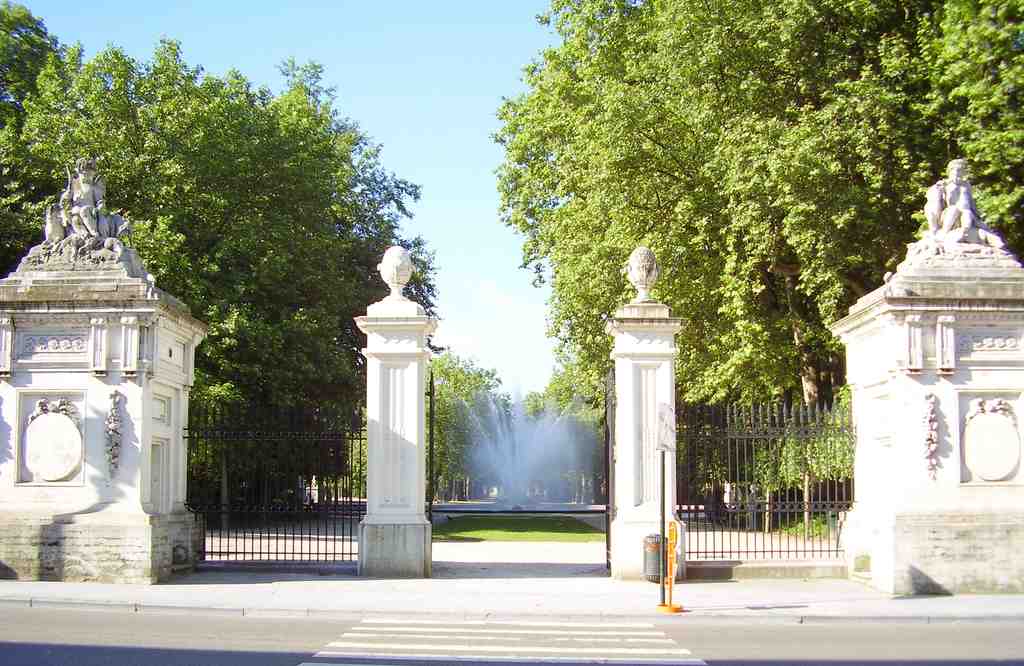
Right in front of you, you’ll see two grand stone pillars topped with decorative busts and statues, flanked by ornate iron gates, opening into an avenue shaded by tall trees and with a gracefully spraying fountain straight ahead-this is the main entrance to Brussels Park.
Now that you’re here at the gates, picture this: a swath of green that’s more than just a park, but once belonged to dukes, emperors, and revolutionaries. We're talking about the largest public park in central Brussels, spreading across 32 acres-big enough that you might just get lost if you’re not careful. But don’t worry, there are no minotaurs in this labyrinth, only the occasional squirrel on a power trip.
Long before joggers and chess players made it their haunt, this land was part of the grand gardens of the Coudenberg Palace-a playground for medieval nobility. Back in those days, this ‘Warande’ was a hunting ground, home to stag, regal falcons, and, rumor has it, some very snooty ducks. It was split into a wild game reserve and a private ornamental garden. Fancy Corinthian labyrinths, flower gardens, and aviaries packed with exotic birds-this might just have been the original Brussels Zoo, minus the ticket price.
Things took a dramatic turn in 1731, when a devastating fire transformed the elegant palace into a field of smoldering ruins. The park, left behind, became little more than an afterthought-a ghost of former splendor, haunted by overgrown paths and toppled statuary. But then, in true Brussels spirit, the idea sparked to turn these ruins into something marvelous. First, planners wanted a statue-then they thought, “Why not a brand new park?” So began the grand neoclassical redesign of Brussels Park, spearheaded by Gilles-Barnabé Guimard and Joachim Zinner from 1776 to 1783. Out with the tangled wilds, in with straight avenues and geometric beauty. Over a thousand old trees were felled (treehugger tears optional), and three thousand more planted-a real ‘out with the old, in with the new’ situation.
History kept trampling through here. In 1793, French Revolutionaries-those famous sans-culottes-stormed in and utterly trashed the sculptures, treating Roman emperor busts like bowling pins. Don’t worry, these statues made a comeback soon after, thanks to the generosity of Brussels’ citizens, who held a public subscription. The park was so precious that the thirty most generous donors picked their own committee to manage it-can you imagine the debates on which tree should be pruned next? “To prune, or not to prune,” that was definitely the question.
In the 1800s, trees formed double rows thickening the quiet grandeur, while cast-iron fences and elegant entrances kept out city bustle. During the Belgian Revolution of 1830, soldiers took shelter here, probably wishing the grand fountains dispensed hot chocolate instead of water.
Today, the park is full of lively detail. There’s the Royal Park Theatre, which started out as a literary salon where people rented novels for one penny-a sort of revolutionary Netflix, with fewer subscription tiers. Kids once performed here, to the horror of the local bishop, who clearly wasn’t a fan of burlesque comedy. Over its lifetime the theatre has dodged burning stages and changing styles but still stands strong.
Just behind it, the Vauxhall-a meeting place with its green trelliswork and an imperial dome-echoes with the music, balls, and boisterous parties of 19th-century aristocrats. The Royal Theatre of La Monnaie even hosted concerts here at the bandstand: imagine summer evenings filled with fanfare and echoes of applause.
Gaze down the main avenue and you’ll notice the symmetry-designed so three grand boulevards align perfectly with the Palace of Justice, the Royal Palace, and Place du Trône. The trees along the avenues are a veritable arboretum: plane trees, chestnuts, elms, beeches, and more, woven together in leafy grandeur. And scattered throughout are around sixty statues, many moved from far and wide, and inspired by Greco-Roman gods and legends-don’t be surprised if you see Hermes more than once.
So, as birds chatter overhead and the sun casts dappled shadows on the wide paths, remember you are strolling through a park that has survived fires, revolutions, pompadoured aristocrats, and even fashion changes for statues. Who knows-maybe yours will be the next great story whispered beneath these ancient trees.
If you're keen on discovering more about the buildings and monuments, sculptures or the remarkable trees, head down to the chat section and engage with me.




