
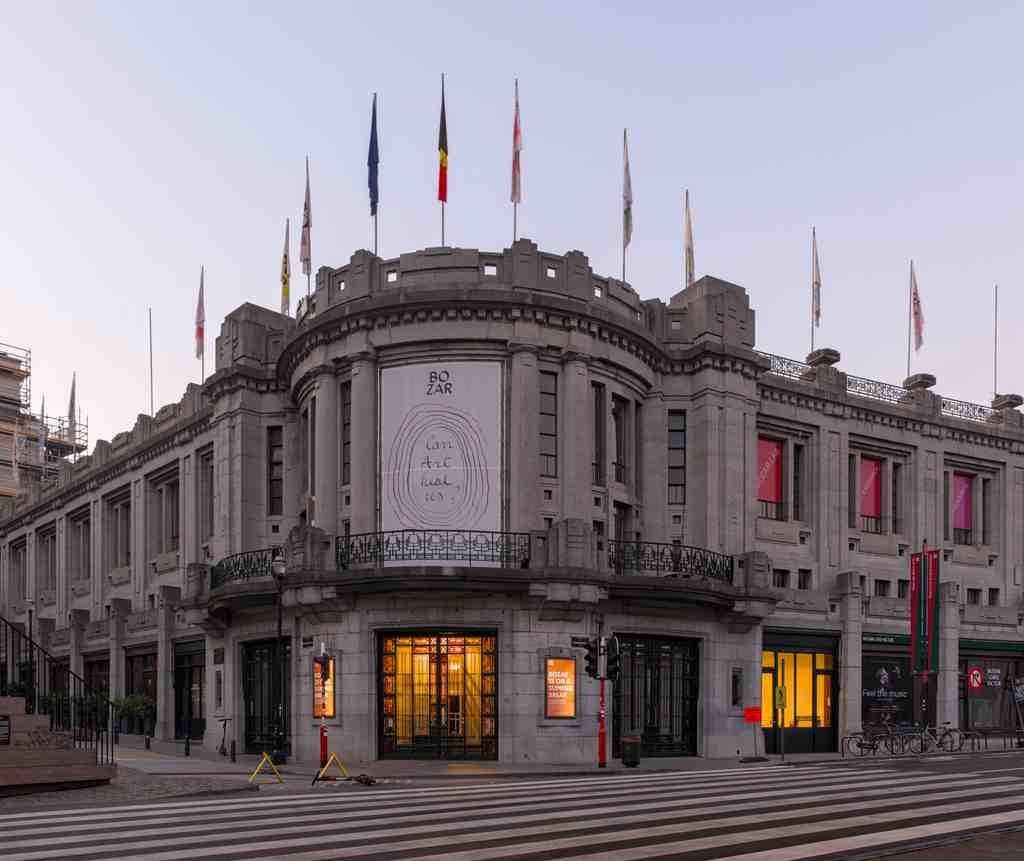
Look ahead for a grand grey stone building with a rounded corner, topped by a ring of flags and big modern banners-standing right at the crosswalk in front of you is the Centre for Fine Arts, also known as BOZAR.
Now, let’s imagine you’re stepping back in time, but don’t worry, you won’t need a time machine-just your imagination (and maybe a little less rain than Brussels usually offers). It’s the roaring 1920s. Picture busy builders clattering away, the sound of hammers echoing down Rue Ravenstein, and the city’s top architect, Victor Horta, pacing around in a snazzy hat, sketching out his grand vision for a palace of the arts.
What you’re seeing now-this curving, bold Art Deco façade-wasn’t built overnight. For decades, Brussels dreamed of a place to gather music, art, and theatre under one splendid roof. The government once thought about putting this center where the stock exchange now stands or even in the city’s parks. But after a whirlwind of design competitions, funding hiccups, and hopes dashed by world wars, finally in the early 1920s, the right ingredients appeared: determination, generous patrons, and a plot of land perfect for something special.
Enter Henry Le Bœuf-a banker with an arty streak-who teamed up with Horta. Their goal? To create not just a hall for concerts, but a hub for every kind of creativity. Imagine the smell of fresh marble and parquet floors as the doors opened in 1928. The King and Queen themselves swept in for the occasion, and the concert halls soon throbbed with the sound of orchestras, legendary dancers, and the excited chatter of visitors.
But building BOZAR didn’t go exactly as planned. The sloping land, tricky regulations, and never-enough money made the project a tough nut to crack-so tough, Horta sometimes joked the building was “the most difficult child” he ever brought into the world. Yet, despite it all, the Centre became famous for its beauty, its innovative horseshoe-shaped concert hall, and for welcoming everyone, from jazz lovers and surrealist painters to world-class conductors and star ballet dancers.
Through the years, BOZAR survived world wars, occupation, economic crashes, and more than a few lively Belgian debates about funding and language. During WWII, it even managed to stay open-sometimes screening films, sometimes hosting secret meetings of artists who just wouldn’t let the music stop, even when the city outside felt silent and tense.
After the war, the halls buzzed with new life: picture flickering film projectors, the footsteps of ballet dancers, the passionate judge in the Queen Elisabeth Competition, and the dramatic music of the Belgian National Orchestra. The Centre held wild art parties during Expo 58, where curious festival-goers glimpsed the first color TVs and the wildest modern art Brussels could offer.
Of course, the story isn’t all glamour. Leaky roofs, cracked concrete, and wild student protests in '68 brought both challenges and wild energy into the building’s veins. Artists sat peacefully in the sculpture hall, demanding more space and democracy-a bit like an artistic sleepover, if you will.
Fast-forward to more recent years, and BOZAR has been lovingly restored, even after fire damaged the roof in 2021. Today, the Center is home to art exhibitions, concerts, films, dance, and more, buzzing with ideas from Frida Kahlo to Keith Haring. It’s a place where, at any moment, you might see a world-famous violinist, a daring new play, or a rooftop concert as the sunset glows over Brussels.
And hey, here’s a fun fact to end on: Out in space, there’s even an asteroid named after BOZAR. So, this is truly a palace of the arts that’s out of this world. Would you expect anything less from Brussels’ creative heart?
Ready to delve deeper into the facilities, directors or the trivia? Join me in the chat section for an enriching discussion.




