
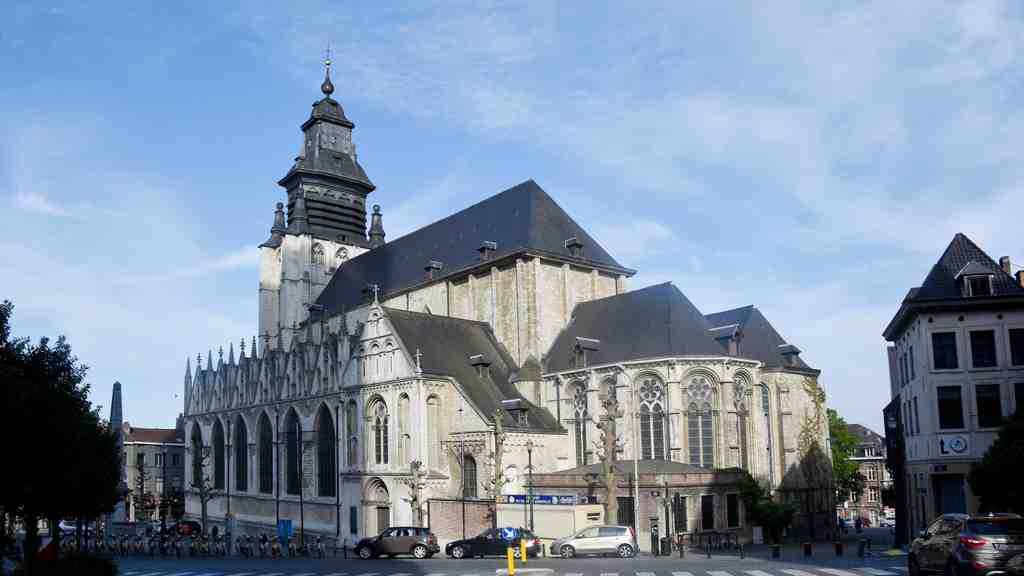
To spot the Church of Our Lady of the Chapel, just look ahead for the striking stone building with a tall Baroque bell tower rising above elegant pointed arches and rows of spiky pinnacles-it’s right at the edge of Place de la Chapelle.
Now, as you stand before this mighty structure, imagine rolling back the clock nearly 900 years. Picture the hustle at the city’s edge: a dirt road, monks in heavy robes trudging along, and markets trading chatter in dozens of accents. Here, outside the ancient walls, once sat a simple little chapel, donated in 1134 by the powerful Count Godfrey I of Louvain. Soon after, Benedictine monks took over, probably thinking, “Nice donation, but could we get a bit more Gothic?”. The neighborhood here grew so much that Brussels needed a second parish church, and so the seeds for this splendid giant were sown.
The church itself is a masterpiece of transition, visually and historically-a mix of rough-and-tough Romanesque and the lift-your-eyes-to-the-heavens Gothic, finished off with a dash of Baroque like some medieval stylist went on a decorating spree spanning centuries. The stones came all the way from Gobertange, a journey of 45 kilometers; by horse cart, that’s a lot of “are we there yet?"
But, oh, this place has stories. Fires, Calvinist mobs, grand armies-everyone wanted a piece of the Chapel Church. In 1405, flames gobbled up most of the original nave. The townsfolk must have had a rough week, but they rebuilt, bigger and bolder, with those sizzling side chapels and pointy Brabantine Gothic lines. Then, in 1574, Brussels’ Calvinists stormed the church, smashing anything not nailed down (and a few things that were). Perhaps they were upset about the lack of seating? When the Catholics got their church back, the place needed more repairs than your average second-hand sofa from the flea market.
If you look up, that charming bell tower wasn’t always so Baroque. In 1695, French cannons shattered the older spire during one of Brussels’ less-fun parties, so the city called in Antoine Pastorana, who whipped up the elegant slate crown you see today. The saga continued-sometimes closed, sometimes open, always loved and always getting patched up like a favorite old coat.
Step closer and look at the grey buttresses and spiky pinnacles, like stone feathers and claws gripping the church tightly to this square. Gargoyles glare down, as if they dare pigeons to misbehave. The outside’s grandeur is only the start-inside, your eyes would adjust from the dim, ancient Romanesque transept to the airier, light-filled nave. Big windows, soft stone, a feeling both solemn and somewhat magical.
And while most churches promise saints, this one delivers artists. Pieter Bruegel the Elder-yes, the very Bruegel who painted fantastic peasant scenes and wild festivals-found his final rest here in 1569. His funeral monument still greets visitors, perhaps with a ghostly wink and the echo of laughter from his wild paintings. Oh, and if you find yourself by a certain side chapel, you’ll spot an icon cherished by Brussels’ Polish community, connecting centuries-old bricks to new traditions every day.
Let your mind wander through all those centuries-the clanking of medieval armor, the hush of monks at prayer, the clatter during yet another restoration, the thump-thump of today’s city life outside. This is a church that’s survived fire, warfare, and even some divine interior decorating. Through every blow and every prayer, the Chapel Church stands-sometimes battered, always beautiful, right where history and daily life cross paths on this busy square.




