
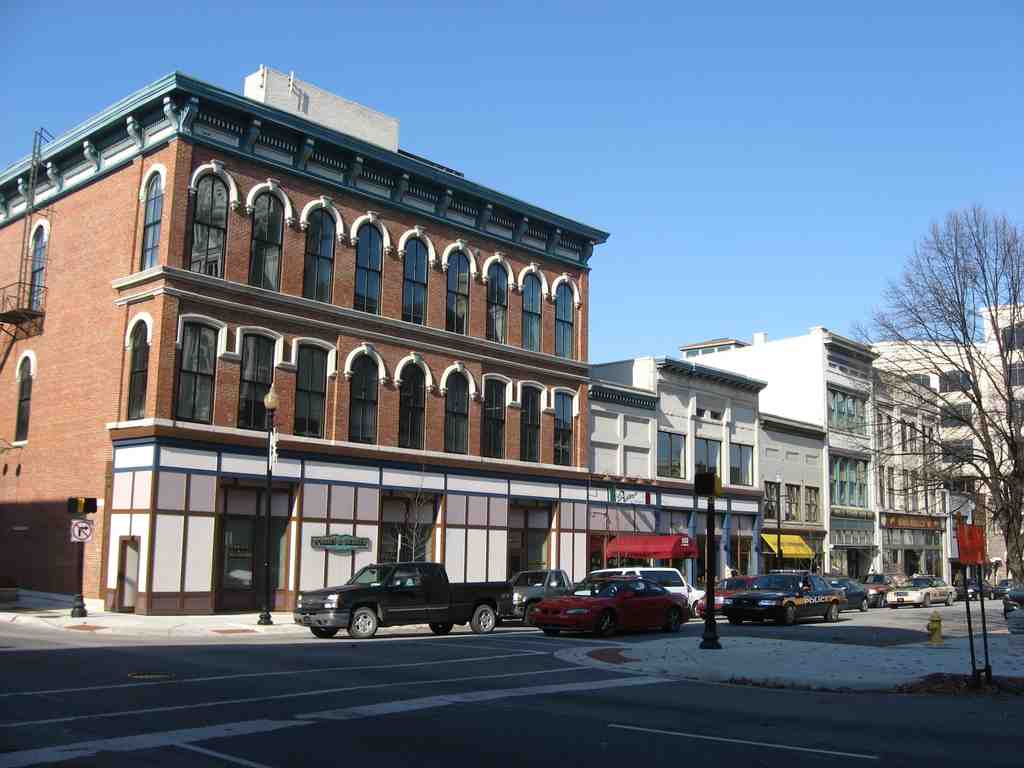
Lafayette Audio Tour: Echoes of Elegance and Timeless Streets
Beneath Lafayette’s peaceful streets, a legacy of power struggles and whispered intrigue pulses through the Centennial Neighborhood District’s leafy avenues. Take a self-guided audio tour through the city, unlocking hidden stories and secret corners even locals overlook. This isn’t just sightseeing—it’s a deep dive into Lafayette’s untold past. Why did fierce arguments once echo through the halls of the Cathedral of Saint Mary of the Immaculate Conception? Which mysteries still cling to the elegant bricks of Saint James Lutheran Church and School? And who left behind cryptic symbols beneath faded doorways, waiting to be decoded by sharp-eyed explorers? Travel time’s winding corridors, encountering the city’s political battles, religious upheavals, and back-alley secrets. Walk from sunlight into shadow, and watch Lafayette’s history flicker to life in the margins of the everyday. Uncover what lies beneath the surface—your journey into Lafayette’s hidden depths starts now.
Tour preview
About this tour
- scheduleDuration 40–60 minsGo at your own pace
- straighten4.1 km walking routeFollow the guided path
- location_onLocationWest Lafayette, United States
- wifi_offWorks offlineDownload once, use anywhere
- all_inclusiveLifetime accessReplay anytime, forever
- location_onStarts at Lafayette station
Stops on this tour
To spot Lafayette Station, look for a sturdy brick building with a wide, dark roof, large front steps, and old-fashioned lamps-a real “train station of yesteryear” vibe, right…Read moreShow less
To spot Lafayette Station, look for a sturdy brick building with a wide, dark roof, large front steps, and old-fashioned lamps-a real “train station of yesteryear” vibe, right across from the plaza. Alright, imagine you’re standing here back in 1902-the smell of coal in the air, the clatter of luggage, and steam rising as a grand train whistles into the city. This station, with its Romanesque arches and brickwork, was not just a place to catch a ride-it was a portal to cities like Cincinnati and Chicago, bustling with travelers and the hum of excitement. Built by two rival railroads trying to outdo each other, the depot became Lafayette’s own Grand Central. Funny enough, in the old days, the Amtrak train used to stop right in the middle of 5th Street, making it a bit tricky for jaywalkers! In 1994, the whole building packed its bags (figuratively) and moved here to its current home, making sure the charm and echoes of a century’s worth of travel stories weren’t lost. Stand here long enough, and you might just feel the vibrations of the Floridian, the Kentucky Cardinal, or the James Whitcomb Riley-famous trains once speeding into town. Today, you’re standing before one of Indiana’s last great railroad treasures, listed on the National Register of Historic Places, where echoes of the past still linger if you listen close.
Open dedicated page →Look for a massive limestone building ahead, with towering columns, a grand domed clock, and a statue of Liberty perched right at the very top-trust me, you can’t miss…Read moreShow less
Look for a massive limestone building ahead, with towering columns, a grand domed clock, and a statue of Liberty perched right at the very top-trust me, you can’t miss it! Welcome to the Tippecanoe County Courthouse, where history stands as tall as the statue of Liberty beaming out from its dome! Picture the year 1826-Lafayette was just a patchwork of rented rooms and muddy roads, and county business took place wherever someone could find an empty space. But by 1829, the locals had built a sturdy two-story brick courthouse. Not to be outdone, a bigger version replaced it in 1845-a true glow-up except for a fiery hiccup in the 1840s when quick-thinking townsfolk managed to douse the flames before any real damage could be done. Now, pause and take in the building in front of you. Finished in 1884, this courthouse was a marvel, and-between you and me-a bit of a show-off. The thing cost $500,000, which made many taxpayers groan louder than the courthouse’s 3,000-pound bell! In fact, when Mark Twain strolled through town and saw it, he remarked, “Striking! It must have struck the taxpayers a mighty blow!” Yes, this place was the priciest courthouse Indiana had ever seen (at least, until Allen County one-upped them twenty years later). But what a sight: a wild mix of styles, almost as if the architects couldn’t decide between grand, fancy, or regal, so they packed in a little bit of everything-Second Empire roofs, Georgian grace, and even Rococo flair. With one hundred columns, nine statues, and four clock faces under that gleaming, elongated dome, this courthouse is Lafayette’s royal crown. Stretch your neck and spot the 14-foot Liberty statue-perched 212 feet in the air, she’s the city’s silent guardian. All this beauty hasn’t only seen parades and civic pride, though. On a summer day in 1998, the air snapped as a pickup packed with gasoline and explosives smashed into the east entrance. Quick and fearless, the local firefighters rushed in, putting out the blaze before disaster could ignite. The would-be bombers? Still a mystery. No suspect was ever caught, despite a hefty reward and years of investigation. And yet here the courthouse stands-weathering fires, mystery, and outrageously high price tags, its bell ready to toll and Liberty still watching over Lafayette. So, next time you hear city bells ringing, just imagine that heavy note chiming out a few blocks away...
Open dedicated page →To spot the Downtown Lafayette Historic District, look for a grand stretch of old brick and stone buildings with tall arched windows and ornate details lining Main Street, right…Read moreShow less
To spot the Downtown Lafayette Historic District, look for a grand stretch of old brick and stone buildings with tall arched windows and ornate details lining Main Street, right in front of you across the intersection. Alright, my friend, as you stand here in the heart of Lafayette, you’re surrounded by a living time machine. Imagine dusty boots and the rhythmic clop-clop of horse hooves as William Digby first laid out this town back in 1825, all because the sparkling Wabash River was just a stone’s throw away. Picture Lafayette’s earliest days-shops opening, neighbors greeting each other with a cheerful wave, and the hum of possibility in the air. This spot has always been buzzing! In the 1830s, folks gathered for open-air markets when Lafayette’s first log courthouse went up-think of it as Indiana’s answer to a pop-up shop, but with more wagons and way less Wi-Fi. Then, in 1843, the mighty Wabash and Erie Canal came chugging in, bringing traders, families, and big dreams from as far as Toledo. The courthouse was rebuilt in sturdy brick, and Fifth Street widened, turning this area into a bustling marketplace where everyone came for business, news, and probably a little bit of town gossip. But wait, the real magic started when the trains arrived like iron dragons. In 1852, you could hear the whistle of the Lafayette & Indianapolis Railroad as it pulled into town, followed closely by the Monon Railroad in 1853. If you’d stood here then-well, I hope you like noise, because trains blasted through, crossing Main Street, and filling the air with bustling energy. The town grew as businesses flourished along these tracks. Imagine the lively scene: shopkeepers shouting deals, heavy barrels rolling down the sidewalk, and horses pulling carts piled high with goods. Many of the buildings you see now are survivors from that very era: the Hatcher Building, the Milwaukee Block, the impressive old Perrin Building-all with stories to tell and secrets in their walls. Some of them watched as the Fowler Hotel opened its doors to fancy guests and the Lafayette Life Building counted coins and dreams alike. Let your feet wander the sidewalks and listen for whispers from the past. You might just hear echoes of those early traders or a bell from the old market calling everyone together, reminding you that you’re walking where history happened-one step, one heartbeat, and one hopeful handshake at a time.
Open dedicated page →



Show 10 more stopsShow fewer stopsexpand_moreexpand_less
 4
4Marian Apartments
Buy tour to unlock all 17 tracksTo spot the Marian Apartments, look for a sturdy, three-story rectangular brick building right in front of you, with big three-sided bay windows jutting out on both ends and…Read moreShow less
To spot the Marian Apartments, look for a sturdy, three-story rectangular brick building right in front of you, with big three-sided bay windows jutting out on both ends and plenty of stone and wood trim around the windows. Now, as you stand here, just imagine the year is 1907: you hear the clack of horse-drawn carriages rolling down the street outside. The Marian Apartments, also called the Marian Flats, have just opened their doors, and Lafayette is buzzing with excitement over this stylish new address. Designed by Oliver W. Pierce, Jr., its bold brick walls and grand limestone accents would have made passersby stop and whistle. Just picture young families trailing up those stone stairs to visit, their arms loaded with groceries from the bustling market, the scent of fresh bread following them inside. The three-story bays poking out like ship prows gave everyone breathtaking views-and probably made the nosy neighbors jealous! Inside, the wooden trim and tall ceilings make for rooms that echo with laughter, clinking glasses, and the distant strains of an old phonograph on a lazy Sunday evening. The building became such a local classic that in 1983, it was given official historic status-proving that a good apartment building can achieve legendary status without ever having to pay rent!
Open dedicated page → 5
5Pottlitzer House
Buy tour to unlock all 17 tracksTo spot the Pottlitzer House, look up for the grand cream-colored home with dark brown trim, and notice the tall, pointy spires and decorated gables rising dramatically above the…Read moreShow less
To spot the Pottlitzer House, look up for the grand cream-colored home with dark brown trim, and notice the tall, pointy spires and decorated gables rising dramatically above the tree branches on the corner-almost like a cluster of wizard hats! Now that you’ve found it, imagine the year is 1893: horses clop down muddy roads, ladies in long dresses bustle by, and a sense of excitement fills Lafayette. Here stands Leo and Minnie Pottlitzer’s shining new masterpiece-a house so stylish it must’ve made the neighbors gasp, “Just how many towers do they need?” Leo and Minnie weren’t showing off, though; they just happened to love a little bit of everything, so they blended Colonial Revival, Chateau, and Queen Anne styles all together. Take a look at those oversized gables and the whimsical spires on the roof-these special spires are the only ones like it on any house in Lafayette. You could call it the fashion icon of 19th-century homes! Of course, every good house needs a little drama. In 2015, just as the house prepared for its next century, a fire ignited in the back, sending a rush of smoke and panic through the old rooms. Thankfully, much of the house survived, but you can almost feel its resilience as it stands proudly today, a monument to Lafayette’s ability to blend old charm with new grit. And between you and me, if you ever lost a hat in a windstorm, I’d check those spires first!
Open dedicated page → 7
7Centennial Neighborhood District
Buy tour to unlock all 17 tracksTo spot the Centennial Neighborhood District, just look up and ahead for the round blue-green sign strung between decorative black ironwork on a lamppost, with the words “Historic…Read moreShow less
To spot the Centennial Neighborhood District, just look up and ahead for the round blue-green sign strung between decorative black ironwork on a lamppost, with the words “Historic Centennial Neighborhood” circling an old-fashioned building-this marks the heart of the district. Alright, traveler, you’re standing at the gateway to one of Lafayette’s most fascinating time capsules-where nearly two centuries of stories echo through the streets, like whispers riding on a gentle summer breeze. Here, the Centennial Neighborhood District stretches before you, inviting you to imagine scenes from its earliest days. Picture it: It’s the 1830s, and this patch of land north and east of the Wabash River is just starting to bustle as Lafayette, a little town at the time, stretches its arms wider. Wooden carts rumble over dirt roads, and the songs of hammers and saws fill the air as newcomers build their hopes alongside their homes. This area really started humming in 1843, when the mighty Wabash and Erie Canal cut right through, bringing with it traders, builders, and a wild energy of change. The new canal drew mills, warehouses, and wharves-suddenly, this was the place everyone wanted to be. Can you smell the dusty grain and hear the workers calling out as they unload their barges? It must’ve been a bit noisy-Lafayette’s version of rush hour! Less than ten years later, the railroad thundered into town. By 1853, steam engines carved a shrieking, iron path close to where you’re standing. Canal boats gave way to trains, and the need for new homes boomed-row houses sprouted along North Fourth Street for the railway crews, their bricks still standing today like steadfast sentinels. Picture lining up for work back then, your boots caked in mud, waiting for the whistle that meant another train was coming. But Centennial isn’t just about work and mud-it’s about spirit, too. The district takes its name from Centennial School, built in 1876 to celebrate America’s 100th birthday. Imagine children in bonnets and suspenders running to class right over there, on the north east corner of Brown and North 6th. Though the school’s been replaced by Centennial Park, the joyful shouts of students seem to bounce on the wind. It’s a neighborhood of faith and learning-look around and you’ll see churches rising up like stone guardians: St. John’s Episcopal, the oldest still standing, and grand Gothic beauties like St. Boniface, St. James, and Trinity Methodist. Even Bethel AME, which first opened as the city’s black school, tells a story of hope and determination. The old Albert A. Wells Memorial Library, all columns and stone, is Lafayette’s own temple of knowledge from 1928. Century after century, these streets have seen celebration and struggle, noisy arrivals and quiet moments. Summers filled with the aroma of cut grass, winters painted white. Today, the Centennial Neighborhood District is honored on the National Register of Historic Places-a place where Lafayette’s heartbeat echoes strongest in every brick and tree. So as you stand here, just think: you’re standing inside a living chronicle, a patchwork of stories as American as apple pie-and a little more historic, too.
Open dedicated page → 8
8Trinity United Methodist Church
Buy tour to unlock all 17 tracksTo spot Trinity United Methodist Church, just look ahead for a large red-brick building with tall, pointed green spires and rows of narrow, arched windows-its impressive Gothic…Read moreShow less
To spot Trinity United Methodist Church, just look ahead for a large red-brick building with tall, pointed green spires and rows of narrow, arched windows-its impressive Gothic style will stand out on the corner. Let’s travel back almost 200 years-long before the busy streets and modern buildings of Lafayette-when this spot was just a patch of wild Indiana land and maybe a squirrel or two for company. In 1824, a determined circuit-riding preacher named Eli P. Farmer rolled into town on horseback, dust trailing behind him, and decided it was time to spark something special here. Picture him gathering a few neighbors together inside the old log courthouse, the air thick with hope and the smell of pine logs. With just ten souls, they founded the very first church in Lafayette-right here where you stand. Over the years, this little congregation moved and grew as Lafayette itself began to bloom. Their first real building cost only $1,500, which probably wouldn’t buy you a doorknob today! In 1868, they settled at this exact spot, springing for a city lot at a hefty $7,000. The church you see now began to rise up-a red-brick dream crowned with stained glass. By 1873, the sanctuary was finished, and folks poured in for the dedication, probably all wearing their Sunday best and hoping they could snag a good seat. If you look closely, those spectacular stained glass windows are the handiwork of Edna Browning Ruby, a local legend who colored churches all over town with her light-filled art. Down below, in the 1930s, hardworking members dug out the basement with nothing but buckets and elbow grease-a labor of love that gave them room for laughter, meals, and friendship. Today, Trinity is still bustling-a friendly, welcoming place where music pours from the pipe organ, and people of all kinds gather to seek a little wisdom and warmth. So, while you take in those lofty spires and glowing windows, just imagine all the footsteps and stories that have filled this sacred corner for nearly two centuries! Pretty impressive for the oldest church in town, right?
Open dedicated page → 10
10Upper Main Street Historic District
Buy tour to unlock all 17 tracksLook just ahead and to your left-see those rows of grand, old-fashioned brick buildings lining Main Street with their elegant facades and intricate storefronts? You’ve arrived at…Read moreShow less
Look just ahead and to your left-see those rows of grand, old-fashioned brick buildings lining Main Street with their elegant facades and intricate storefronts? You’ve arrived at the Upper Main Street Historic District! Let’s imagine you’ve just stepped back into a bustling Lafayette from over a century ago. Picture carriages clattering along the brick streets, shopkeepers sweeping their stoops, and travelers arriving wide-eyed from the Lake Erie & Wabash Railroad that once changed everything here. Sixth Street used to be the city’s edge, but by 1840, Lafayette was expanding fast, and this neighborhood became the hot new commercial center-a bit like Lafayette’s own version of Times Square, only with fewer flashing lights and more mustache wax. It wasn’t just commerce that flourished. Around Eleventh Street, hotels like the Enterprise Hotel on 1015 Main, the Alt Heidelberg, the American Lafayette, and the Derby Hotel popped up to greet every new face with open doors and maybe a dash of gossip. If you listen closely, you might just hear a phantom bellhop calling, “Room with a view, sir?” Traveling salesmen rubbed shoulders with local builders and banter filled the air, especially outside places like Carnahan Hall or the Beck and Haderle Buildings. The air would have been thick with the aroma of brewed coffee, fresh newsprint, and maybe the occasional whiff of cigar smoke. Take a moment and look along the street-do you see the dignified Vollmer-Conrad Building, proudly standing from 1873, or perhaps the impressive Lafayette Theater from 1938? All these structures aren’t just relics-they’re stars of their own story. Some are so dazzling in their design or history that they earned an ‘Outstanding’ nod from preservationists-think of them as the Hollywood celebrities of Lafayette architecture. Others, maybe more modest, stand together, creating a sense of character as strong as any blockbuster cast ensemble. So as you walk past these buildings, imagine their walls whispering the tales of businessmen striking deals, actors racing backstage, and guests sneaking in after curfew. The Upper Main Street Historic District isn’t just a place-it’s a living stage for Lafayette’s greatest hits, and today, you’re walking right through the set! Now, who knows-maybe your footsteps will inspire the next chapter in its story.
Open dedicated page → 11
11Judge Cyrus Ball House
Buy tour to unlock all 17 tracksYou’re looking for a striking red-brick mansion with tall narrow windows and a grand central tower topped by a mansard roof-just peek through the trees ahead and you’ll see its…Read moreShow less
You’re looking for a striking red-brick mansion with tall narrow windows and a grand central tower topped by a mansard roof-just peek through the trees ahead and you’ll see its ornate woodwork and sturdy limestone foundation standing proudly on South Ninth Street. Now, as you stand here in front of the Judge Cyrus Ball House, let your imagination transport you back to 1869. The air is thick and sweet with the scent of lilacs, the sounds of carriage wheels rumbling over the dirt road nearby. Picture this stately home brand new-two stories of dignified brickwork with intricate wood and stone details, and a three-story mansard-roofed tower that must have seemed almost futuristic for its time. The slate roof glistens, and the home looks both elegant and imposing, a true jewel in Lafayette’s Ninth Street Hill neighborhood. Let me introduce you to Cyrus Ball, the man behind the mansion. Born in 1804 in Lebanon, Ohio-perhaps dreaming of adventure even as he worked sunrise to sunset on the family farm-Cyrus started life as the youngest of six. By his teens, he was already showing what he was made of, teaching at a country school. But farming and teaching weren’t enough for him. In 1825, he swapped plows for law books, quickly earning his place at the Ohio bar. Before long, young Cyrus packed up with his cousin, seeking fortune out west. Imagine him sleuthing through bustling Baltimore for merchandise before landing here in Lafayette with a head full of ideas and pockets full of ambition. He opened his general store and, as if in a twist straight out of a novel, became sole owner within 18 months. Cyrus wasn’t a man to sit idle for long; he became Justice of the Peace at just 25, wearing his judge’s robe with pride. Ball’s business sense was as sharp as his wit-he ran dry goods firms, collected canal tolls, worked as a banker, even co-founded Lafayette’s artificial gas company. It sounds exhausting, but Cyrus truly lived for opportunity. And when the railroad rolled toward Indianapolis, he was at the center of it, ensuring the future was steered right through Lafayette’s heart. But here’s where the story gets a little more human. Cyrus loved and lost, marrying twice and enduring the heartbreak of losing children. Still, his grand home became a haven-a place where, believe it or not, famous abolitionist William Lloyd Garrison once spent the night. As you watch sunlight filter through the trees onto the aged stones, know you’re standing before more than just a mansion-this house is a monument to grit, vision, and the heart of 19th-century Lafayette. And next time someone asks if you’ve stood in the footsteps of history, you can say-without exaggeration-that you most definitely have.
Open dedicated page → 12
12Fowler House Mansion
Buy tour to unlock all 17 tracksLook to your left at the corner of 10th and South Streets, and you’ll spot a grand, castle-like mansion with steep gables, pointed arches, and ornate stonework-the Moses Fowler…Read moreShow less
Look to your left at the corner of 10th and South Streets, and you’ll spot a grand, castle-like mansion with steep gables, pointed arches, and ornate stonework-the Moses Fowler House stands out as Lafayette’s Gothic gem. Picture yourself walking up to this house in the 1850s, when Lafayette was still a frontier town, and suddenly-bam!-you’re face to face with this enormous, fairy tale mansion with tall windows and a fanciful roofline that would make even Dracula feel right at home. The Moses Fowler House isn’t just big, it’s “pull-out-the-top-hat-and-monocle” big, a rare Gothic Revival masterpiece built with local black walnut and white oak, carved so finely you might be tempted to knock on the door and see if royalty’s inside. Moses Fowler, who made quite the fortune in everything from cattle ranching to banking (who says you have to pick just one career?), decided in 1851-1852 to build a home that would knock Lafayette’s socks off. And get this-Moses actually picked out the house’s design from a book by Andrew Jackson Downing while on a business trip in New York City. Talk about next-level mail-order! He wanted the best, so he brought in Italian craftsmen all the way from New York-through the then-bustling Wabash and Erie Canal-to work their magic on the plaster ceilings in the north and south parlors. Imagine the delicate swirls and ornate patterns floating above your head, crafted by hands now lost to time. When Moses and his wife, Eliza, weren’t building the house, they were busy building Lafayette itself. Want an example? They donated generously to Purdue University-that’s right, the very same Purdue that changed the face of education in Indiana. Maybe Moses wanted a legacy bigger than his bank account, or maybe Eliza just needed somewhere to send all those future Fowler scholars-either way, their footprints are everywhere in this community. Now, though the house was already spectacular, it got even fancier in the early 20th century. In 1916-17, Cecil G. Fowler, Moses and Eliza’s grandson, decided he wouldn’t just live in the mansion-oh, no-he’d make it party central for the town’s glitterati. He hired workmen to add a huge Tudor-style dining room, a big formal living room, indoor kitchens, and a grand Italian-style tiered patio with sparkling fountains, a tea house, and the kind of gardens that could hide the world’s finest Easter egg hunt. You can just imagine the laughter of party guests drifting out over the lawn. Cecil, it turns out, wasn’t only a banker like his grandfather, he was also a real estate developer who partnered with the developer of the Indianapolis Motor Speedway to build Miami Beach’s first luxury hotel-it was like Gatsby had moved to Lafayette. By 1940, the children had grown, the parties had slowed, and the Fowlers sold the mansion to the Tippecanoe County Historical Association, who used the grand old house as a museum, office, and storage-certainly not as rock ’n’ roll as those roaring parties, but it kept the house alive through the decades. In 2015, thanks to the generosity of Matt and Dr. Ann Jonkman, the property was rescued and restored, opening its doors to the public as a venue for celebrations, tours, and community events. So as you stand here, imagine the carriages arriving, the doors thrown open, lamps flickering at twilight, and the incredible legacy of the Fowler family living on-even if the only dance you do today is to the sound of your own footsteps.
Open dedicated page → 13
13Diocese of Lafayette in Indiana
Buy tour to unlock all 17 tracksYou’re looking for a tall, tan-bricked church with a dramatic pointed spire and arched stained glass windows-just look for the grand staircase leading up to those big wooden doors…Read moreShow less
You’re looking for a tall, tan-bricked church with a dramatic pointed spire and arched stained glass windows-just look for the grand staircase leading up to those big wooden doors right in front of you! Now, take a deep breath and imagine the whispers of centuries as you stand before the Diocese of Lafayette in Indiana. It might look calm now, but its roots are tangled with adventure, faith, and more than a pinch of mystery-kind of like a history book with a secret compartment! Picture this land as a wild frontier: in the 17th and 18th centuries, French fur traders and missionaries trailed through thick forests, their boots squishing in the mud, guided by the Bishop of Quebec. Indiana was a place where you were just as likely to bump into a squirrel as a priest with a mission! Then, after the French and Indian War-boom!-it was all handed over to the British, who didn’t exactly roll out the welcome mat for new settlers. The American Revolution roared to life, and before long, Pope Pius VI drew a line on the map: the brand-new Diocese of Baltimore, spanning the entire young United States. That’s right-Indiana included! The Catholic presence was tiny and scattered, but incredibly determined. Skip ahead a bit-Indiana gets shuffled into the Diocese of Bardstown, and then under the Diocese of Vincennes (say that three times fast). This was still the Wild West by church standards-French missionaries braved suspicious locals, bad roads, and the occasional bear. And into all this, arrived the legendary Mother Theodore Guerin and her small band of Sisters of Providence. They founded St. Mary of the Woods College in the middle of the forest-talk about a school trip! Their students fanned out, awakening the Catholic faith in every small town and prairie. With changing times came new lines on the map: next stop, the Diocese of Fort Wayne, then finally, in 1944, the Lafayette area became its own diocese, the one you see before you now. At its beginning, the Diocese of Lafayette in Indiana had just 54 parishes-and 31,700 Catholics, which might be smaller than some football crowds! Reverend John Bennett took the helm as bishop, followed by John Carberry-the man who could organize a diocesan council almost as quickly as he could drink a cup of coffee. During these years, the number of Catholics grew fast; parishes expanded out of old towns and into the mushrooming suburbs. Time moved forward, and so did the bishops: Gallagher built new churches, Fulcher’s time was sadly cut short by a car accident, and then William Higi walked in-serving over 26 years, building schools like St. Theodore Guerin High, and even starting outreach programs all the way to Haiti. Timothy Doherty, the current bishop, faced a modern challenge: fewer priests, more need. Ever resourceful, he recruited priests from far-off Nigeria and Mexico. The diocese’s story, though, isn’t only about growth and faith-there’s also a shadowy side. Over the decades, allegations of abuse came to light. The bishops faced painful decisions, sometimes acting swiftly, sometimes too slowly. Journalists uncovered years of complaints; policies evolved, victims finally found their voices, and the church continues to seek accountability and healing. Yet through it all, some things have never wavered-in particular, the diocese’s devotion to its patron, the Immaculate Conception. December 8 is a local day of joy, celebration, and hope. More recently, the canonized spirit of Theodore Guerin has guided the community as a second patron saint-a reminder that even in hard times, a determined heart (and maybe a good pair of boots) can change the world. So, as you gaze up at this striking spire, imagine the thousands of footsteps that have echoed on these stone steps-students, priests, hopefuls, doubters, the troubled and the joyful, all woven into the story of faith that still stretches onward into tomorrow. And if you listen for a moment, you just might catch the faintest trace of the past-rustling robes, children’s laughter, and the resolve of those who built more than just walls: they built a home for hope, resilience, and faith right in the heart of Indiana. Interested in a deeper dive into the bishops, coat of arms or the ecclesiastical province? Join me in the chat section for an insightful conversation.
Open dedicated page →
Frequently asked questions
How do I start the tour?
After purchase, download the AudaTours app and enter your redemption code. The tour will be ready to start immediately - just tap play and follow the GPS-guided route.
Do I need internet during the tour?
No! Download the tour before you start and enjoy it fully offline. Only the chat feature requires internet. We recommend downloading on WiFi to save mobile data.
Is this a guided group tour?
No - this is a self-guided audio tour. You explore independently at your own pace, with audio narration playing through your phone. No tour guide, no group, no schedule.
How long does the tour take?
Most tours take 60–90 minutes to complete, but you control the pace entirely. Pause, skip stops, or take breaks whenever you want.
What if I can't finish the tour today?
No problem! Tours have lifetime access. Pause and resume whenever you like - tomorrow, next week, or next year. Your progress is saved.
What languages are available?
All tours are available in 50+ languages. Select your preferred language when redeeming your code. Note: language cannot be changed after tour generation.
Where do I access the tour after purchase?
Download the free AudaTours app from the App Store or Google Play. Enter your redemption code (sent via email) and the tour will appear in your library, ready to download and start.
If you don't enjoy the tour, we'll refund your purchase. Contact us at [email protected]
Checkout securely with 


