
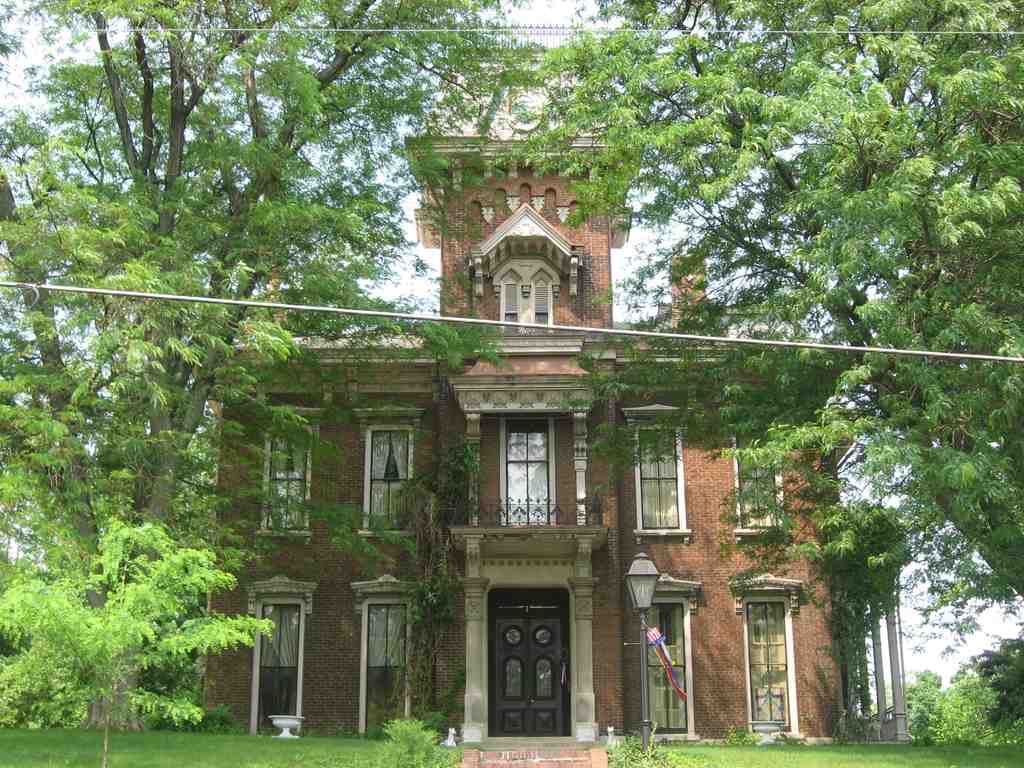
You’re looking for a striking red-brick mansion with tall narrow windows and a grand central tower topped by a mansard roof-just peek through the trees ahead and you’ll see its ornate woodwork and sturdy limestone foundation standing proudly on South Ninth Street.
Now, as you stand here in front of the Judge Cyrus Ball House, let your imagination transport you back to 1869. The air is thick and sweet with the scent of lilacs, the sounds of carriage wheels rumbling over the dirt road nearby. Picture this stately home brand new-two stories of dignified brickwork with intricate wood and stone details, and a three-story mansard-roofed tower that must have seemed almost futuristic for its time. The slate roof glistens, and the home looks both elegant and imposing, a true jewel in Lafayette’s Ninth Street Hill neighborhood.
Let me introduce you to Cyrus Ball, the man behind the mansion. Born in 1804 in Lebanon, Ohio-perhaps dreaming of adventure even as he worked sunrise to sunset on the family farm-Cyrus started life as the youngest of six. By his teens, he was already showing what he was made of, teaching at a country school. But farming and teaching weren’t enough for him. In 1825, he swapped plows for law books, quickly earning his place at the Ohio bar. Before long, young Cyrus packed up with his cousin, seeking fortune out west. Imagine him sleuthing through bustling Baltimore for merchandise before landing here in Lafayette with a head full of ideas and pockets full of ambition.
He opened his general store and, as if in a twist straight out of a novel, became sole owner within 18 months. Cyrus wasn’t a man to sit idle for long; he became Justice of the Peace at just 25, wearing his judge’s robe with pride. Ball’s business sense was as sharp as his wit-he ran dry goods firms, collected canal tolls, worked as a banker, even co-founded Lafayette’s artificial gas company. It sounds exhausting, but Cyrus truly lived for opportunity. And when the railroad rolled toward Indianapolis, he was at the center of it, ensuring the future was steered right through Lafayette’s heart.
But here’s where the story gets a little more human. Cyrus loved and lost, marrying twice and enduring the heartbreak of losing children. Still, his grand home became a haven-a place where, believe it or not, famous abolitionist William Lloyd Garrison once spent the night. As you watch sunlight filter through the trees onto the aged stones, know you’re standing before more than just a mansion-this house is a monument to grit, vision, and the heart of 19th-century Lafayette. And next time someone asks if you’ve stood in the footsteps of history, you can say-without exaggeration-that you most definitely have.


