
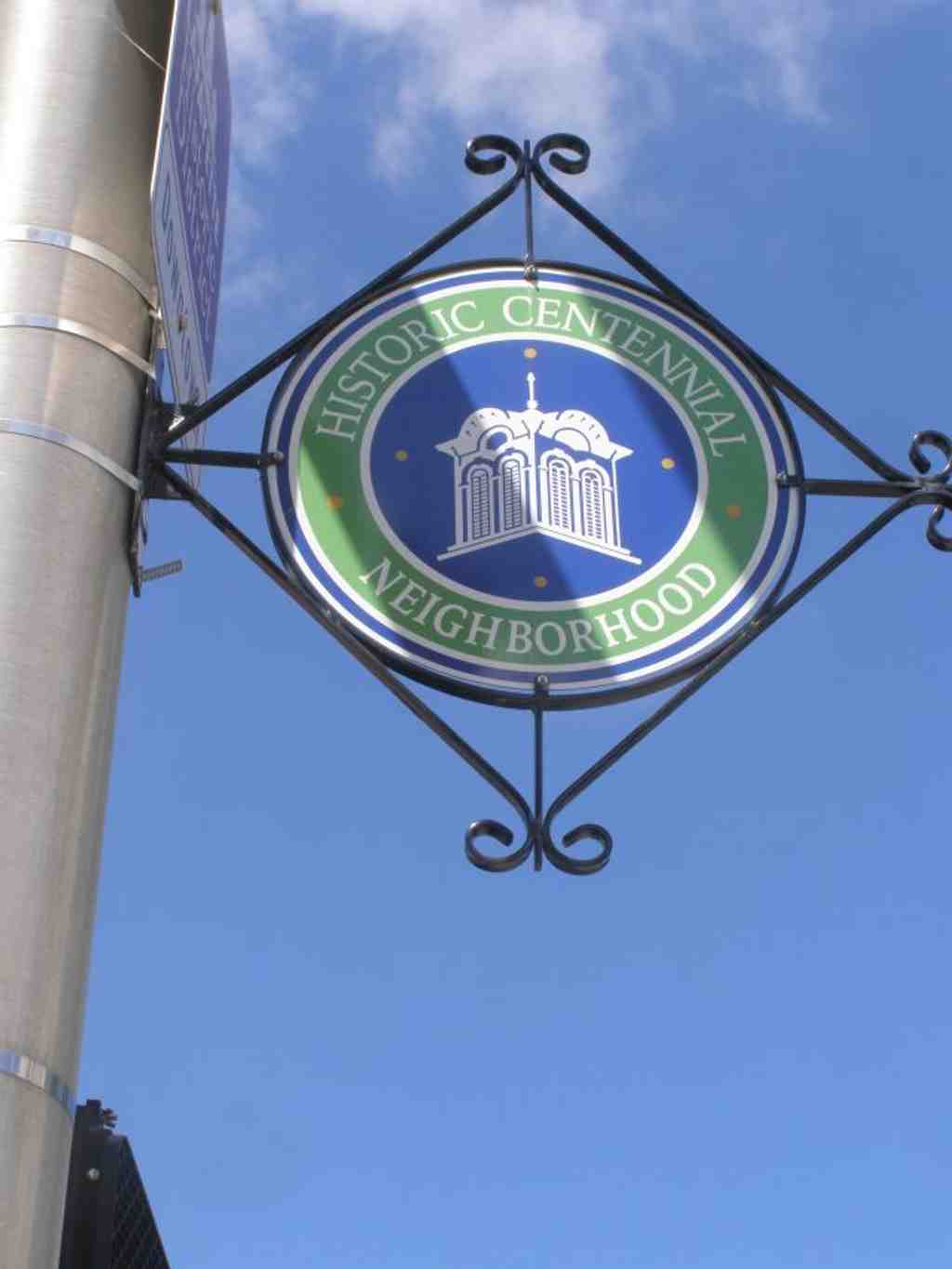
To spot the Centennial Neighborhood District, just look up and ahead for the round blue-green sign strung between decorative black ironwork on a lamppost, with the words “Historic Centennial Neighborhood” circling an old-fashioned building-this marks the heart of the district.
Alright, traveler, you’re standing at the gateway to one of Lafayette’s most fascinating time capsules-where nearly two centuries of stories echo through the streets, like whispers riding on a gentle summer breeze. Here, the Centennial Neighborhood District stretches before you, inviting you to imagine scenes from its earliest days. Picture it: It’s the 1830s, and this patch of land north and east of the Wabash River is just starting to bustle as Lafayette, a little town at the time, stretches its arms wider. Wooden carts rumble over dirt roads, and the songs of hammers and saws fill the air as newcomers build their hopes alongside their homes.
This area really started humming in 1843, when the mighty Wabash and Erie Canal cut right through, bringing with it traders, builders, and a wild energy of change. The new canal drew mills, warehouses, and wharves-suddenly, this was the place everyone wanted to be. Can you smell the dusty grain and hear the workers calling out as they unload their barges? It must’ve been a bit noisy-Lafayette’s version of rush hour!
Less than ten years later, the railroad thundered into town. By 1853, steam engines carved a shrieking, iron path close to where you’re standing. Canal boats gave way to trains, and the need for new homes boomed-row houses sprouted along North Fourth Street for the railway crews, their bricks still standing today like steadfast sentinels. Picture lining up for work back then, your boots caked in mud, waiting for the whistle that meant another train was coming.
But Centennial isn’t just about work and mud-it’s about spirit, too. The district takes its name from Centennial School, built in 1876 to celebrate America’s 100th birthday. Imagine children in bonnets and suspenders running to class right over there, on the north east corner of Brown and North 6th. Though the school’s been replaced by Centennial Park, the joyful shouts of students seem to bounce on the wind.
It’s a neighborhood of faith and learning-look around and you’ll see churches rising up like stone guardians: St. John’s Episcopal, the oldest still standing, and grand Gothic beauties like St. Boniface, St. James, and Trinity Methodist. Even Bethel AME, which first opened as the city’s black school, tells a story of hope and determination. The old Albert A. Wells Memorial Library, all columns and stone, is Lafayette’s own temple of knowledge from 1928.
Century after century, these streets have seen celebration and struggle, noisy arrivals and quiet moments. Summers filled with the aroma of cut grass, winters painted white. Today, the Centennial Neighborhood District is honored on the National Register of Historic Places-a place where Lafayette’s heartbeat echoes strongest in every brick and tree. So as you stand here, just think: you’re standing inside a living chronicle, a patchwork of stories as American as apple pie-and a little more historic, too.


