
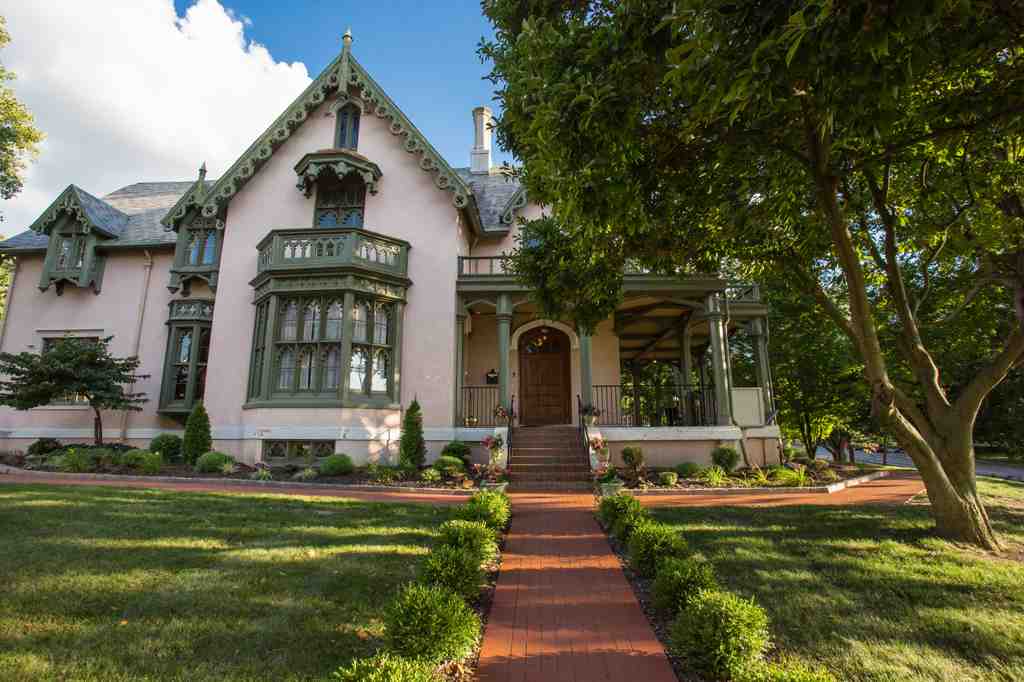
Look to your left at the corner of 10th and South Streets, and you’ll spot a grand, castle-like mansion with steep gables, pointed arches, and ornate stonework-the Moses Fowler House stands out as Lafayette’s Gothic gem.
Picture yourself walking up to this house in the 1850s, when Lafayette was still a frontier town, and suddenly-bam!-you’re face to face with this enormous, fairy tale mansion with tall windows and a fanciful roofline that would make even Dracula feel right at home. The Moses Fowler House isn’t just big, it’s “pull-out-the-top-hat-and-monocle” big, a rare Gothic Revival masterpiece built with local black walnut and white oak, carved so finely you might be tempted to knock on the door and see if royalty’s inside. Moses Fowler, who made quite the fortune in everything from cattle ranching to banking (who says you have to pick just one career?), decided in 1851-1852 to build a home that would knock Lafayette’s socks off.
And get this-Moses actually picked out the house’s design from a book by Andrew Jackson Downing while on a business trip in New York City. Talk about next-level mail-order! He wanted the best, so he brought in Italian craftsmen all the way from New York-through the then-bustling Wabash and Erie Canal-to work their magic on the plaster ceilings in the north and south parlors. Imagine the delicate swirls and ornate patterns floating above your head, crafted by hands now lost to time.
When Moses and his wife, Eliza, weren’t building the house, they were busy building Lafayette itself. Want an example? They donated generously to Purdue University-that’s right, the very same Purdue that changed the face of education in Indiana. Maybe Moses wanted a legacy bigger than his bank account, or maybe Eliza just needed somewhere to send all those future Fowler scholars-either way, their footprints are everywhere in this community.
Now, though the house was already spectacular, it got even fancier in the early 20th century. In 1916-17, Cecil G. Fowler, Moses and Eliza’s grandson, decided he wouldn’t just live in the mansion-oh, no-he’d make it party central for the town’s glitterati. He hired workmen to add a huge Tudor-style dining room, a big formal living room, indoor kitchens, and a grand Italian-style tiered patio with sparkling fountains, a tea house, and the kind of gardens that could hide the world’s finest Easter egg hunt. You can just imagine the laughter of party guests drifting out over the lawn. Cecil, it turns out, wasn’t only a banker like his grandfather, he was also a real estate developer who partnered with the developer of the Indianapolis Motor Speedway to build Miami Beach’s first luxury hotel-it was like Gatsby had moved to Lafayette.
By 1940, the children had grown, the parties had slowed, and the Fowlers sold the mansion to the Tippecanoe County Historical Association, who used the grand old house as a museum, office, and storage-certainly not as rock ’n’ roll as those roaring parties, but it kept the house alive through the decades. In 2015, thanks to the generosity of Matt and Dr. Ann Jonkman, the property was rescued and restored, opening its doors to the public as a venue for celebrations, tours, and community events.
So as you stand here, imagine the carriages arriving, the doors thrown open, lamps flickering at twilight, and the incredible legacy of the Fowler family living on-even if the only dance you do today is to the sound of your own footsteps.


