
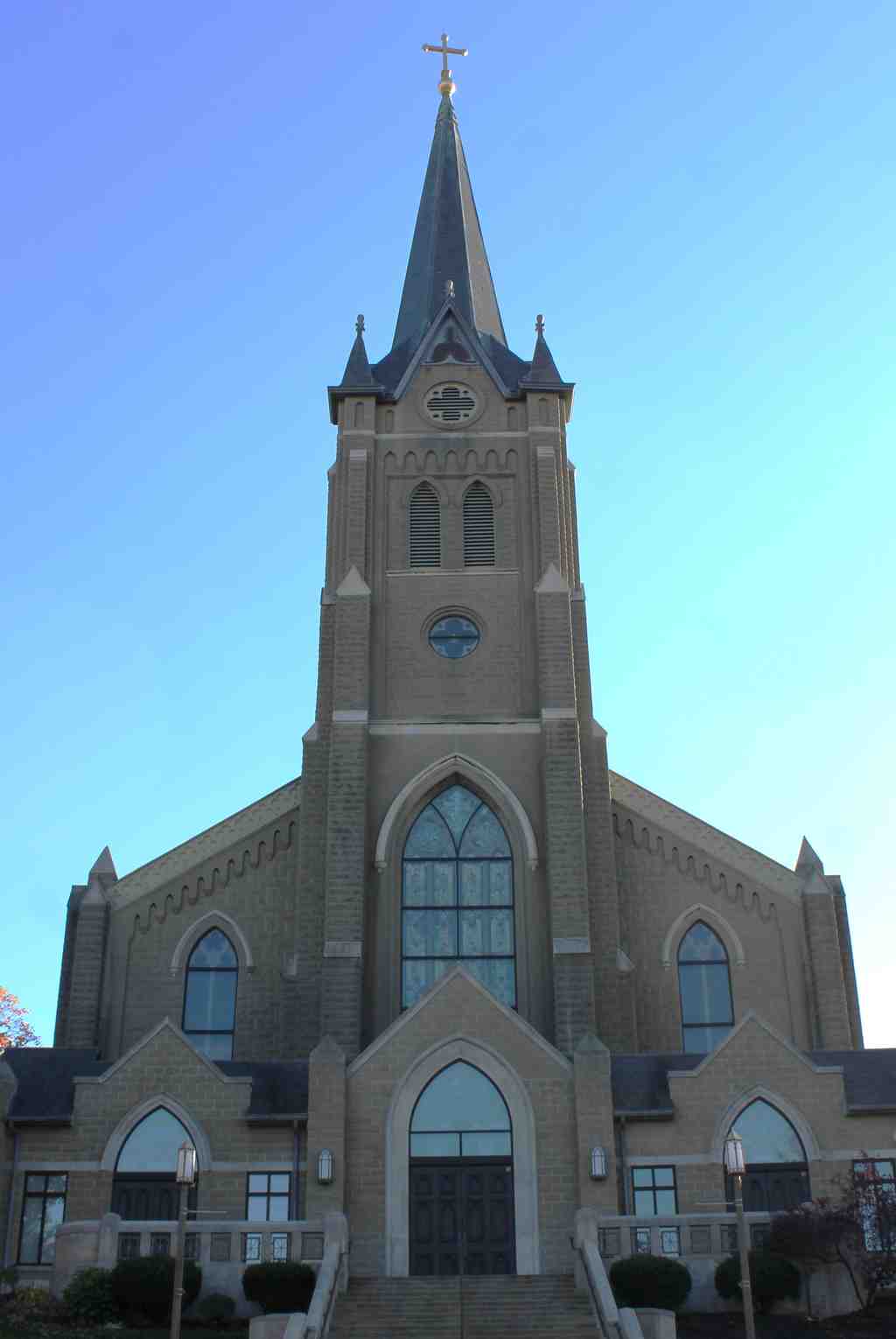
You’re looking for a tall, tan-bricked church with a dramatic pointed spire and arched stained glass windows-just look for the grand staircase leading up to those big wooden doors right in front of you!
Now, take a deep breath and imagine the whispers of centuries as you stand before the Diocese of Lafayette in Indiana. It might look calm now, but its roots are tangled with adventure, faith, and more than a pinch of mystery-kind of like a history book with a secret compartment! Picture this land as a wild frontier: in the 17th and 18th centuries, French fur traders and missionaries trailed through thick forests, their boots squishing in the mud, guided by the Bishop of Quebec. Indiana was a place where you were just as likely to bump into a squirrel as a priest with a mission!
Then, after the French and Indian War-boom!-it was all handed over to the British, who didn’t exactly roll out the welcome mat for new settlers. The American Revolution roared to life, and before long, Pope Pius VI drew a line on the map: the brand-new Diocese of Baltimore, spanning the entire young United States. That’s right-Indiana included! The Catholic presence was tiny and scattered, but incredibly determined.
Skip ahead a bit-Indiana gets shuffled into the Diocese of Bardstown, and then under the Diocese of Vincennes (say that three times fast). This was still the Wild West by church standards-French missionaries braved suspicious locals, bad roads, and the occasional bear. And into all this, arrived the legendary Mother Theodore Guerin and her small band of Sisters of Providence. They founded St. Mary of the Woods College in the middle of the forest-talk about a school trip! Their students fanned out, awakening the Catholic faith in every small town and prairie.
With changing times came new lines on the map: next stop, the Diocese of Fort Wayne, then finally, in 1944, the Lafayette area became its own diocese, the one you see before you now. At its beginning, the Diocese of Lafayette in Indiana had just 54 parishes-and 31,700 Catholics, which might be smaller than some football crowds! Reverend John Bennett took the helm as bishop, followed by John Carberry-the man who could organize a diocesan council almost as quickly as he could drink a cup of coffee. During these years, the number of Catholics grew fast; parishes expanded out of old towns and into the mushrooming suburbs.
Time moved forward, and so did the bishops: Gallagher built new churches, Fulcher’s time was sadly cut short by a car accident, and then William Higi walked in-serving over 26 years, building schools like St. Theodore Guerin High, and even starting outreach programs all the way to Haiti. Timothy Doherty, the current bishop, faced a modern challenge: fewer priests, more need. Ever resourceful, he recruited priests from far-off Nigeria and Mexico.
The diocese’s story, though, isn’t only about growth and faith-there’s also a shadowy side. Over the decades, allegations of abuse came to light. The bishops faced painful decisions, sometimes acting swiftly, sometimes too slowly. Journalists uncovered years of complaints; policies evolved, victims finally found their voices, and the church continues to seek accountability and healing.
Yet through it all, some things have never wavered-in particular, the diocese’s devotion to its patron, the Immaculate Conception. December 8 is a local day of joy, celebration, and hope. More recently, the canonized spirit of Theodore Guerin has guided the community as a second patron saint-a reminder that even in hard times, a determined heart (and maybe a good pair of boots) can change the world.
So, as you gaze up at this striking spire, imagine the thousands of footsteps that have echoed on these stone steps-students, priests, hopefuls, doubters, the troubled and the joyful, all woven into the story of faith that still stretches onward into tomorrow. And if you listen for a moment, you just might catch the faintest trace of the past-rustling robes, children’s laughter, and the resolve of those who built more than just walls: they built a home for hope, resilience, and faith right in the heart of Indiana.
Interested in a deeper dive into the bishops, coat of arms or the ecclesiastical province? Join me in the chat section for an insightful conversation.


