
New York City Audio Tour: Hell's Kitchen Arts
New York City is not just steel and glass. Beneath the neon pulse of Hell’s Kitchen lies a graveyard of scandals and forgotten rebellions waiting to be unearthed. Uncover these secrets with a self guided audio tour designed to peel back the layers of a neighborhood where legends hide in plain sight. Experience stories that remain invisible to the millions walking past every day. What dark political betrayal cost a city leader their legacy inside these very walls? Why does a quiet sanctuary hold the echoes of a mysterious vanishing act? Can you identify the specific stage door where a legendary performer left their final, scandalous mark? Navigate through the shadows of the Al Hirschfeld Theatre and the storied halls of Birdland. Feel the grit of history shifting under your feet as the city transforms from a familiar grid into a stage for human drama. Start your journey and confront the ghosts of Hell’s Kitchen.
Tour preview
About this tour
- scheduleDuration 80–100 minsGo at your own pace
- straighten3.0 km walking routeFollow the guided path
- location_onLocationNew York, United States
- wifi_offWorks offlineDownload once, use anywhere
- all_inclusiveLifetime accessReplay anytime, forever
- location_onStarts at Manganaro's
Stops on this tour
lock_open 3 free previews · 11 unlock with purchase
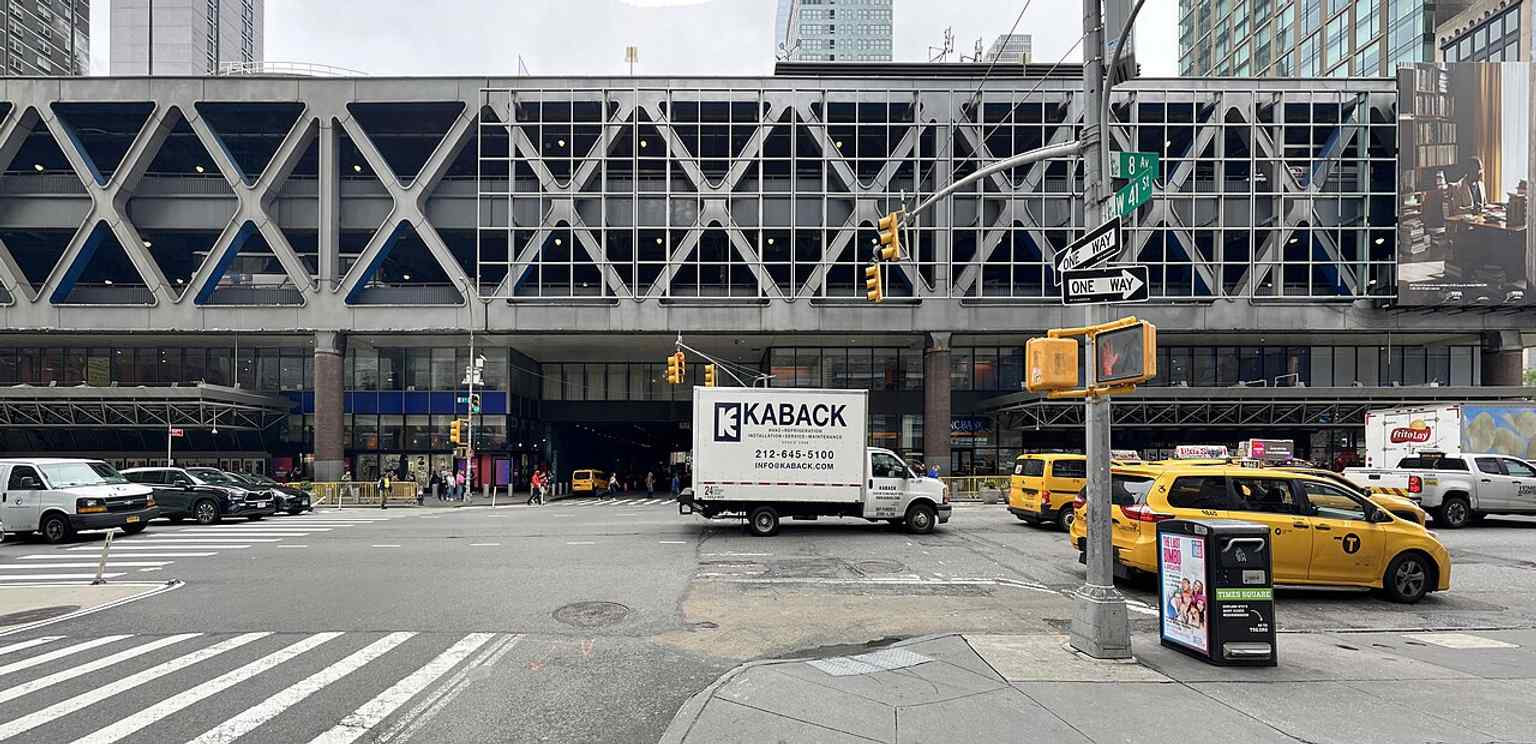
Look for a massive, block-long structure wrapped in dark steel, defined by a distinct pattern of large X-shaped trusses crisscrossing its upper levels above a recessed ground…Read moreShow less
Open dedicated page →Look for a massive, block-long structure wrapped in dark steel, defined by a distinct pattern of large X-shaped trusses crisscrossing its upper levels above a recessed ground floor arcade. You really cannot miss it. Welcome to the Port Authority Bus Terminal, or the P-A-B-T for short.
Take a second to just watch the doors. You are standing outside the busiest bus terminal on the entire planet. Over sixty-five million people flow through this space every single year. It is a giant, breathing machine of concrete and motion.
Before nineteen fifty, taking a bus to New York was chaos. There were private bus depots scattered all over midtown Manhattan. Some were even tucked inside the ground floors of hotels. The city was choking on traffic, so they decided to consolidate. They cleared half a city block, relocating four hundred and fifty families, and built this behemoth. To pay for it, they issued sixteen point three million dollars in bonds back in nineteen forty-seven, which would be over two hundred and twenty million dollars today. When it opened, it was an absolute marvel of the International Style, an architectural movement focused on stark, unadorned geometric forms, and it came complete with a rooftop parking garage and a three-hundred-seat newsreel theater inside.
Take a look at your screen to see the interior layout of the original main concourse.
But cities grow, and so do their problems. By the nineteen sixties and seventies, the terminal started to struggle. The city was changing, and the Port Authority became known as a rough place, a haven for hustlers and the homeless. The building was handling over seven thousand buses a day, and it was practically bursting at the seams.
So, in nineteen seventy-nine, they built a massive expansion called the North Wing. That is when they added those giant steel X-shaped trusses you can see on the facade. People have strong opinions about that look. In two thousand and eight, one travel website even ranked this as one of the world's top ten ugliest buildings. But I think there is a rugged, industrial charm to it. It is architecture that wears its heavy lifting right on its sleeve.
If you ever wander inside, past the rush of commuters and franchise coffee shops, keep an eye out for some unexpected beauty. There is a wild, rolling ball sculpture called the Forty-Second Street Ballroom inside the North Wing. Check your app for a glimpse of this mesmerizing piece of kinetic art.
Right now, this old concrete giant is waiting for its next chapter. After years of debates and delayed plans, a ten billion dollar reconstruction project is officially underway to completely replace the terminal by twenty thirty-two. The grand plan includes huge new glass atriums and acres of public parks, effectively ending the era of the hulking steel box you see today.
Take a moment to soak this in. When you are ready, we can head to the next stop.
Work began in May 2025 for a temporary terminal on Dyer Avenue, a first step in the PANYNJ's ambitious $10 billion reconstruction of the PABT.Photo: Gunnar Klack, Wikimedia Commons, CC BY-SA 4.0. Cropped & resized. Cast your eyes left to find a towering thirty-three story skyscraper defined by its striking blue-green terra-cotta facade, distinctive stepped crown, and continuous horizontal…Read moreShow less
Open dedicated page →Cast your eyes left to find a towering thirty-three story skyscraper defined by its striking blue-green terra-cotta facade, distinctive stepped crown, and continuous horizontal bands of green metal-framed windows.
This is three thirty West Forty-Second Street, though most folks know it as the McGraw-Hill Building. Back in nineteen thirty-one, when architect Raymond Hood brought this place to life, he did not just want to build another boring stone tower. He envisioned a future where the New York skyline would be packed with brightly colored buildings. He chose these blue-green ceramic tiles specifically to blend into the sky.
Now, you might think a giant teal skyscraper sounds universally cool, but when it opened, it caused a massive architectural scandal. People were used to vertical lines that drew the eye up. Hood gave this building strong horizontal lines instead. One critic complained that a tall building is supposed to go up, not sideways. But Hood was ahead of his time. This became one of the very first examples of the International Style in America.
Take a look at your screen to see a detail of how the building steps back as it gets higher. Those setbacks were required by a nineteen sixteen zoning law, which was a set of city rules meant to keep tall buildings from completely blocking light from the streets below. But Hood only put the setbacks on the front and back. From the sides, it looks like one massive, flat slab. One writer even compared its shape to a giant ocean liner cruising right through Hell's Kitchen.
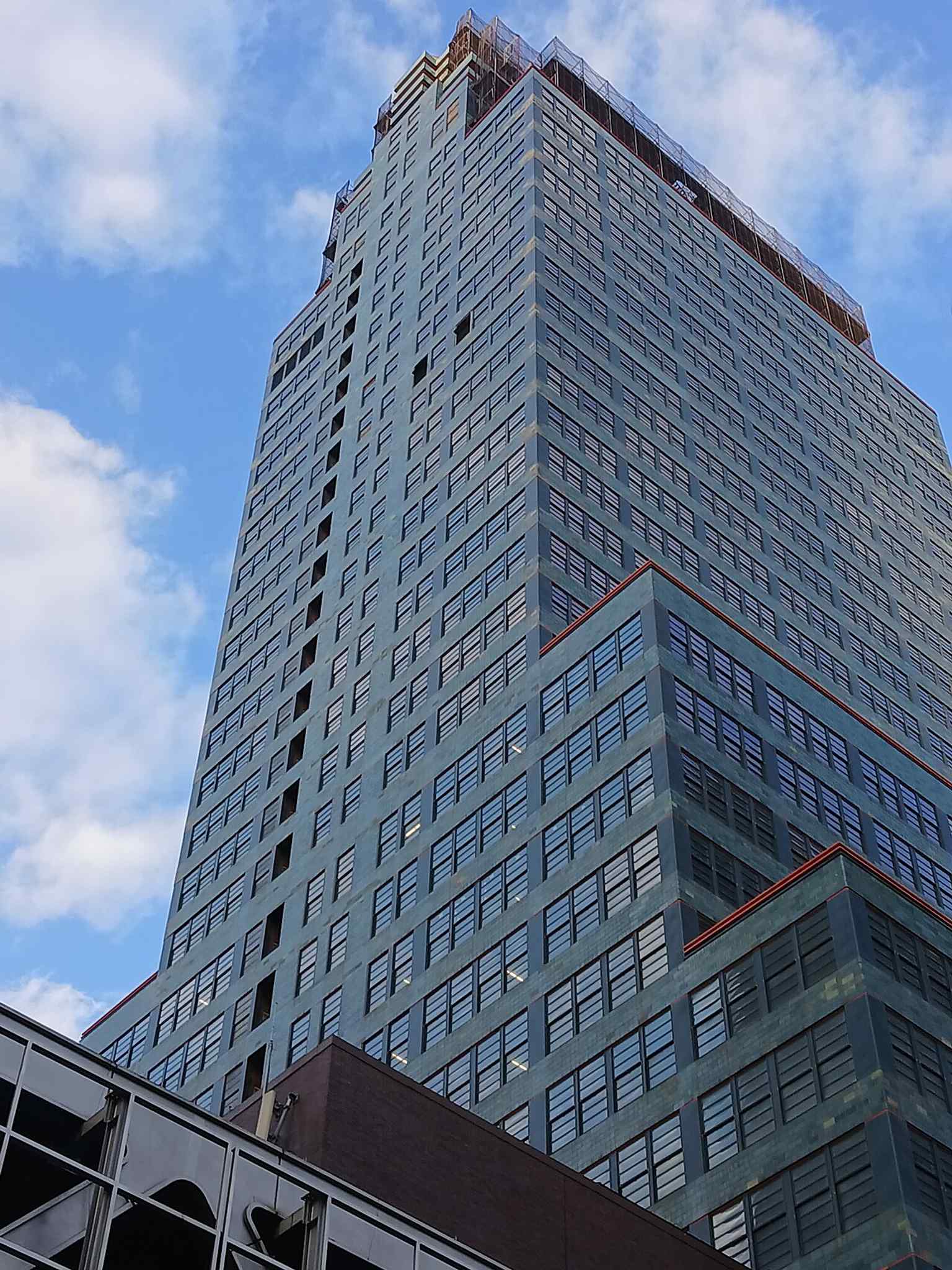
This detail shows the unique setbacks at various floors, which are only visible from the west and east, making the northern and southern elevations appear as a slab, leading architectural writer Eric P. Nash to liken its massing to an ocean liner.Photo: Epicgenius, Wikimedia Commons, CC BY-SA 4.0. Cropped & resized. Originally, this was a powerhouse of publishing. McGraw-Hill printed their magazines and books right here on the lower floors. Those industrial spaces were reinforced for heavy machinery, while the higher floors were light-filled offices for editors and executives. But cities change, and neighborhoods shift. Take a peek at the historic before and after image on your app to see how this block has evolved. Once partially obscured by the old Ninth Avenue elevated railway, the striking blue-green terra-cotta tower of the McGraw-Hill Building now stands unobstructed amidst a densely developed modern Midtown streetscape.
By nineteen seventy-two, McGraw-Hill outgrew the space and moved away. They had previously sold the building in nineteen seventy for fifteen million dollars, which would be roughly one hundred twenty million dollars today. As the surrounding area went through a rough patch, this beautiful green giant sat mostly empty for a few years, with only a tiny maintenance crew wandering its massive halls. Eventually, Group Health Insurance moved in and brought it back to life, and now, the building is being transformed once again, this time into residential apartments.
It is wild to think about the journey of this place, from a noisy, controversial printing plant to a quiet, historic landmark. Feel free to admire those classic lines. Once you are set, let's amble toward our next destination.
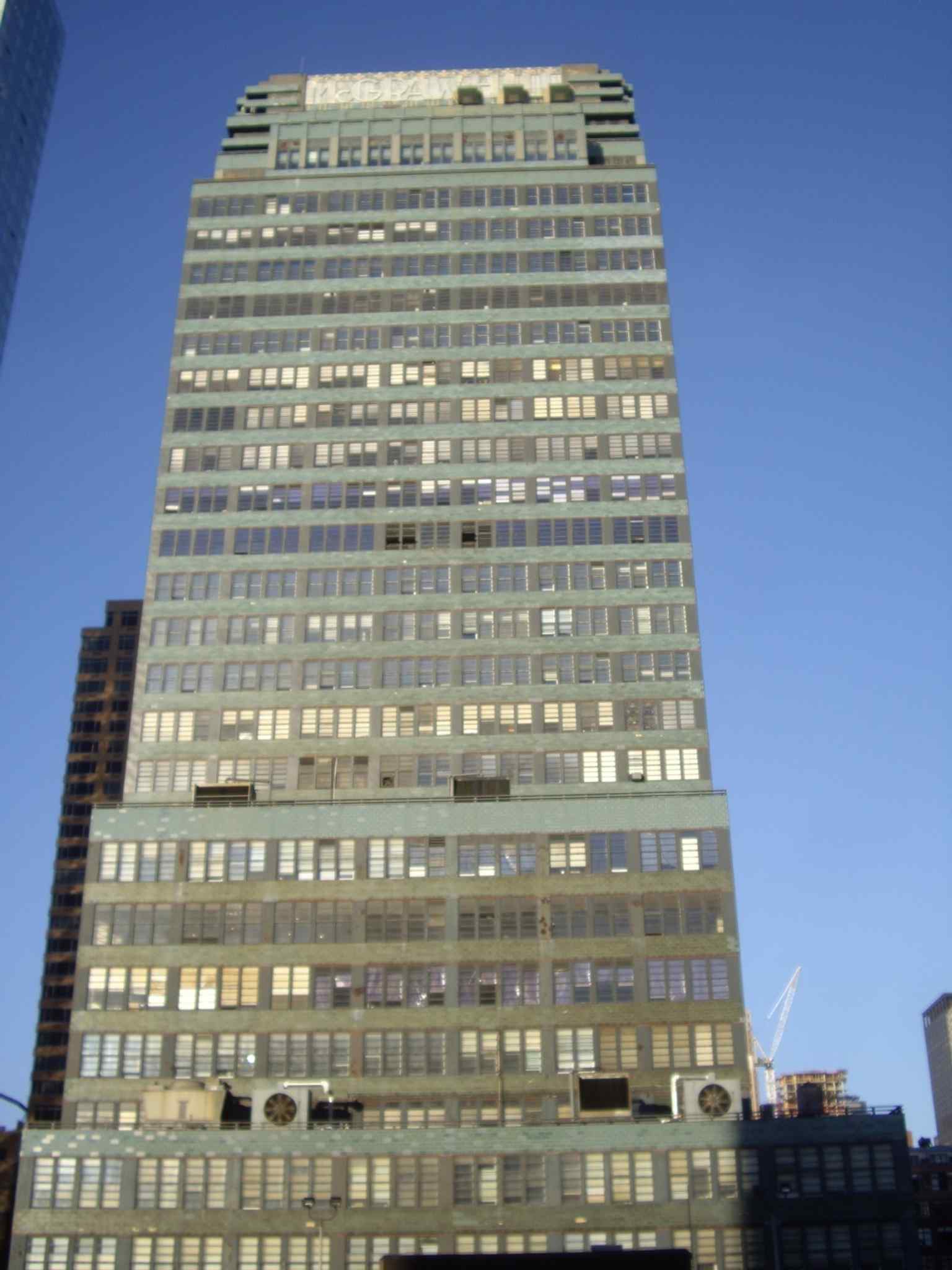
This view captures the distinctive blue-green terracotta facade and horizontal emphasis that was controversial at the time of its completion in 1931, but later recognized as an early example of the International Style.Photo: Dmadeo, Wikimedia Commons, CC BY-SA 4.0. Cropped & resized. 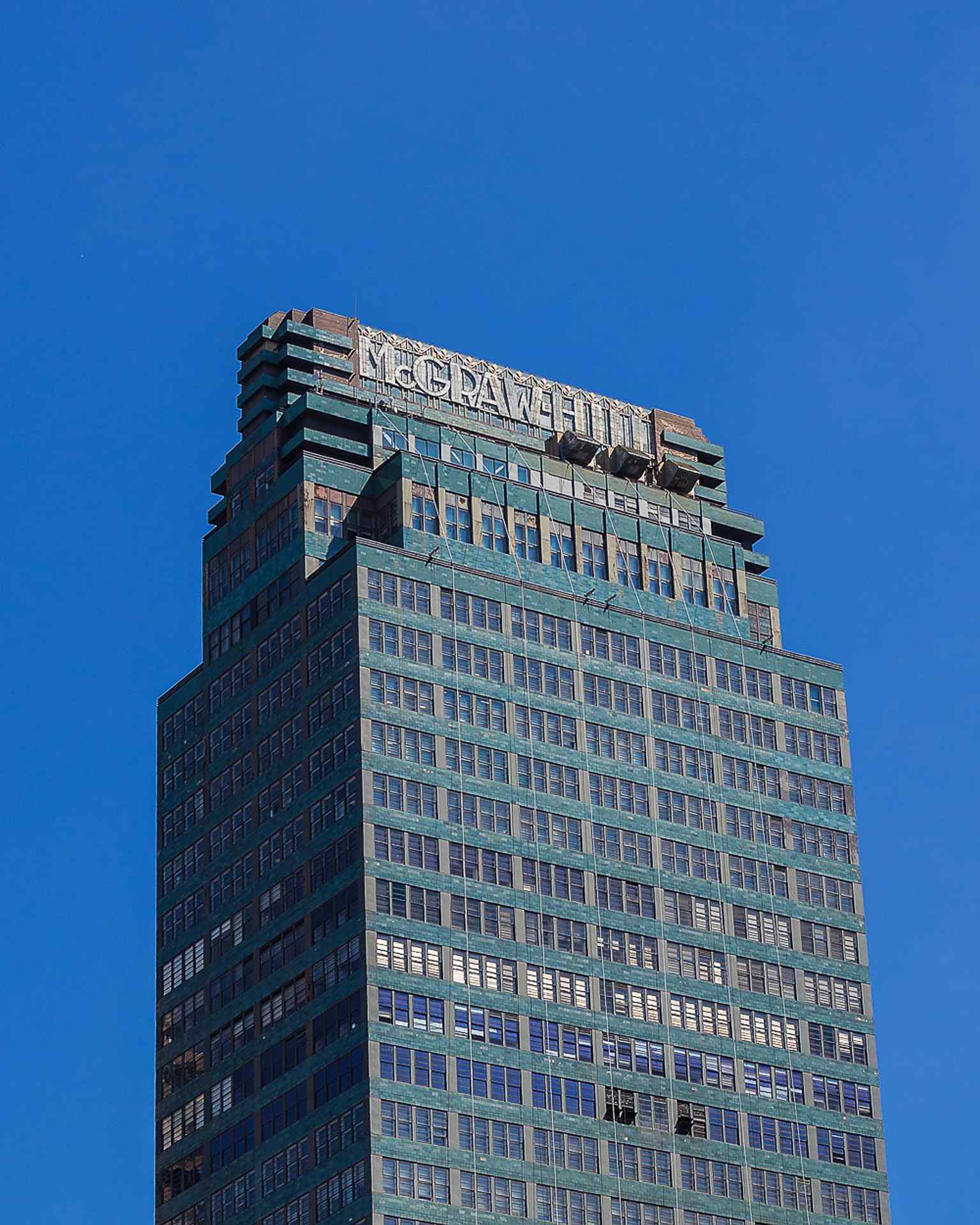
A close-up showcases the unique blue-green terracotta ceramic tile panels and green metal-framed windows, a primary means of ornament that architect Raymond Hood predicted would lead to a future skyline of "gaily colored buildings."Photo: Dan Alcalde, Wikimedia Commons, CC BY-SA 3.0. Cropped & resized. 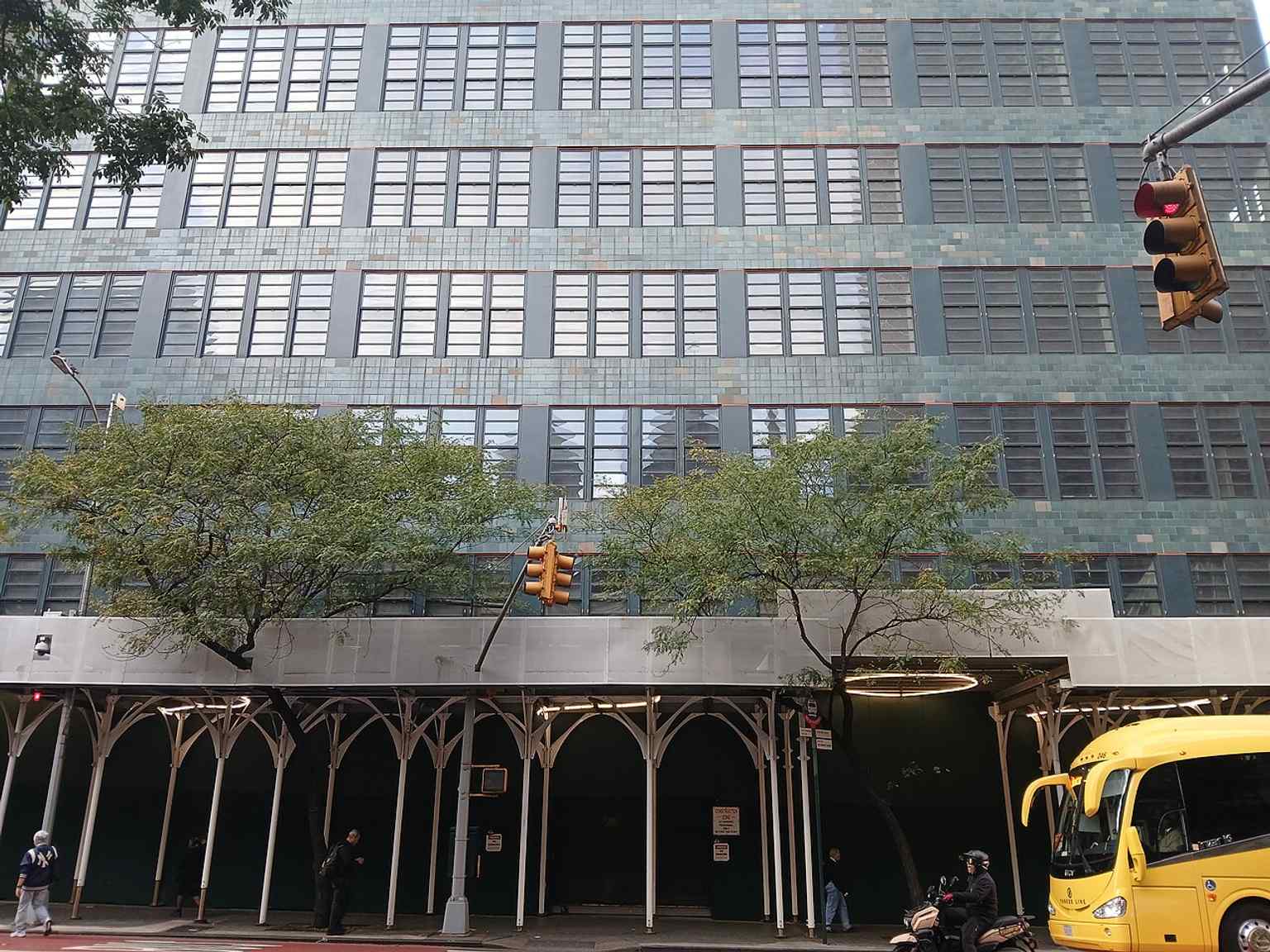
This contemporary view highlights the building's massing, which features numerous setbacks on 41st and 42nd streets, designed to comply with the 1916 Zoning Resolution.Photo: Epicgenius, Wikimedia Commons, CC BY-SA 4.0. Cropped & resized. 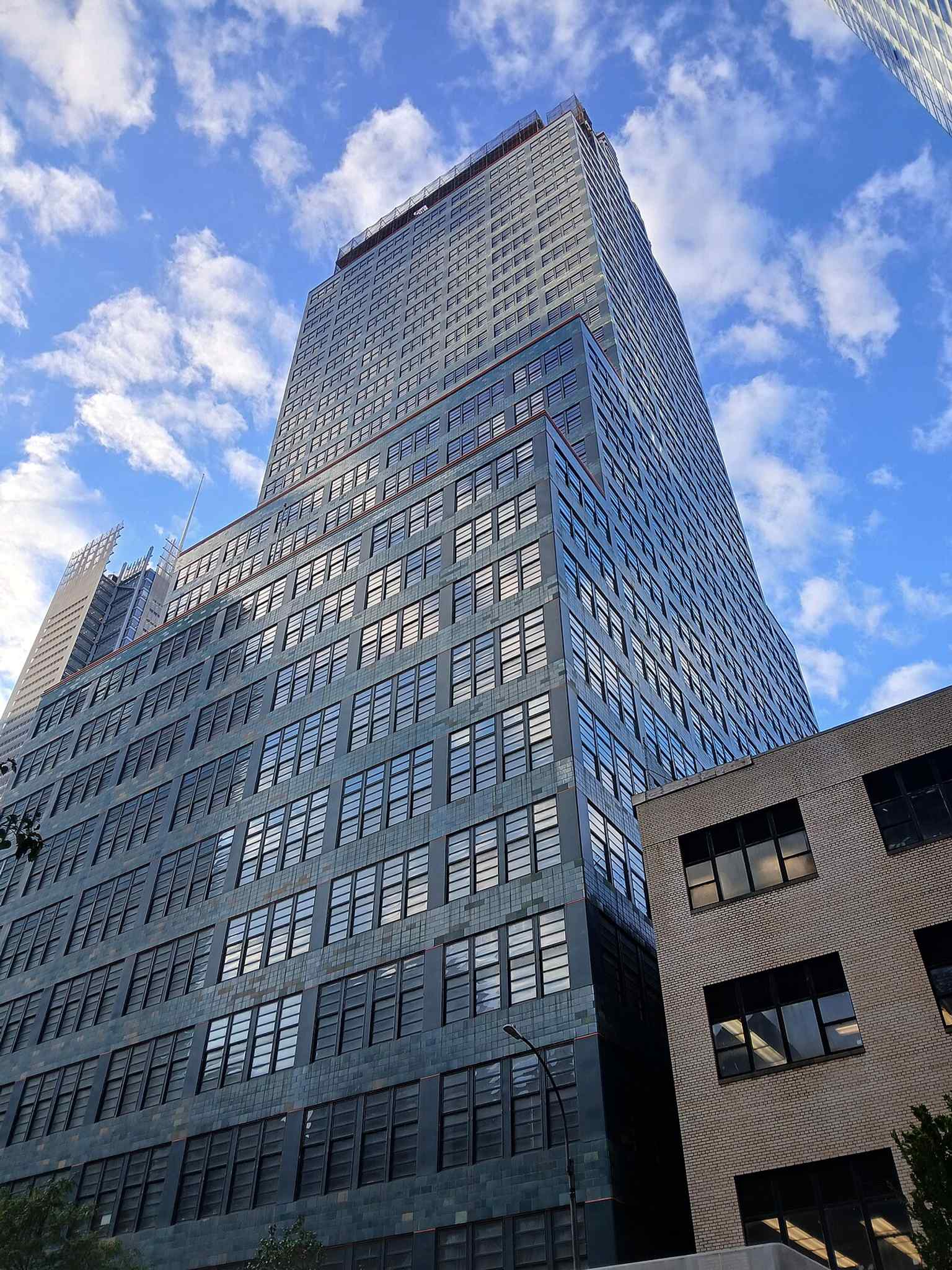
The 485-foot, 33-story skyscraper stands tall in Hell's Kitchen, noted as one of the tallest buildings in the neighborhood when completed, and intended to accommodate both commercial and industrial uses.Photo: Epicgenius, Wikimedia Commons, CC BY-SA 4.0. Cropped & resized. 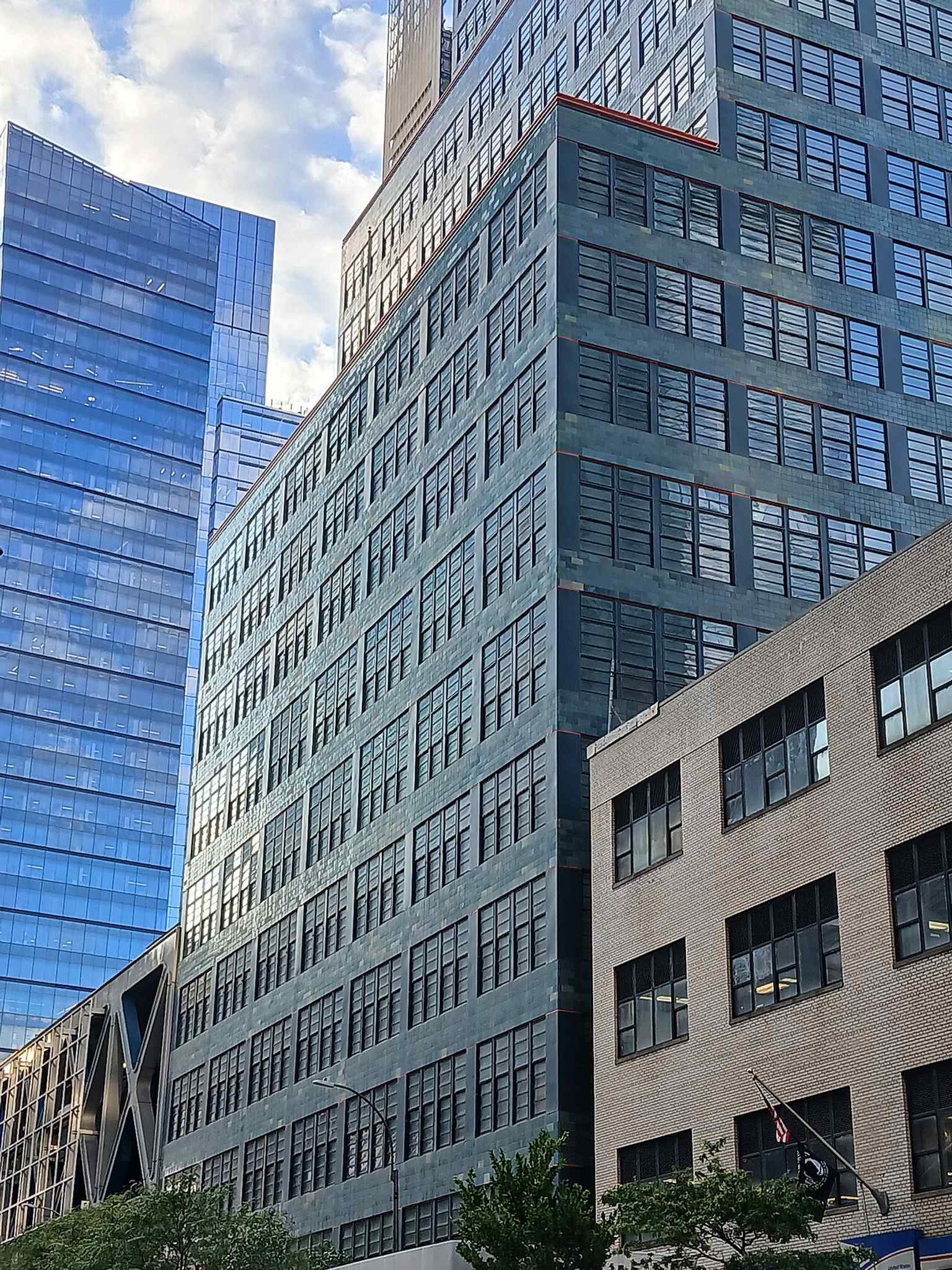
A view of the building's crown and upper facade, which Henry-Russell Hitchcock and Philip Johnson, who included it in a 1932 MoMA exhibition on the International Style, described as "an illogical and unhappy break in the general system of regularity."Photo: Epicgenius, Wikimedia Commons, CC BY-SA 4.0. Cropped & resized.
Show 11 more stopsShow fewer stopsexpand_moreexpand_less
Look right and you will spot a striking red brick facade flanked by twin square towers, with a prominent gold cross gleaming near the peak of its central gable. This is Holy Cross…Read moreShow less
Open dedicated page →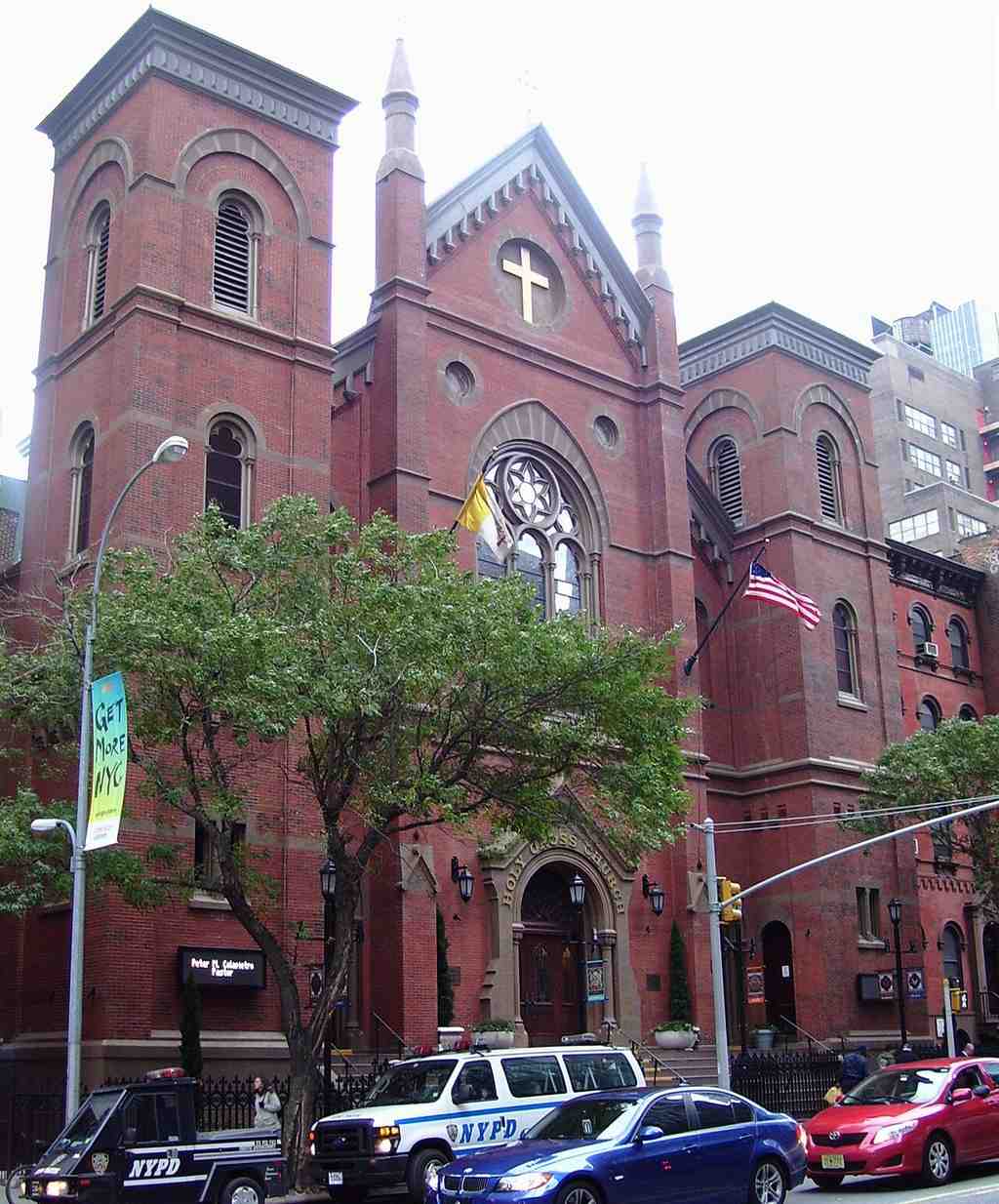
Holy Cross ChurchPhoto: Beyond My Ken, Wikimedia Commons, CC BY-SA 4.0. Cropped & resized. Look right and you will spot a striking red brick facade flanked by twin square towers, with a prominent gold cross gleaming near the peak of its central gable. This is Holy Cross Church, and it is actually the oldest building on Forty-Second Street.
It has got a real survivor's story. Back in eighteen sixty-seven, a lightning bolt struck the previous church on this exact spot, sparking a massive fire that completely destroyed the building and its original organ. But the community did not give up. By eighteen seventy, this current structure was standing tall. It was designed in an Italianate Gothic style, which just means it mixes the pointed arches of traditional Gothic architecture with the sturdy brickwork and symmetry you would see in old Italian buildings.
Inside, the layout is literally shaped like a giant cross, stretching one hundred feet from front to back, topped by a soaring dome. And if you wander in, you are in for a visual treat. The legendary designer Louis Comfort Tiffany created the stunning mosaics below the dome, as well as the stained glass in the upper clerestory windows, which are those high windows that let light flood down into the central hall.
But what really makes this place the beating heart of Hell's Kitchen is the people. Around here, this is practically known as Father Duffy's Church. Reverend Francis P. Duffy was a decorated World War One chaplain for the Fighting Irish, the sixty-ninth New York Regiment. After the war, he became the pastor here. He knew his neighborhood was full of tough, hardworking people, and he met them exactly where they were. In nineteen thirty-two, he even started a special Printers' Mass at two thirty in the morning. That incredibly late service was specifically for the night shift workers at the New York Times and the Daily News who were just finishing up their shifts. Talk about knowing your audience.
To this day, the church runs a food pantry and soup kitchen, keeping that grounded community spirit alive. In two thousand and fifteen, the parish merged with Saint John the Baptist and is now staffed by Capuchin friars, a Catholic order recognized by their brown robes and their dedicated focus on serving the poor.
If you want to peek inside, the church is open daily starting at seven A-M on weekdays, eleven A-M on Saturdays, and eight A-M on Sundays, usually closing up by mid-afternoon. Linger as long as you like. Once you have caught your breath, we will move on.
Look up and to your right to spot Manhattan Plaza, a massive pair of forty-six-story brown brick towers defined by repeating vertical columns of recessed balconies. In nineteen…Read moreShow less
Open dedicated page →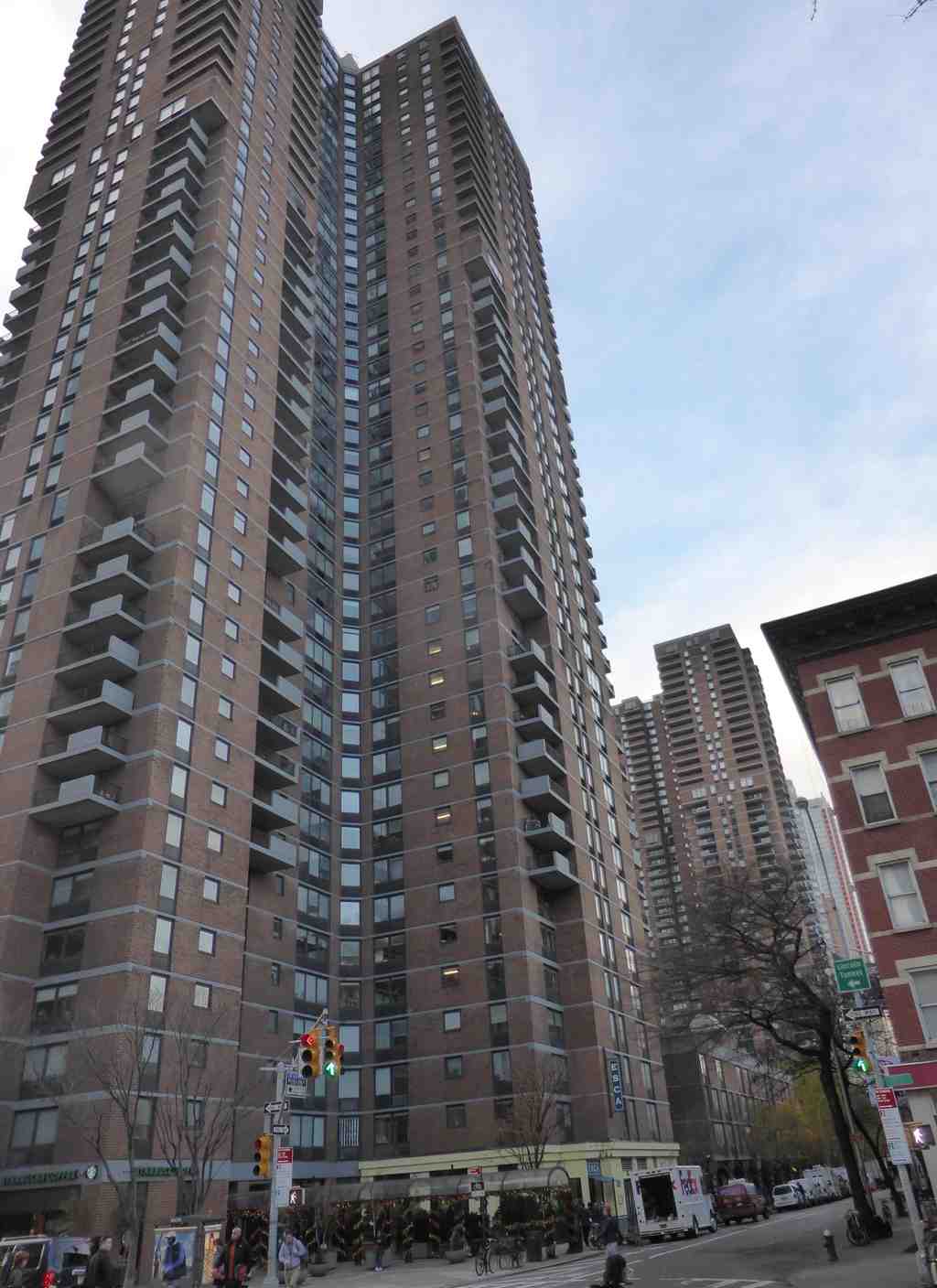
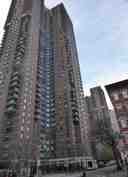
Manhattan PlazaPhoto: Michael Bednarek, Wikimedia Commons, CC BY-SA 4.0. Cropped & resized. Look up and to your right to spot Manhattan Plaza, a massive pair of forty-six-story brown brick towers defined by repeating vertical columns of recessed balconies.
In nineteen seventy-four, this was supposed to be a luxury oasis for the middle class. The city provided a ninety-five million dollar mortgage for the project, which is over half a billion dollars today. This was under a state initiative called the Mitchell-Lama program, which was designed to create affordable middle-income housing.
But New York soon went completely broke, and the housing market tanked. Plus, back then, this rough-and-tumble stretch of Hell's Kitchen was the epicenter of the city's adult entertainment industry. Nobody wanted to pay a premium to live next to all of that.
The developers were desperate. To avoid financial ruin, they pivoted to Section Eight housing, a federal program where low-income tenants pay no more than thirty percent of their earnings for rent. But the surrounding working-class locals panicked, fearing an influx of thousands of troubled neighbors.
That is when a developer named Daniel Rose had a totally wild idea. He remembered a quote from a theater producer who said his family was often broke, but never poor. Rose proposed limiting the subsidized apartments specifically to people in the performing arts.
You can glance at your screen to see how the towers anchor the neighborhood in a shot from twenty sixteen.
The plan worked perfectly. By seeding the building with actors, stagehands, and musicians, they cleared out the adult businesses and stabilized the block when the complex finally opened in nineteen seventy-seven. Today, seventy percent of the sixteen hundred and eighty-nine units are reserved for theater folks, while fifteen percent go to longtime neighborhood residents and fifteen percent to the elderly.
The waiting list blew past three thousand names in the very first year. We are talking about a place where legends like Tennessee Williams, Al Pacino, and Mickey Rourke lived. Bruce Willis even poured drinks as a bartender down at the cafe at the base of the Ninth Avenue building.
But it wasn't just a glamorous dorm. When the AIDS crisis devastated the performing arts community, this complex suffered deeply. The building's director, Reverend Rodney Kirk, quickly set up an incredible social services program right here to care for sick residents, ensuring nobody had to face it alone.
The management office here is open Monday through Friday from nine A-M to five P-M, and closed on the weekends. This massive brick complex really is the beating heart of the New York theater world. Take all the time you need here, and whenever you are ready, we will keep wandering to our next spot.
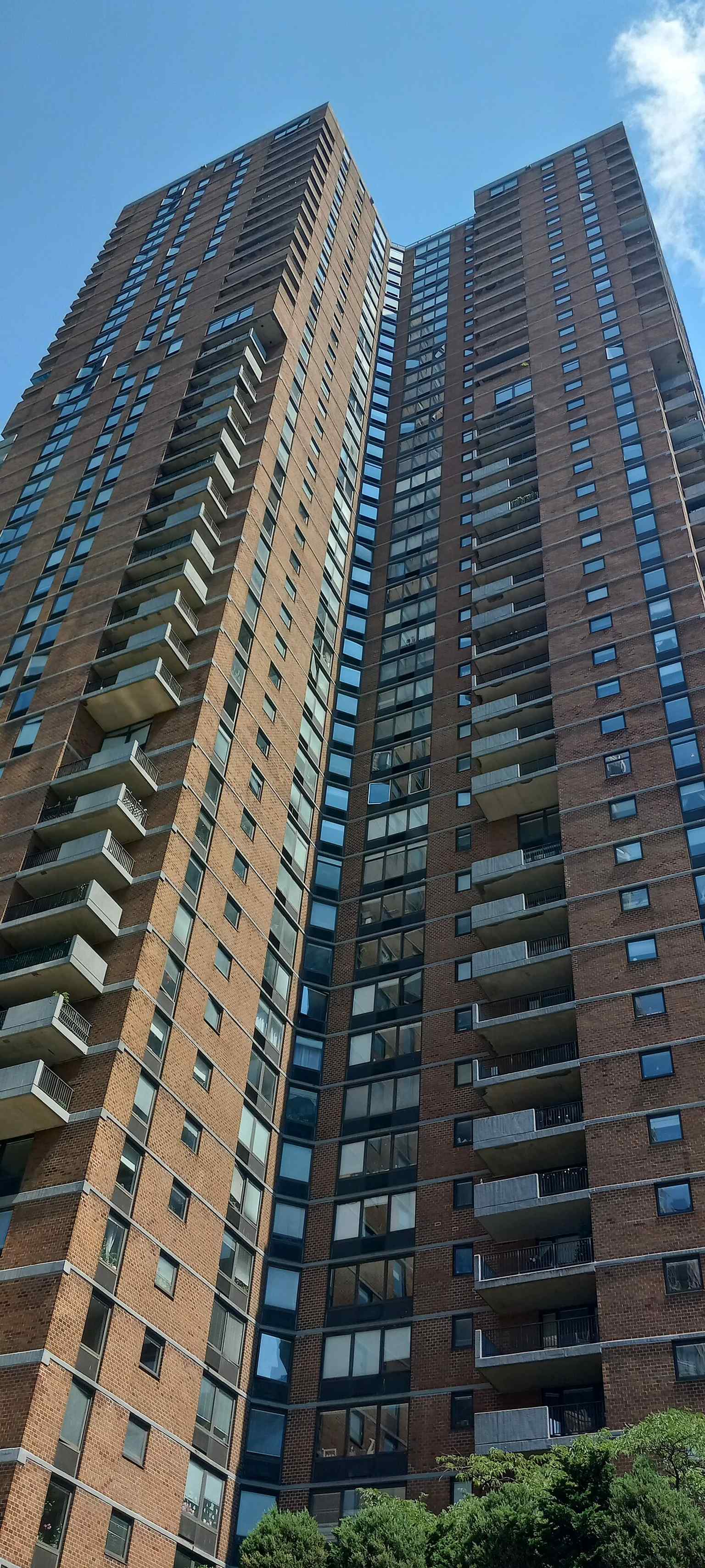
This image shows the exterior of Manhattan Plaza, a 46-floor residential complex designed by David Todd that became home to performing artists and local residents.Photo: Kidfly182, Wikimedia Commons, CC BY 4.0. Cropped & resized. Take a look at the theater on your left, characterized by its wide brick facade, a rectangular glass entranceway, and a prominent overhanging metal marquee stretching out over the…Read moreShow less
Open dedicated page →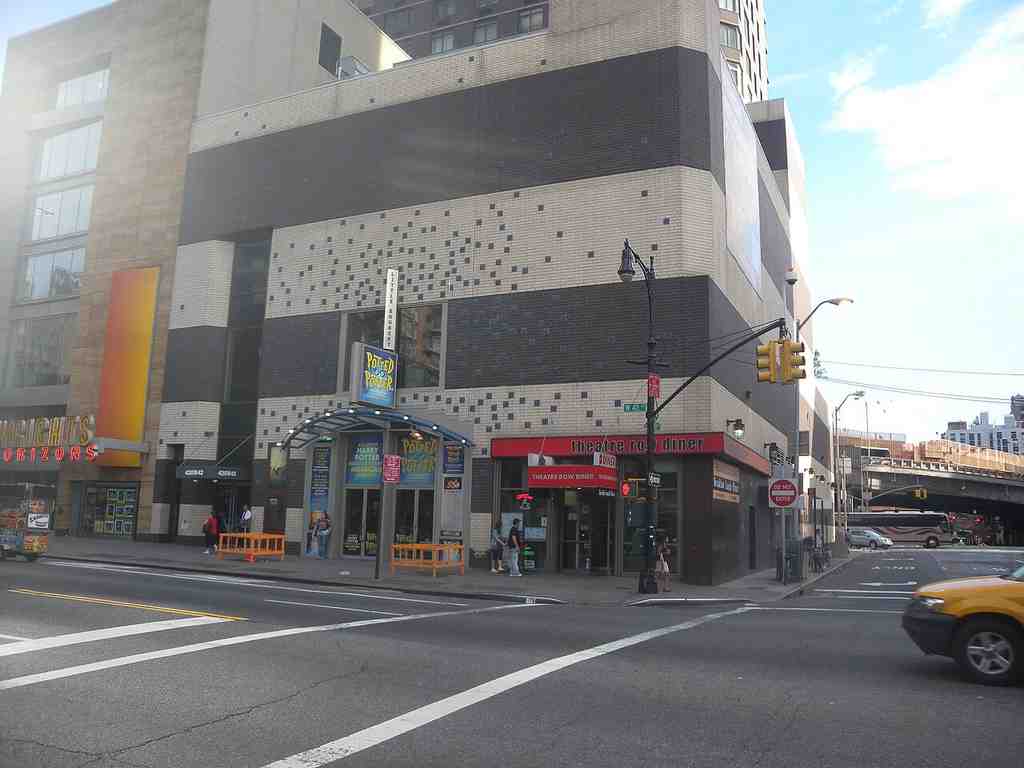
Stage 42Photo: Jim.henderson, Wikimedia Commons, CC0. Cropped & resized. Take a look at the theater on your left, characterized by its wide brick facade, a rectangular glass entranceway, and a prominent overhanging metal marquee stretching out over the sidewalk. This is Stage forty-two. If you check your screen, you can see what it looked like back in twenty twelve when it was still called the Little Shubert Theatre.
Built in two thousand and two as part of the residential tower soaring above it, this spot is quietly groundbreaking. It was actually the first Off-Broadway theater in New York built entirely from the ground up. It was also the Shubert Organization's first brand new theater in the city since nineteen twenty-eight.
But here is where the theater world gets fascinating. Stage forty-two has exactly four hundred and ninety-nine seats. Why not round up to a nice, even five hundred? Because in New York theater, the second you hit five hundred seats, you officially become a Broadway house. That means new union contracts and a massive spike in production costs. Even at four hundred and ninety-nine, it is already an expensive venue because the stage and orchestra pit are just as massive as the Broadway big leagues. Back in twenty eleven, producers actually played with the idea of bolting down just one extra chair to make the theater eligible for the Tony Awards. The math did not work out, so that magical five-hundredth seat never happened.
Instead, it has stayed true to its Off-Broadway roots, hosting everything from Fame on forty-second Street to Kinky Boots. It is a big space with an intimate soul. Take your time admiring the marquee, and whenever you are ready, just keep strolling to our next stop.
Look for the wide glass and steel facade wrapping the base of this towering skyscraper, anchored by a prominent digital marquee over the entrance. This is the Pershing Square…Read moreShow less
Open dedicated page →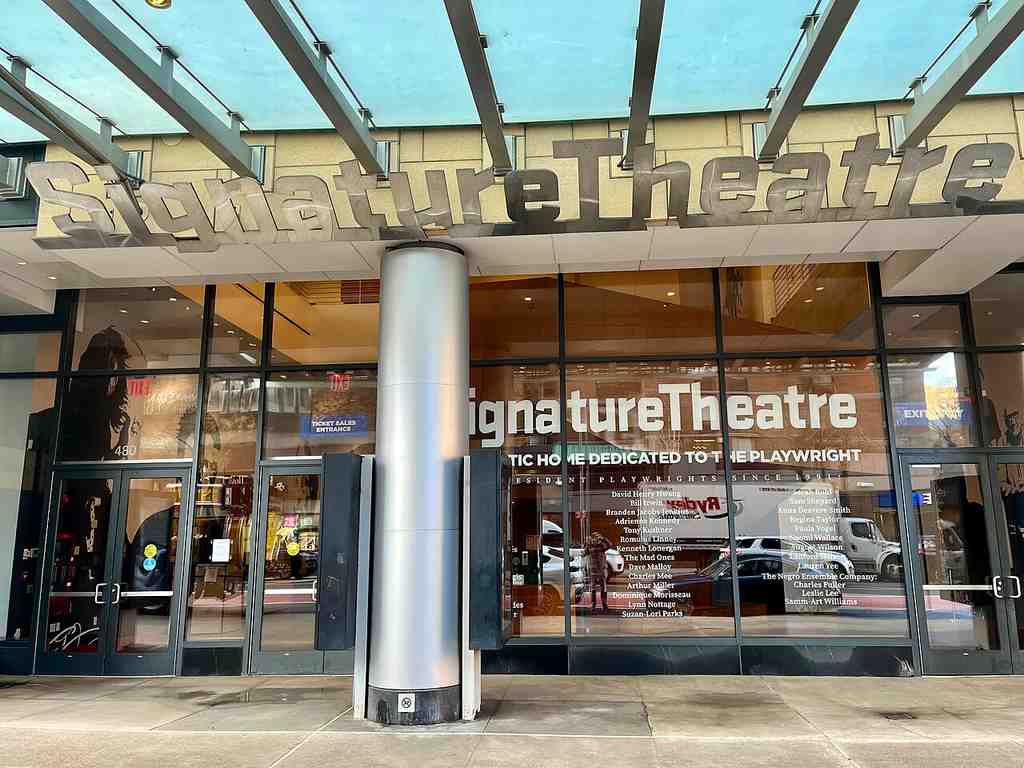
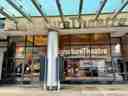
Pershing Square Signature CenterPhoto: Transpoman, Wikimedia Commons, CC BY-SA 4.0. Cropped & resized. Look for the wide glass and steel facade wrapping the base of this towering skyscraper, anchored by a prominent digital marquee over the entrance. This is the Pershing Square Signature Center, occupying the first floors of the forty-three story MiMa apartment building. Designed by Frank Gehry Architects and opened in two thousand and twelve, it brings a totally different vibe to Theatre Row on West Forty-Second Street.
Instead of stacking everything, Gehry put three Off-Broadway theaters, smaller professional venues that allow for bolder shows, onto one flowing level with rehearsal studios, a bookstore, and a cafe. It is the headquarters of the Signature Theatre Company, and The New Group frequently presents work here too. A twenty-five million dollar donation from the Pershing Square Foundation provided the name, even though the actual Pershing Square is over a mile east. Inside is the Alice Griffin Jewel Box Theatre. Glance at your app to see its beautiful interior. With just one hundred ninety-one seats, it feels incredibly intimate.
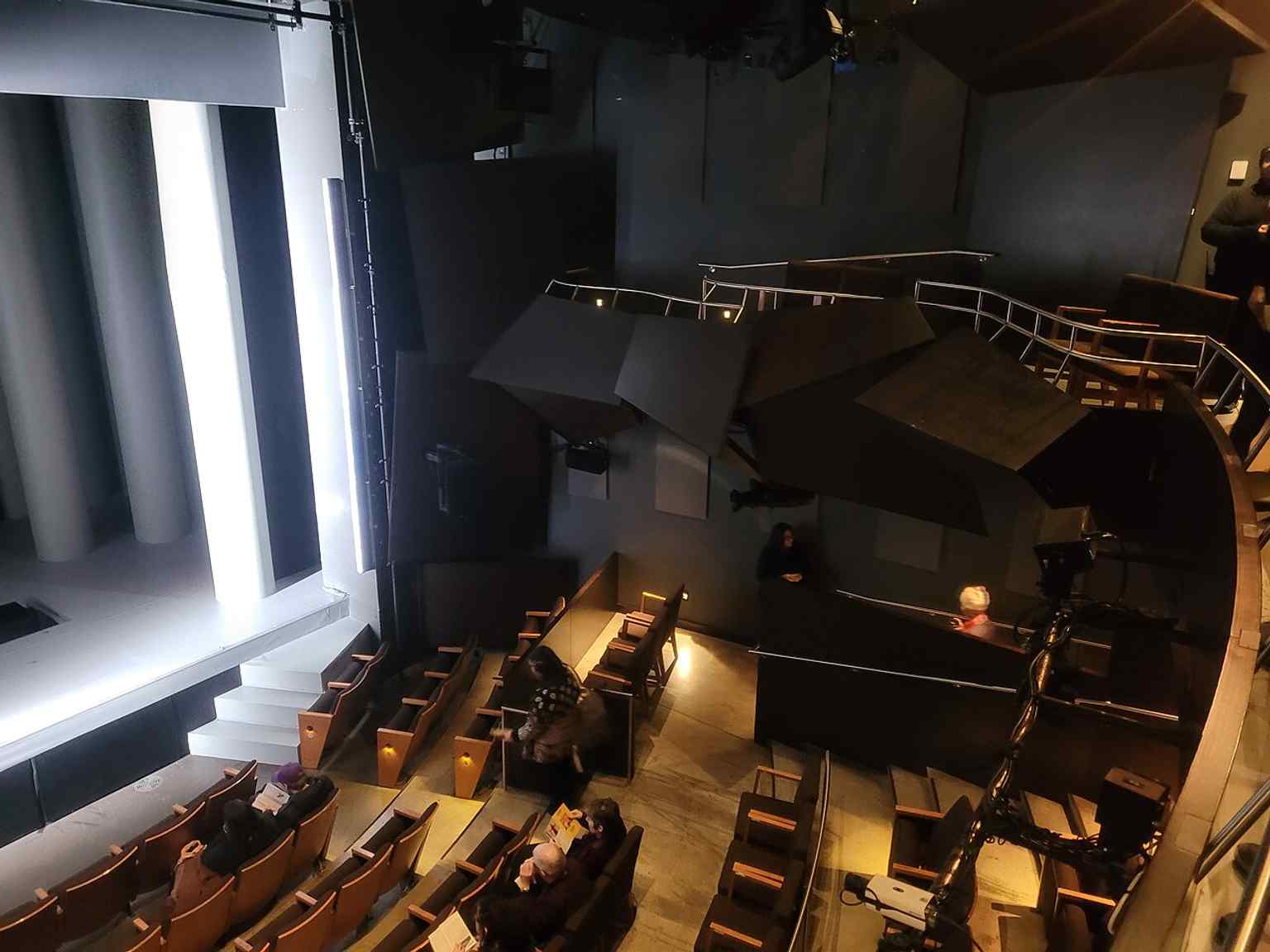
The Alice Griffin Jewel Box Theatre, one of three distinct performance spaces at the Pershing Square Signature Center, features a seating capacity of 191 seats.Photo: SnowFire, Wikimedia Commons, CC BY 4.0. Cropped & resized. This place proves some of the city's best creative energy happens off the main drag. Whenever you are ready to keep rolling, let's head to our next destination.
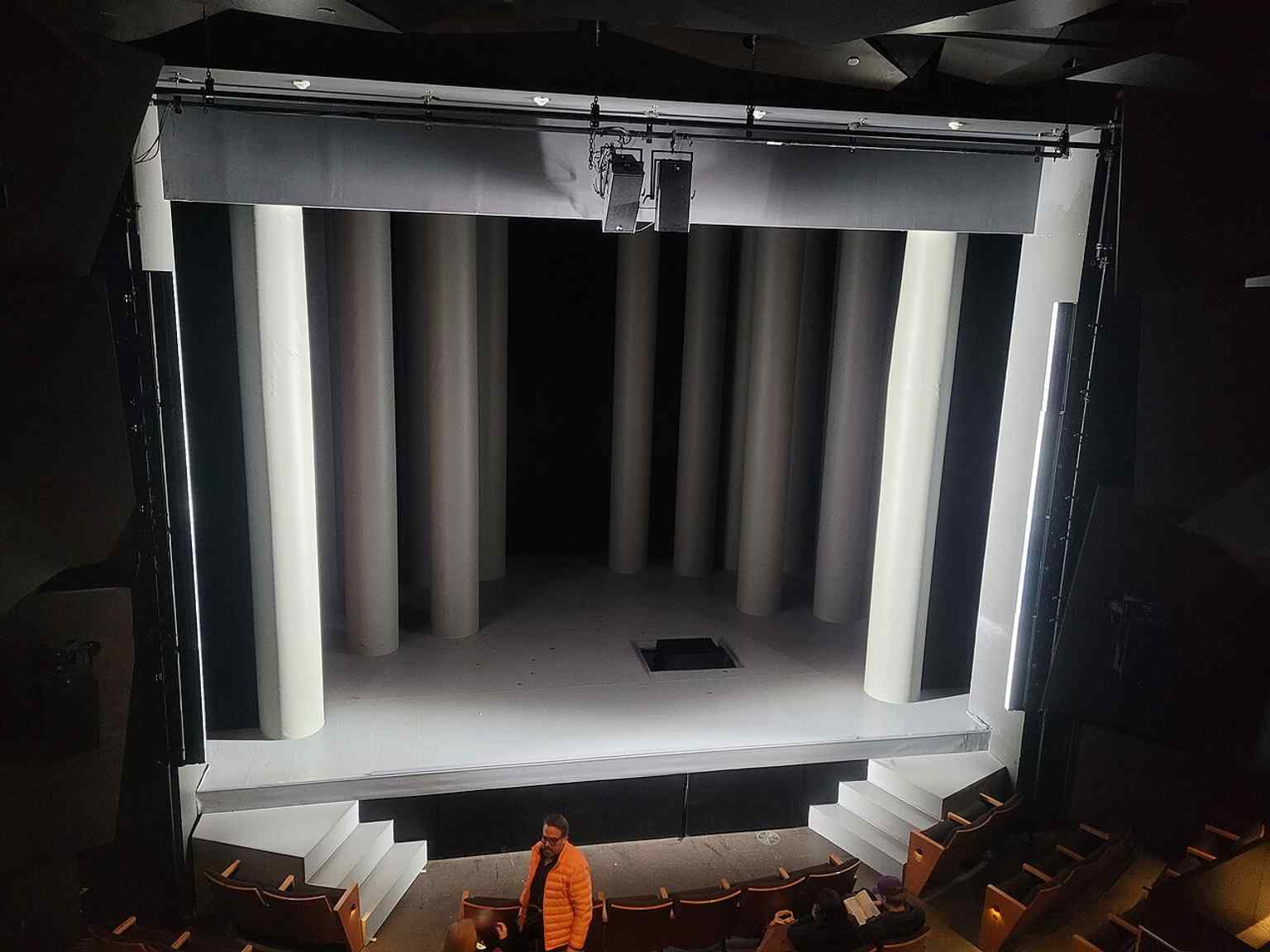
The stage of the Alice Griffin Jewel Box Theatre, where many notable productions, including those by The New Group, are frequently presented.Photo: SnowFire, Wikimedia Commons, CC BY 4.0. Cropped & resized. You are looking at a striking French Gothic church defined by its rough gray stone twin towers capped with oxidized green copper spires, which transitions smoothly into a dark red…Read moreShow less
Open dedicated page →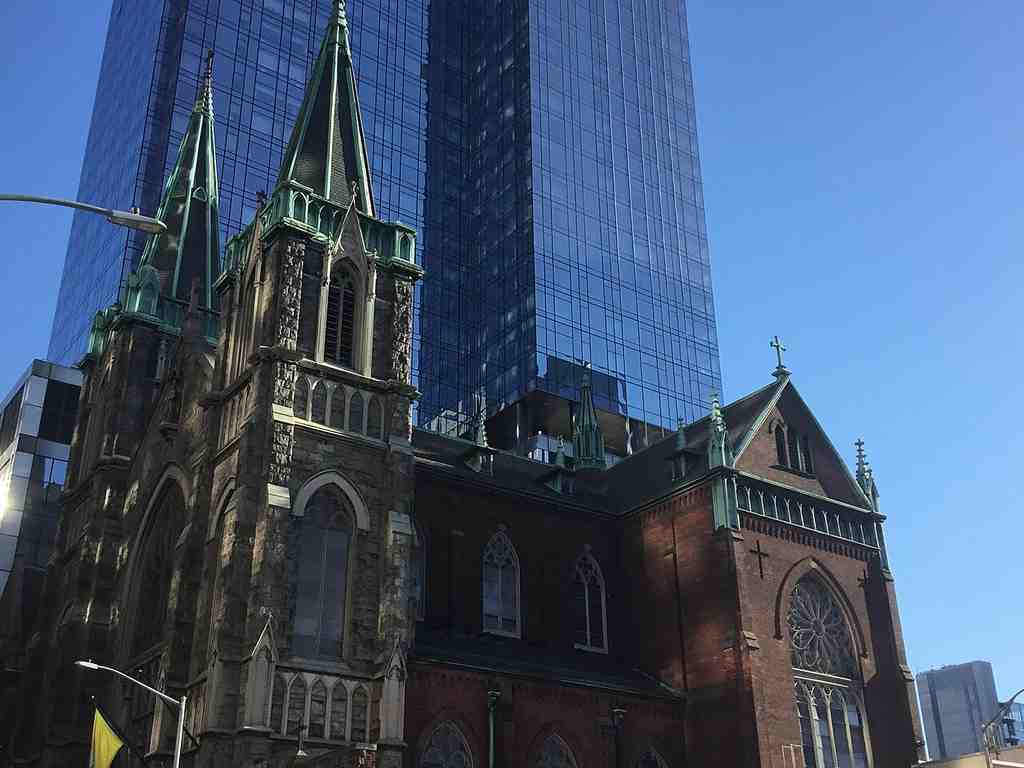
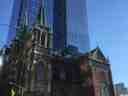
Church of Sts. Cyril & Methodius and St. RaphaelPhoto: Kidfly182, Wikimedia Commons, CC BY-SA 4.0. Cropped & resized. You are looking at a striking French Gothic church defined by its rough gray stone twin towers capped with oxidized green copper spires, which transitions smoothly into a dark red brick body along the side.
Remember Holy Cross Church, which we passed a little while ago? Well, back in eighteen eighty-six, the territory for this very parish was actually carved right out of Holy Cross to serve the booming population of poor Irish immigrants here in Hell's Kitchen. Ground was broken for this building, originally just the Church of St. Raphael, in nineteen oh one. The architect, George H. Streeton, designed those impressive front towers using Manhattan schist. That is the tough, sparkly local bedrock that anchors the city's massive skyscrapers, and here it is trimmed nicely with pale limestone.
Take a peek at the before and after image on your screen to see how over a century of development has completely transformed the surrounding Manhattan streetscape, yet the grand facade of this historic forty-first Street church remains a steadfast anchor of the neighborhood.
By the nineteen thirties, the construction of the Lincoln Tunnel and new railroad tracks tore right through this neighborhood, and the local Irish population plummeted. But while St. Raphael's was struggling, another community was growing. Since the late eighteen hundreds, a wave of Croatian immigrants had been settling in the West thirties, forties, and fifties, working the nearby docks and rail yards. For years, they had no church of their own, until nineteen thirteen, when a young priest named Irenaeus Petričak arrived from Zagreb. He tested out a Croatian language Sunday Mass at another local church, and it was packed to overflowing.
That same year, the community rented a small, disused church on fiftieth Street, spending five weeks scrubbing and painting it themselves. They named it after Cyril and Methodius, two ninth-century Greek brothers who famously translated religious texts and became known as the Apostles to the Slavs.
Fast forward to nineteen seventy-one. The Croatian parish was bursting at the seams, while St. Raphael's was largely empty. The Croatians began renting a rundown gymnasium behind St. Raphael's, redecorating it with motifs of their homeland. A few years later, in nineteen seventy-four, the archdiocese officially handed the keys to the Croatians, merging the rich histories of both parishes into one.
If you look closely at the street signs outside, you will notice this stretch of forty-first Street is also named Cardinal Stepinac Place, honoring the Archbishop of Zagreb who led the church in Croatia through the mid-twentieth century. Inside, the church even holds a bronze bust of him sculpted by the renowned artist Ivan Meštrović.
If you want to step inside to appreciate the peaceful nave, the soaring central hall of the church, the doors are open Monday through Thursday from eight A-M to five P-M, and Sunday mornings from nine to eleven A-M. Take a breath and enjoy the quiet. When you feel ready, let's continue on our route.
Look to your left for a solid red brick building with tall arched windows and a sturdy stone base, that is the Westside Theatre. It has a surprisingly heavy, grounded look for a…Read moreShow less
Open dedicated page →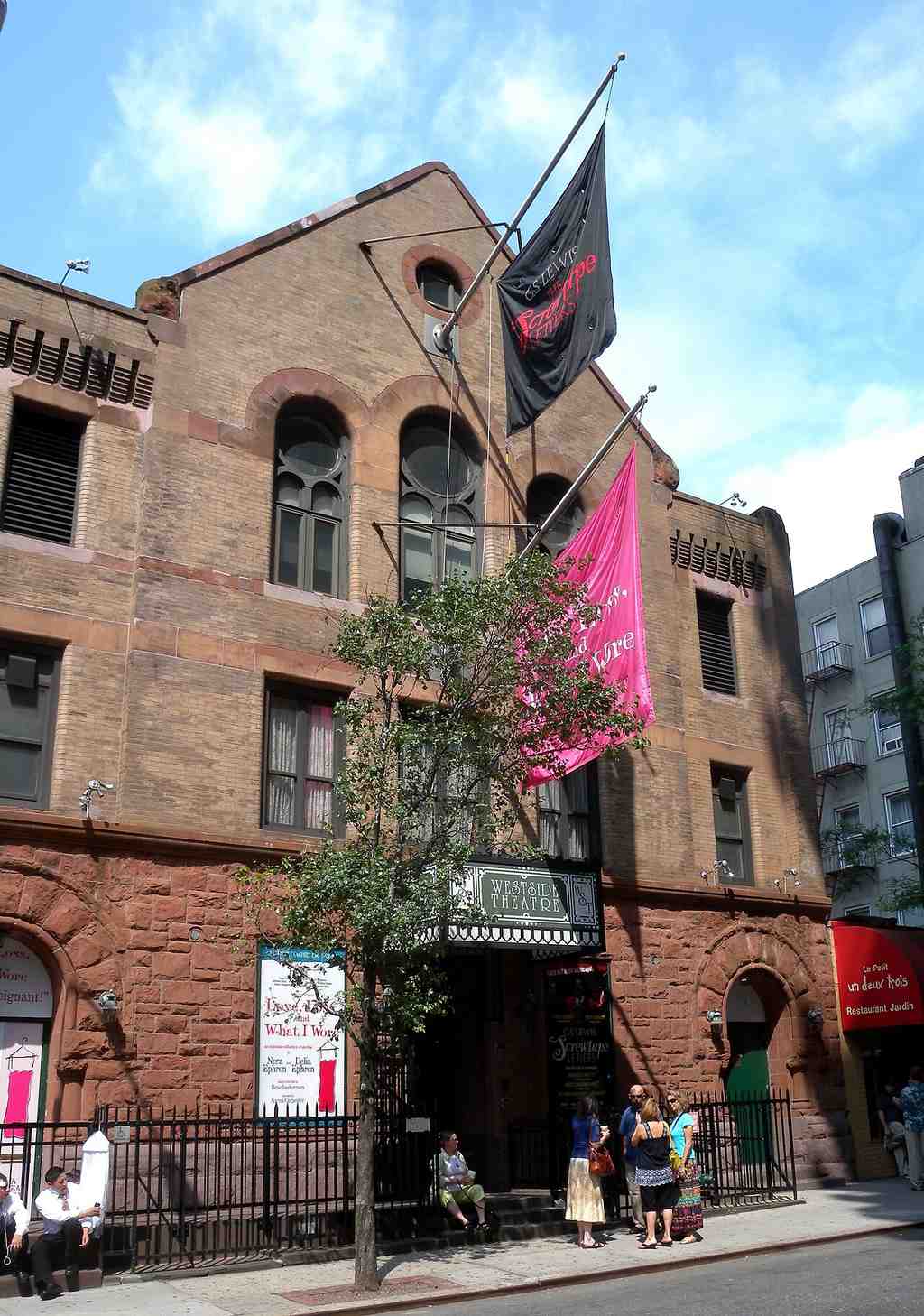
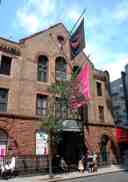
Westside TheatrePhoto: Jim.henderson, Wikimedia Commons, CC0. Cropped & resized. Look to your left for a solid red brick building with tall arched windows and a sturdy stone base, that is the Westside Theatre. It has a surprisingly heavy, grounded look for a theater, right? That is because architect Henry Franklin Kilburn designed it back in eighteen ninety in the Romanesque Revival style, an architectural vibe focused on thick walls and medieval-looking arches, originally built for the Second German Baptist Church.
It held onto its holy roots until the nineteen sixties, but this neighborhood has a way of loosening a collar. By the nineteen seventies, the hymnals were gone and the space was bouncing as a string of underground nightclubs. Then, in nineteen seventy-six, the disco balls came down and the theatrical lights went up. Check out your screen to see its original heavy stone and brick church glory.
Inside, they carved out two totally distinct worlds. The Upstairs Theatre seats two hundred and seventy people for traditional shows. The Downstairs Theatre is a bit more intimate, holding two hundred and forty-nine folks around a thrust stage. That is a stage that physically extends out into the room, so the audience sits on three sides of the action, practically breathing the same air as the actors.
Before a major nineteen ninety-one renovation, it went by a few different names, like the Westside Arts Theatre, which you can pull up on your app right now. Under this very roof, audiences have witnessed the off-Broadway magic of Penn and Teller in nineteen eighty-five, and massive hits like Little Shop of Horrors.
If you ever want to grab tickets at the box office, they are open from twelve noon to eight P-M Tuesday through Sunday, and closed on Mondays. It is pretty wild to think about this single building transforming from a quiet sanctuary to a noisy nightclub to a launching pad for theatrical legends. Take your time soaking up all those layers of history. Whenever you feel like moving, we will wander on to our next spot.
On your right, you will see a wide red-brick building anchored by a dramatic double-height stone arcade with sweeping arches resting on octagonal columns. Welcome to the Al…Read moreShow less
Open dedicated page →On your right, you will see a wide red-brick building anchored by a dramatic double-height stone arcade with sweeping arches resting on octagonal columns. Welcome to the Al Hirschfeld Theatre. Back when it opened in nineteen twenty-four, it was called the Martin Beck Theatre, named after the vaudeville king who built it. You have to admire the confidence of a guy who names a theater after himself and builds it without taking out a single mortgage.
Most Broadway houses from that era look like little Greek temples, all neoclassical and proper. But Beck wanted something completely different. The architect, Gustave Albert Lansburgh, gave him this incredible Moorish and Byzantine palace. Even from the street, the building has a real three-dimensional depth, thanks to that massive arcade wrapping the entrance. And what is brilliant is how the facade masks both the auditorium and the stage house as one unified block, which was pretty rare for the time.
If you pull out your screen for a second, check out the original ticket box window. You can still see the words Martin Beck Theatre carved right into the stone, a quiet little ghost of the past hanging out by the box office.
Now, the inside is where things get truly wild. Originally, the color scheme was red, blue, and orange with gold accents, meant to outshine every other theater in the neighborhood. Take a glance at your app to see the magnificent ceiling over the auditorium. That is a massive octagonal canopy with a multicolored wooden dome suspended in the center by canvas strips, all painted in these vibrant geometric designs. You do not see ceilings like that every day.
The theater has seen some legendary runs over the decades. We are talking over a thousand performances of The Teahouse of the August Moon in the nineteen fifties, and massive hits like Into the Woods and Dracula. But let us talk about the name change. In two thousand and three, the venue was renamed for Al Hirschfeld, the iconic Broadway illustrator, to celebrate his upcoming one hundredth birthday. He actually knew about the honor before he passed away earlier that year. They even put up a new marquee featuring his famous self-portrait as an inkwell. Originally, they used red neon for the ink, but people thought it looked a little too much like blood dripping from his head, so they quickly swapped it to blue neon. Problem solved.
If you ever want to catch a show or just admire the lobby, the box office is usually open from ten A-M to eight P-M most days, closing a bit earlier on Sundays and Mondays. This block just would not be the same without this Byzantine beauty anchoring the street. Whenever you are ready to keep moving, we can head to our next spot.
A wide view of the grand auditorium and stage, which originally seated 1,200 patrons and was intended to be more lavish than any other theatre in the area.Photo: Epicgenius, Wikimedia Commons, CC BY-SA 4.0. Cropped & resized. 
The auditorium features an orchestra level and a mezzanine, providing 1,404 seats and decorated with ornamental plasterwork.Photo: Epicgenius, Wikimedia Commons, CC BY-SA 4.0. Cropped & resized. 
One of the theatre's ornate box seats at the mezzanine level, adorned with geometric patterns in plasterwork and supported by decorated columns.Photo: Epicgenius, Wikimedia Commons, CC BY-SA 4.0. Cropped & resized. 
The proscenium arch is highlighted by half-columns with unique geometric designs and four concentric arches, a key element of the Byzantine-style interior.Photo: Epicgenius, Wikimedia Commons, CC BY-SA 4.0. Cropped & resized. 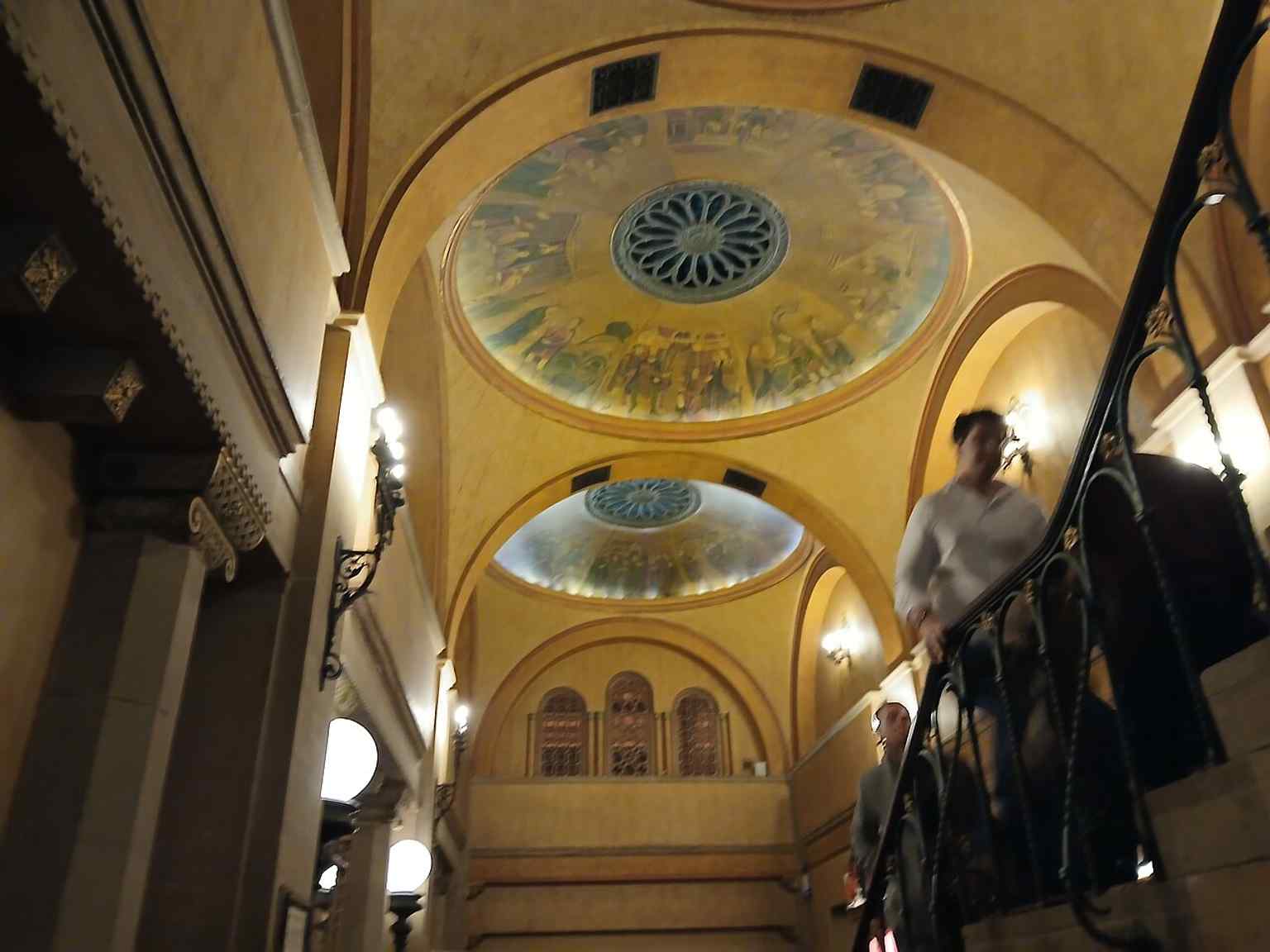
A detailed view of the side wall's ornamental plasterwork, showcasing the distinctive Moorish and Byzantine motifs used throughout the theatre's interior.Photo: Epicgenius, Wikimedia Commons, CC BY-SA 4.0. Cropped & resized. Take a look at the sign on your right. Birdland. Just the word alone swings, doesn't it? You are standing outside the modern incarnation of the jazz corner of the world. The…Read moreShow less
Open dedicated page →Take a look at the sign on your right. Birdland. Just the word alone swings, doesn't it? You are standing outside the modern incarnation of the jazz corner of the world.
The original club opened its doors back in December nineteen forty-nine, just up Broadway. They named it to capitalize on the fame of the legendary saxophonist Charlie Parker, whose nickname was Yardbird, or simply Bird. But here is the ironic twist. Parker barely ever played at his namesake club. The reason was pretty straightforward. According to the club's management, he simply demanded too much money every time he was booked.
Imagine stepping down into that original, below-street-level room back in the nineteen fifties. The neon sign outside glowed like a beacon. If you had one dollar and fifty cents, which is about eighteen bucks today, you could walk right past the high rollers and grab a folding chair in a fenced-in section right next to the bandstand. They called it the bullpen, and it was so casual that even teenagers were allowed in. To really hammer home the theme, they actually kept live finches in cages right inside the club. It was a fashionable place to be seen, pulling in regulars like Frank Sinatra, Marilyn Monroe, and Marlon Brando.
The vibe was electric, but it was heavily steered by a master of ceremonies named Pee Wee Marquette. Pee Wee was exactly four feet tall and ran his stage with ruthless confidence. If a musician refused to tip him, Pee Wee would deliberately mispronounce their name over the microphone when introducing them to the crowd.
But the club saw its share of dark, heavy moments, too. In August nineteen fifty-nine, the brilliant trumpeter Miles Davis was brutally beaten by a New York City police officer on the sidewalk right outside the club during a performance engagement. And just months earlier, co-owner Irving Levy was stabbed to death near the service area in the back.... The truly surreal part is that a trombonist was playing on stage at the time, and the crowd was so mesmerized by the music that the murder happened completely unnoticed by the patrons.
Eventually, the original joint filed for Chapter Eleven bankruptcy, a legal process where a struggling business reorganizes its debts to try and survive, but it officially closed down in nineteen sixty-five. Still, you cannot keep a good rhythm down forever. A brand new Birdland opened uptown in nineteen eighty-six, and eventually relocated right here to West Forty-Fourth Street in nineteen ninety-six.
Take a quick glance at your screen to see an image of the current interior. It is a vibrant, moody space that keeps the old spirit alive, hosting modern giants of jazz.
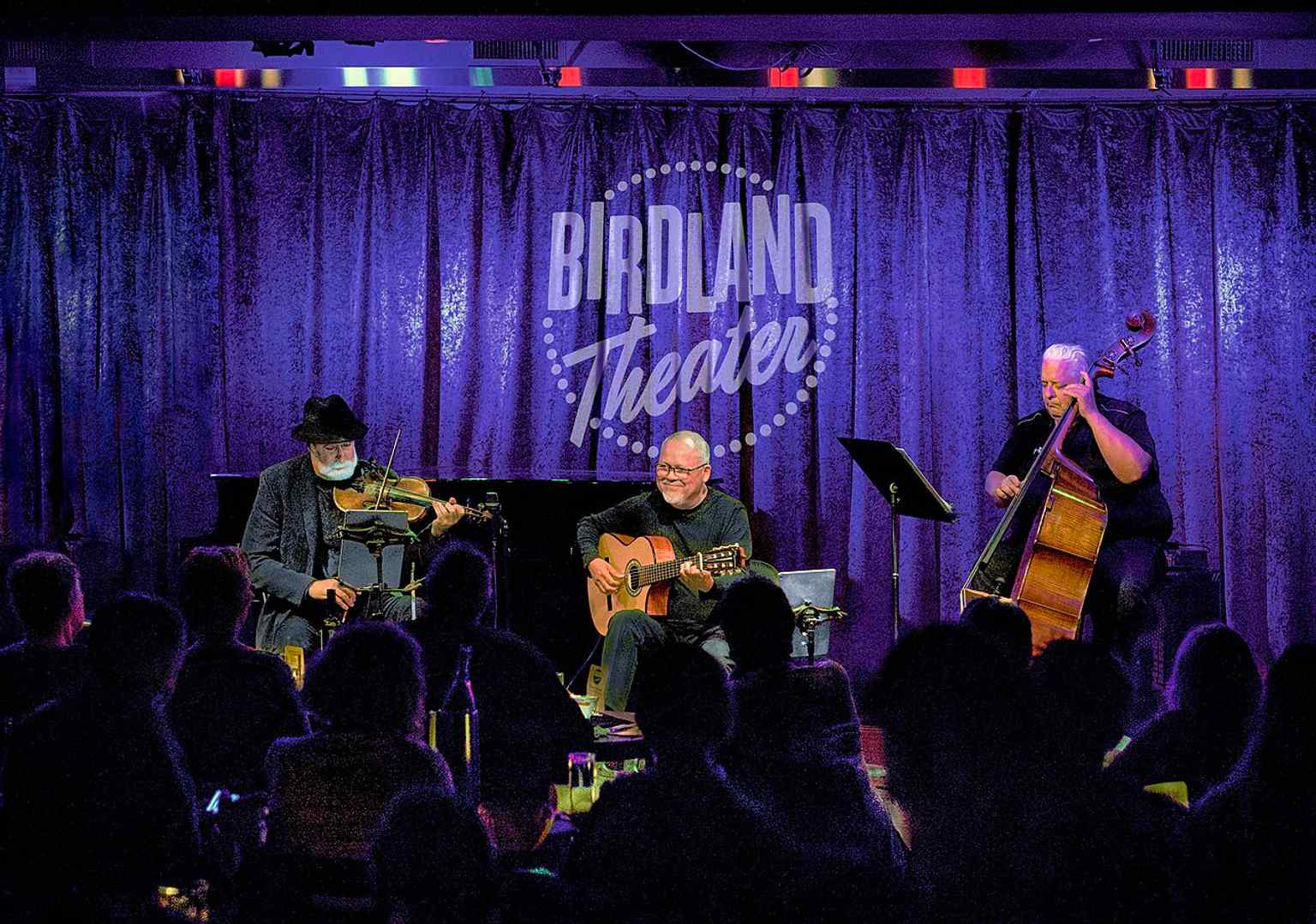
A vibrant interior view of the current Birdland jazz club from 2023, which reopened in 1986 in Manhattan's Theater District and continues to host top performers.Photo: Hudson Valley Traveller, Wikimedia Commons, CC BY 4.0. Cropped & resized. This name is woven deeply into American culture. Jack Kerouac wrote about dropping a five-dollar bill here in his novel On the Road, and the band U-Two even sang about it. If you want to catch a show, be prepared for an expensive ticket, but the doors stay open well into the midnight hours all week long. Imagine that classic jazz soundtrack echoing in your head as we walk on over to our next location.
Glance across the street to your left at a stately Greek Revival structure, an architectural style designed to resemble an ancient temple, featuring a painted brick facade, tall…Read moreShow less
Open dedicated page →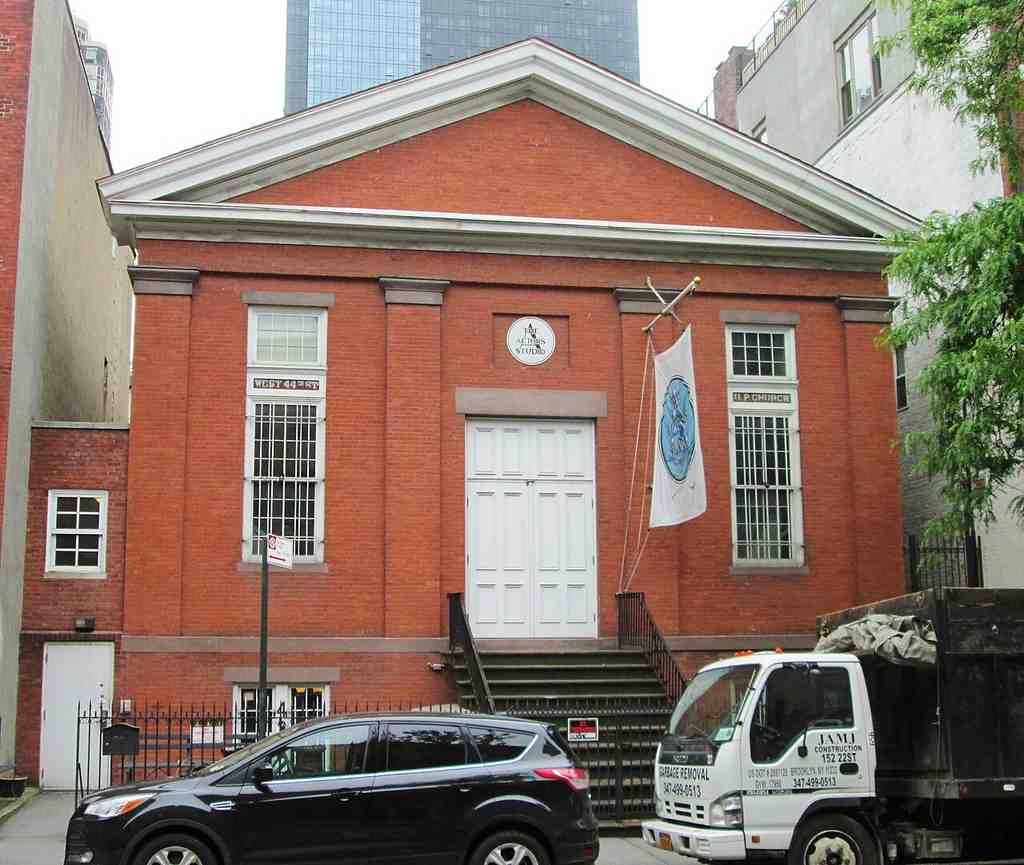
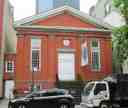
Actors StudioPhoto: Beyond My Ken, Wikimedia Commons, CC BY-SA 4.0. Cropped & resized. Glance across the street to your left at a stately Greek Revival structure, an architectural style designed to resemble an ancient temple, featuring a painted brick facade, tall arched windows, and a classic triangular pediment at the roofline.
It certainly looks like an old church, and that is exactly what it was. Built way back in eighteen fifty-eight or eighteen fifty-nine for the Seventh Associate Presbyterian Church, it is actually one of the very last buildings raised in this specific style in New York City. But since nineteen fifty-five, this space has served as a sanctuary of a completely different kind.
This is the Actors Studio. The absolute beating heart of American theatre and film acting.
Founded in nineteen forty-seven by Elia Kazan, Cheryl Crawford, and Robert Lewis, this organization fundamentally changed how we experience stories on stage and screen. These founders were all former members of the Group Theatre, an influential collective from the nineteen thirties. They took the psychological acting techniques pioneered by Constantin Stanislavsky at the Moscow Art Theatre, and they refined them into what we now know as Method acting.
If you are wondering what Method acting actually means, it is essentially the practice of drawing on your own real, deeply personal emotional memories to inhabit a character. You do not just pretend to be heartbroken, you dig into your own past until you genuinely feel it. Lee Strasberg, who directed the studio from nineteen fifty-two until nineteen eighty-two, made this place the ultimate laboratory for that raw, emotional truth.
Getting in was, and still is, a legendary challenge. In the very first year, around seven hundred actors auditioned. Only fifty were chosen. One of those first fifty was a young Marlon Brando. But once you pass that audition, you become a life-member.
Inside these walls, actors strip away the shiny gloss of show business. Pull up the third photo in your app to peek inside during a performance session. This is a totally private environment. It gives professionals a safe space to fail, to experiment, and to take massive creative risks without a director worrying about box office numbers or critics taking notes.
The studio did not just shape actors, either. It gave playwrights like James Baldwin, Lorraine Hansberry, and Tennessee Williams a place to develop brilliant new works. Even though it is a strict members-only club, they sometimes invited extraordinary non-members to present. Take a look at the first image on your screen. That is Marilyn Monroe, who occasionally presented her work here, captured in nineteen fifty-five, the exact same year the studio finally settled into this church building.
Before scoring this permanent home, the studio spent eight years bouncing around the city. They rented out an old dance studio on East Fifty-Ninth Street, squished into rehearsal rooms in the C-B-S Building, and at one low point, were reduced to renting a single room just twice a week.
Today, the organization is still going strong, guided by co-presidents Ellen Burstyn, Alec Baldwin, and Al Pacino. It remains a quiet, protected space where legends go to forget their fame and remember their craft.
Take a moment to soak in the creative energy of this building. Whenever you are ready to keep walking, we can head over to our next spot.
Frequently asked questions
How do I start the tour?
After purchase, download the AudaTours app and enter your redemption code. The tour will be ready to start immediately - just tap play and follow the GPS-guided route.
Do I need internet during the tour?
No! Download the tour before you start and enjoy it fully offline. Only the chat feature requires internet. We recommend downloading on WiFi to save mobile data.
Is this a guided group tour?
No - this is a self-guided audio tour. You explore independently at your own pace, with audio narration playing through your phone. No tour guide, no group, no schedule.
How long does the tour take?
Most tours take 60–90 minutes to complete, but you control the pace entirely. Pause, skip stops, or take breaks whenever you want.
What if I can't finish the tour today?
No problem! Tours have lifetime access. Pause and resume whenever you like - tomorrow, next week, or next year. Your progress is saved.
What languages are available?
All tours are available in 50+ languages. Select your preferred language when redeeming your code. Note: language cannot be changed after tour generation.
Where do I access the tour after purchase?
Download the free AudaTours app from the App Store or Google Play. Enter your redemption code (sent via email) and the tour will appear in your library, ready to download and start.
If you don't enjoy the tour, we'll refund your purchase. Contact us at [email protected]
Checkout securely with 






