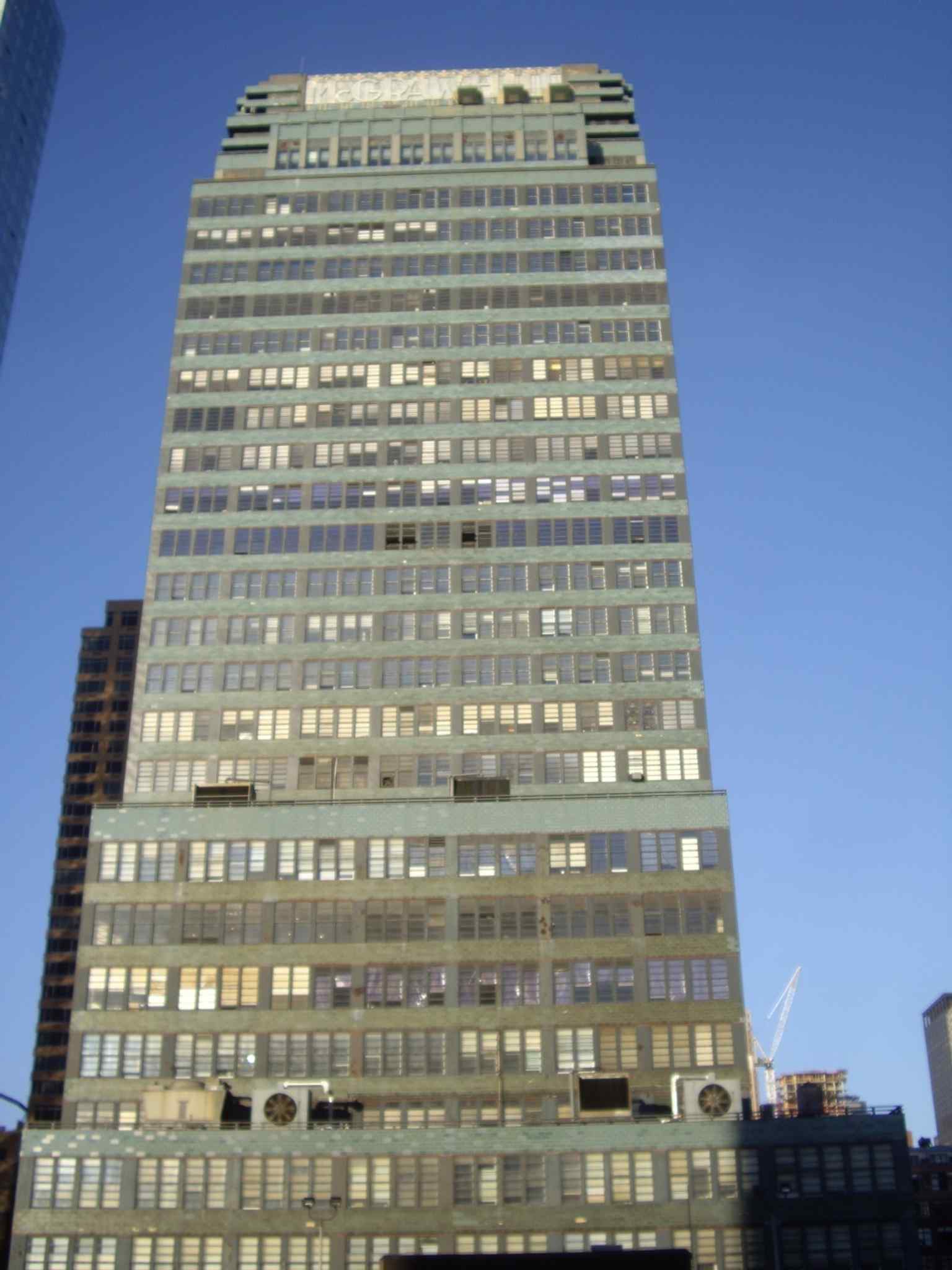
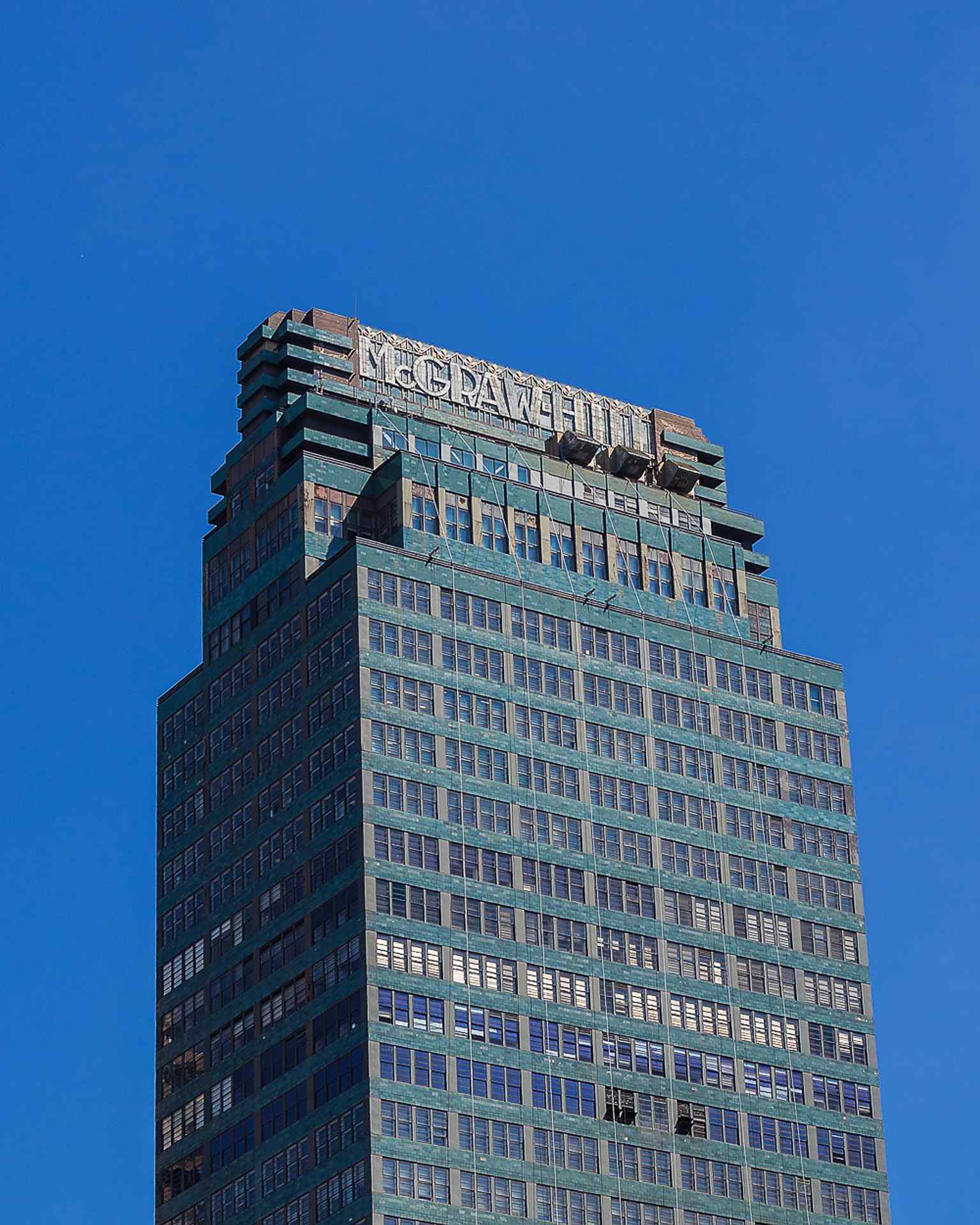
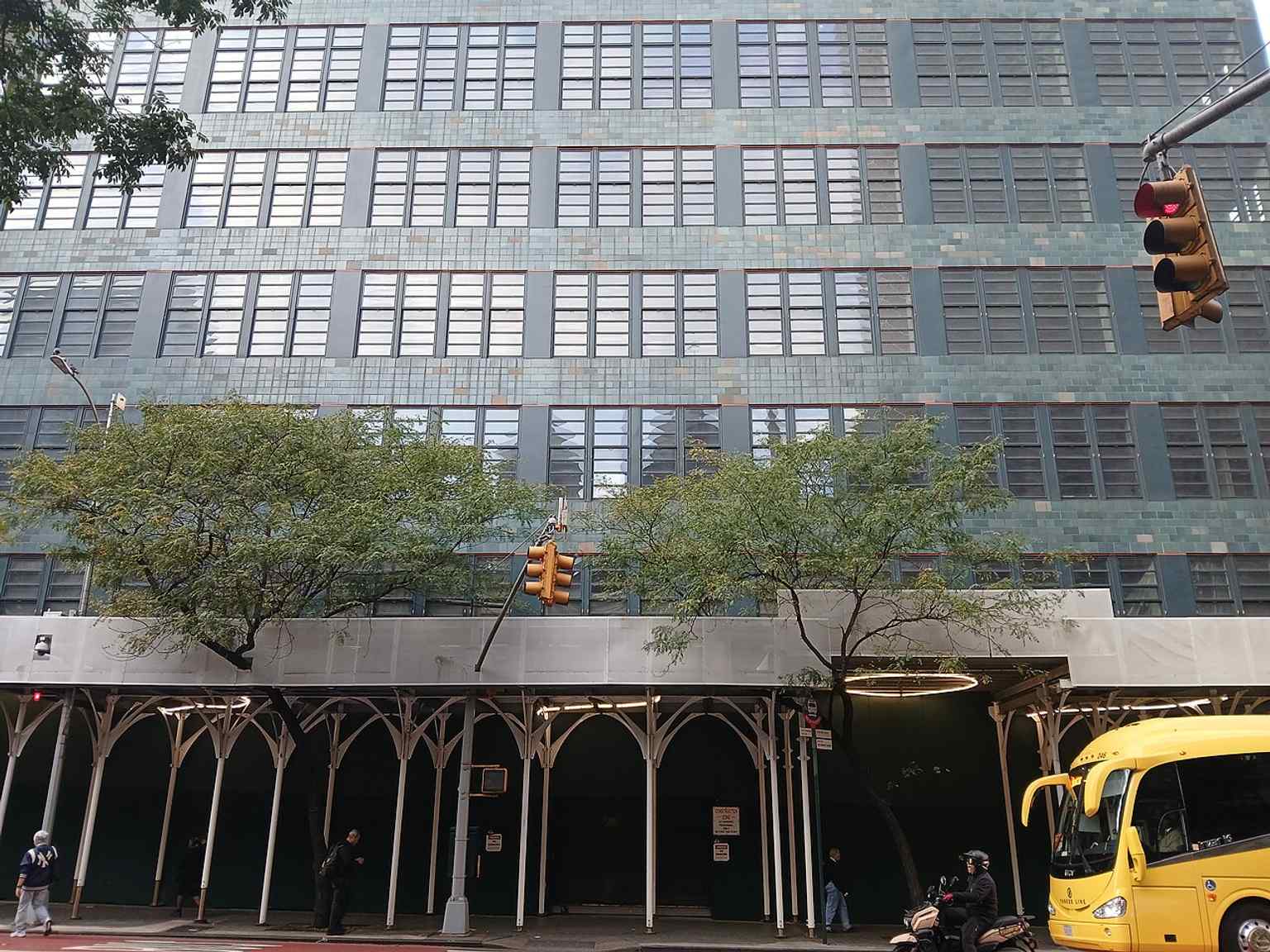
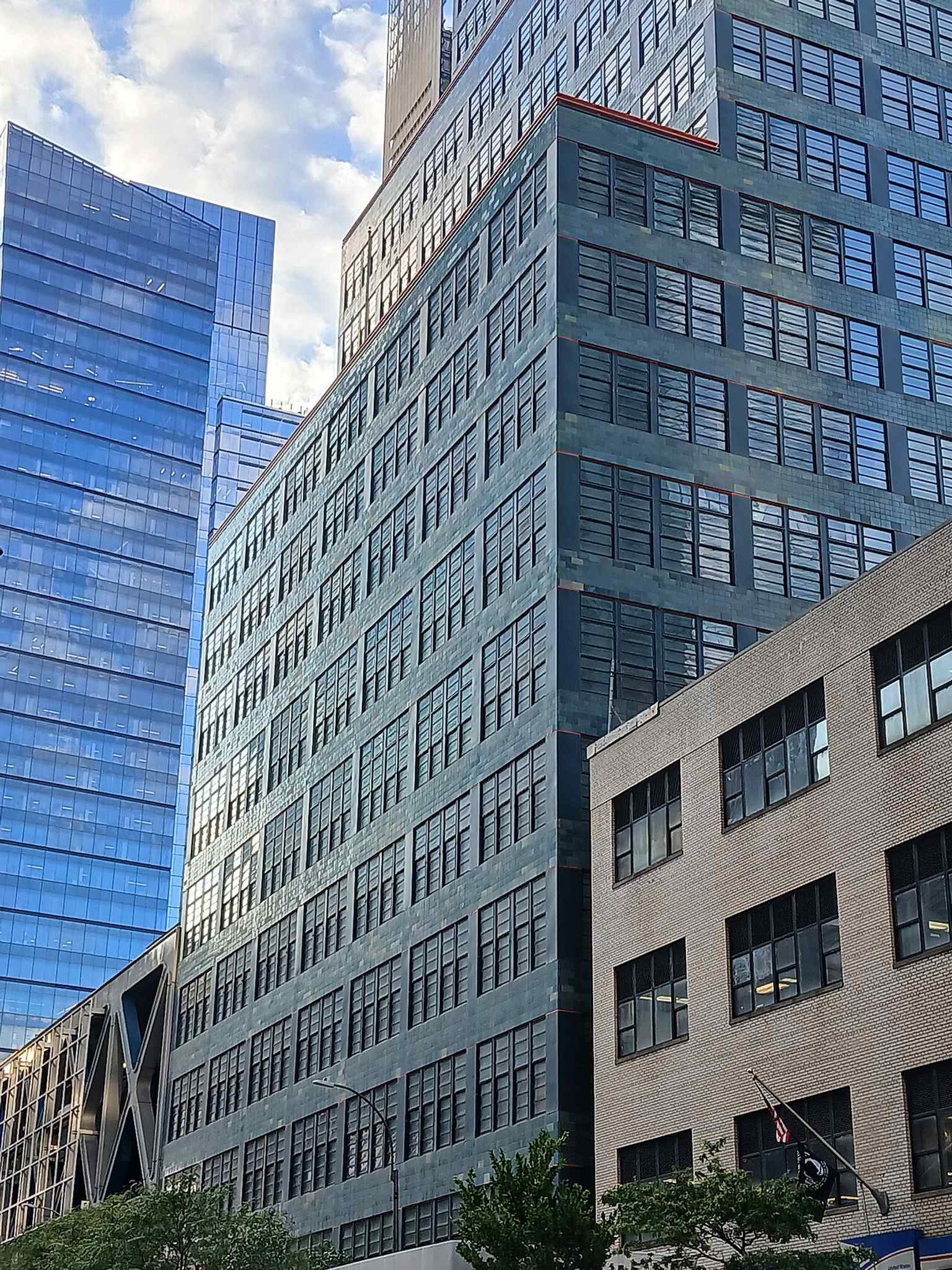
Cast your eyes left to find a towering thirty-three story skyscraper defined by its striking blue-green terra-cotta facade, distinctive stepped crown, and continuous horizontal bands of green metal-framed windows.
This is three thirty West Forty-Second Street, though most folks know it as the McGraw-Hill Building. Back in nineteen thirty-one, when architect Raymond Hood brought this place to life, he did not just want to build another boring stone tower. He envisioned a future where the New York skyline would be packed with brightly colored buildings. He chose these blue-green ceramic tiles specifically to blend into the sky.
Now, you might think a giant teal skyscraper sounds universally cool, but when it opened, it caused a massive architectural scandal. People were used to vertical lines that drew the eye up. Hood gave this building strong horizontal lines instead. One critic complained that a tall building is supposed to go up, not sideways. But Hood was ahead of his time. This became one of the very first examples of the International Style in America.
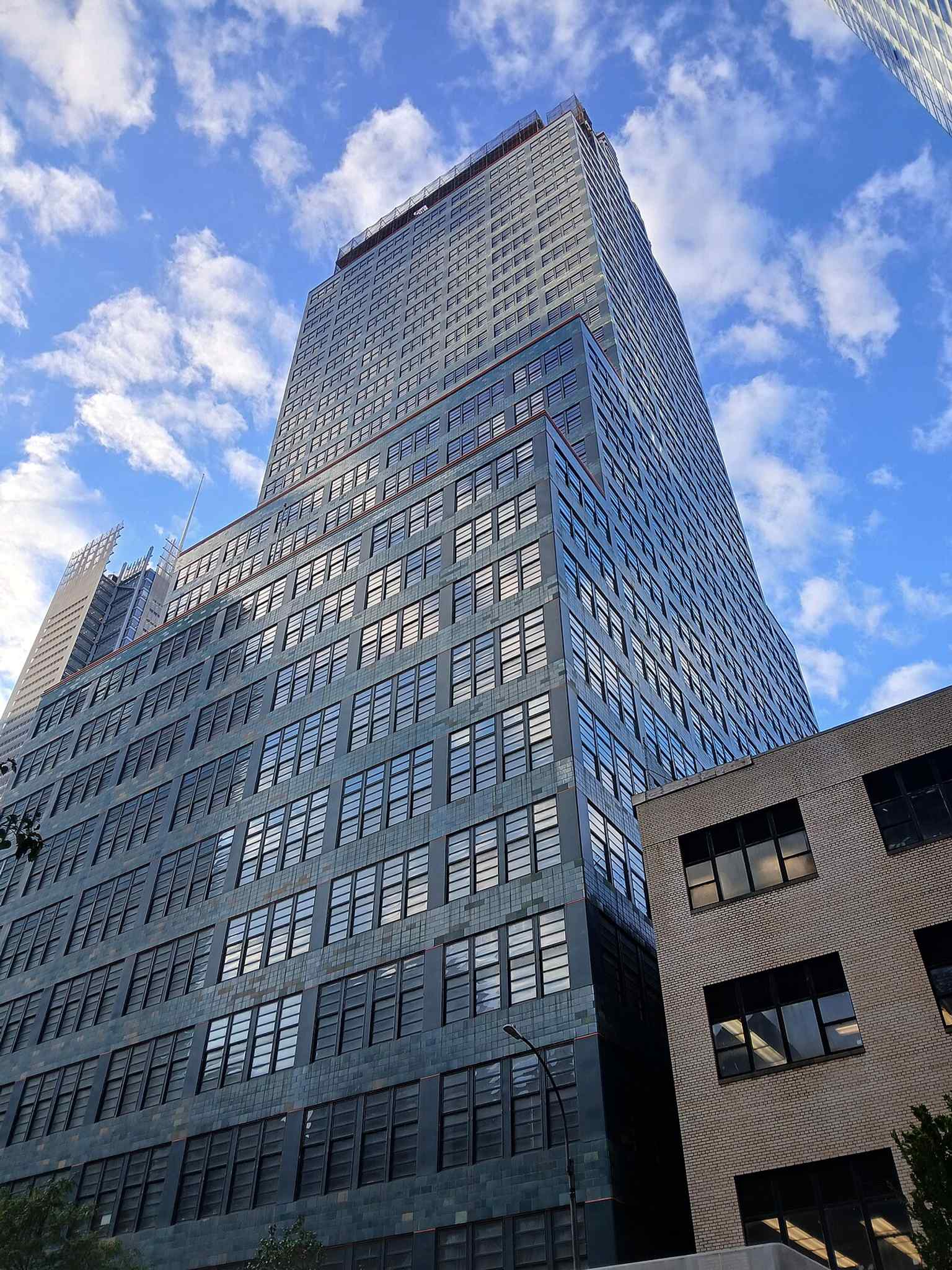
Take a look at your screen to see a detail of how the building steps back as it gets higher. Those setbacks were required by a nineteen sixteen zoning law, which was a set of city rules meant to keep tall buildings from completely blocking light from the streets below. But Hood only put the setbacks on the front and back. From the sides, it looks like one massive, flat slab. One writer even compared its shape to a giant ocean liner cruising right through Hell's Kitchen.
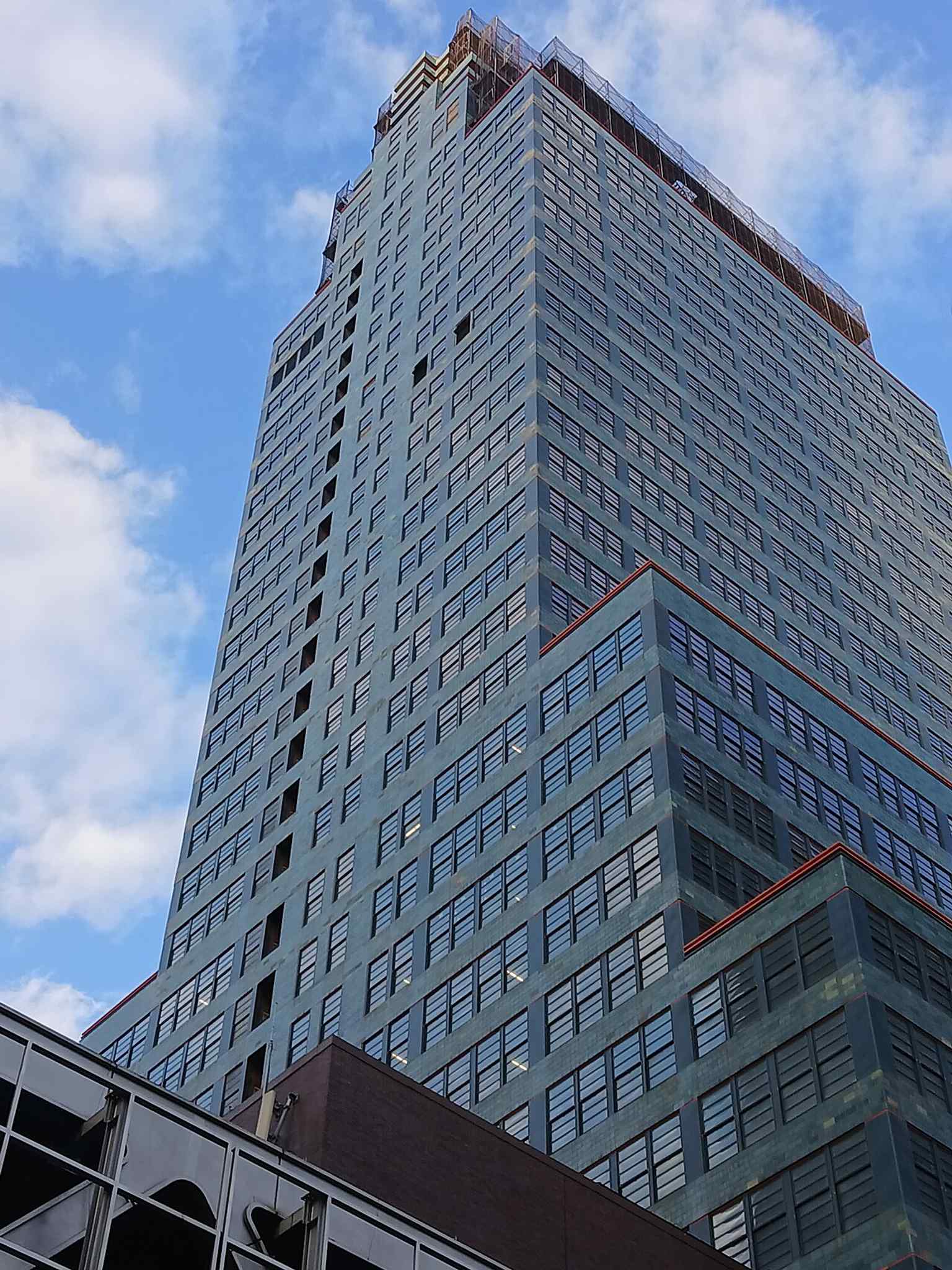
Originally, this was a powerhouse of publishing. McGraw-Hill printed their magazines and books right here on the lower floors. Those industrial spaces were reinforced for heavy machinery, while the higher floors were light-filled offices for editors and executives. But cities change, and neighborhoods shift. Take a peek at the historic before and after image on your app to see how this block has evolved. Once partially obscured by the old Ninth Avenue elevated railway, the striking blue-green terra-cotta tower of the McGraw-Hill Building now stands unobstructed amidst a densely developed modern Midtown streetscape.
By nineteen seventy-two, McGraw-Hill outgrew the space and moved away. They had previously sold the building in nineteen seventy for fifteen million dollars, which would be roughly one hundred twenty million dollars today. As the surrounding area went through a rough patch, this beautiful green giant sat mostly empty for a few years, with only a tiny maintenance crew wandering its massive halls. Eventually, Group Health Insurance moved in and brought it back to life, and now, the building is being transformed once again, this time into residential apartments.
It is wild to think about the journey of this place, from a noisy, controversial printing plant to a quiet, historic landmark. Feel free to admire those classic lines. Once you are set, let's amble toward our next destination.