
Halifax Audio Tour: The Pulse of Halifax Past and Present
Halifax hides secrets beneath its stone streets: medieval whispers echo from church vaults and industrial revolutions pulse through market squares. Beyond the surface lies a city forged by ambition, rebellion, and invention. This self-guided audio tour invites you to wander Halifax at your own pace, unlocking stories and forgotten places that most visitors never find. Discover hidden corners, dramatic histories, and vivid tales right where they happened. Why did angry crowds storm Piece Hall in a clash over wool and wages? Which haunted chamber within Halifax Minster keeps its darkest secret? What peculiar link connects Eureka! to a 19th-century mystery about stolen children? Journey through centuries of risk and reinvention, each step revealing ghosts of power struggles, scandalous twists, and everyday magic. Feel time shift as stories swirl around you. Start the adventure now and see how much more Halifax reveals when you look deeper.
Tour preview
About this tour
- scheduleDuration 80–100 minsGo at your own pace
- straighten3.2 km walking routeFollow the guided path
- location_onLocationHalifax, United Kingdom
- wifi_offWorks offlineDownload once, use anywhere
- all_inclusiveLifetime accessReplay anytime, forever
- location_onStarts at Eureka!
Stops on this tour
lock_open 3 free previews · 9 unlock with purchase
Look for a low, modern cream-and-red building with a broad glass entrance and the bold Eureka! name set across the front. Eureka! began with a brilliant transatlantic leap... in…Read moreShow less
Open dedicated page →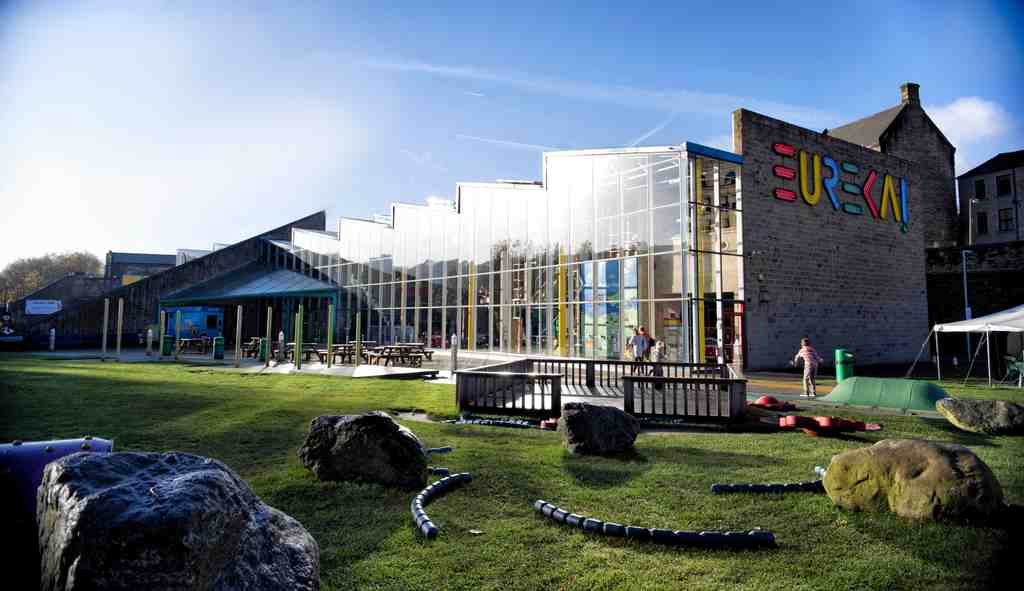
Eureka!Photo: Sospot, Wikimedia Commons, CC BY-SA 4.0. Cropped & resized. Look for a low, modern cream-and-red building with a broad glass entrance and the bold Eureka! name set across the front.
Eureka! began with a brilliant transatlantic leap... in nineteen eighty-five, Vivien Duffield visited a children’s museum in Boston and came back determined to create that same hands-on magic here in Halifax. What she imagined was the exact opposite of a “look but don’t touch” museum. This is a not-for-profit educational charity built for families, especially children from zero to eleven, where kids and grown-ups learn side by side through play.
She helped raise nine million pounds to make it happen, and this former British Rail site beside the station became the perfect stage. Prince Charles thought the empty land could help revive Halifax, and he opened the museum on the ninth of July, nineteen ninety-two. Architect Ken Moth, working with Building Design Partnership, or B-D-P, shaped the building, while a whole team of designers packed it with imagination. Tim Hunkin created the Archimedes display at the entrance, Satoshi Kitamura brought in playful cartoon signage, and inside you’ll find worlds like All About Me, exploring the body, SoundSpace with Orby the Alien, a miniature town square for Living and Working Together, a sensory Wonder Walk, and even The Beach, a vast sandpit.
The museum opens every day from ten A-M to five P-M. This place turns curiosity into something you can almost touch. When you’re ready, we can continue to the next stop.
On your right, look for the pale stone church with a long Gothic roofline, a broad square tower, and a small vertical sundial cut into the outer wall. This is Halifax Minster,…Read moreShow less
Open dedicated page →On your right, look for the pale stone church with a long Gothic roofline, a broad square tower, and a small vertical sundial cut into the outer wall.
This is Halifax Minster, dedicated to Saint John the Baptist, and it carries the kind of history that makes a whole town feel deeper. Halifax gave it minster status in two thousand and nine, a special honor that only a few churches in West Yorkshire have. But its story reaches much farther back than that... all the way to around eleven twenty, when Cluniac monks from Lewes Priory cared for an earlier Norman church on this very spot.
And here is the part I love: pieces of that older church still survive inside the fabric of this one. In the north wall, builders reused carved chevron stones from the Norman building, so the past is not just remembered here... it is literally built in. The church you see now took shape in the fifteenth century, when Halifax needed a bigger parish church for a growing population. The nave, the main central hall of the church, and the chancel, the space around the altar, were finished around fourteen fifty. The tower started rising in the fourteen forties and took more than three decades to complete, still under construction in fourteen eighty-two.
If you open the image on your phone, the interior view gives you a sense of how spacious that central hall became after later restorations cleared away galleries and opened it up again. In the late nineteenth century, George Gilbert Scott and his son John Oldrid Scott led a major restoration here, lowering some of the visual clutter and revealing more of the stone bones of the building.
Inside, the Minster is packed with wonderfully human details. There are Jacobean box pews from sixteen thirty-three and sixteen thirty-four, like little wooden rooms for worshippers. There is a spectacular medieval font cover, once gilded, designed to stop people stealing baptismal water because they believed it had healing power. That is faith, folklore, and practical security all rolled into one. There is even a life-sized wooden figure called Old Tristram, carved around seventeen oh one, who holds the alms box and may have been based on a real beggar from the church precincts.
Music matters here too. The organ began with work by John Snetzler in seventeen sixty-three, installed in seventeen sixty-six, and later builders expanded and rebuilt it into the powerful instrument the Minster treasures today. Take a glance at the organ image in the app and you can almost imagine the sound filling every arch and beam.
Then there are the lives remembered here. Anne Lister of Shibden Hall, Halifax's brilliant and fearless diarist, has a rediscovered tombstone inside. The Minster also became the chapel of the Duke of Wellington's Regiment, and in two thousand and seven their colours were laid up here in a formal military ceremony, binding civic pride, memory, and worship together under one roof.
If you want to step inside later, the Minster usually opens every day from noon until four.
Halifax Minster feels like the town's memory bank, carved in stone, wood, glass, and music.
Take a moment with it, and when you're ready, we can continue on to the next stop.
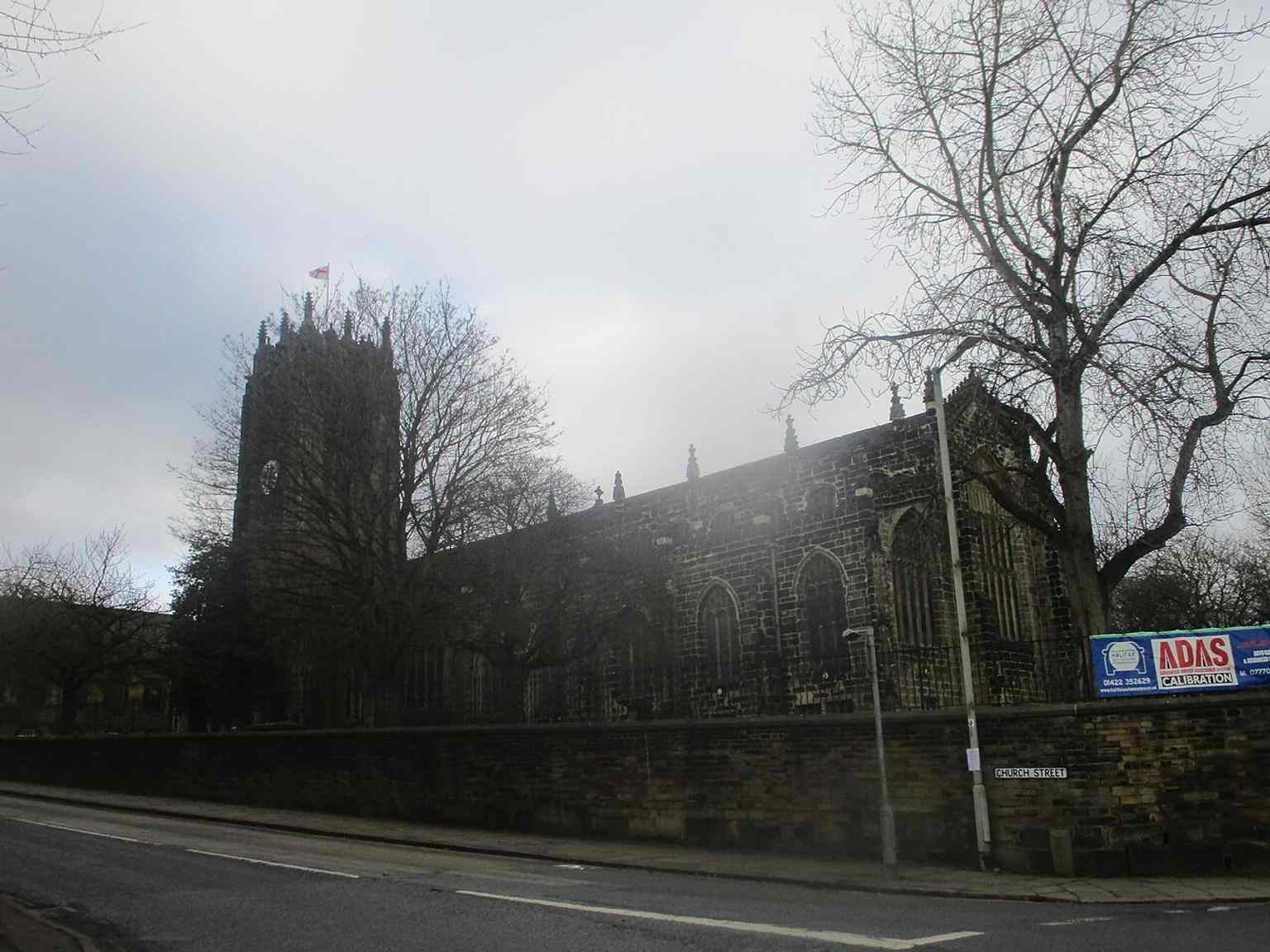
A classic front view of Halifax Minster, the parish church that became a minster in 2009.Photo: Mtaylor848, Wikimedia Commons, CC BY-SA 4.0. Cropped & resized. 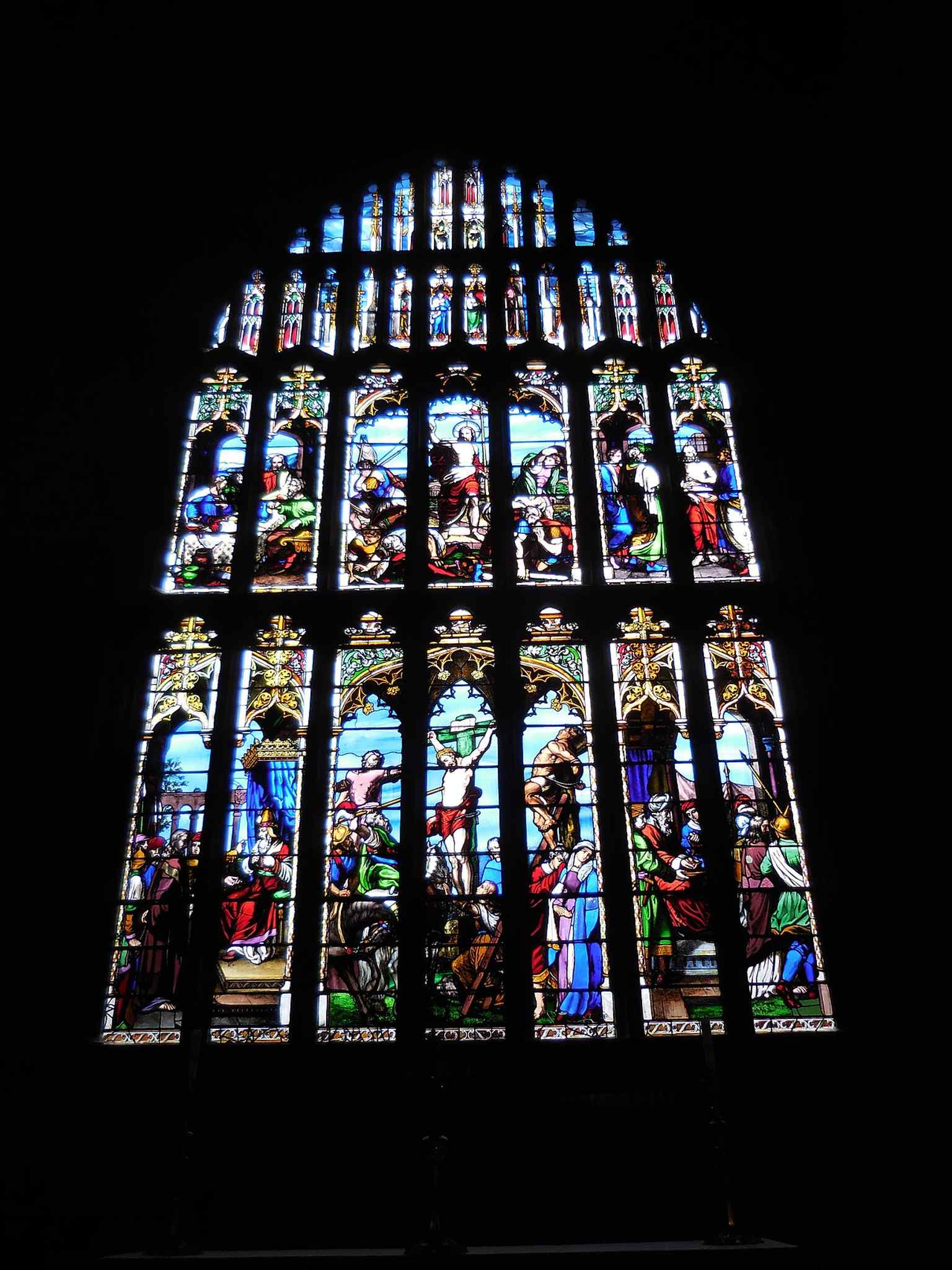
The towering west end of the Minster, showing the 15th-century church built on an earlier Norman site.Photo: Silver Birch Golden Wattle, Wikimedia Commons, CC BY-SA 4.0. Cropped & resized. 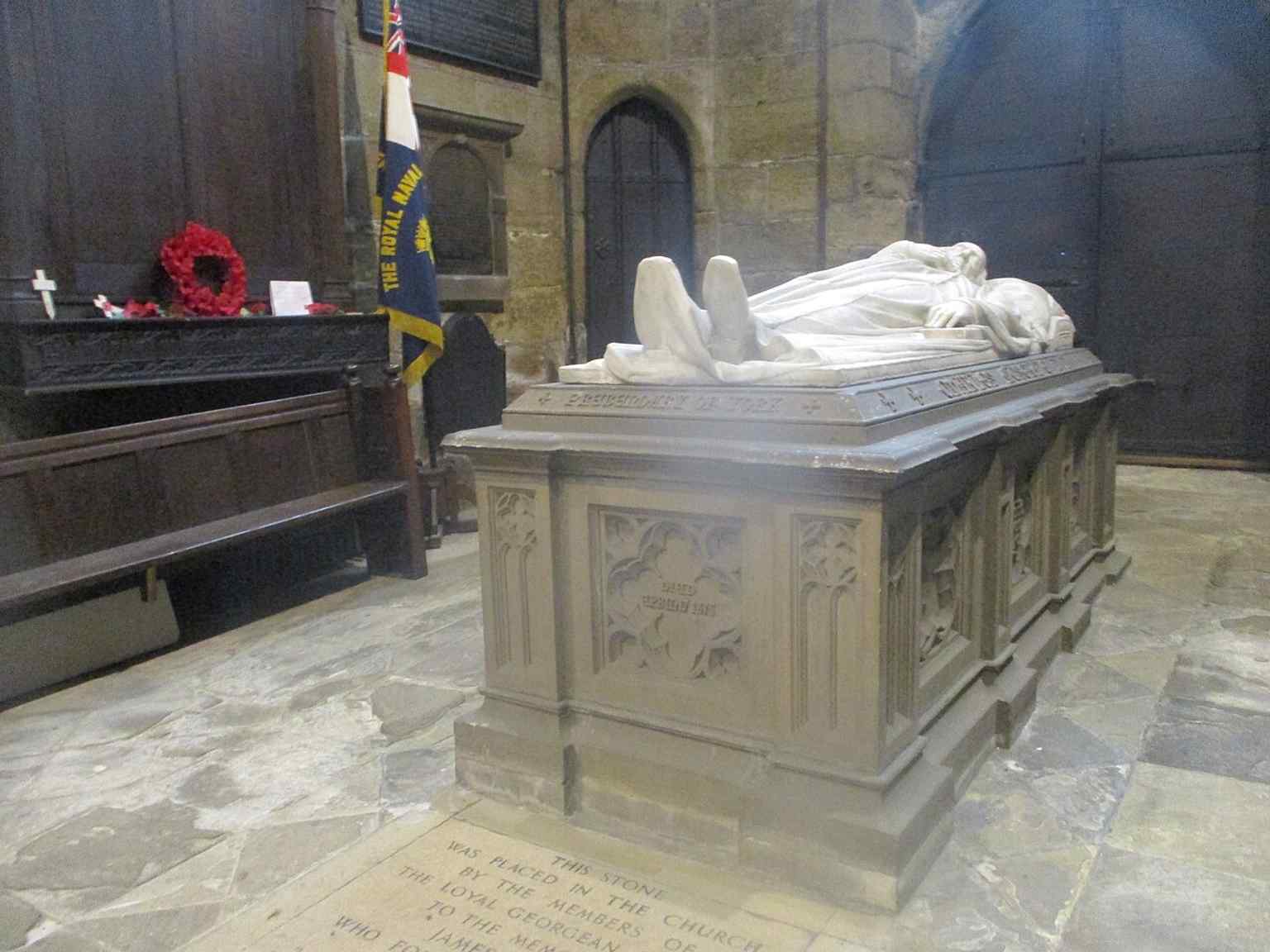
The church interior with its rich historic fittings, reflecting centuries of change and restoration.Photo: Mtaylor848, Wikimedia Commons, CC BY-SA 4.0. Cropped & resized. 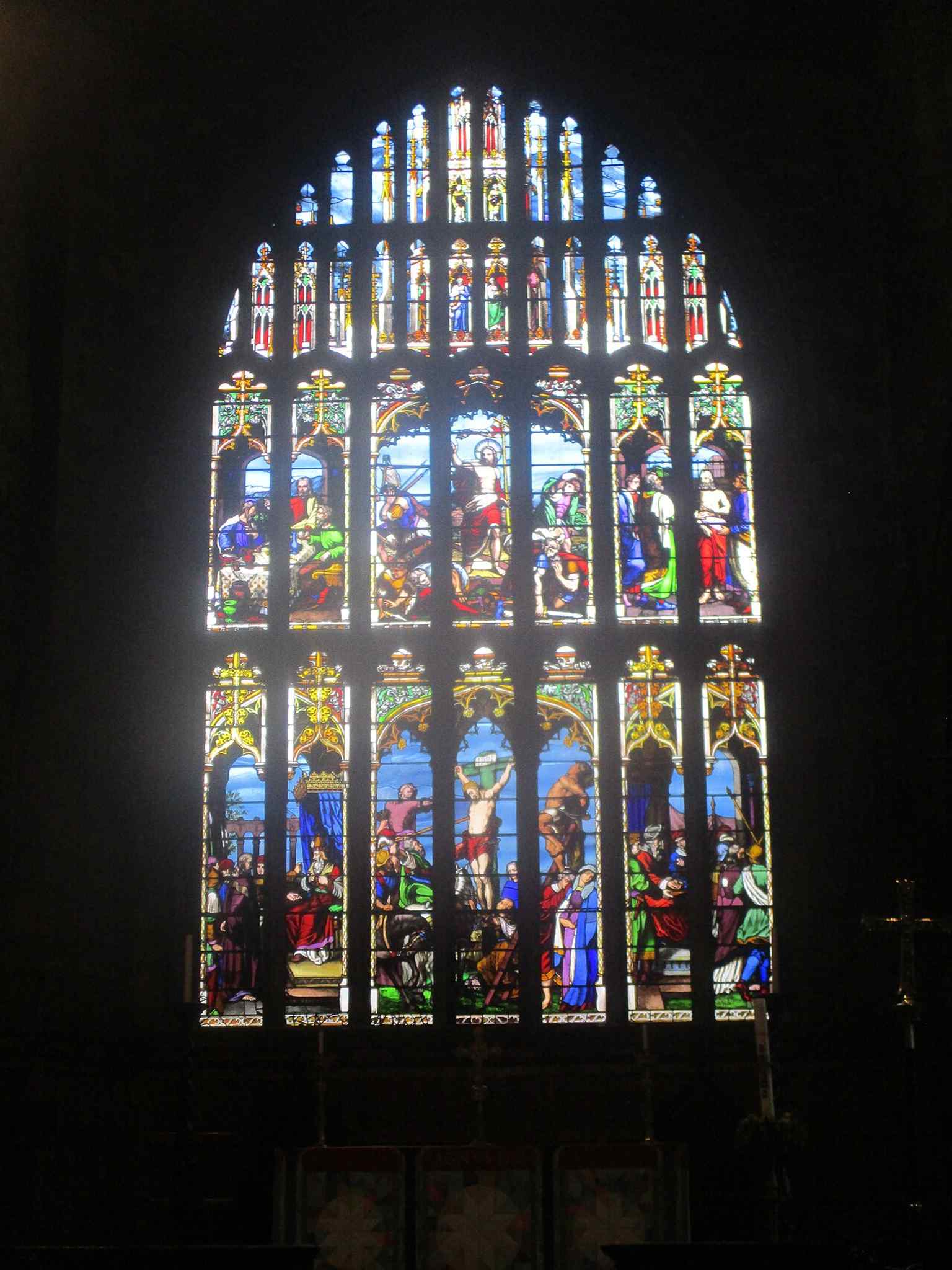
A stained-glass window detail, part of the Minster’s mix of surviving medieval and Victorian glass.Photo: Mtaylor848, Wikimedia Commons, CC BY-SA 4.0. Cropped & resized. 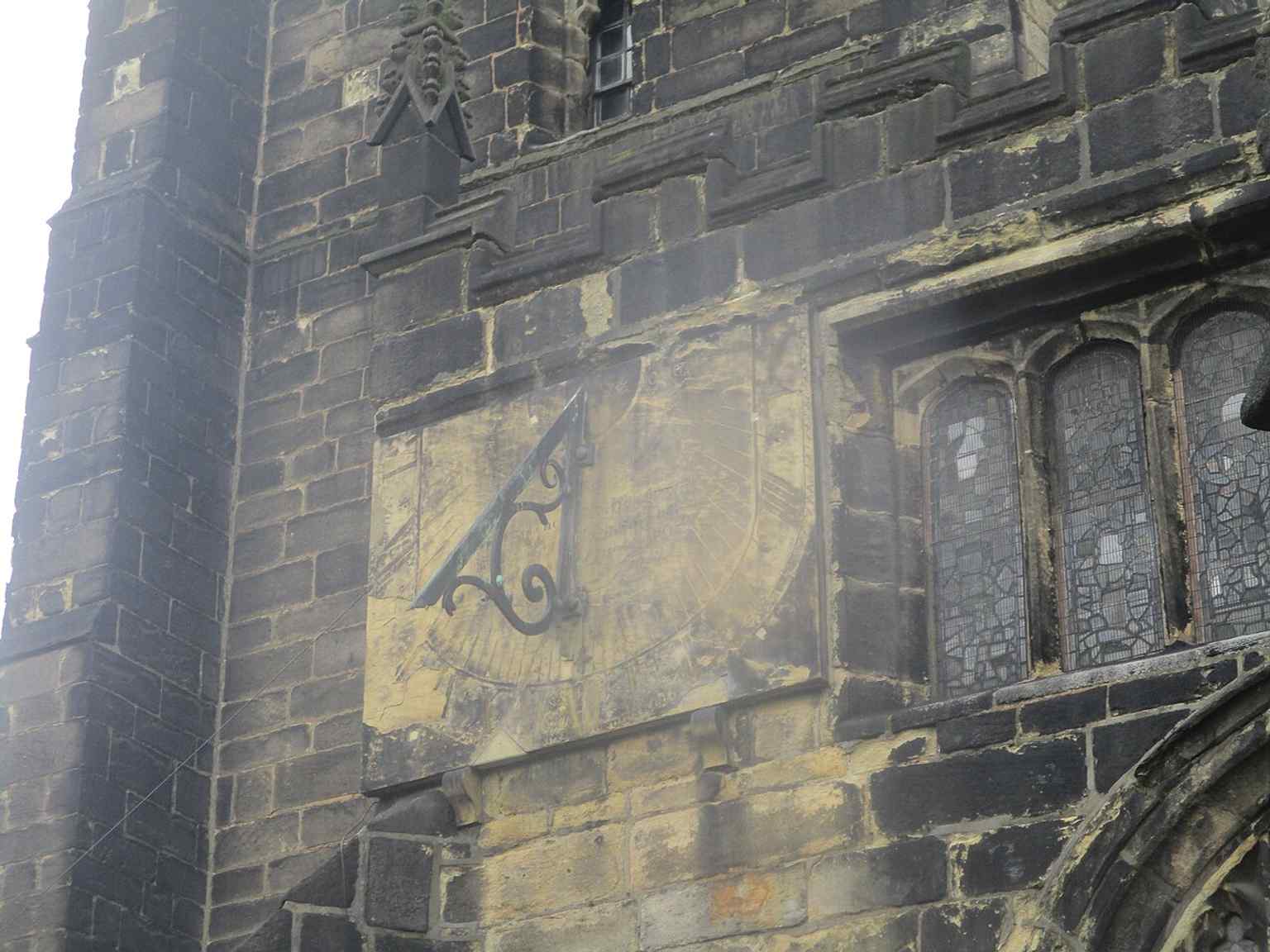
The church’s vertical sundial, a small but distinctive historic feature on the Minster exterior.Photo: Mtaylor848, Wikimedia Commons, CC BY-SA 4.0. Cropped & resized. 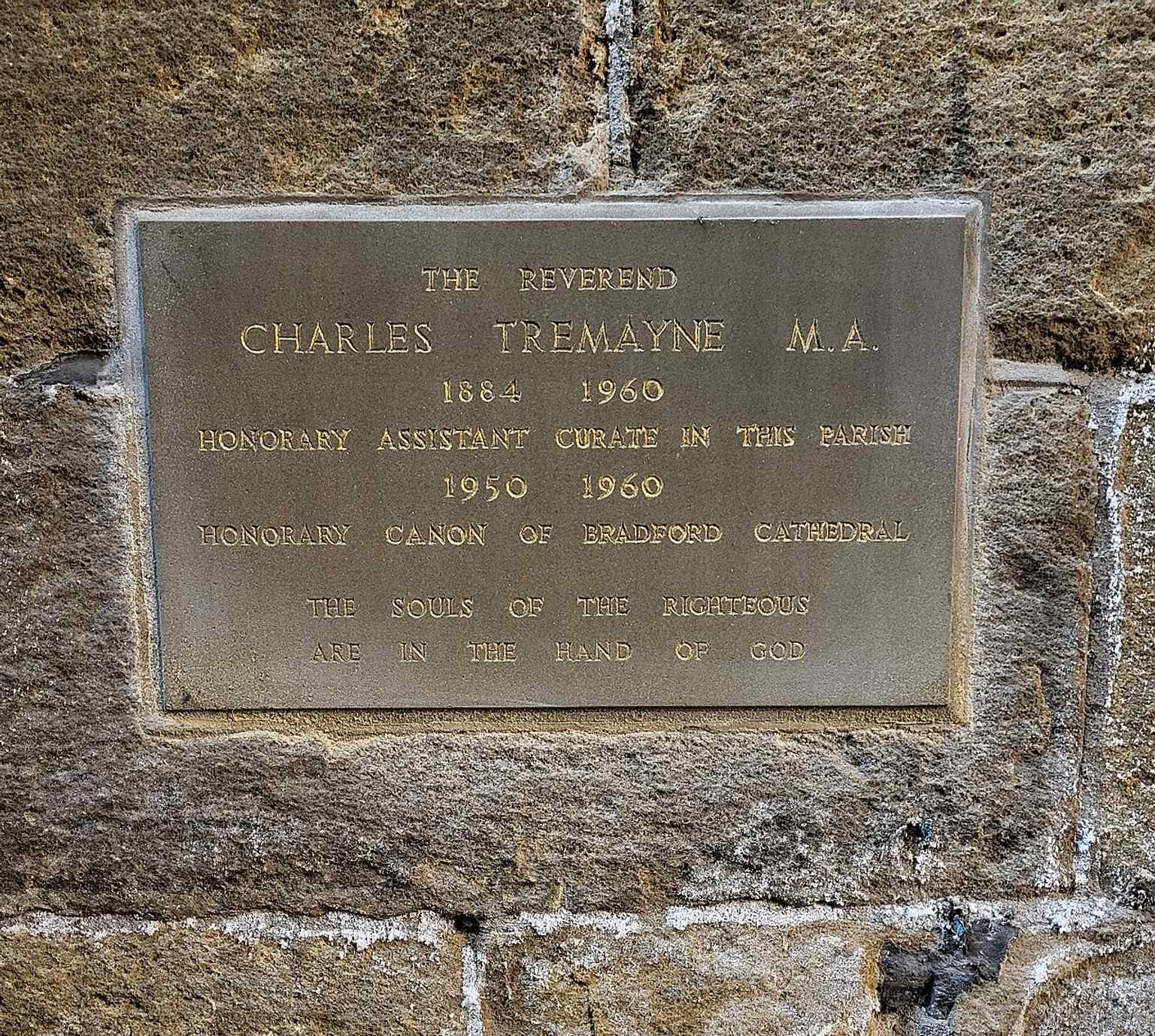
A memorial plaque inside the Minster, showing the many commemorative monuments preserved here.Photo: Jowaninpensans, Wikimedia Commons, CC BY-SA 4.0. Cropped & resized. On your right, look for the solid stone mill building with its long rows of rectangular windows, pitched roof, and plain factory frontage. This is Halifax with its sleeves rolled…Read moreShow less
Open dedicated page →On your right, look for the solid stone mill building with its long rows of rectangular windows, pitched roof, and plain factory frontage.
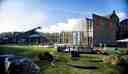
This is Halifax with its sleeves rolled up. Calderdale Industrial Museum celebrates the area’s industrial heritage, and inside are working machines from eighteen fifty to nineteen thirty, each one either built in Halifax or used here. Picture gears clattering, belts whipping, engines thumping, and the sharp tang of oil and metal... this place keeps that world alive. The museum opened in nineteen eighty-seven with support from Calderdale Metropolitan Council, then a private trust took over the lease in February two thousand and fourteen. It closed for renovation and reopened in September two thousand and seventeen. If you glance at the before-and-after image in the app, you can see this Square Works frontage change from a closed-up industrial relic in two thousand and nine to a cared-for museum by twenty twenty-three. Even better, volunteers from the Calderdale Industrial Museum Association run it with no direct funding. It’s usually open only on Saturdays from ten in the morning to four in the afternoon.
This stop shows how Halifax honors the people and machines that powered it. When you’re ready, we can carry on to the next stop.
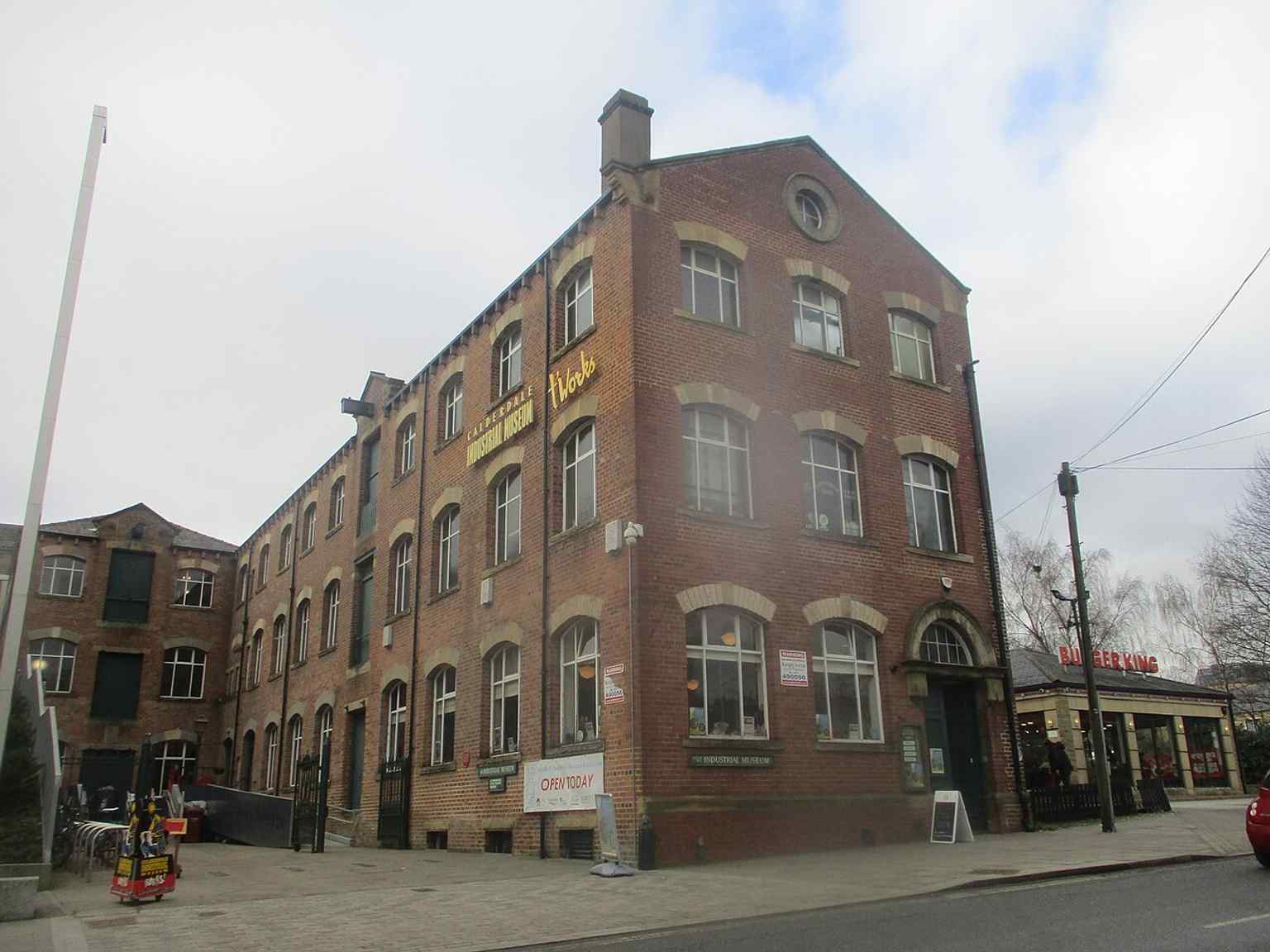
The museum building on Charles Street in Halifax, shown in 2023, where volunteers preserve the town’s industrial heritage and working machines.Photo: Mtaylor848, Wikimedia Commons, CC BY-SA 4.0. Cropped & resized.
Show 9 more stopsShow fewer stopsexpand_moreexpand_less
On your right, look for the red-brick, almost box-shaped chapel with its square form and the surviving steeple beside it, now woven into the library. Square Chapel started as a…Read moreShow less
Open dedicated page →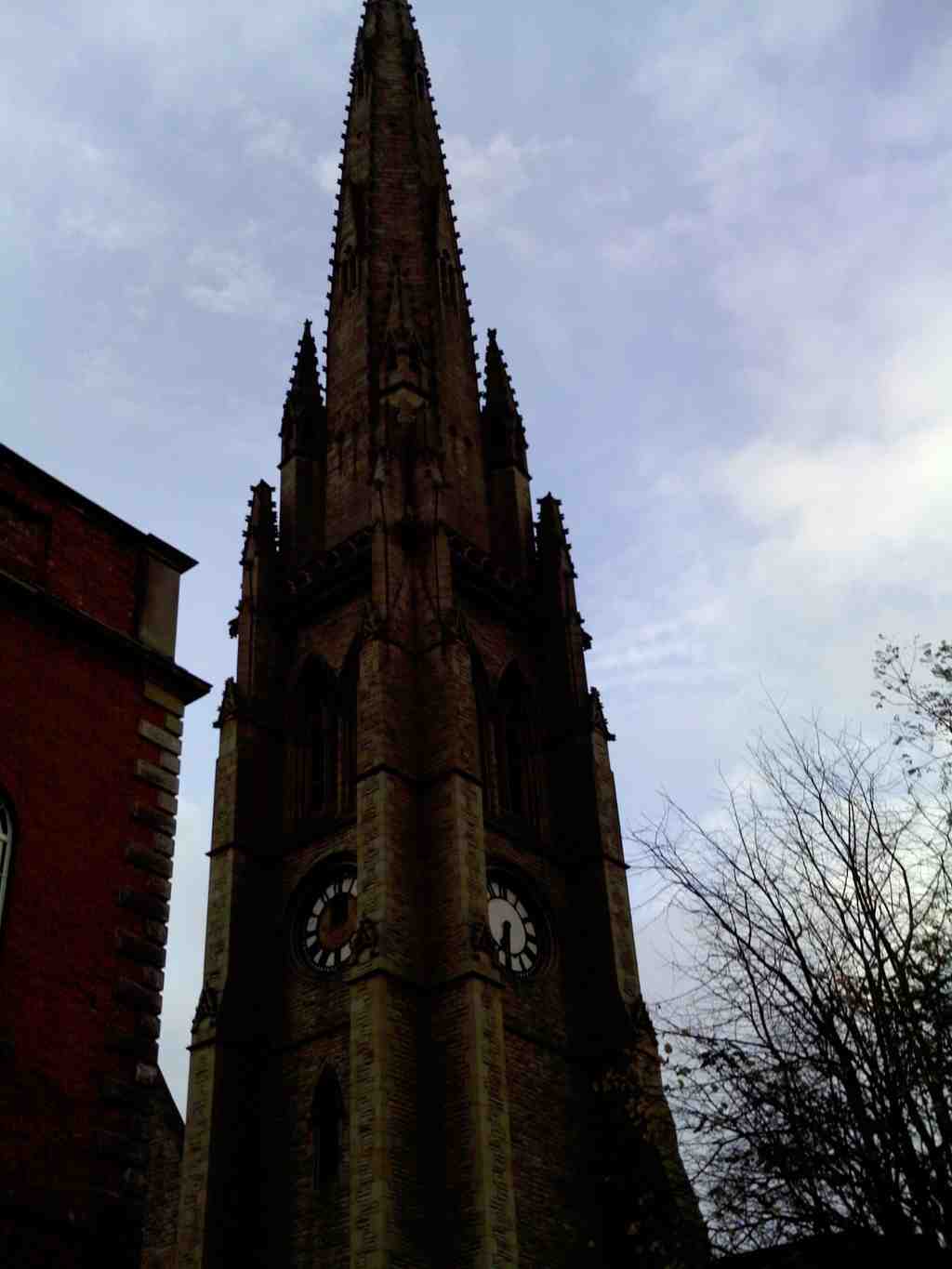
Square ChapelPhoto: Mtaylor848, Wikimedia Commons, CC BY-SA 3.0. Cropped & resized. On your right, look for the red-brick, almost box-shaped chapel with its square form and the surviving steeple beside it, now woven into the library.
Square Chapel started as a bold idea from local preacher Titus Knight, and architects Thomas Bradley and James Kershaw set it rising in seventeen seventy-two. John Wesley himself came here that July... and that tells you this place mattered fast. It was a Nonconformist chapel, meaning it served Protestants outside the Church of England, so the design kept the inside open, with no supporting pillars blocking the preacher from view. Even the material made a statement: red brick, not Calderdale’s usual stone. In the eighteen fifties, a new chapel joined it on the north side, and this older building became a Sunday school. If you check the before-and-after image, you can see how the tower-heavy view of two thousand and nine became today’s polished arts setting. Since nineteen ninety-two, music, theatre, and performance have filled these walls again, and both chapel and steeple are specially protected historic treasures.
This place shows Halifax turning faith, memory, and art into one living story. Take your time here... when you're ready, we can continue to Piece Hall.
In front of you rises a huge honey-colored sandstone rectangle, lined with repeating arched galleries and marked by a grand classical gateway. This is the Piece Hall, a Grade One…Read moreShow less
Open dedicated page →In front of you rises a huge honey-colored sandstone rectangle, lined with repeating arched galleries and marked by a grand classical gateway.
This is the Piece Hall, a Grade One listed building, which means it has the highest level of historic protection in the U-K. Halifax created it for handloom weavers to sell their cloth “pieces” - finished lengths of woollen fabric, including worsted, a smooth tightly spun wool cloth that became one of Yorkshire’s great signatures. In seventeen seventy-four, local leaders chose this site, Talbot Croft, because they wanted buyers and sellers in one organized place... more competition, faster deals, and fewer fraudsters.
When the hall opened on the first of January, seventeen seventy-nine, it contained three hundred and fifteen separate rooms around one open courtyard. That layout mattered. Traders could inspect cloth, argue over price, and keep negotiations private, room by room, while the whole building functioned like a giant engine for Halifax’s textile trade. If you glance at the app, the aerial image shows that rare rectangular plan beautifully clearly. And the cloister image reveals the covered galleries that tied all those little trading rooms together.
My favorite part is the mystery: nobody knows for certain who designed it. Historians have suggested Thomas Bradley, Samuel and John Hope, and John Carr, but the true architect never signed the story.
Then the Industrial Revolution changed everything. Bigger mills cut out the small producers, and the hall declined. Halifax Corporation bought it in eighteen sixty-eight and turned it into a wholesale market. By nineteen seventy-one, people even considered tearing it down... but public funding saved it. After another major restoration, costing nineteen million pounds, the Piece Hall reopened in August twenty seventeen and began a bold new chapter, even hosting major live music, with Father John Misty headlining the first big concert.
It’s open daily from nine in the morning until eleven at night if you’d like to return and explore more.
This place is Halifax turning cloth, commerce, and culture into architecture. Stay with it for a moment... and when you’re ready, we can head on to the next stop.
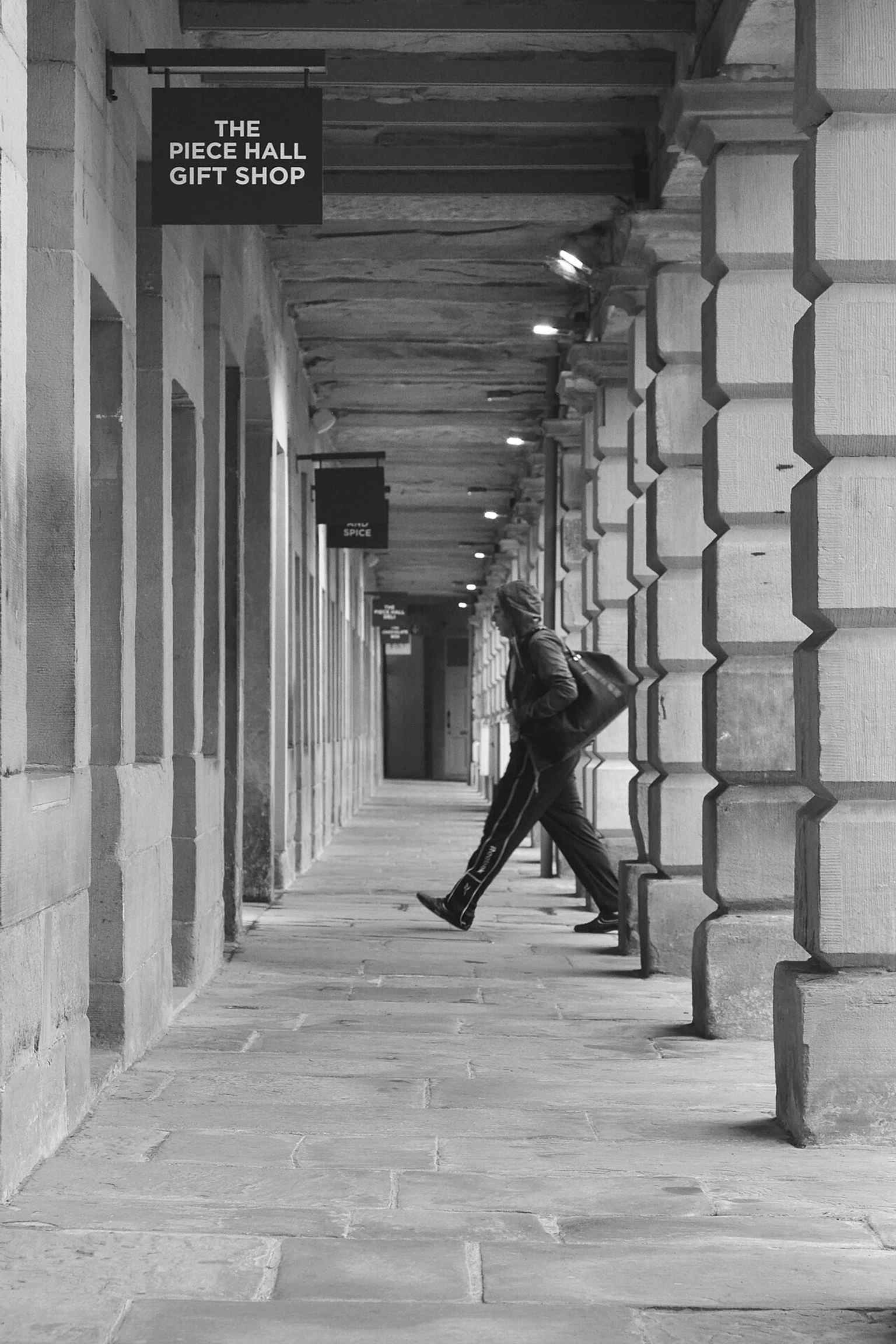
Walking through the North Cloisters reveals the covered galleries around the courtyard, part of the hall’s distinctive enclosed market layout.Photo: Vauxhall Bridgefoot, Wikimedia Commons, CC BY-SA 4.0. Cropped & resized. On your right, Halifax Town Hall rises in pale sandstone with a grand arched portico, a tall corner tower and spire, and the old Halifax coat of arms carved above the…Read moreShow less
Open dedicated page →On your right, Halifax Town Hall rises in pale sandstone with a grand arched portico, a tall corner tower and spire, and the old Halifax coat of arms carved above the entrance.
This place is Halifax showing off... and honestly, it earned the right. In the mid nineteenth century, the town kept asking for a proper civic headquarters, first in eighteen forty-seven, then again in eighteen fifty-three, then again in eighteen fifty-six. The push really gathered force after the Improvement Act allowed the borough to borrow fifteen thousand pounds, roughly a couple of million pounds today, for a town hall, courthouse, and police station. Local industrial giant John Crossley was reshaping this area at the same time, and that helps explain why the hall fits so neatly with the surrounding Crossley Street buildings.
Then came a wonderful twist. Charles Barry judged the design competition, disliked every entry, and the town basically said... fine, you do it. He did. Barry drew up this confident classical design, meaning a style inspired by ancient civic buildings, full of arches, columns, balance, and authority. He died in eighteen sixty, so his son, Edward Middleton Barry, carried the design through. Whiteley Brothers built it on land from Crossley, using twenty-four thousand tons of local Ringby sandstone from Swales Moor.
Now look up at that tower. It climbs to one hundred and eighty feet, and it is packed with symbolism. Sculptor John Thomas decorated the steeple with figures representing Europe, Asia, Africa, and North America, with four seven-foot angels at the corners. If you want a closer look, check the tower image on your screen. It is such a Victorian idea of worldliness: empire, trade, ambition, all carved into stone above the town.
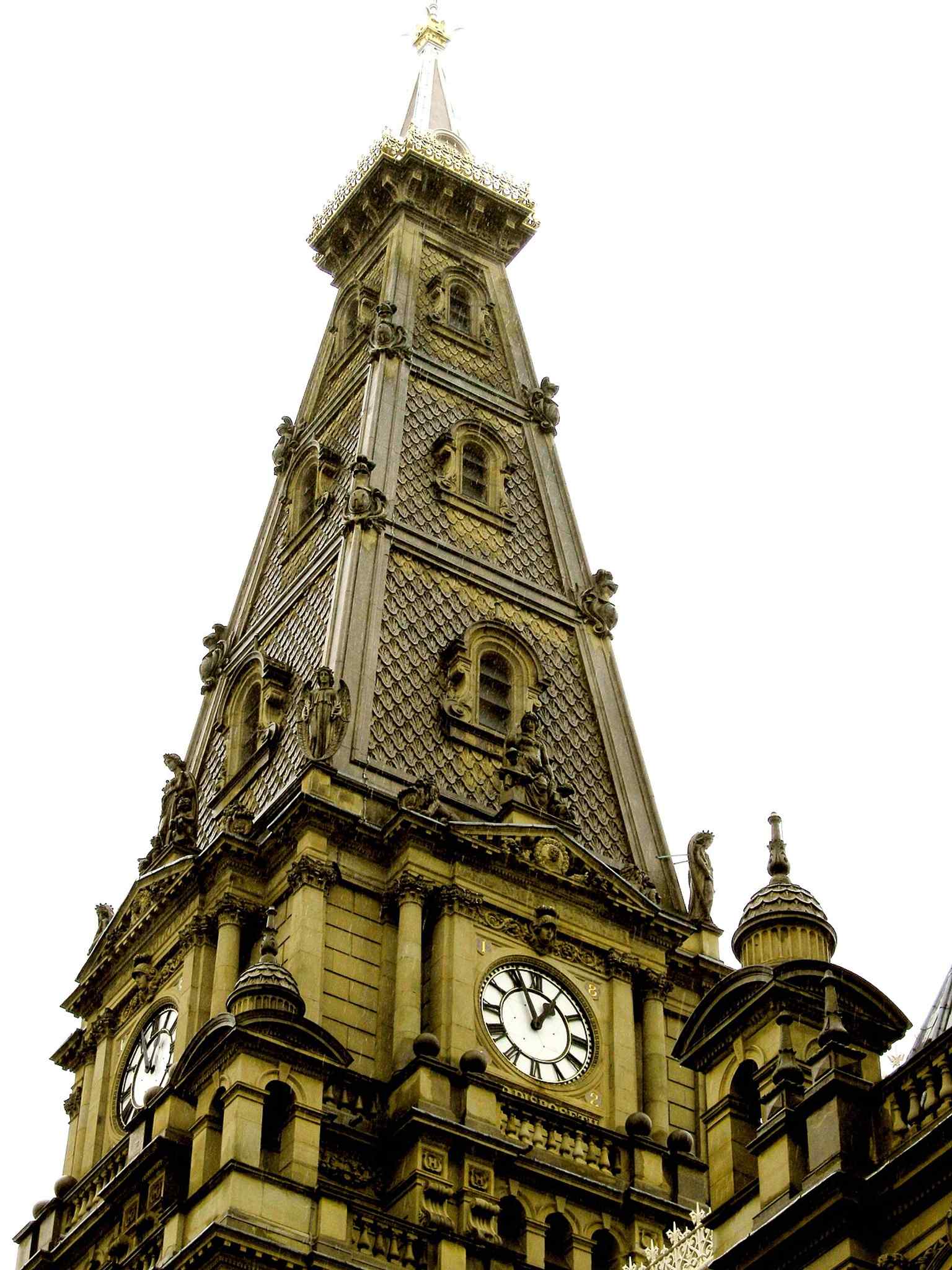
The soaring tower and spire, a key feature of the building, with the 180-foot steeple and its sculptural programme by John Thomas.Photo: Linda Spashett Storye_book, Wikimedia Commons, CC BY 3.0. Cropped & resized. And the opening? Absolutely enormous. On the third and fourth of August, eighteen sixty-three, three hundred and fifty-eight trains brought seventy thousand people, and thousands more walked in. The future Edward the Seventh arrived by royal train, greeted by guns on Beacon Hill and a guard of honor of three hundred soldiers. There was a grand procession, children singing hymns in the Piece Hall, hundreds of police controlling the crowds, a banquet, a balloon ascent, and fireworks. Princess Alexandra did not come, to the heartbreak of many spectators, and the Halifax Courier described streets fragrant with flowers even as relentless rain turned celebration into soggy chaos.
Inside, the drama keeps going. Victoria Hall glows with mosaic floors, ornate plasterwork, and a blue-and-green glass ceiling. The grand staircase rises under a blue glass dome, with paintings by Daniel Maclise and J. C. Horsley. If you fancy a peek, the app shows that spectacular interior beautifully. The building still serves as the headquarters of Calderdale Metropolitan Borough Council, so this is not a frozen monument; it is still doing the civic job it was created for.
One tiny detail I love: the bells have not rung at night since nineteen eighteen, because the great singer Dame Nellie Melba complained they disturbed her sleep at Halifax’s Princess Hotel. That is local government meeting diva power, and somehow it feels exactly right.
Halifax built this town hall to sound important, look important, and believe in its own future.
Take one more look up at the spire, and when you’re ready, we can carry on to the bus station.
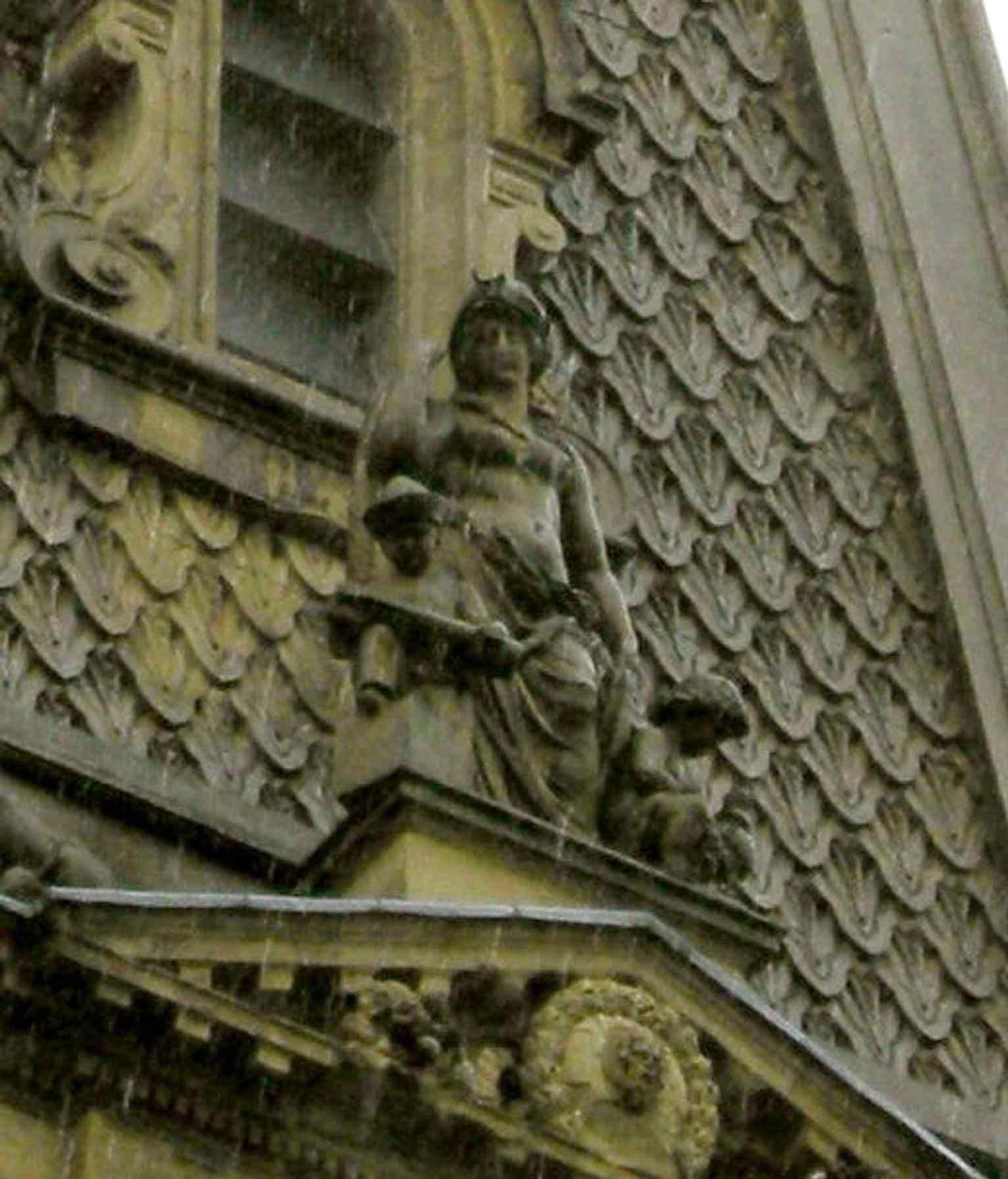
A close look at the statue of Asia on the spire, one of the four continent figures carved for the tower and completed under Daniel Maclise’s supervision.Photo: Linda Spashett Storye_book, Wikimedia Commons, CC BY 3.0. Cropped & resized. On your right, look for a broad glass-and-steel station hall with a long low roof and a clean row of bus bays built into the frontage. This is Halifax bus station, owned and…Read moreShow less
Open dedicated page →On your right, look for a broad glass-and-steel station hall with a long low roof and a clean row of bus bays built into the frontage.
This is Halifax bus station, owned and managed by West Yorkshire Metro, and it tells a very modern kind of town story: not ancient stone, but reinvention. The older station used several island platforms, those central boarding strips surrounded by traffic, and then in March twenty twenty-one crews began preparing a complete replacement. They had to keep Halifax moving while they rebuilt it, so the station shifted through a careful series of temporary layouts... first a few old stands stayed open, then services moved left, then south, and by late February twenty twenty-two passengers were using a six-stand temporary station labeled A to F. It was basically transport choreography with hard hats.
The new station reopened on the first of October, twenty twenty-three, with nineteen reversal bays, a layover area, and four accessible entrances from the town centre side, including routes from Northgate, Winding Road, and Wade Street. If you like, tap the before-and-after image and you’ll see how dramatically this Winding Road side changed from building site to gateway.
And what a gateway it became. The fifteen point four million pound redevelopment created a fully enclosed station with solar power on the rooftops, coach departures from stand one, and stands two and three set aside for drop-offs. By July twenty twenty-four, the final phase finished, all nineteen stands were in use, and services including National Express coaches had returned. Inside, travelers can find A-T-M-s, defibrillators, a newsagent, public toilets, and a Travel shop.
From here, First West Yorkshire, Arriva Yorkshire, and Team Pennine send buses out to places like Brighouse, Elland, Ripponden, Sowerby Bridge, Bradford, Leeds, and Keighley. Even routes that once skipped the station, including many for Illingworth and Mixenden, now come back through this hub.
This is Halifax in motion, practical and proud.
Take it in for a moment, and when you’re ready, we can continue on to the power station.
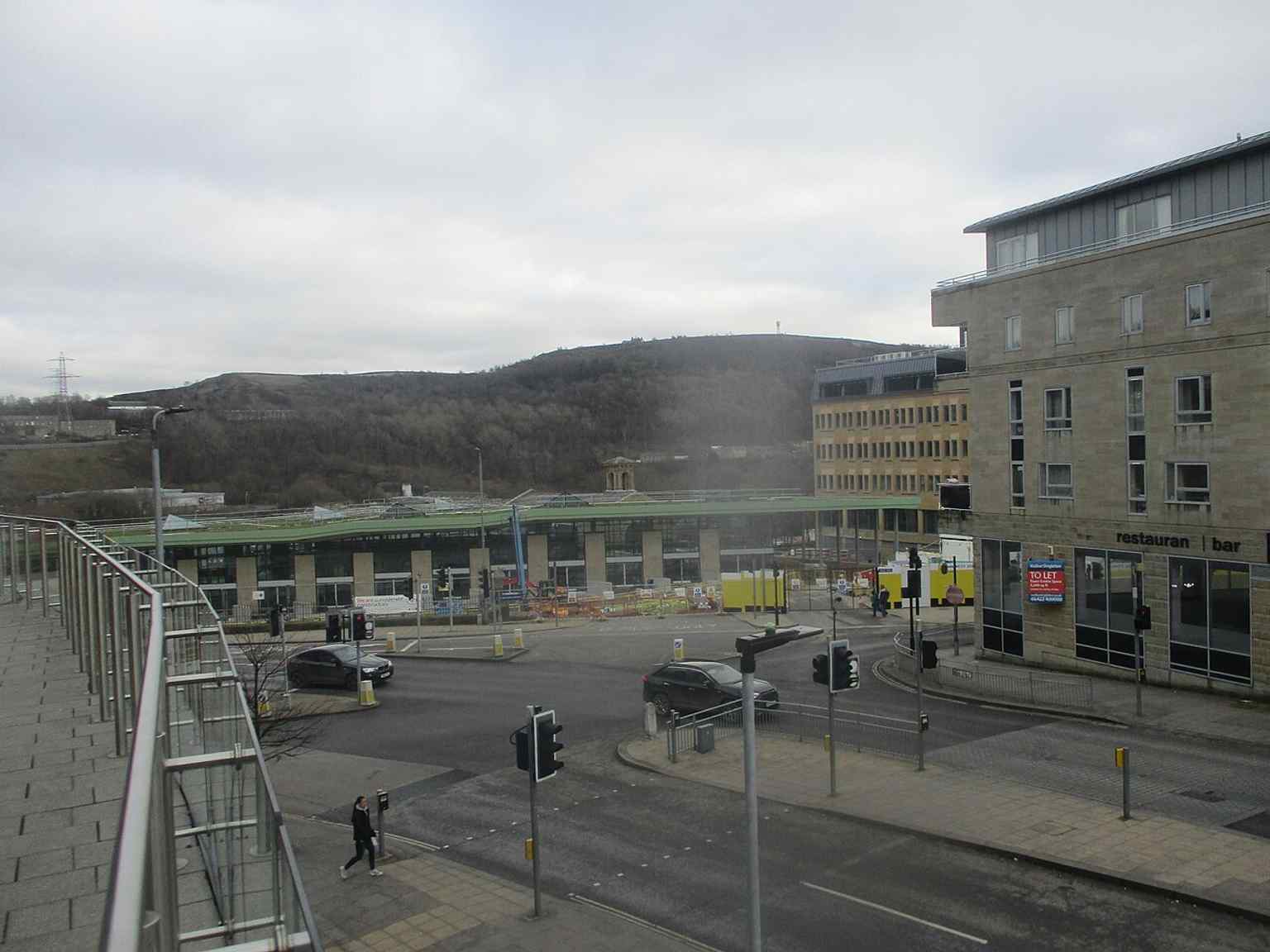
The bus station site under redevelopment in 2023, showing the major rebuild that replaced the old island-platform layout.Photo: Mtaylor848, Wikimedia Commons, CC BY-SA 4.0. Cropped & resized. 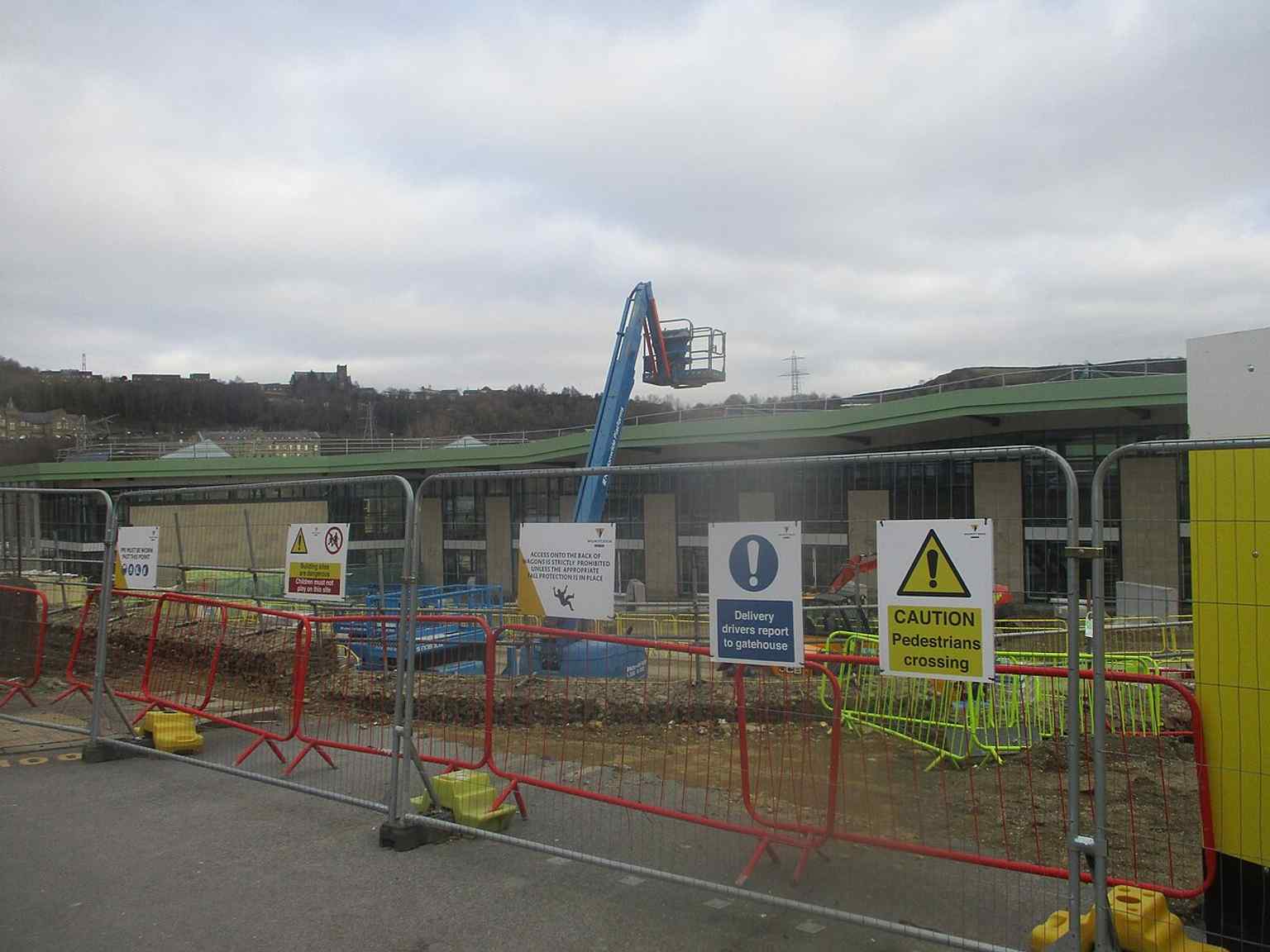
A view from Northgate during construction, one of the three town-centre access routes mentioned in the station’s description.Photo: Mtaylor848, Wikimedia Commons, CC BY-SA 4.0. Cropped & resized. 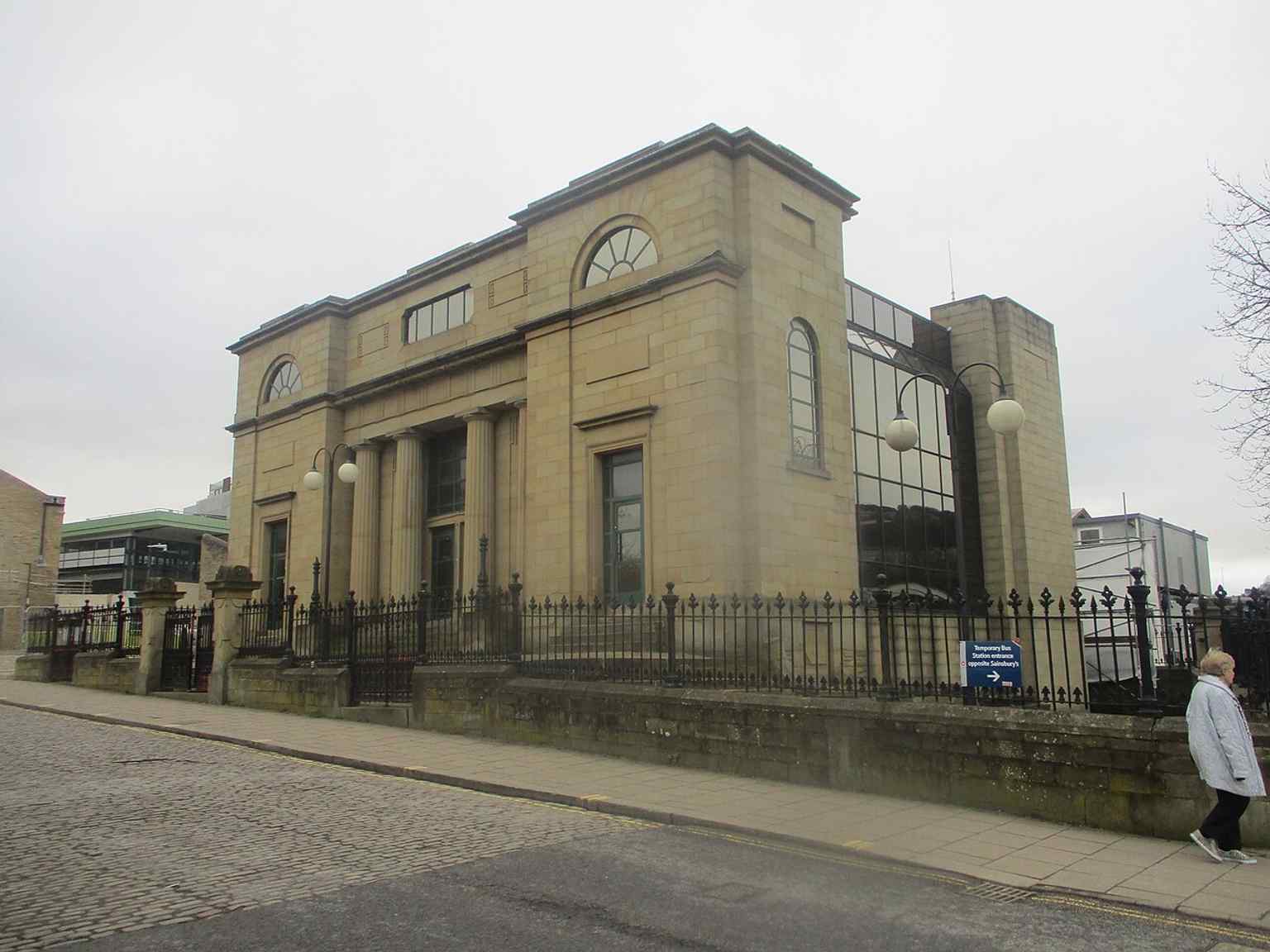
The Halifax bus station works seen from Wade Street, part of the phased redevelopment that kept services running while the new station was built.Photo: Mtaylor848, Wikimedia Commons, CC BY-SA 4.0. Cropped & resized. 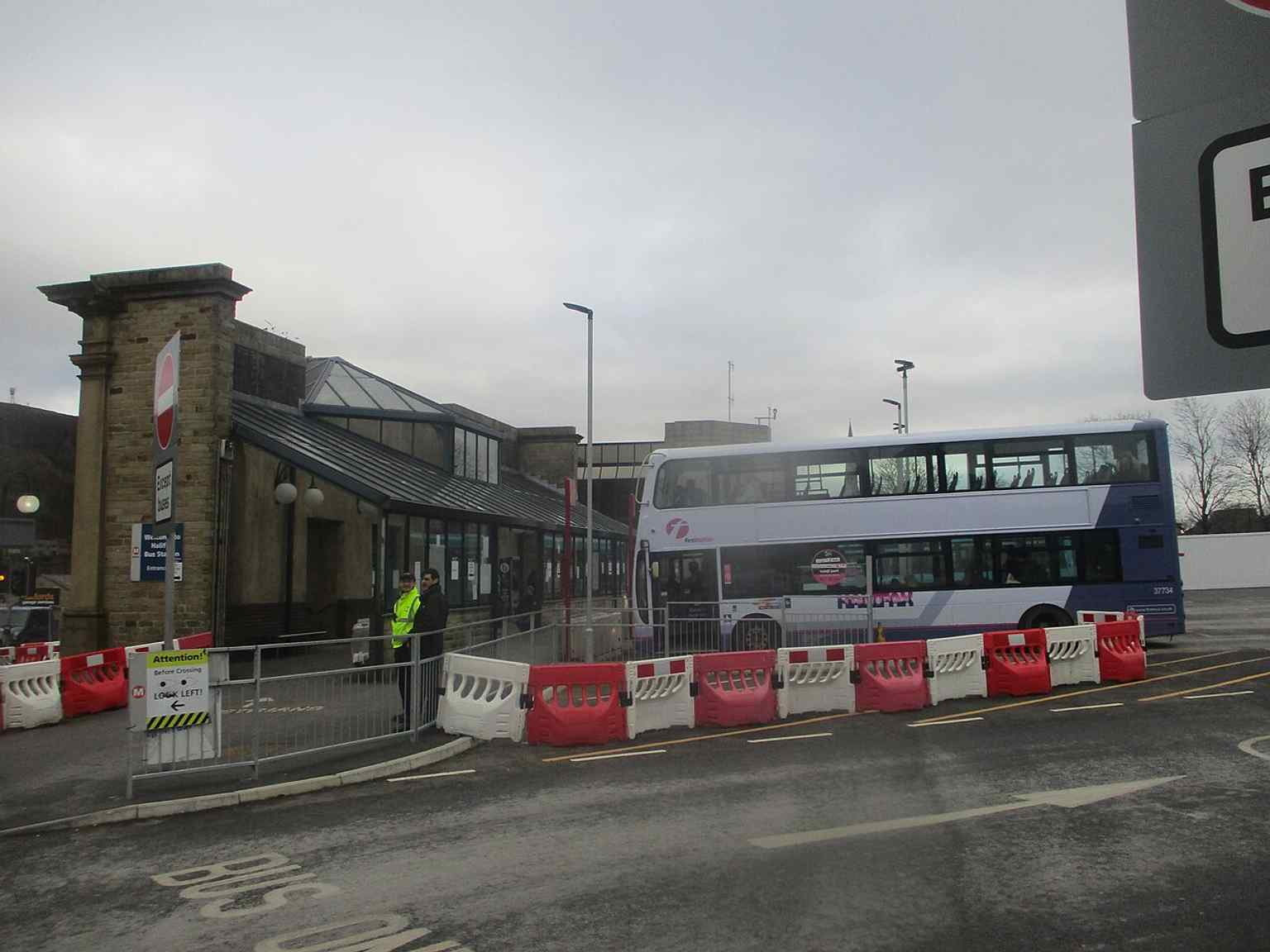
Construction seen from Winding Road, another of the approaches to the station in Halifax town centre.Photo: Mtaylor848, Wikimedia Commons, CC BY-SA 4.0. Cropped & resized. On your left is a broad iron-and-stone bridge with two sweeping arches, Gothic-style railings, and a little turret that holds a drinking fountain. North Bridge is Halifax showing…Read moreShow less
Open dedicated page →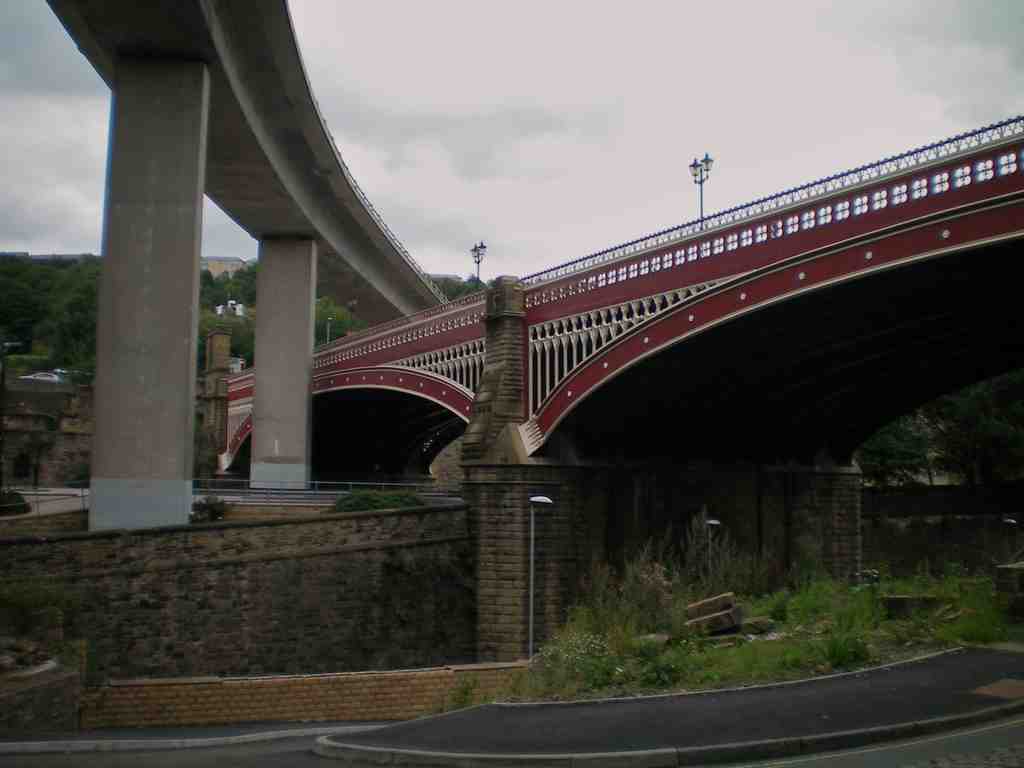
North Bridge, HalifaxPhoto: Charlesdrakew, Wikimedia Commons, Public domain. Cropped & resized. On your left is a broad iron-and-stone bridge with two sweeping arches, Gothic-style railings, and a little turret that holds a drinking fountain.
North Bridge is Halifax showing off. It strides across the Hebble valley in Victorian Gothic style, a nineteenth-century taste for church-like drama, with buttresses, pointed lancet openings, and parapets pierced with quatrefoils, those four-lobed shapes you see in medieval design, plus tiny Maltese crosses worked into the pattern. If you check the image on your screen, you can really catch those details in the bridge skin itself.
But this crossing has a long, rough family history. A wooden bridge stood here by the year twelve seventy-seven. Then a stone one took over, and in seventeen seventy, during Rogation Day, when people walked the parish boundary in a ceremony called beating the bounds, that bridge collapsed and injured many in the crowd. Halifax did not give up. Matthew Oates of Northowram started a replacement in seventeen seventy-two, using stone from Crib Lane quarries. His bridge stretched four hundred feet in six arches and carried the main toll road, complete with a toll booth. After a fatal incident there in eighteen nineteen, workers added iron palisades for safety. Even that bridge suffered, with flash flooding knocking part of it down in eighteen fifty-five.
Then came the version beside you. Brothers John and James Fraser of Leeds designed it, and John knew railway bridges inside out. They lifted this bridge eleven feet higher than the old one so the Halifax and Ovenden Joint Railway could run beneath the northern end, with North Bridge Station stretching under it. That is such a classic Victorian move... solve traffic, rail travel, and civic pride all at once.
The opening on the twenty-fifth of October, eighteen seventy-one turned gloriously chaotic. The town got a half-day holiday, crowds flooded the bridge before the mayor arrived, police tried to clear space, yeomanry rode in, twenty dragoons blocked the entrance, and after speeches from local grandees and visiting mayors, the ceremony ended with an artillery salute. Halifax did not do quiet ribbon-cuttings.
If you want the bigger picture, look at the app image showing North Bridge beside Burdock Way. That modern flyover took the heaviest traffic in nineteen seventy-three, letting this older bridge settle into local service. Before that, trams rattled across here too, and in nineteen oh-six one runaway double-decker overturned on the bridge, killing two people and injuring eleven.
This bridge is not just a crossing; it is Halifax engineering, ambition, and nerve in one grand span.
Take a final look at those Gothic details, and when you're ready, we can head on to Phoenix Radio.

Frequently asked questions
How do I start the tour?
After purchase, download the AudaTours app and enter your redemption code. The tour will be ready to start immediately - just tap play and follow the GPS-guided route.
Do I need internet during the tour?
No! Download the tour before you start and enjoy it fully offline. Only the chat feature requires internet. We recommend downloading on WiFi to save mobile data.
Is this a guided group tour?
No - this is a self-guided audio tour. You explore independently at your own pace, with audio narration playing through your phone. No tour guide, no group, no schedule.
How long does the tour take?
Most tours take 60–90 minutes to complete, but you control the pace entirely. Pause, skip stops, or take breaks whenever you want.
What if I can't finish the tour today?
No problem! Tours have lifetime access. Pause and resume whenever you like - tomorrow, next week, or next year. Your progress is saved.
What languages are available?
All tours are available in 50+ languages. Select your preferred language when redeeming your code. Note: language cannot be changed after tour generation.
Where do I access the tour after purchase?
Download the free AudaTours app from the App Store or Google Play. Enter your redemption code (sent via email) and the tour will appear in your library, ready to download and start.
If you don't enjoy the tour, we'll refund your purchase. Contact us at [email protected]
Checkout securely with 





%20001.jpg)

%20022.jpg)
%20010.jpg)
%20005.jpg)

.jpg)


%20001.jpg)
.jpg)
.jpg)
%20003.jpg)