
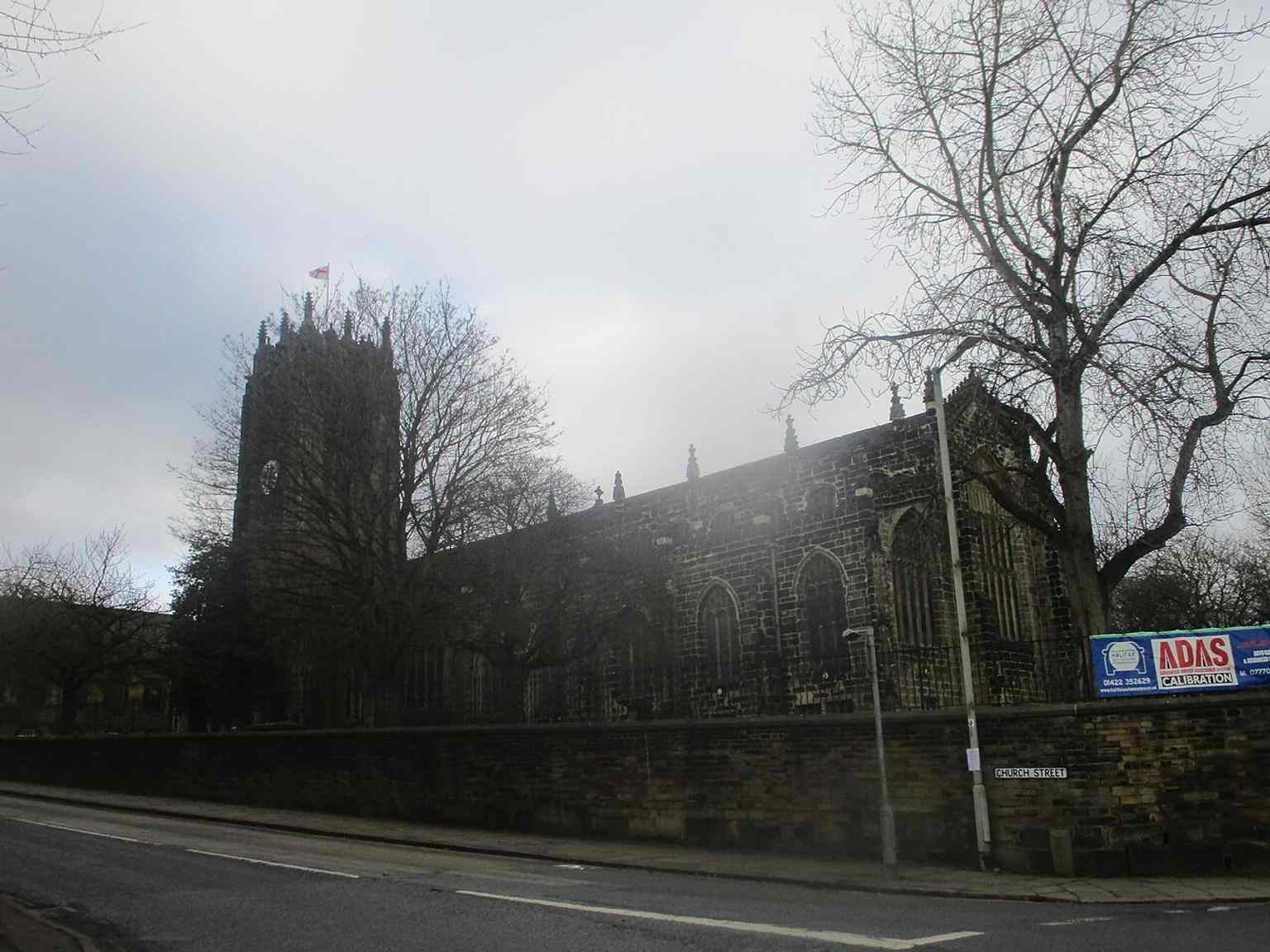
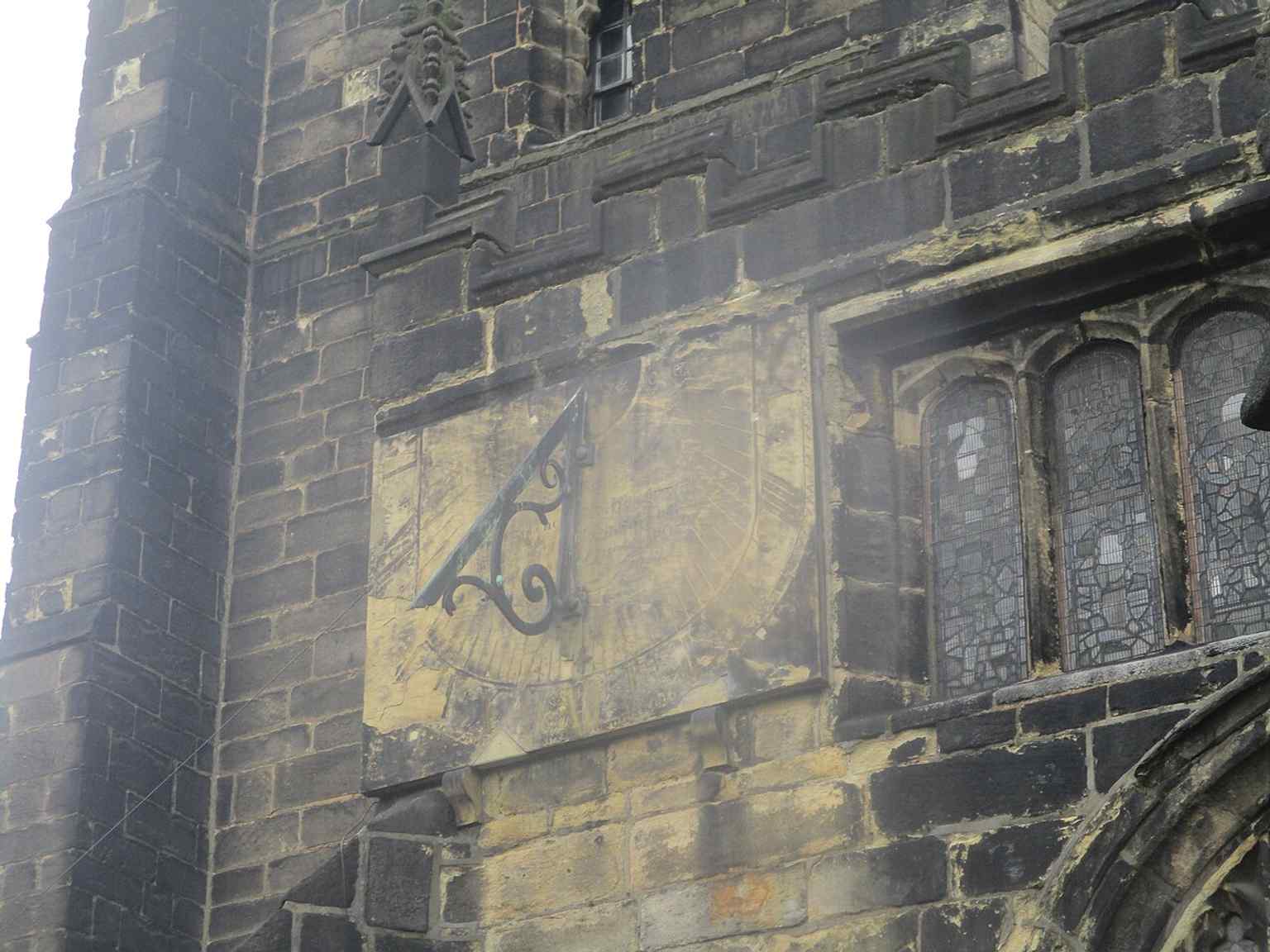
On your right, look for the pale stone church with a long Gothic roofline, a broad square tower, and a small vertical sundial cut into the outer wall.
This is Halifax Minster, dedicated to Saint John the Baptist, and it carries the kind of history that makes a whole town feel deeper. Halifax gave it minster status in two thousand and nine, a special honor that only a few churches in West Yorkshire have. But its story reaches much farther back than that... all the way to around eleven twenty, when Cluniac monks from Lewes Priory cared for an earlier Norman church on this very spot.
And here is the part I love: pieces of that older church still survive inside the fabric of this one. In the north wall, builders reused carved chevron stones from the Norman building, so the past is not just remembered here... it is literally built in. The church you see now took shape in the fifteenth century, when Halifax needed a bigger parish church for a growing population. The nave, the main central hall of the church, and the chancel, the space around the altar, were finished around fourteen fifty. The tower started rising in the fourteen forties and took more than three decades to complete, still under construction in fourteen eighty-two.
If you open the image on your phone, the interior view gives you a sense of how spacious that central hall became after later restorations cleared away galleries and opened it up again. In the late nineteenth century, George Gilbert Scott and his son John Oldrid Scott led a major restoration here, lowering some of the visual clutter and revealing more of the stone bones of the building.
Inside, the Minster is packed with wonderfully human details. There are Jacobean box pews from sixteen thirty-three and sixteen thirty-four, like little wooden rooms for worshippers. There is a spectacular medieval font cover, once gilded, designed to stop people stealing baptismal water because they believed it had healing power. That is faith, folklore, and practical security all rolled into one. There is even a life-sized wooden figure called Old Tristram, carved around seventeen oh one, who holds the alms box and may have been based on a real beggar from the church precincts.
Music matters here too. The organ began with work by John Snetzler in seventeen sixty-three, installed in seventeen sixty-six, and later builders expanded and rebuilt it into the powerful instrument the Minster treasures today. Take a glance at the organ image in the app and you can almost imagine the sound filling every arch and beam.
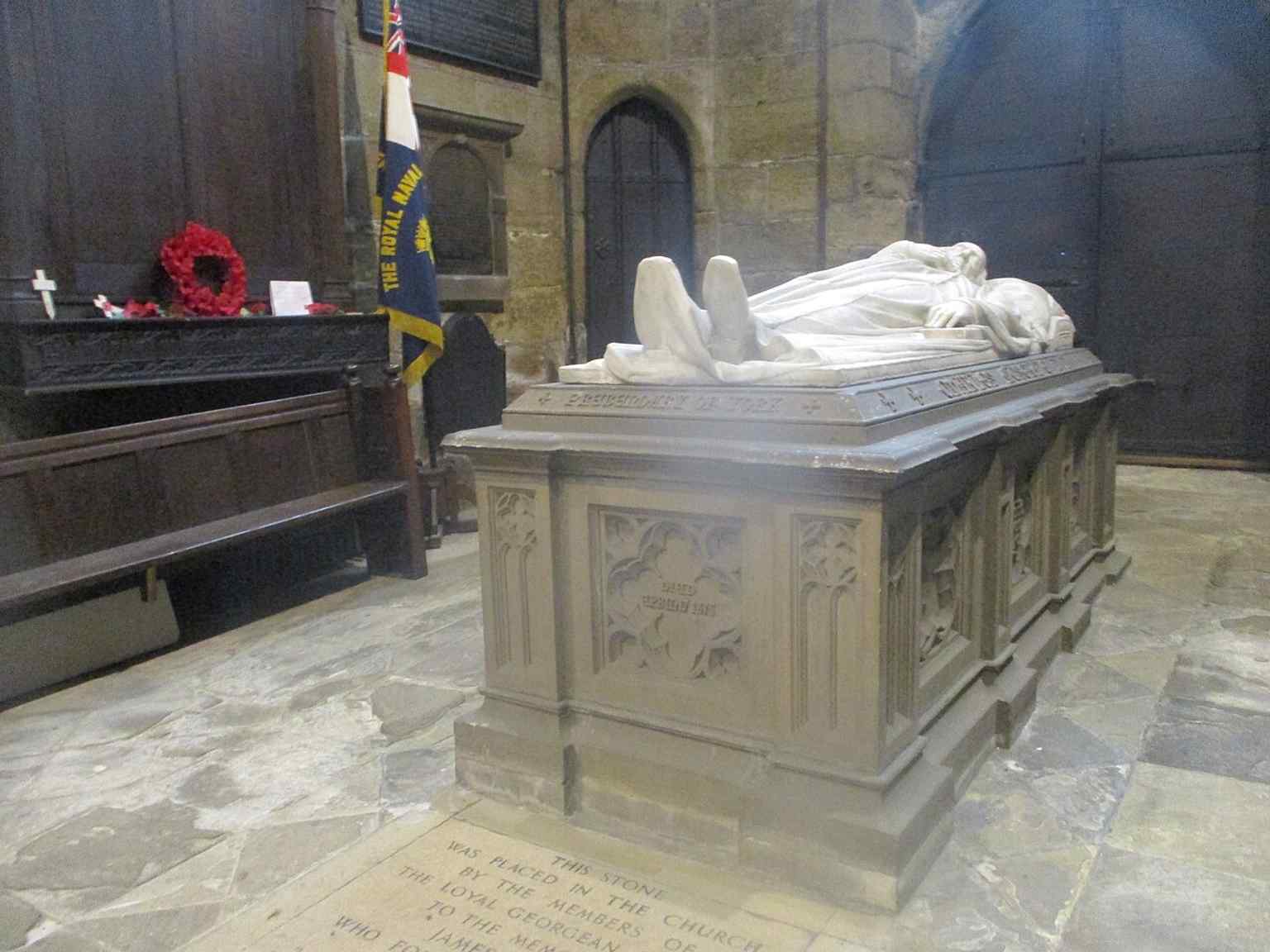
Then there are the lives remembered here. Anne Lister of Shibden Hall, Halifax's brilliant and fearless diarist, has a rediscovered tombstone inside. The Minster also became the chapel of the Duke of Wellington's Regiment, and in two thousand and seven their colours were laid up here in a formal military ceremony, binding civic pride, memory, and worship together under one roof.
If you want to step inside later, the Minster usually opens every day from noon until four.
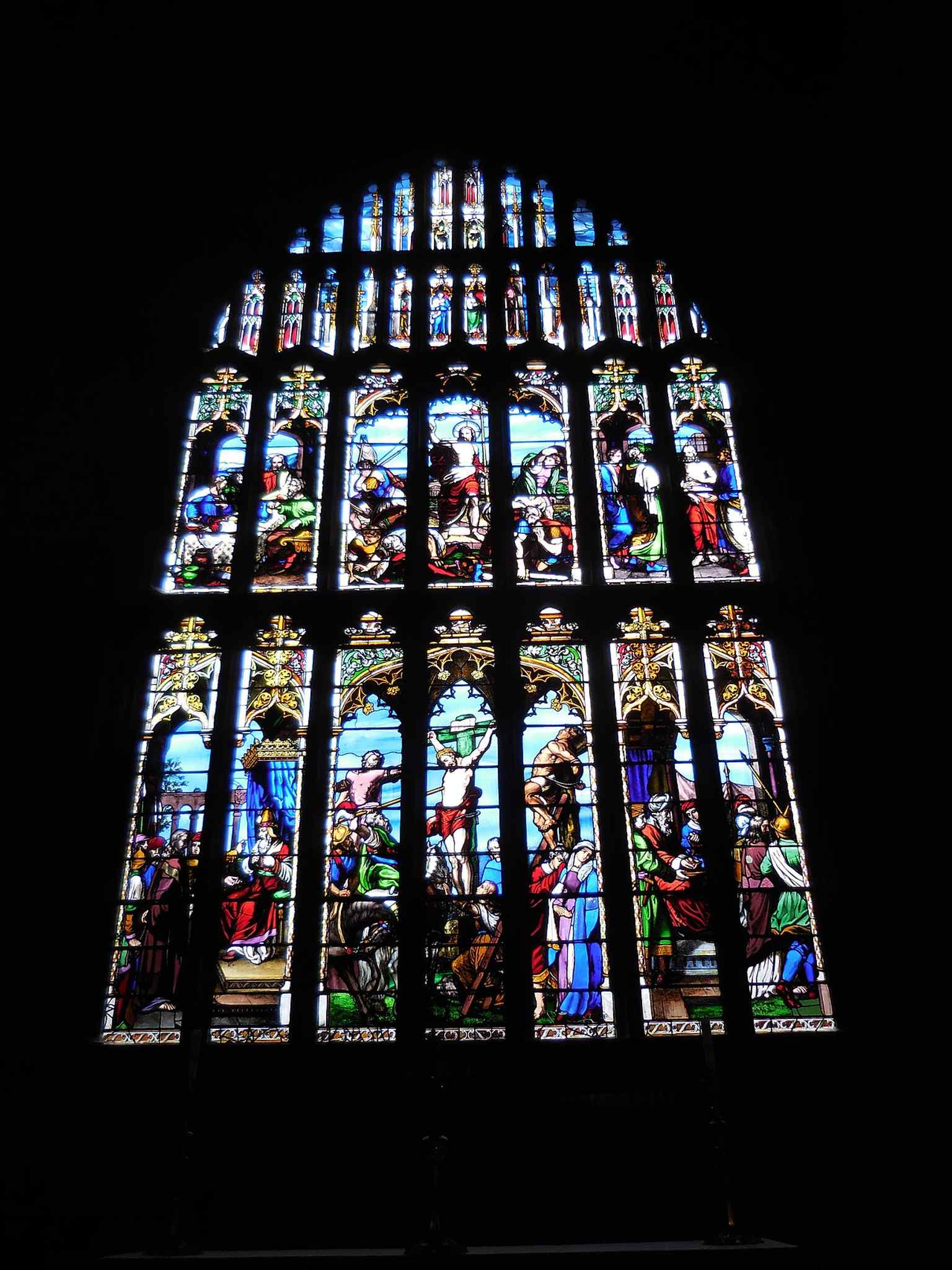
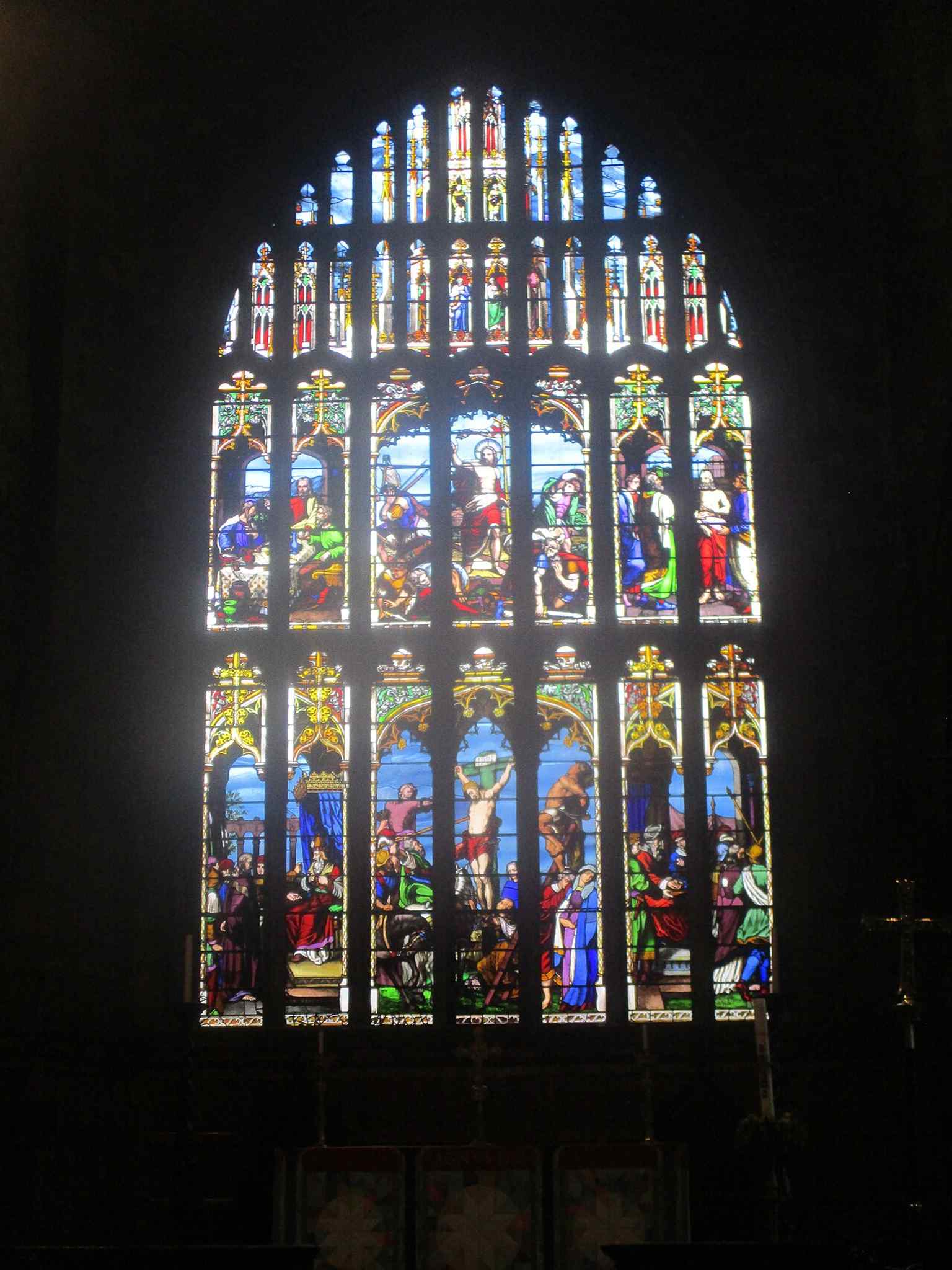
Halifax Minster feels like the town's memory bank, carved in stone, wood, glass, and music.
Take a moment with it, and when you're ready, we can continue on to the next stop.





%20001.jpg)

%20022.jpg)
%20010.jpg)
%20005.jpg)
