On your right, Halifax Town Hall rises in pale sandstone with a grand arched portico, a tall corner tower and spire, and the old Halifax coat of arms carved above the entrance.
This place is Halifax showing off... and honestly, it earned the right. In the mid nineteenth century, the town kept asking for a proper civic headquarters, first in eighteen forty-seven, then again in eighteen fifty-three, then again in eighteen fifty-six. The push really gathered force after the Improvement Act allowed the borough to borrow fifteen thousand pounds, roughly a couple of million pounds today, for a town hall, courthouse, and police station. Local industrial giant John Crossley was reshaping this area at the same time, and that helps explain why the hall fits so neatly with the surrounding Crossley Street buildings.
Then came a wonderful twist. Charles Barry judged the design competition, disliked every entry, and the town basically said... fine, you do it. He did. Barry drew up this confident classical design, meaning a style inspired by ancient civic buildings, full of arches, columns, balance, and authority. He died in eighteen sixty, so his son, Edward Middleton Barry, carried the design through. Whiteley Brothers built it on land from Crossley, using twenty-four thousand tons of local Ringby sandstone from Swales Moor.
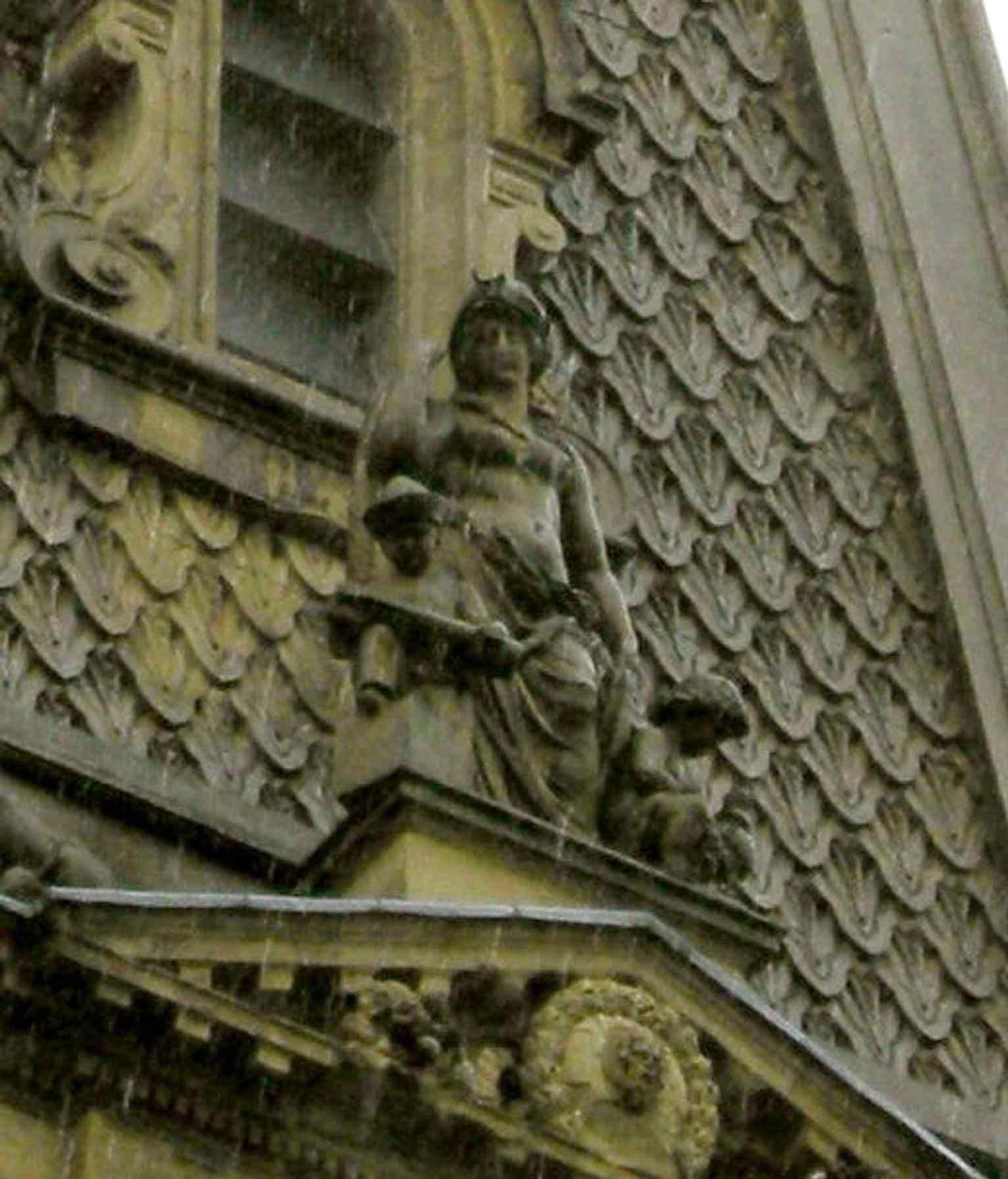
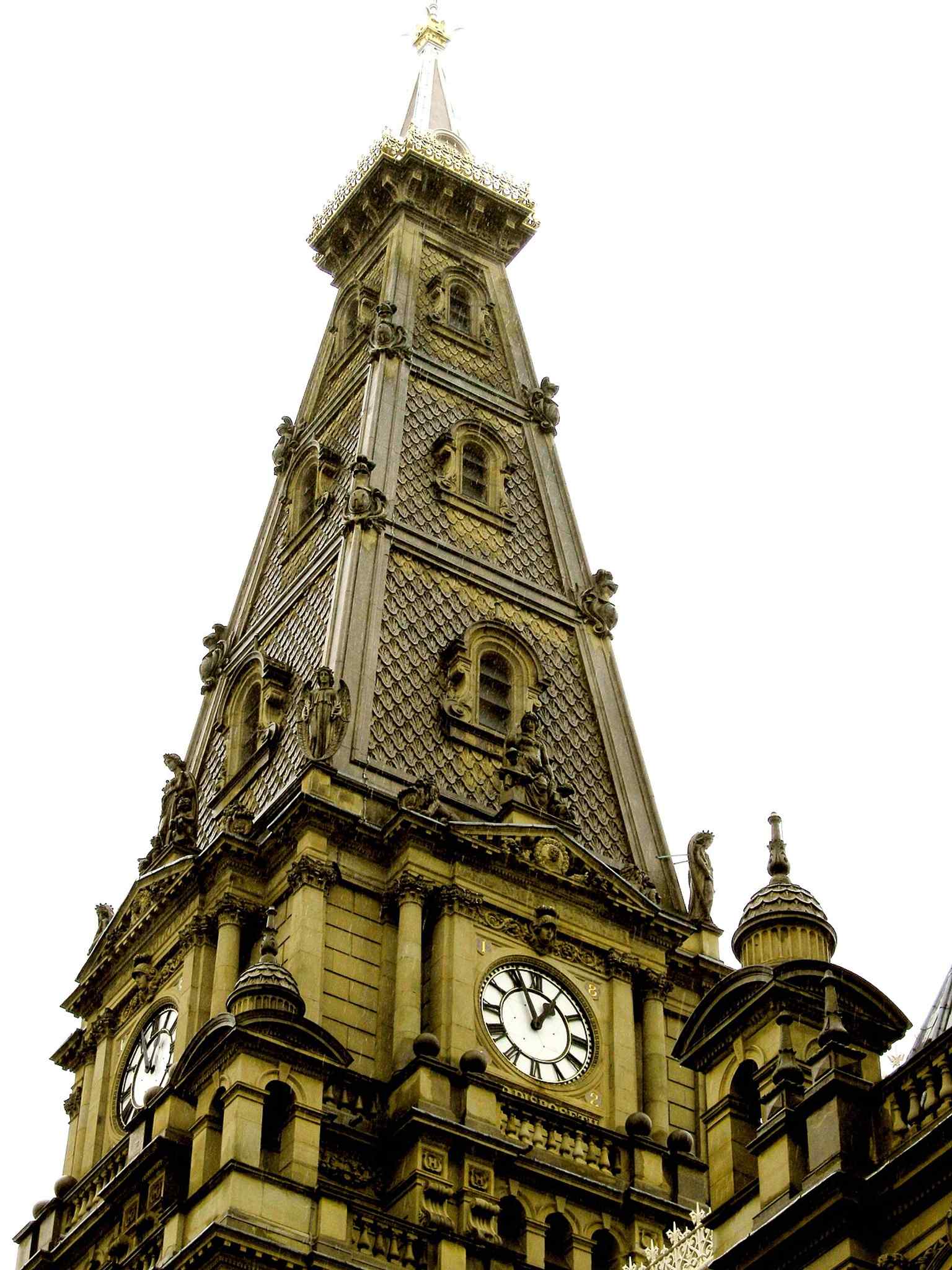
Now look up at that tower. It climbs to one hundred and eighty feet, and it is packed with symbolism. Sculptor John Thomas decorated the steeple with figures representing Europe, Asia, Africa, and North America, with four seven-foot angels at the corners. If you want a closer look, check the tower image on your screen. It is such a Victorian idea of worldliness: empire, trade, ambition, all carved into stone above the town.
And the opening? Absolutely enormous. On the third and fourth of August, eighteen sixty-three, three hundred and fifty-eight trains brought seventy thousand people, and thousands more walked in. The future Edward the Seventh arrived by royal train, greeted by guns on Beacon Hill and a guard of honor of three hundred soldiers. There was a grand procession, children singing hymns in the Piece Hall, hundreds of police controlling the crowds, a banquet, a balloon ascent, and fireworks. Princess Alexandra did not come, to the heartbreak of many spectators, and the Halifax Courier described streets fragrant with flowers even as relentless rain turned celebration into soggy chaos.
Inside, the drama keeps going. Victoria Hall glows with mosaic floors, ornate plasterwork, and a blue-and-green glass ceiling. The grand staircase rises under a blue glass dome, with paintings by Daniel Maclise and J. C. Horsley. If you fancy a peek, the app shows that spectacular interior beautifully. The building still serves as the headquarters of Calderdale Metropolitan Borough Council, so this is not a frozen monument; it is still doing the civic job it was created for.
One tiny detail I love: the bells have not rung at night since nineteen eighteen, because the great singer Dame Nellie Melba complained they disturbed her sleep at Halifax’s Princess Hotel. That is local government meeting diva power, and somehow it feels exactly right.
Halifax built this town hall to sound important, look important, and believe in its own future.
Take one more look up at the spire, and when you’re ready, we can carry on to the bus station.