Exeter Audio Tour: A Journey Through History and Heritage
Medieval secrets linger in Exeter’s winding lanes, where ancient church towers watch over tales of scandal and survival that most visitors never hear. This self-guided audio tour reveals the city’s hidden depths and little-known landmarks—perfect for those curious to peel back the layers of everyday stone. What mysterious force kept Sacred Heart Church miraculously standing when bombs rained from the sky? Why did Exeter’s bishop abandon his first cathedral and haul relics through the mud by royal command? How exactly do you move a medieval house—windows, beams, and even stubborn resident cats—without breaking history itself? Wander from soaring cathedrals to stubborn survivors of wartime fire. Hear whispers of rebellion, forgotten faiths, daring feats, and oddities lost in the cracks. With each turn you’ll see Exeter not as a quiet city but a stage for dramatic acts and near-mythic moves. Ready to unlock Exeter’s best-kept secrets? Begin your journey into the shadows beneath its stones.
Tour preview
About this tour
- scheduleDuration 40–60 minsGo at your own pace
- straighten3.0 km walking routeFollow the guided path
- location_onLocationExeter, United Kingdom
- wifi_offWorks offlineDownload once, use anywhere
- all_inclusiveLifetime accessReplay anytime, forever
- location_onStarts at Diocese of Exeter
Stops on this tour
As you stand here in front of the Diocese of Exeter, take a moment to imagine what this place was like nearly a thousand years ago-stone walls rising up, townsfolk bustling by,…Read moreShow less
As you stand here in front of the Diocese of Exeter, take a moment to imagine what this place was like nearly a thousand years ago-stone walls rising up, townsfolk bustling by, and the occasional ringing of church bells. Exeter’s diocese covers all of Devon, making it one of the grandest in England-big enough that you’d need a very sturdy pair of walking boots to see it all! Now, at the heart of it all is the magnificent Cathedral Church of St Peter-home base for the Bishop of Exeter. Today, that’s Mike Harrison. He’s got quite the team: a Bishop of Plymouth and (usually) a Bishop of Crediton, though that spot’s empty at the moment. It’s almost like assembling the Avengers, only in fancier robes. The story of the Diocese actually begins in the town of Crediton back in 909 AD. St. Boniface was born there, and, apparently, if you’re going to pick a spot for your cathedral, birthplace perks go a long way. But in 1050, Bishop Leofric decided Crediton just didn’t have enough pizzazz-or city walls. So he upped sticks to Exeter, bringing a royal order from King Edward the Confessor. Just imagine medieval movers hauling ancient relics and manuscripts through muddy lanes! Leofric became the first Bishop of Exeter, making the city’s role in church life official. Since then, the Diocese has seen all sorts of changes-shifting boundaries, new bishops, and even a new diocese breaking away in Cornwall. Nowadays, you could nearly get lost in all the archdeaconries, deaneries, and titles-Devon’s got more church leaders than a biscuit tin’s got crumbs. If you ever spot the Diocese’s coat of arms-a pair of golden keys crossed with a silver sword and topped with a bishop’s hat-that’s a nod to the cathedral’s patron saints, Peter and Paul. So, next time someone quizzes you on Exeter history, you’ll have the (bishops’) keys to success! Ready to move on? Let’s see where history leads us next!
Open dedicated page →Look ahead and you’ll spot Sacred Heart Church standing proudly at the corner, where South Street and Bear Street meet. Its tall, square stone tower rises high above you, finished…Read moreShow less
Look ahead and you’ll spot Sacred Heart Church standing proudly at the corner, where South Street and Bear Street meet. Its tall, square stone tower rises high above you, finished off at the top with elegant arched windows. The main entrance is easy to find-a trio of pointed arch doorways, all edged with pale stone. The big stained glass windows above are like eyes watching everything that happens on the street below, bursting with that classic Gothic shape. The building itself looks solid and weathered, like it’s been quietly holding stories for generations. Now, imagine it’s the 1880s. The air smells of stone dust and fresh mortar, and the site right here was once not a holy ground but a noisy old tavern-the Bear Tavern, in fact! Before this church was built, Catholics in Exeter would slip quietly into private rooms for Mass, hoping to avoid trouble. Finally, after much patient waiting and fundraising (and probably a lot of church bake sales), the foundation stone was laid in 1883. Leonard Stokes, the architect, must have felt like he was building a fortress for faith right in the city center. Step inside and the world changes: cool air, stone vaults, shafts of colored light dancing from the stained glass high above. The church remembers its own adventures-look for the statue of St Thomas More, a hero of the Reformation who famously lost his head for his faith. There’s also a mysterious saint inside-nobody’s quite sure, but she gets a spot of honor! Now, imagine April 1942, when war turned Exeter upside down. Bombs rained down, and this street was nearly destroyed. But just as the smoke cleared, Sacred Heart stood strong and somehow untouched, thanks in part to brave priests dashing about with sand buckets-now that’s not a typical day for a parish priest. One of them, Fr Barney, claimed he saw a sign of the cross in the sky that night. Miracle or not, Sacred Heart became a symbol of hope on a badly wounded South Street. Over the decades, new altars were built to keep up with changing times, and the church stayed close with the community, students from the university, and even the local primary school. Look out for a grand iron rood screen, and don’t miss the statues of St George and St Edward the Confessor-let’s just say, if there was ever a church hall of fame, this place would have plenty of candidates. So here it stands, with its grand flat tower and warm stone, keeping watch. Sacred Heart is more than bricks and mortar-it’s a survivor, a storyteller, and a place where Exeter’s Catholic community found a home. And in case you’re wondering: No, they don’t serve any bear-themed ale anymore, but the spirit here is pretty strong!
Open dedicated page →Look just ahead and to your left-you can’t miss it! The House That Moved stands at the corner, a striking, three-story building with white walls crisscrossed by dark timber beams…Read moreShow less
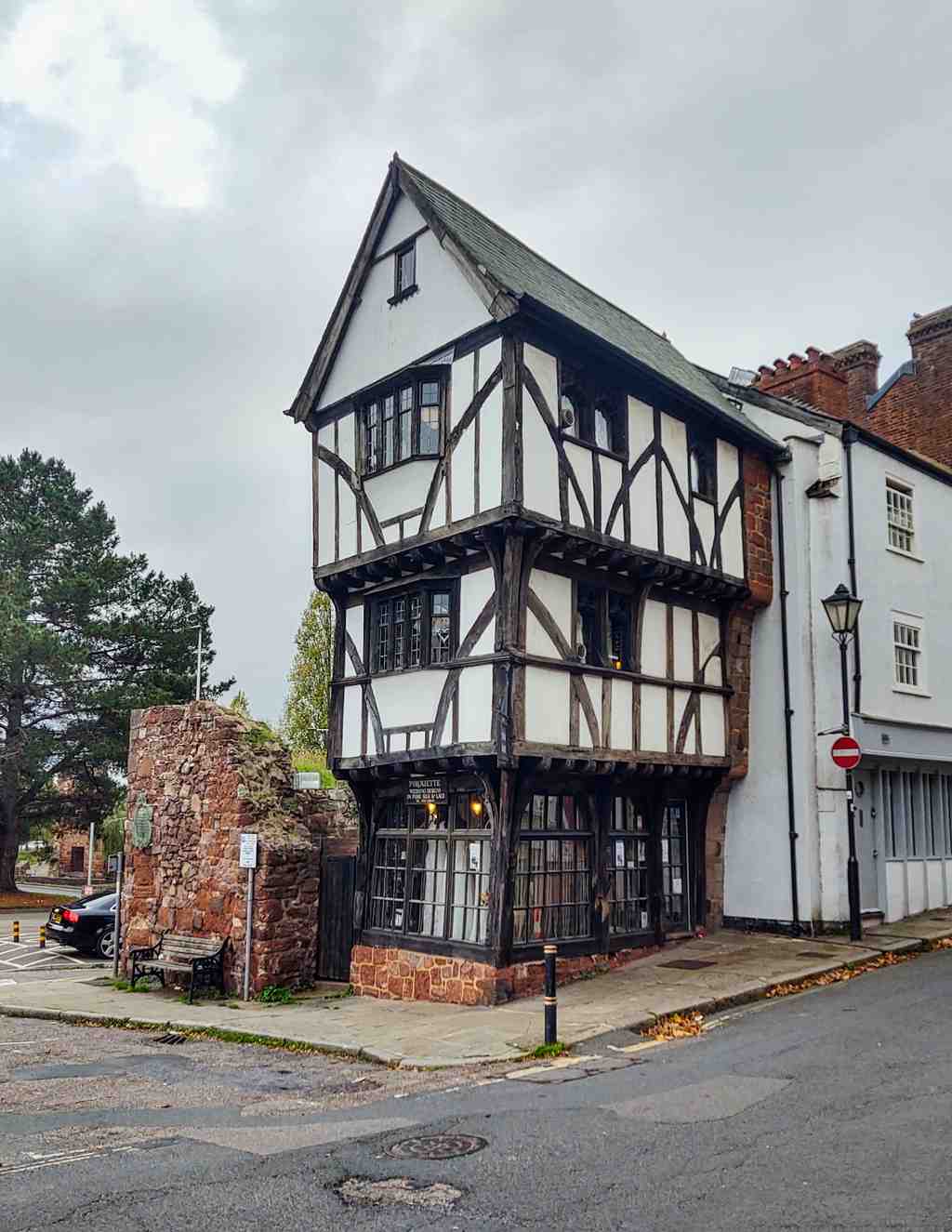
Look just ahead and to your left-you can’t miss it! The House That Moved stands at the corner, a striking, three-story building with white walls crisscrossed by dark timber beams and upper floors that jut out further than the one below. The windows are small, a bit squinty, almost as if the house itself is peering curiously at the street. The ground floor has lots of glass and wooden frames, while the upper stories seem to teeter in the air-like the building is playing a game of architectural Jenga. You’re standing in front of one of Exeter’s quirkiest legends-the House That Moved. Picture this: it’s the late Middle Ages, somewhere between 1420 and 1460. The city is smaller, the air thick with the scent of woodsmoke, and instead of car engines, you’d hear horses’ hooves on cobblestones. This very house was built for a wealthy merchant, right on the main road between West Gate and the old Exe Bridge, not far from the busy marketplace. But fast forward to the 1960s, and things got dramatic. The city needed a new bridge and a big shiny road, and poor Edmund Street was about to disappear under a sea of bulldozers. Most buildings around here just vanished. But this house, sometimes called the Tudor House (even though it’s older than your average Tudor), was too fascinating to lose. People called for its rescue-historians, archaeologists, maybe even a few ghosts. The solution? Move it-like a giant piece on a chessboard! Imagine the scene: builders stripped the house back to its skeleton, wrapped it up with wooden beams, and rolled it away on iron wheels, slowly turning it 90 degrees to fit its new spot. No bolts, just good old-fashioned muscle and a government grant. The whole thing weighed more than two elephants-with a couple of stubborn cats thrown in for luck. And now, here it stands-a time traveler, really, with stories hiding in those dragon beams and traceried windows. Next time someone complains about moving house, just point them here! Where most buildings just stood still and hoped for the best, this one packed up, rolled down the street, and settled in to watch Exeter’s centuries unfold-one overhanging floor at a time.
Open dedicated page →
Show 12 more stopsShow fewer stopsexpand_moreexpand_less
- location_on4
Isca Dumnoniorum
Buy tour to unlock all 19 tracksLook ahead and you’ll spot a long, sturdy wall made from reddish and brown stones, stretching across the grass and shaded in spots by chestnut trees. It almost looks like…Read moreShow less
Look ahead and you’ll spot a long, sturdy wall made from reddish and brown stones, stretching across the grass and shaded in spots by chestnut trees. It almost looks like something out of a time-travel movie-thick, weathered, and nearly ancient. If you’re standing on a grassy patch under the dappled shadow of the trees with wildflowers at your feet, you’re in exactly the right spot. Welcome to Isca Dumnoniorum-Exeter’s Roman secret with a name that’s a bit of a tongue-twister! Imagine standing here almost two thousand years ago. There’s the scent of woodsmoke in the air, and you hear soldiers shouting and hammers hitting timber as the Romans build their massive fortress. Romans built their mighty fort right here around AD 55, where their legion-about 5,000 strong-camped out while planning their next adventures (and maybe thinking about their next meal). This wall you see marked the edge of their world. Around them, the town began to buzz with traders, families, and children running after each other-maybe even sneaking glances at the fierce Roman soldiers. Now, here’s a fishy fact-The name ‘Isca’ comes from the river that flows nearby, and it means “full of fish”! Picture the river Exe bubbling along, packed with silver fish, while Romans haul their catches back to the fort. Sometimes I wonder if the local cats ever tried to sneak in for a midnight snack... Look closely at the stones-some have stood here since those Roman days, watching as Exeter changed, grew, and thrived around them. If you start feeling a bit like a Roman yourself, just remember-watch out for cockfighting pits and keep your sandals dry! Ready to march on to the next stop? Let’s go, legionary!
Open dedicated page → - location_on5
Exeter monastery
Buy tour to unlock all 19 tracksTo spot the Exeter monastery, look for a sturdy, reddish-brown stone building with thick walls and small, deep-set windows. There’s an uneven, castle-like roofline, almost as if…Read moreShow less
To spot the Exeter monastery, look for a sturdy, reddish-brown stone building with thick walls and small, deep-set windows. There’s an uneven, castle-like roofline, almost as if the top tried to grow a crown but got distracted halfway up! You’ll find the building a little tucked away behind a line of hedges and some lush greenery-just peek beyond the plants, and that blocky structure with its confident, almost fortress-like presence is your monastery. Alright, let’s take you back in time. Imagine Exeter before all the pizza shops, back when the only “delivery” you got was a loaf of bread from the monks-if you were lucky. This city has had monasteries since the 7th century. Picture monks in long robes shuffling by, chanting softly as a cool breeze sweeps through the ancient Roman streets. Right here stood the very first monasteries, on top of even older Roman bathhouses. Now, these weren’t just your average quiet monks. Vikings kept popping by-uninvited-so these poor monks had to keep rebuilding the place. It became a bit of a cycle: build, pray, and hope you don’t see a longboat! There’s a funny twist though: every time the invaders forced the monks to flee, some determined king-like Æthelstan, Edgar, or even the legendary Canute-would say, “No worries boys, let’s put it back!” As you stand here, imagine the clang of builders’ hammers mixing with the low hum of prayer as a new king tried to outdo the last one. In the tenth century, life got busier-over a thousand people lived around this area. Kids ran across the minster yard, and the name “Monkton” stuck, because frankly, there were monks everywhere you looked. But the most mysterious part is all the layers beneath your feet. Archaeologists found ancient church foundations when digging here, right under a more modern church. It’s as if Exeter couldn’t stop stacking churches on top of monasteries on top of Roman spas. Eventually, all the bits and pieces-nunneries, priories, Benedictine and Augustinian houses-merged into one grand cathedral. And here you are, standing where centuries of prayers, invasions, and royal do-overs have created a place full of echoes and secrets. So, as you look at these rough old stones, try to hear not just the city, but the whispers of monks, the clash of history, and the dreams of kings who wouldn’t give up. And if you see any Vikings, maybe just walk a little faster!
Open dedicated page →
6Exeter Synagogue
Buy tour to unlock all 19 tracksTo spot the Exeter Synagogue, take a good look around Synagogue Place, just off Mary Arches Street. This building doesn’t grab your attention with big windows or grand signs.…Read moreShow less
To spot the Exeter Synagogue, take a good look around Synagogue Place, just off Mary Arches Street. This building doesn’t grab your attention with big windows or grand signs. Instead, it's quite humble and tucked away, almost as if it’s playing a game of hide-and-seek with the city. The outside is discreet and windowless-look for its simple, classic brickwork just set back from the street, away from any crowds. If you find yourself wondering if you’re in the right place, you probably are! That’s the charm: it hides in plain sight, invisible on purpose since the 1700s. Imagine stepping into the past, back to the 1760s, when the sound of footsteps on cobblestone echoed through narrow Exeter alleys. Right in front of you stands Exeter Synagogue: the third oldest synagogue in all of the United Kingdom. Picture the inside: a warm wooden space, light flickering as if by candle, with a grand, marble-like Torah ark at the front (though, here’s a secret-it’s actually carved wood pretending to be marble, a classic bit of 18th-century trickery). This synagogue has stood through everything. It started as a place for Dutch-Jewish traders, then took in families from Germany as the centuries rolled on. Its walls have heard prayers sung for kings, for peace, and even for missing loved ones during the chaos of war. Back in the day, the community faced heartbreak and drama-one scandal even involved a teacher, a nephew, and a shocking conversion to Christianity! It was the talk of the town, and, honestly, Exeter’s episode of “Family Feud” never got this juicy. Now, imagine 1764, the day of the big consecration. Abraham Ezekiel and Kitty Jacobs made sure the Torah was carried seven times around the bimah, the air full of tradition and excitement. The story of Exeter's Jews is one of resilience; they kept coming back, no matter what happened. The synagogue survived bombings in World War II, neglect, and even, recently, a shocking arson attack. But here it is-steadfast and proud. Today, the synagogue still welcomes people from every corner of Devon and beyond, all keeping old traditions alive in this cozy, hidden place. So, as you stand outside, remember: if these quiet walls could talk, they’d have more stories than the city library. And if you sometimes wish you could stay hidden from the world, just like this synagogue, you’re certainly in good company here.
Open dedicated page →
7Devon County War Memorial
Buy tour to unlock all 19 tracksJust ahead of you, you’ll spot the Devon County War Memorial standing proudly on the Cathedral Green. If you look past the grassy area, slightly west of the towering Exeter…Read moreShow less
Just ahead of you, you’ll spot the Devon County War Memorial standing proudly on the Cathedral Green. If you look past the grassy area, slightly west of the towering Exeter Cathedral, you’ll see a tall, pale grey stone cross rising up behind a dark metal fence. There’s no mistaking it-its height and simple shape set it apart from everything else. The cross is smooth and solid, carved from a single block of Dartmoor granite, so keep your eyes peeled for that sleek, strong silhouette. The plinth and three broad steps beneath the cross give it a grand stage, almost like nature lifting it up for everyone to see. Now, as you stand in front of the memorial, imagine a scene just after the First World War. The people of Devon were trying to figure out how best to remember those who never came home. At first, they thought about adding a beautiful cloister to the cathedral, or maybe a grand new hospital wing-but money was tight, and ideas were plenty. It was a time of debate, hope, and even a few grumbles-some argued that every penny should care for living veterans instead, not carved stone! Stepping in to end the squabble was Sir Edwin Lutyens, one of the most creative architects England had to offer. Lutyens didn’t want fancy frills-he went for strength and simplicity, designing this bold granite cross. He chose Haytor granite from Dartmoor, making it as sturdy as the hills themselves. Just picture giant chunks of stone being heaved out of the earth, rumbled along country roads, and chiselled into this monument right in front of you. On 16 May 1921, the Prince of Wales himself came here to unveil the memorial. The crowd was hushed, the atmosphere heavy with pride and loss. Lutyens became famous for memorials like this all across Britain-he even designed The Cenotaph in London, where the nation still gathers to remember. But here in Exeter, somehow, the committees of city and county never coordinated, so the city’s memorial ended up elsewhere in Northernhay Gardens. It turns out even in matters of remembrance, people can be just as stubborn as ever! This cross is now a protected Grade II* listed building, part of a whole “national collection” of Lutyens’ works. Just think of how many stories and silent moments this spot has seen, and imagine the footsteps of families who’ve come to lay wreaths at its base-sometimes with heavy hearts, sometimes with quiet gratitude, and always with respect. You’re standing in the same spot as crowds a century ago-a living part of Exeter’s long memory.
Open dedicated page →- location_on8
St Pancras Church, Exeter
Buy tour to unlock all 19 tracksTake a look just ahead-right in the heart of the shopping centre, surrounded by bricks and busy shoppers, you’ll spot a tiny, ancient building made of rough, reddish-brown stones.…Read moreShow less
Take a look just ahead-right in the heart of the shopping centre, surrounded by bricks and busy shoppers, you’ll spot a tiny, ancient building made of rough, reddish-brown stones. It looks almost sunken below street level, huddled against the modern shopfronts, with a sloping stone roof and small arched windows. It’s easy to miss, like a secret from another era slipped quietly into the bustle. That, believe it or not, is St Pancras Church. If churches could feel out of place, this one might be checking Google Maps! Now, imagine yourself back in the 1200s-no phones, no shopping bags, just the echoes of footsteps on ancient stone and the smell of candles drifting through the air. St Pancras feels like a survivor from a lost world. The font inside, where people have been baptised for nearly a thousand years, is even older than the church itself. And some folks say the site is the oldest place of Christian worship in all of Exeter. Nobody really knows when St Pancras first appeared, but its name hints at an Anglo-Saxon beginning. There used to be a Saxon-style arch, replaced long ago-no fancy carvings now, just plain, worn stone holding centuries of secrets. Through the years, this little church has faced ups and downs: it was abandoned and reopened, remade and rescued, even almost closed forever by the Bishop. But St Pancras proved to be stubborn, sticking around while shops and cafés popped up all around. Here’s a strange picture for you: in the 1930s, a house was built right up against the church, squashing a window out of sight! It wasn’t until the shopping centre was built that daylight finally returned. If you peek in the east window, the stained glass might catch your eye-it shows St Pancras of Rome, the Crucifixion and St Boniface, bright colours glowing on a sunny day. Oh, and one of the church’s prized possessions, a Jacobean pulpit, arrived when another church was demolished. Talk about hand-me-downs! It’s not just a building-it’s a scrappy survivor, ducking and weaving through history while the city grows up around it
Open dedicated page → - location_on9
Royal Albert Memorial Museum and Art Gallery
Buy tour to unlock all 19 tracksHere we are, right in front of the Royal Albert Memorial Museum - or as everyone calls it, RAMM. To spot this treasure chest of a building, look up to your left and feast your…Read moreShow less
Here we are, right in front of the Royal Albert Memorial Museum - or as everyone calls it, RAMM. To spot this treasure chest of a building, look up to your left and feast your eyes on its grand, Gothic Revival façade. It’s made of red and creamy sandstone, with rows of pointed arches and stone carvings that look like they should belong in a storybook. If you squint just right, you might spot the big round rose window right in the middle of all those turrets and spiky towers. RAMM is the tallest, grandest building around this corner - trust me, it’s hard to miss. Now, let’s step into the story. Cast your mind back to the 1800s: imagine a bustling week, horse hooves echoing on cobbles, and workers scrambling to put the finishing touches on this grand museum.. This mammoth building was born from a big idea: let’s pile every bit of Exeter’s curiosity and creativity into one magical place! Local MP Richard Sommers Gard donated the land, and a design competition whipped up the most dramatic blueprints. The winner, John Hayward, wanted to plop a huge tower on top, but the city said, “Let’s keep things a *tiny* bit less Hogwarts,” so we’re left with the gables and the beautiful rose window instead. When the RAMM opened in 1868, it was Exeter's ultimate adventure room. There were paintings, old bones, glittering stones, and yes-a library, a reading room, a school of art and engineering, all under one Gothic roof. Sometimes it seems like the only thing that DIDN’T end up inside were the city’s sheep! Over the decades, RAMM grew and expanded. It became the launchpad for much of Exeter’s cultural life. The city’s university, the library, even the college of art-yep, they all had their roots here! Just imagine the sound of delighted visitors over the years, the gasps when they first saw a shimmering fossil or an ancient artifact dug from the ground. With millions of objects (everything from ancient Roman coins to mysterious sea stars in jars), there’s always something to ignite your curiosity. RAMM nearly burst at the seams more than once, leading to bigger and grander rooms. The latest transformation finished in 2011: an epic four-year, £24 million makeover that washed away the dust and made room for even wilder exhibits. Today you can explore creatures old and new, wander through the art galleries, or even meet Percy Sladen’s sea stars-considered the best echinoderm collection this side of any national museum. Best of all, RAMM’s collections are now open access-they want the world to know that Exeter’s stories are for everyone. So, if you ever wanted to discover ancient treasures, marvel at natural wonders, or see art up close-all you have to do is step inside. And don’t worry: admission is totally free. Step across the threshold and who knows what curious creature (or ancient artifact) will become your favorite? If you listen carefully as you go in, you might even hear the whispers of old curators, still dusting exhibits and telling tales-after all, a building this grand doesn’t sleep quietly..
Open dedicated page →
10Northernhay Gardens
Buy tour to unlock all 19 tracksRight in front of you is the entrance to Northernhay Gardens. To spot it, just look for the impressive statue perched on a stone base-that’s The Deer Stalker! He’s crouched,…Read moreShow less
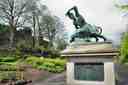
Right in front of you is the entrance to Northernhay Gardens. To spot it, just look for the impressive statue perched on a stone base-that’s The Deer Stalker! He’s crouched, muscles ready, as if he’s about to spring into action. The gardens spread out around him, with winding paths, colourful flowerbeds, and ancient stone walls rising in the background. You’ll often hear birds chattering above and might catch a whiff of fresh greenery if you let the breeze hit just right. Alright, step into Northernhay Gardens and imagine yourself strolling through centuries of Exeter’s past. Can you believe you’re standing in England’s oldest public park? It all started back in 1612 when Exeter’s residents needed a little more fresh air and a little less city noise. This was their peaceful escape-except, of course, during the Civil War, when things got a bit dramatic and soldiers dug ditches where your feet are now. But look around-these gardens have more history than most novels. The stones underfoot were first ripped from the ground by Romans to build the city walls, and if you look along the edge, you’ll spot the last bit of Saxon town wall in all of England. That’s not just a wall, that’s a piece of one-thousand-year-old mystery! As the years ticked by, the gardens got flattened by war, replanted by townsfolk, and even dressed up with statues of Exeter’s Victorian heroes. The Deer Stalker here, he’s just waiting for someone to ask for directions-or maybe a selfie. There’s John Dinham nearby, ready with his philanthropic pose, and Sir Thomas Dyke Acland, keeping an eye on the city. Oh, and don’t trip over the ghosts of the hundreds of elms that once lined the avenue-Dutch Elm Disease got them in the 1900s but the gardens keep blooming, bright with flowers all year. Find a bench, soak up the scene, and listen for the bandstand music if you’re lucky. Maybe close your eyes for a second and picture townsfolk in powdered wigs, soldiers with muddy boots, and kids running laughter through the same lanes. That’s Northernhay-a garden that remembers everything and is always changing, just like Exeter itself. Ready to wander on or stay for one more statue?
Open dedicated page →

11Exeter War Memorial
Buy tour to unlock all 19 tracksYou’ve arrived at the Exeter War Memorial-impossible to miss if you know where to look. Standing right in front of you, the memorial rises tall and proud from the gardens,…Read moreShow less
You’ve arrived at the Exeter War Memorial-impossible to miss if you know where to look. Standing right in front of you, the memorial rises tall and proud from the gardens, surrounded by clusters of flowers and a leafy frame. If you glance up, you’ll spot a striking bronze figure right at the top-she’s poised, one arm raised high, holding a spray of laurel leaves to the sky, as if she’s calling down peace for everyone below. Quite the attention-grabber! Down below her, wrap around the base and you’ll see four imposing figures: a soldier, a sailor sitting on the hull of a ship, a prisoner of war, and a nurse cradling medical supplies, each one almost life-sized and frozen in a story. Here you are, just as Exeter’s townsfolk would have stood in 1923, maybe clutching their coats against a stubborn Devon breeze and listening to the echo of a single bugle drifting over the park. This is the heart of Exeter’s remembrance. The monument, designed by John Angel and paid for by the people, isn’t just a block of stone and metal-it’s a time capsule. The figure at the top, sometimes called Peace, sometimes Victory, is 8 feet tall, standing triumphantly over a squashed dragon (yes, a real dragon-well, a bronze one, anyway). You have to admire the drama. If you walk around, notice how every angle tells its own story. The bronze figures aren’t just random-they’re all roles from the war: the grit of a soldier, the strength of a sailor, the struggle of a prisoner, and the compassion of a nurse. John Angel wanted everyone to see themselves here: their courage, their pain, and their hope for peace. During World War II, the city built a tall brick wall around the memorial to guard it from bombs-leaving only the top raised hand visible, like a beacon of hope peeking over danger. After the war, more names were quietly added, as if the city itself was still remembering, still grieving. There’s a touch of drama behind the scenes too: the city and county couldn’t quite agree on how to do this, so they built two separate memorials-sometimes, even in peace, people can’t help a bit of rivalry. And if you listen carefully, you might almost hear the hush of a crowd, the voice of a bishop, and the clear, lingering note of The Last Post played from Athelstan’s Tower, sending out a promise: this memory will not fade. In 2012, a new memorial joined the old, quietly listing Exeter’s more recent losses-Afghanistan, Iraq, Northern Ireland-reminding us that the story doesn’t end. So while you stand here, surrounded by garden scents and city air, you’re right where history, memory, and everyday Exeter all come together. It’s not just a monument; it’s a gathering place for stories-some sad, some uplifting, but all connected to the city’s heart. If you find yourself touched, don’t worry. Even granite and bronze shed a tear now and then!
Open dedicated page →- location_on12
Rougemont Gardens
Buy tour to unlock all 19 tracksTake a moment to scan ahead-Rougemont Gardens is right in front of you. You’ll spot it by the rolling green banks, like a giant scoop of earth has been lifted out to leave a soft…Read moreShow less
Take a moment to scan ahead-Rougemont Gardens is right in front of you. You’ll spot it by the rolling green banks, like a giant scoop of earth has been lifted out to leave a soft hollow, rimmed with sloping grass and dotted with bare-branched trees. Ahead, you’ll catch a glimpse of sturdy stone walls, poking through the foliage, and if you look closely, you might spot the arched Norman gatehouse peering through like a watchful old giant. The sun slips easily through the trees, casting just enough shade to feel peaceful but never gloomy. Now, as you stand here, imagine stepping back in time. These tranquil gardens weren’t always the calm retreat you see today. In fact, if you were here nearly a thousand years ago, you’d be standing in the thick of Exeter’s defences-a place of tension and drama, when William the Conqueror ordered the building of Rougemont Castle. This wide, deep ditch that now cradles joggers and picnickers? Picture it bristling with stakes, ready to keep out invaders. Some say the ditch is so wide because it was once a Roman quarry; who would’ve guessed that stone used to build ancient city walls would later be the bones of a beautiful garden? By the late 1700s, the story shifts from conquest to calm. A local surgeon named John Patch-who clearly liked his peace and quiet-built Rougemont House just below the gatehouse and planted the very gardens you see today. As new residents moved in and out, they added trees and flowers, and by Victorian times, people called it “a perfect sylvan retreat.” Let’s be honest, that just means it was downright lovely-a secret green pocket in the middle of the city. For decades, if you listened carefully in the summer, you could hear applause echoing off the stone walls as actors performed Shakespeare, using the ancient defences as their stage. You can almost hear the rustle of audience members settling on the grass, the thrill of a sword fight, and the ring of laughter floating into the night. Today, Rougemont Gardens has swapped swords for sunbathers and battlements for birdsong, but the excitement and stories are still here, hidden beneath your feet. And the best part? If you’re feeling dramatic, you can always perform a line or two for the squirrels-they’re a tough crowd, though, so make it good! When you’re ready, let’s make our way to the next landmark-there’s more Exeter adventure just ahead.
Open dedicated page → - location_on13
Rougemont Castle
Buy tour to unlock all 19 tracksTo spot Rougemont Castle, look for the striking, tall stone structure just ahead-its rugged red walls stand out against the greenery, with a large double-arched entrance that’s…Read moreShow less
To spot Rougemont Castle, look for the striking, tall stone structure just ahead-its rugged red walls stand out against the greenery, with a large double-arched entrance that’s partly covered in moss. The gatehouse looks ancient, almost like a set from a medieval adventure film, and if you spot the grand gate with battlements to your right, you’re definitely in the right place. It’s a little bit of history sandwiched right between city parks and modern life. Now, let’s imagine you’re standing here almost a thousand years ago. Rougemont Castle, or Exeter Castle, is looming above you, its red stone glowing in the sun-yes, that color comes from the earth itself, dug right from under Exeter! It was built in a hurry after Exeter tried to stand up to William the Conqueror in 1068. William wasn’t exactly in a good mood after the city said no to extra taxes, so once he won the siege, he made sure this fortress would watch over Exeter for good. Listen as the wind whistles through the ancient arches above you. Back in the day, this castle was a serious stronghold, with its thick walls and a deep ditch outside, just to make sure you really wanted to pay a visit! King Stephen even tried to take it down with a three-month siege in 1136-but the castle didn’t budge. Now, take a look at the gatehouse in front of you. Those funny windows and blocky corners? They’re a mix of Anglo-Saxon and early Norman design, built by English masons right under the watchful eyes of their new conquerors. There’s even a legend that some of these stones show early repair marks from an attack while it was still unfinished-talk about a rough start! And here’s a fun fact: Shakespeare himself mentions Rougemont Castle in Richard III, so you’re standing in the middle of both real drama and stage drama. Just beware of witches-they were once tried here in the days when people still believed magic could be deadly. Today, you’ll sometimes hear laughter and music where once you’d have heard the clanging of swords and marching boots. The castle’s been everything from a court to a party venue, and it’s aiming to become the Covent Garden of the Southwest. Not too shabby for an old Norman stronghold! Soak in the atmosphere-imagine knights, rebels, judges, and maybe even a ghost or two, all crowding these old red walls. Interested in a deeper dive into the construction and early history, the siege of 1136 and after or the 17th to 20th centuries? Join me in the chat section for an insightful conversation.
Open dedicated page → - location_on14
2008 Exeter attempted bombing
Buy tour to unlock all 19 tracksRight in front of you, you’ll spot a big green tarpaulin tent set up in the middle of the square, with a police van parked nearby. This is a clear sign something serious happened…Read moreShow less
Right in front of you, you’ll spot a big green tarpaulin tent set up in the middle of the square, with a police van parked nearby. This is a clear sign something serious happened here - the area is roped off and bustling with activity. To get your bearings, look for the glass-fronted shops with “New Look” on them: you’re exactly where Princesshay’s centre felt the impact of a dramatic day. Now, let’s step back to 22 May 2008 - a sunny, ordinary day in Exeter, when lunchtime at the Giraffe café turned unforgettable. Picture yourself here, perhaps just popping in for a coffee, when suddenly--the calm is shattered by an explosion from the café toilets. At first, most people shrug it off, blaming nearby construction, but there’s a ripple of unease. Some say it sounded more like a series of pops, or even a lightbulb blowing. Moments later, the police and ambulance services rush to the scene. They quickly realise this is no drill. The restaurant is evacuated, and the usually busy Princesshay shopping area is transformed into a scene straight out of a TV crime drama; the police stretch a cordon across the whole city centre. Buses are diverted. Shoppers are herded out, wondering what on earth has just happened to their day. Inside, all eyes are on one man: Nicky Reilly. He’s rushed to hospital-astonishingly, the only one injured, as the home-made device explodes before he ever leaves the toilet. Meanwhile, bomb disposal teams sweep the area and find another device, which, thankfully, is made safe. For hours, the city’s heart beats with tension as roads close and the streets stand strangely silent. People peek behind curtains, business owners wring their hands, police dogs sniff their way through the scene. After six hours, the cordon begins to lift and, slowly, Exeter starts to come back to life. The only evidence of the chaos is a lingering memory, and maybe a story or two for the next coffee break. So, as you stand here now, imagine the drama that unfolded on what was supposed to be just another unremarkable Thursday. And take a look around - you never know what stories the modern city streets have to tell… or which lunch spots to choose for maximum excitement!
Open dedicated page → - location_on15
Barnfield Theatre
Buy tour to unlock all 19 tracksLook ahead for a long, sturdy red-brick building with tall arched windows that line up in neat rows. There’s a fancy bit of stonework above the doorway and a little clock tower on…Read moreShow less
Look ahead for a long, sturdy red-brick building with tall arched windows that line up in neat rows. There’s a fancy bit of stonework above the doorway and a little clock tower on the roof-almost as if the building itself is dressed up for one of the shows inside. If you spot some lively painted scenes on the lower windows and a pair of bright red letterboxes right at the corner, you’ll know you’re standing outside the Barnfield Theatre. Welcome to the grand finale of our Exeter journey! Imagine yourself here more than 100 years ago. The year is somewhere near the end of the 19th century, and this beautiful hall was buzzing with the chatter of scholars from the Exeter Literary Society. Maybe you can still hear a faint whisper of old debates floating on the breeze. Hop forward to 1972, and Barnfield Hall takes a dramatic turn-literally! The building became the Barnfield Theatre. Since then, laughter, applause, and the occasional over-the-top stage whisper have echoed off these brick walls. Today, you’re standing before a place that welcomes everyone from local drama clubs to professional theatre troupes. Step inside (don’t worry, there are 280 comfy seats with a perfect view-no need to fight for the best spot). If you wander into the Clifford Room, you’ll find a magical space that can transform as quickly as a quick-change artist backstage-studio, conference, theatre-in-the-round, you name it! Now, imagine the buzz as the foyer got its makeover in 2015, and then again in 2022 when the Northcott Theatre took over. A little fresh paint, a dash of history, and a dollop of anticipation-just the sort of place where stories come to life, and you never quite know what's going to happen next. So take a moment to soak in the atmosphere. Who knows, maybe the echoes of Victorian voices and the cheers from a modern panto will blend together to make your own theatre magic here. And if you hear a distant round of applause, don’t worry-it’s probably just the walls, clapping for every show they've ever hosted! Thanks for walking Exeter with me. Curtain call-until next time!
Open dedicated page →
Frequently asked questions
How do I start the tour?
After purchase, download the AudaTours app and enter your redemption code. The tour will be ready to start immediately - just tap play and follow the GPS-guided route.
Do I need internet during the tour?
No! Download the tour before you start and enjoy it fully offline. Only the chat feature requires internet. We recommend downloading on WiFi to save mobile data.
Is this a guided group tour?
No - this is a self-guided audio tour. You explore independently at your own pace, with audio narration playing through your phone. No tour guide, no group, no schedule.
How long does the tour take?
Most tours take 60–90 minutes to complete, but you control the pace entirely. Pause, skip stops, or take breaks whenever you want.
What if I can't finish the tour today?
No problem! Tours have lifetime access. Pause and resume whenever you like - tomorrow, next week, or next year. Your progress is saved.
What languages are available?
All tours are available in 50+ languages. Select your preferred language when redeeming your code. Note: language cannot be changed after tour generation.
Where do I access the tour after purchase?
Download the free AudaTours app from the App Store or Google Play. Enter your redemption code (sent via email) and the tour will appear in your library, ready to download and start.
If you don't enjoy the tour, we'll refund your purchase. Contact us at [email protected]
Checkout securely with