
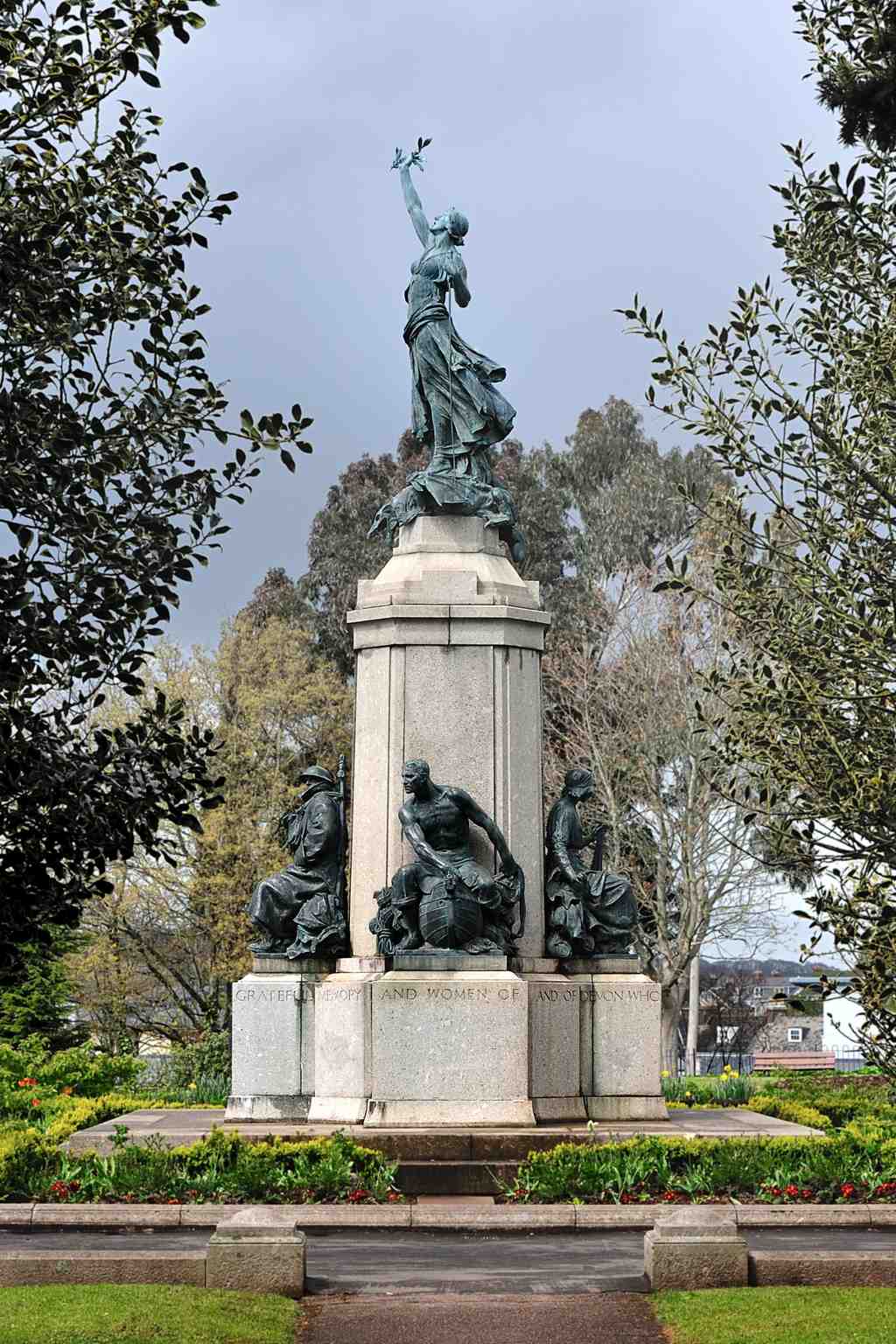
You’ve arrived at the Exeter War Memorial-impossible to miss if you know where to look. Standing right in front of you, the memorial rises tall and proud from the gardens, surrounded by clusters of flowers and a leafy frame. If you glance up, you’ll spot a striking bronze figure right at the top-she’s poised, one arm raised high, holding a spray of laurel leaves to the sky, as if she’s calling down peace for everyone below. Quite the attention-grabber! Down below her, wrap around the base and you’ll see four imposing figures: a soldier, a sailor sitting on the hull of a ship, a prisoner of war, and a nurse cradling medical supplies, each one almost life-sized and frozen in a story.
Here you are, just as Exeter’s townsfolk would have stood in 1923, maybe clutching their coats against a stubborn Devon breeze and listening to the echo of a single bugle drifting over the park. This is the heart of Exeter’s remembrance. The monument, designed by John Angel and paid for by the people, isn’t just a block of stone and metal-it’s a time capsule. The figure at the top, sometimes called Peace, sometimes Victory, is 8 feet tall, standing triumphantly over a squashed dragon (yes, a real dragon-well, a bronze one, anyway). You have to admire the drama.
If you walk around, notice how every angle tells its own story. The bronze figures aren’t just random-they’re all roles from the war: the grit of a soldier, the strength of a sailor, the struggle of a prisoner, and the compassion of a nurse. John Angel wanted everyone to see themselves here: their courage, their pain, and their hope for peace.
During World War II, the city built a tall brick wall around the memorial to guard it from bombs-leaving only the top raised hand visible, like a beacon of hope peeking over danger. After the war, more names were quietly added, as if the city itself was still remembering, still grieving.
There’s a touch of drama behind the scenes too: the city and county couldn’t quite agree on how to do this, so they built two separate memorials-sometimes, even in peace, people can’t help a bit of rivalry.
And if you listen carefully, you might almost hear the hush of a crowd, the voice of a bishop, and the clear, lingering note of The Last Post played from Athelstan’s Tower, sending out a promise: this memory will not fade. In 2012, a new memorial joined the old, quietly listing Exeter’s more recent losses-Afghanistan, Iraq, Northern Ireland-reminding us that the story doesn’t end.
So while you stand here, surrounded by garden scents and city air, you’re right where history, memory, and everyday Exeter all come together. It’s not just a monument; it’s a gathering place for stories-some sad, some uplifting, but all connected to the city’s heart. If you find yourself touched, don’t worry. Even granite and bronze shed a tear now and then!




