
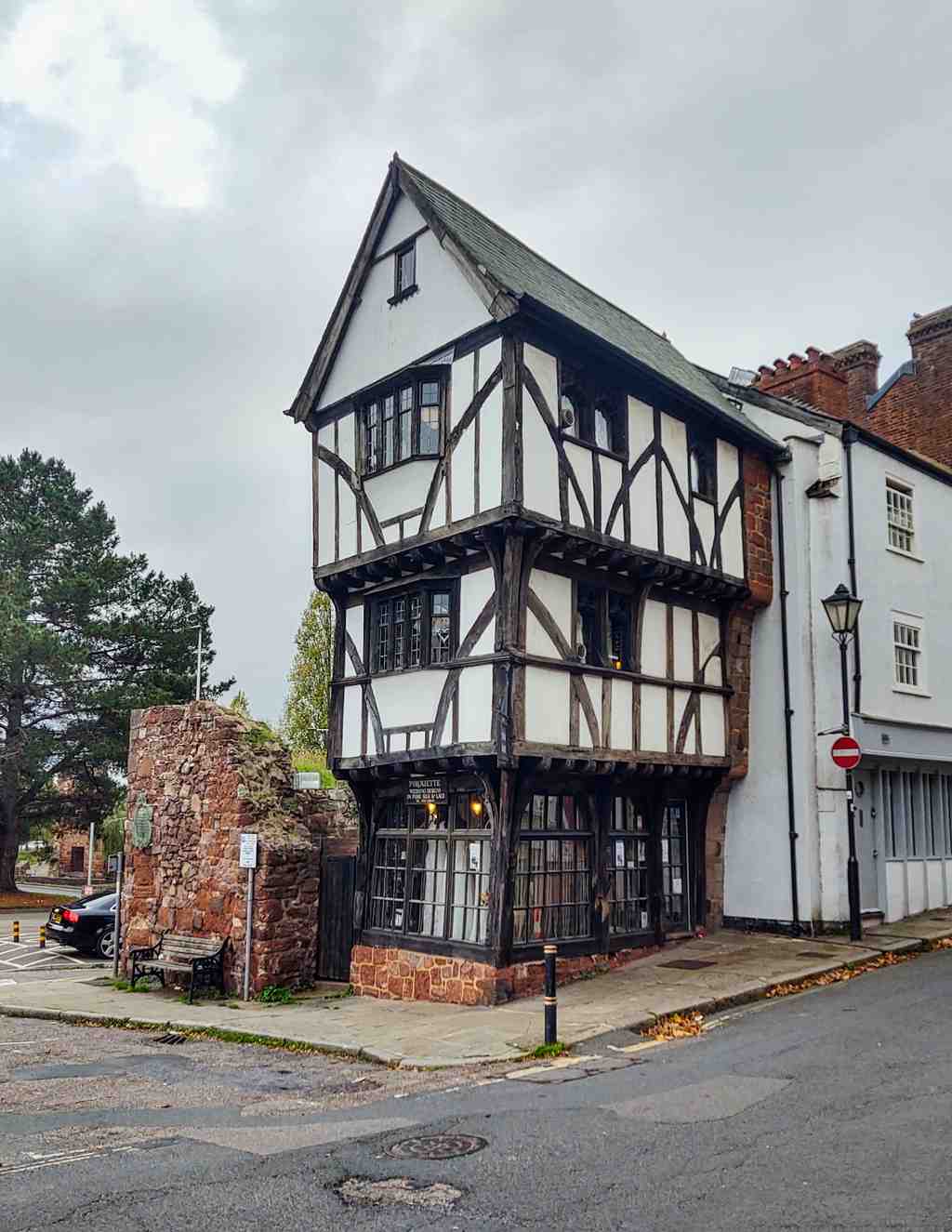
Look just ahead and to your left-you can’t miss it! The House That Moved stands at the corner, a striking, three-story building with white walls crisscrossed by dark timber beams and upper floors that jut out further than the one below. The windows are small, a bit squinty, almost as if the house itself is peering curiously at the street. The ground floor has lots of glass and wooden frames, while the upper stories seem to teeter in the air-like the building is playing a game of architectural Jenga.
You’re standing in front of one of Exeter’s quirkiest legends-the House That Moved. Picture this: it’s the late Middle Ages, somewhere between 1420 and 1460. The city is smaller, the air thick with the scent of woodsmoke, and instead of car engines, you’d hear horses’ hooves on cobblestones. This very house was built for a wealthy merchant, right on the main road between West Gate and the old Exe Bridge, not far from the busy marketplace.
But fast forward to the 1960s, and things got dramatic. The city needed a new bridge and a big shiny road, and poor Edmund Street was about to disappear under a sea of bulldozers. Most buildings around here just vanished. But this house, sometimes called the Tudor House (even though it’s older than your average Tudor), was too fascinating to lose. People called for its rescue-historians, archaeologists, maybe even a few ghosts. The solution? Move it-like a giant piece on a chessboard!
Imagine the scene: builders stripped the house back to its skeleton, wrapped it up with wooden beams, and rolled it away on iron wheels, slowly turning it 90 degrees to fit its new spot. No bolts, just good old-fashioned muscle and a government grant. The whole thing weighed more than two elephants-with a couple of stubborn cats thrown in for luck.
And now, here it stands-a time traveler, really, with stories hiding in those dragon beams and traceried windows. Next time someone complains about moving house, just point them here! Where most buildings just stood still and hoped for the best, this one packed up, rolled down the street, and settled in to watch Exeter’s centuries unfold-one overhanging floor at a time.




