
Cambridge Audio Tour: The Cambridge Heritage Quest
A thousand years of ambition are hidden beneath Cambridge’s peaceful skyline—look closer and every street hums with the echoes of rebellion, invention, and intrigue. This self-guided audio tour unlocks corners most visitors walk past, inviting you to discover the city’s restless spirit and its untold tales. Why did desperate rebels once storm Cambridge Castle at midnight? What secret object did Jim Ede hide among pebbles in Kettle’s Yard? Which scandalous vote at the University Pitt Club changed nearly 200 years of tradition overnight? Walk from grassy castle mounds to quirky art-filled cottages and a neo-classical clubhouse with a notorious guest list. Hear chants of monks, whispers of political plotting, and the distant sound of laughter drifting from hidden chambers as you cross centuries in minutes. The city is waiting to reveal its best-kept secrets. Ready to listen deeper and step into Cambridge’s shadows? Your journey begins now.
Tour preview
About this tour
- scheduleDuration 100–120 minsGo at your own pace
- straighten4.3 km walking routeFollow the guided path
- location_onLocationCambridge, United Kingdom
- wifi_offWorks offlineDownload once, use anywhere
- all_inclusiveLifetime accessReplay anytime, forever
- location_onStarts at Cambridge Castle
Stops on this tour
lock_open 3 free previews · 12 unlock with purchase
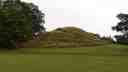
To spot Cambridge Castle, look for a tall, grassy mound rising out of the open green near the large trees-this is the old castle motte, standing like a small hill in the heart of…Read moreShow less
To spot Cambridge Castle, look for a tall, grassy mound rising out of the open green near the large trees-this is the old castle motte, standing like a small hill in the heart of the city. Welcome to the very first stop on our journey-the legendary Cambridge Castle! Now, you might be expecting to see massive stone walls and turrets, but what’s left today is this grassy hill, known as Castle Mound, holding secrets that go back almost a thousand years. Imagine standing here in 1068, while the air buzzes with the shouts of Norman soldiers and the clatter of carts full of timber and stone. William the Conqueror needed to keep the locals in check and control the all-important route north to York, so he ordered this castle built-right here, where Cambridge, or "Grantabridge" as it was called then, met the old Roman road. This place wasn’t always so peaceful. If you squint, you might see shadows of 27 unlucky houses that had to be flattened to make way for the castle’s ramparts. The man in charge, Picot the sheriff, even built a priory next door. At first, the castle was classic motte-and-bailey style-a sturdy wooden fort sitting on top of this mound, with all kinds of medieval activity bustling below. It was a tense time: imagine rebels plotting, kings brooding, and the countryside alive with rumors of conflict. Just a short stroll later, in 1139, war erupted in England-a tangle of disputes called The Anarchy. Geoffrey de Mandeville, rebel and all-round troublemaker, burst in and raided the town, capturing the castle for the Empress Matilda. But the tables turned! King Stephen, not a fan of sharing, swept back through with his army and took it right back. These walls have seen more comebacks than a rock band. As the years rolled on, King John-yes, the one disliked by Robin Hood-spent a fair share sprucing things up, adding expensive chambers and halls where local lords had to guard the place as part of their land deals. And it didn’t stop there: when Edward I arrived, he cranked the whole thing up to castle 2.0, shelling out huge sums to build mighty towers and a stone keep. For a short time, this was a fortress in the latest fashion, with squat round towers on the corners and a big circular keep right on top of the mound where you stand. But, as so often happens, the excitement faded-by the late Middle Ages, the castle was already crumbling, and clever college builders thought, “Why quarry new stones when there’s a handy pile right here?” That’s right-chunks of this castle ended up in King’s College Chapel and Trinity College’s chapel, and even in a fancy mansion out in the Fens. Talk about recycling! By the time the English Civil War thundered in, the castle was just a shadow-a mix of gaol, court, and crumbly ruins. Parliamentarians hurriedly bolstered it with earthworks and bricks, fearing an attack from the Royalists, but no great battle ever came. The only noises here were the hammerings of hasty repairs and perhaps the mutters of grumpy soldiers. In the centuries after, the castle quietly slipped into a new role as the local prison, its walls holding little more than echoes and secrets. The strange, octagonal prison that appeared here in the 19th century quickly vanished when Shire Hall took its place, leaving nothing but this grassy mound. Now, you're standing on the highest point in Cambridge, with a panoramic view of the city’s rooftops and church spires. Close your eyes-and you might hear history whisper: the clang of swords, the chants of monks, the wailing of prisoners, and-if you listen hard enough-the far-off sounds of a castle being hauled away, stone by stone, to help build the future of Cambridge. So take a moment, climb to the top if you dare, and survey the centuries beneath your feet. Ready to walk through history? Let’s see what other stories Cambridge is hiding-on to the next stop!
Open dedicated page →To spot the University Pitt Club, look ahead for a striking white building with classical columns and a triangular pediment above-if you glance up, you’ll see a round plaque…Read moreShow less
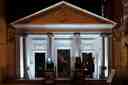
To spot the University Pitt Club, look ahead for a striking white building with classical columns and a triangular pediment above-if you glance up, you’ll see a round plaque featuring the profile of William Pitt the Younger right above the entrance at 7a Jesus Lane. Now, let’s step right into the heart of Cambridge tradition-though, watch your step; history has a habit of tripping people up around here! The University Pitt Club, or simply “the Pitt Club” to those in the know, has been one of the city’s most exclusive haunts since 1835. It was started in the name of William Pitt the Younger-once Britain’s youngest ever Prime Minister, and a former Pembroke College student who probably found Cambridge’s winters as chilly as its politics. Originally, the club was rather serious business: a place for up-and-coming Tory students to strategize, support local politicians, and maybe even practice their rousing political speeches over a good dinner. They’d dress in party uniforms, toast to the glory of Pitt, and let the wine-and political fervor-flow. But as decades passed, the politics quietly left the table, replaced by stories, laughter, and plenty of socializing-because, let’s face it, no one wants to debate taxes after dessert. But the club's history is far from dull. It spent its early years roaming Cambridge, meeting in bookshops, above furniture dealers, anywhere students could gather for heated conversation. Then, in 1866, it landed right here at 7a Jesus Lane, and what a peculiar spot it is! This grand neo-classical building looks purpose-built for student secrets and late-night intrigue, but originally it was opened in 1863 not for plotting or partying, but as “Roman (improved Turkish) Baths” designed by Sir Matthew Digby Wyatt. The baths venture sank quicker than a stone in the Cam-open barely a year before closing down. The building was put up for auction, and, probably with a wink and a nudge, Sir Wyatt bought it himself. Half went to the Pitt Club, the other half became Orme’s Billiards Rooms-a perfect pairing, as billiards and brandy solve more arguments than politics ever did. By 1907, the Pitt Club became the sole master of the house, which underwent a fresh lick of paint after a fire that same year. A few years later, in 1933, a rather grand, slightly snobby stone plaque bearing William Pitt’s head was mounted on the pediment-a gift from General Sir Neill Malcolm. That plaque originally came from Bowling-Green House in Putney, the very place where Pitt drew his last breath. Now it keeps a watchful (and possibly disapproving) eye on the foot traffic along Jesus Lane, judging every pedestrian’s political credentials-or maybe just their taste in restaurants. Speaking of restaurants-did you know that the ground floor has hosted everything from the exotic “Xanadu” to a Pizza Express? During the Covid pandemic, even the endless parade of dough and cheese paused. Now, the scent drifting out comes from The Kibou Japanese Kitchen & Bar. Imagine, all those old Tory clubmen from the 1800s would hardly know whether to order sushi or just ask for bread and dripping. The Pitt Club keeps its traditions upstairs, while the ground floor brings a new flavor to historic walls. The building has lived through dramatic times. During the World Wars, its routines were upended: The Great War thinned the club’s membership, with the minutes bemoaning a “horrible scarcity of whisky”-a tragedy for any proper club! In World War II, the club was commandeered for use as a public restaurant, earning the scornful look from Pitt’s stone head and forcing club members to form the tongue-in-cheek “Interim Club” above the Trinity Street post office-a far cry from fine dining on Jesus Lane. But perhaps the greatest drama came just recently, in 2017. For nearly 200 years, the club admitted only men. Change was brewing, as more and more Cambridge traditions modernized. After a heated referendum (with only resident members getting a vote-a classic club manoeuvre), the Pitt Club opened its doors to women. You can almost hear the echoing gasps of centuries of alumni... or maybe they’re just groaning about missing out on the vote. The Pitt Club has counted among its members kings, Nobel laureates, spies, actors, and even the original namesake of James Bond! But despite the grandeur, it remains, at its heart, an undergraduate club-young minds, old traditions, and the reassuring sense that, whatever changes, somewhere in Cambridge there will always be a secret stairway, lively debate, and perhaps a sly nocturnal toast to Mr. Pitt.
Open dedicated page →
Show 12 more stopsShow fewer stopsexpand_moreexpand_less
Gaze ahead and you’ll spot a grand stone building with pointed spires and a commanding gatehouse right in the center, surrounded by lush lawns and framed by an impressive medieval…Read moreShow less
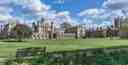
Gaze ahead and you’ll spot a grand stone building with pointed spires and a commanding gatehouse right in the center, surrounded by lush lawns and framed by an impressive medieval chapel tower to the right-yep, that’s St John’s College! Now, as you stand here, imagine winding the clock back over 500 years. St John’s College was dreamed up by Lady Margaret Beaufort, the powerful mother of King Henry VII. But founding a college back in 1511 wasn’t simple! After Lady Margaret died, it took cunning negotiation, papal approval, and even the King’s blessing before the doors finally opened. The college rose from the ashes of a crumbling medieval hospital, with its impressive gate built to keep out more than just chilly winds-those heavy doors slammed shut every evening, sealing the scholars in for a quiet night of study... or maybe some ghostly moans according to legend! If you look up at the Great Gate, notice the quirky animals perched above it. Those aren’t your average college mascots! They’re yales-strange creatures from legend with elephant tails, goat-like heads, and magical swiveling horns. And see the red rose? That’s the mark of Lady Margaret, still watching over her scholars to this day. Keep your eyes peeled for the college’s motto too: “Souvent me souvient,” which means, “Often I remember.” Or maybe, “Don’t forget to duck under the Latin!” depending on how you read it. St John’s is a place where history is woven into every stone. Hear the echo of footsteps as you walk under the archways-those might have been the poet William Wordsworth heading to class, or William Wilberforce and Thomas Clarkson, plotting to change the course of history by ending slavery in the British Empire. Even modern royalty couldn’t resist; Prince William took classes here in estate management, which sounds much fancier than my attempts to mow the lawn. See that chapel with its sky-high tower? It’s one of the tallest buildings in Cambridge and a real slice of Victorian drama. The stained glass glows, and if you listen closely, you might hear the hauntingly beautiful sounds of St John’s choir, a tradition since the 1670s. And just so you know, the choir was the first at Oxford or Cambridge to welcome boys and girls into both its children’s and adult choirs-progress marches on, even in ancient halls. If the walls could talk, they’d tell stories of Nobel Prize winners, prime ministers, saints, and a few princes. Some say lost spirits wander the courts at night, including the ghost of James Wood, a scholar so poor he worked by the light in the stairways. During the English Civil War, First Court was used as a prison-imagine the clanging of chains and echoed whispers as rebels paced the ancient stones. In fact, Queen Elizabeth II herself stopped by in 2011 to open a new path-though I doubt she was searching for ghosts. The college buildings are like a timeline in stone. Step through Second Court, called the finest Tudor court in England, where treaties were signed and D-Day landings planned. Cross the legendary Bridge of Sighs-so photogenic even Queen Victoria said it was “pretty and picturesque.” If you find a window with nothing behind it, that’s not a magic trick, just creative architecture! The statues standing in chapel tabernacles aren’t just decoration-they’re famous alumni, forever carved into the college memory. St John’s is famous for its sporting rivalry with neighbouring Trinity College. The two try to outdo each other at every turn-even the eagles above their buildings are said to turn away from their rivals, and rumor has it that the blank clock faces on New Court were left deliberately unfinished just to irritate Trinity. And as for the swans, well, apparently St John’s fellows are the only folks, other than the royal family, allowed to eat the unmarked mute ones. Don’t worry, no swans were harmed in the making of this tour. Today, thousands of students from all over the world wander these courts, study in rooms lined with ancient wooden panelling, punt on the River Cam, and yes, sometimes stumble across more than a few eccentric traditions. Threads of history, music, rivalry, and memory connect them all-and you, lucky visitor, get to stand here and soak it all in, under the watchful gaze of Lady Margaret and her fierce yales. If these walls could gossip, imagine the tales they’d tell! Interested in knowing more about the buildings and grounds, college choirs or the traditions and legends
Open dedicated page →In front of you, Trinity College rises with majestic golden stone, castellated towers, a clock tower to your left, and a grand arched gateway right at the center-just look for the…Read moreShow less
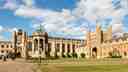
In front of you, Trinity College rises with majestic golden stone, castellated towers, a clock tower to your left, and a grand arched gateway right at the center-just look for the ornate statue of Henry VIII above the Great Gate and the enormous sunlit courtyard stretching beyond. Imagine standing here in 1546: England is full of whispers and worries, because mighty King Henry VIII is seizing church lands left and right, making even the wealthy colleges at Oxford and Cambridge nervous that they might be next. The story goes that Trinity College was born out of that tension-Henry’s sixth wife, Catherine Parr, convinced him not to shut the university down, but to build something new instead. So, right where you’re standing, two older colleges-King’s Hall and Michaelhouse-were mashed together in one royal sweep to form Trinity, a new college with such ambition that you can almost feel it echoing in the stones. Take another look up at the Great Gate-the statue of King Henry VIII should technically be holding a scepter, but legend tells us that, for a cheeky while, he was holding a chair leg swapped in by a mischievous student! These grounds have seen centuries of pranks and protests, from students scaling dizzying rafters to reposition an artificial duck in the hall-or, more recently, demonstrators with shovels digging up the immaculate lawn to protest fossil fuel investments. Trinity doesn’t just have stories-it has presence. This is the richest college in Cambridge, fueled by property, science parks, and even a stake in the O2 Arena in London! But money isn’t everything; prestige and tradition here are almost as thick as the walls. Famous faces have roamed these paths: think Isaac Newton imagining apples and gravity, Lord Byron wandering with his pet bear (yes, a bear-because a dog would have been too ordinary), and six British prime ministers pondering the affairs of the nation. Walk through the Great Court if you get the chance. It’s so vast it’s said to be Europe’s largest enclosed courtyard. And if you’re brave, try your luck running the Great Court Run-sprinting around the perimeter in the time it takes the clock to strike twelve. Olympic athletes have tried and failed to beat it; one wrong foot on the slippery cobbles and you might find yourself flying less like Newtonian physics and more like slapstick comedy. You might hear snippets of Latin grace drifting from the hall at dinner, or the echo of the college choir floating down during the beautiful traditions of Singing from the Towers and Singing on the River. Half the choir belts from atop the Great Gate, the other half answers from the clock tower across the court-listen for the contrast as antiphonal music sweeps over the court. Later, lantern-lit punts drift across the Cam, the choir’s voices fading into the night. Trinity’s walls are alive with stories of academic rivalry, especially with St John’s College next door-rumor has it that cannons even point in their direction, “just by coincidence,” of course. And since only Fellows can walk on the grass (unless you’re a Scholar, in full academic dress), there’s always a sense of mystery about what goes on atop these manicured lawns. Even the architecture is full of surprises. Thomas Nevile, Trinity’s ambitious 16th-century master, rebuilt and expanded much of the college, adding the beautiful cloisters and the celebrated Wren Library-designed by Christopher Wren himself and housing treasures like two of Shakespeare’s First Folios and handwritten notes from Isaac Newton. Meanwhile outside, students once competed to hang bicycles in the branches of the iconic New Court tree, which is definitely not Newton’s apple tree, despite persistent myths! This is a college of firsts: more Nobel prizes than any other Oxbridge college, a boat club with legendary May Balls, the oldest university mathematical society in the UK, and a ceaseless supply of scholars whose names echo through history, from mathematicians to poets to royalty. These stones have soaked up secrets, rivalries, the tributes of monarchs, and the rebellious laughter of students for nearly 500 years. So as you stand here, take a slow breath, and let Trinity College’s grand towers, its sun-drenched courts, and its swirling mix of mischief and intellect welcome you into a world where history still has a very real pulse. To delve deeper into the buildings and grounds, academic profile or the traditions, simply drop your query in the chat section and I'll provide more information.
Open dedicated page →Look to your left-towering above you is a magnificent stone chapel with tall spires, vast arched windows full of intricate glass, and buttresses reaching for the sky, shimmering…Read moreShow less
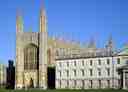
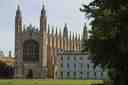
Look to your left-towering above you is a magnificent stone chapel with tall spires, vast arched windows full of intricate glass, and buttresses reaching for the sky, shimmering gently in the sunlight. Now, take a deep breath and imagine the world 600 years ago, with the ground beneath your feet echoing the sounds of builders hard at work. This spectacular chapel, the King's College Chapel, was King Henry VI’s dream-he wanted to create something to rival the grandest churches in all of England! Picture the king himself, cloak clasped tight against the wind, laying the first stone here on a summer’s day in 1446. But plans rarely go smoothly, do they? Wars broke out-the famous Wars of the Roses-and for years, work ground to a halt. Still, decades tumbled by, and every new king felt compelled to add his own piece to this wonder. Imagine Reginald Ely, the architect, scratching his head trying to find the best stone or craftsmen, while bishops supervised every move and masons argued about which vaulting style looked grander! So what you see rising before you now, with its soaring stone ribs and immense stained-glass windows, took more than half a century just to reach its full height. There’s a twist in the tale: originally, the inside was meant to look different. As the years passed, ideas changed and the master masons switched to a fan vault-now, that’s the world’s biggest! Step closer in your mind’s eye and picture sunlight filtering through the stained glass, splashing colored patterns onto the cool stone floor. The stained glass itself is a jewel box of stories. Twelve tall windows on each side, and great east and west windows too-most made by Flemish hands in the early 1500s, with bright reds and blues that would dazzle even the dullest Cambridge morning. During World War II, these windows were carefully taken out and hidden away to keep them safe-a heroic rescue mission worthy of a movie. Imagine the relief when the war ended and each delicate pane was restored, one by one, and the colors glowed again. Let’s not forget the living heart of the chapel-the King’s College Choir. The building is world-famous for its soaring acoustics. Each December, the choir’s voices float through this great stone shell for the BBC’s Christmas broadcast, carrying carols to every corner of Britain. You can almost hear the echoes of centuries of song. But there’s a bit of drama too! In the 1960s, a spectacular painting-the Adoration of the Magi by Rubens-was added above the altar. Some people thought it looked fabulous, while others said, “Wait, does it clash with the stained glass? Isn’t it too small for that huge space?” It was even compared to a postage stamp stuck on a grand window! Eventually, clever architects put up plain shutters on either side, so now Rubens has a proper stage to shine on. And beneath your feet, there’s a secret: when workers altered the floor here, they discovered centuries-old coffins hidden below-hidden stories, not all of them resting quietly! And what about times of trouble? During the English Civil War, many churches were smashed by soldiers who destroyed anything too decorative. But here, the chapel was used as a training ground-some say Oliver Cromwell himself, who studied at Cambridge, made sure no harm came to it. Even today, look closely near the altar and you might see graffiti scrawled by bored soldiers away from battle. That’s not even the end-King’s College Chapel is still in use: for worship, for music, for special college moments. Each detail, from the mighty organ to the stunning stone screen Henry VIII had built to impress Anne Boleyn, is alive with centuries of stories. Maybe, just maybe, if you stand quietly long enough, the history in these walls will whisper a secret just for you. Exploring the realm of the construction, great windows or the rood screen? Feel free to consult the chat section for additional information.
Open dedicated page →Ahead of you is King's College Cambridge-just look for the magnificent chapel with its grand arched windows and forest of soaring stone pinnacles rising above a long sweep of…Read moreShow less
Ahead of you is King's College Cambridge-just look for the magnificent chapel with its grand arched windows and forest of soaring stone pinnacles rising above a long sweep of green lawn. So, here you are at King's College, and if you feel a little awestruck, you’re not alone! King’s is like the crown jewel of Cambridge, founded way back in 1441 by a teenage King Henry VI, who had grand dreams of a place as splendid as his other project-Eton College. You’re standing beside the River Cam and facing elegant King’s Parade, right where Cambridge’s heart beats at its loudest. Picture it: the year is 1441, and Henry VI, wearing shoes probably more expensive than my entire wardrobe, lays the very first stone right here. But, just like every good drama, trouble hits-the Wars of the Roses erupt, turning England upside down and draining both Henry’s fortune and his throne. King's College is left, half-finished, probably feeling a bit like a nice meal interrupted when your WiFi drops: very unsatisfying. Over fifty years later, Henry VII picks up where his ill-fated uncle left off. He wants to show everyone he’s the true “king’s king,” so he pours money and effort into the masterpiece you see-the famous King's College Chapel. Its construction was like Britain’s never-ending roadworks: it spanned three whole royal reigns, finishing only in 1544 under Henry VIII. Good things really do take time… like fine cheese, or Oxford students finishing their essays! The final chapel is so magnificent with its giant stained-glass windows and the world’s largest fan-vaulted ceiling, that it became a symbol, not just of King’s, but of Cambridge itself. Now, the rules at King’s were as strict as a boarding school headmaster with a whistle. Early on, only boys from Eton were allowed in, and becoming a member was for life-kind of like joining a gym, but with more Latin and less lycra. The scholars lived, studied, and even took their meals together, and the only breaks from books were, well, more books! There’s even a 15th-century tale of scholars poking at worms with sticks on the college lawn-although don’t try it; the worms here bite back with fierce intellectual debate. Over centuries, King’s College grew in drama and in stone. Its courts stretched out, and architects argued if the style should be neoclassical or gothic, while the college stuck to its beloved medieval look. In the 19th century, big changes arrived. After centuries of favoring Etonians, King’s started opening its gates to clever minds from all schools (phew, finally a level playing field). It even survived strange slander-someone once claimed this was the home of the world’s first bonsai tree. Turns out, the only thing really growing wild here was student ambition. Through revolutions, world wars, and the swinging sixties, King’s kept modernizing. During WWII, the college hurried to protect its ancient stained glass from bombing. Imagine the hustle as students and professors carted windows off to safe cellars; still, every Christmas Eve the music of the famous Choir of King’s College echoed out-the cherished Festival of Nine Lessons and Carols, broadcast to millions, even with blackout tar-paper flapping in the wind. As you stand here, imagine crowds gathering for the King’s Affair (the college’s legendary June party), famous musicians blasting music through these ancient walls, or modern students dashing to lectures, likely with a coffee in hand and dreams of winning a Nobel Prize. That’s not so far-fetched-King’s boasts at least nine Nobel laureates, and alumni like the brilliant Alan Turing, economist John Maynard Keynes, and a crowd of prime ministers, poets, and comedians. And let’s not forget: if you ever needed to become a champion kayaker, King’s has its own kayaking club with boats on the river behind the college. Or perhaps you’d rather DJ at the Bunker nightclub, or just enjoy the sound of the choir echoing through the most spectacular fan-vaulted ceiling in the world. So go ahead, soak up the layers of drama, history, and ambition that echo through these stones-just watch out for any muttering scholars poking at the grass. They might be onto the next scientific breakthrough, or just looking for lost change. Eager to learn more about the buildings and grounds, academic profile or the intake and access profile? Simply drop your inquiries in the chat section and I'll provide the details you need.
Open dedicated page →To spot the Senate House, look for a striking white neo-classical building with grand columns and a gleaming stone façade, standing proudly between the lawns and old…Read moreShow less
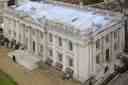
To spot the Senate House, look for a striking white neo-classical building with grand columns and a gleaming stone façade, standing proudly between the lawns and old colleges-nearly impossible to miss as it rises in elegant symmetry right in front of you. Imagine you’re standing here nearly 300 years ago and the air is buzzing with excitement. It’s June 22, 1722, a special day for the city: Thomas Crosse, the Vice-Chancellor, is about to lay the first stone of what would become one of Cambridge’s most iconic landmarks. At that moment, this spot wasn’t the bustling hub you see now-it was filled with old houses, hurriedly bought up by the university by act of Parliament just for this project. The sound of hammers and the smell of fresh stone must have been everywhere, as architect James Gibbs, inspired by a patchwork of his own ideas and those of the gentleman-architect Sir James Burrough, began bringing the Senate House to life. The building went up steadily, dressed head to toe in shiny Portland stone as if it had put on its finest academic gown for the occasion. By 1730, a ceremony declared it open to the city. Though here’s a little twist: this was going to be just one side of a magnificent quadrangle. But plans have a curious way of running away from us, don’t they? The rest was never built! Still, this single grand side was enough to make the Senate House a star in the heart of Cambridge. From the start, the Senate House was more than just pretty walls and pillars-it was the beating heart of university life. Here, big decisions were debated, but more memorably, this is where students become graduates. The tradition goes back almost as far as the building itself. Picture a sea of black gowns, the sound of Latin echoing off the marble, students brought forth college by college, their names called with a roll that echoes with possibility. For each graduand, a Praelector-sort of like a proud parent but in an academic robe-takes them by the hand, walks them forward, and declares in careful Latin that they are worthy in both character and learning. If you listen very closely, you might imagine the gentle murmuring of, "Dignissima domina, Domina Procancellaria et tota Academia praesento vobis..." After the ceremony, new graduates bow, step out through the Doctor’s Door, and-voilà-the certificate is finally in hand. Sometimes, there’s a little more drama for the math wizards of Cambridge. When results for Part II and III of the famous Mathematical Tripos are ready, students gather under the balcony outside, hearts thumping like wild horses. Suddenly, the results are read aloud-and then, in a burst of joyous chaos, piles of class-lists flutter down from the balcony, raining confetti onto the waiting crowd. Not many exam results land quite so literally at your feet. But it’s not all serious tradition and stiff upper lips. If these stones could whisper, they’d have a laugh about some of Cambridge’s cheekiest pranks. The most famous? One bright morning in June 1958, townsfolk and dons alike looked up and did the ultimate double-take: a battered old Austin Seven car perched on the roof. It took some cunning engineers-well, engineering students, to be precise-a late night, some borrowed scaffolding, and a very good sense of humor to pull off. It took the university an entire week to get the car back down, and the nation couldn’t stop chuckling at the news. Since then, the roof has hosted Christmas trees and other curious surprises, proof that the spirit of student mischief is alive and well at Cambridge. Of course, the Senate House also plays the occasional role in modern drama-like when it hosted the BBC Election Debate in 2017, putting national politics against a backdrop older than Parliament itself. And during the university’s 800th anniversary in 2008, the building lit up with a spectacular light show, moments from Cambridge’s past dancing across those classical walls for all to see, as if the building itself was retelling its favorite stories. So as you stand here now, take in the strength of those columns, the feel of these stones beneath your feet, and the echoes of centuries of laughter, triumph, nerves, and celebration. The Senate House is more than just a building-it’s where the story of Cambridge graduates from one generation to the next, with a little mischief, a dash of ceremony, and plenty of heart. Now, shall we move on before someone tries to park another car on the roof? Want to explore the location and construction, history and usage or the traditions and legends in more depth? Join me in the chat section for a detailed discussion.
Open dedicated page →To spot the Church of St Mary the Great, just look for the tall, square stone tower with castle-like turrets at the corners and long, pointed windows standing proudly at the top…Read moreShow less
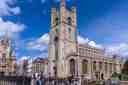
To spot the Church of St Mary the Great, just look for the tall, square stone tower with castle-like turrets at the corners and long, pointed windows standing proudly at the top end of King's Parade-it’s the grand building right in front of you, dominating the view. Now, let’s step into a piece of Cambridge’s living history-welcome to Great St Mary’s, or as the locals like to call it, GSM! Don’t worry, it’s not a mobile signal, but it certainly does have a way of ringing through the centuries! Imagine standing right here hundreds of years ago, as the sun warms the pale stone and the stained glass dances with color behind ancient windows. This isn’t just any church-it’s the University Church, the very heartbeat of Cambridge tradition, law, and ceremony for generations. Close your eyes for a second and picture it’s the year 1205. King John is around, and you might spot knights and townsfolk milling about the markets outside. There’s a local fire-no, not the barbecue kind, but a blaze that destroys the church in 1290, sending the city into chaos. Rumors and blame fly, and the city’s synagogue is closed as a result. But out of the ashes, St Mary’s rises again, walls growing thicker, windows grander, its new stonework glinting in the medieval sunlight. St Mary’s carries stories like a treasure chest-tales of queens and kings, fiery revolts, and scholarly squabbles. In 1381, during the dramatic Peasants’ Revolt, the townsfolk stampeded in, ransacking the church and destroying the university’s precious documents. Imagine the clatter of boots on old stone, and the frantic shuffle as prized charters and title deeds were hurled from secret hiding places. By the 1400s, the city is buzzing-with the distant clang of hammers as the church is rebuilt in the elegant Late Perpendicular style. The roof is so new it smells of fresh-cut wood, and the walls are straight as rulers. Kings Richard III and Henry VII pour treasures into the construction-making Great St Mary’s not just any church, but a royal project! They finish the main building by 1519, with the tower going up a little later, in 1608. Now, look up and feel your neck stretch-those castellated turrets were once the pride of Renaissance Cambridge. Here’s a quirky tradition: university officers have to live within 20 miles of this church, and undergraduates within three! That way, no student can ever claim their “dog ate the sermon!” Speaking of sermons, this church hosts the famous University Sermons, which often drew crowds so big that galleries had to be added in 1735 just to fit everyone in. Attendance, by the way, was compulsory-so if you didn’t fancy a dose of high-minded wisdom, tough luck! Now, here’s where things get musical. The tower houses the bells responsible for the “Cambridge Quarters”-those pleasant chimes you might hear right now. These inspired none other than Big Ben itself in London, so when you listen, you’re hearing history that echoes through the entire nation. The bells are a story of their own: from their earliest days in a wooden frame in the yard, moved to the tower in 1515, replaced and tuned over time, until a sparkling new ring of thirteen was hung in 2009, thanks to a generous donor-Dr. Martin C Faulkes. And here’s a bit of a claim to fame: the Society of Cambridge Youths, founded in 1724 to care for these bells, is Britain’s oldest bell-ringing society, and only one other church group in the world can boast a longer run! Step inside, and you’ll see two mighty pipe organs-one for the church, and one for grand University events. The University Organ was first installed in 1698 and has been gently cared for, expanded, and restored ever since. The sound, when it swells through these ancient arches, can send goosebumps straight down your spine. Walking along the aisles, your eyes might be drawn up to the glorious stained glass, lovingly crafted in the late 1800s, or the sculpture of Christ in Majesty behind the high altar-a modern touch from 1960, but radiant in sunlight. But this church is not just about tradition and grandeur. It stands at the core of Cambridge’s community-Liberal Catholic in style and open to all, proud to be a member of the Inclusive Church. Over eight centuries, from royal intrigue to rebel riots, from solemn bells to the bright promise of a new generation gathering under these stone arches-Great St Mary’s continues to chime in every chapter of Cambridge’s story. So, before we carry on, take a deep breath and listen-you might just catch the whisper of ages past beneath the clatter of today’s bicycles and student chatter. If you're keen on discovering more about the bells, organs or the architecture and features, head down to the chat section and engage with me.
Open dedicated page →Right ahead of you, you’ll spot Queens’ College by its striking, tall twin brick towers and old red-brick walls guarding the entryway, flanked by pointed medieval windows-just…Read moreShow less
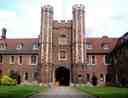
Right ahead of you, you’ll spot Queens’ College by its striking, tall twin brick towers and old red-brick walls guarding the entryway, flanked by pointed medieval windows-just look for the grand archway set in a courtyard of perfectly trimmed grass. Welcome to Queens’ College, Cambridge-a place where centuries of stories are stitched into every brick! Picture yourself in 1448: horses clopping, stone masons chipping, and Queen Margaret of Anjou starting something that would outlast empires and fashion fads. This college was born from royal rivalry, as Margaret’s rival, Queen Elizabeth Woodville, refounded it just years later-so now we call it Queens’, not Queen’s, in honor of both! Imagine the confusion at postal sorting offices before that apostrophe was set straight. You’re looking at the earliest example of a purpose-built college in the city, where the original Old Court still wraps around you, with its red clunch bricks and storybook Gothic windows that have watched nearly 600 years whiz by. There’s something exciting about knowing the President’s Lodge, tucked into Cloister Court beside you, is the oldest building on the river in Cambridge-it’s not just a building, it’s a legend! Of course, all grand stories need a bridge, and Queens’ has the famous Mathematical Bridge crossing the River Cam. Legend says Isaac Newton designed it without bolts, and cheeky students who tried rebuilding it with nuts and bolts left it the way it looks today. Spoiler alert: Newton wasn’t alive when the bridge was built-it’s just one of Cambridge’s many hilarious myths. The bridge actually links two sides of the college known as the “light side” and the “dark side”-yes, just like in Star Wars, but with more rowing and less lightsabers. Over the centuries, Queens’ has had more drama than a soap opera. There were floods in 1795, fires in the Walnut Tree Building in 1777, fierce debates in its St Bernard Society (founded in 1862), and even moments of royal favor-like Queen Elizabeth, the Queen Mother flying her personal standard above the court, which probably left the pigeons feeling very patriotic. Famous names have wandered these courts: Erasmus (that’s right, the big-shot scholar who once complained about English weather), Stephen Fry (who probably cracked a few jokes of his own), author T. H. White, and lately, Sir Demis Hassabis, who scooped a Nobel Prize in 2024 for his work on artificial intelligence-Queen Margaret would barely have known what “artificial” meant, let alone “intelligence”! Step further into Old Court and let your mind drift back to when undergraduate students learned Latin and Greek under candlelight. The War Memorial Library, formerly the original chapel, saw quiet prayers swapped for intense exam revision sessions. And just a few steps away sits one of Cambridge’s oldest libraries, where the books are still clad in their original bindings-because centuries ago, the college simply couldn’t afford fancy new covers. You could say Queens’ has been eco-friendly since before it was fashionable! You might smell the scent of fresh-cut grass or hear footsteps echo off the flagstones, and if it’s May Ball season, you might even hear the thud of fireworks or the distant echo of a band warming up. Back in 2013, Bastille played here, and the crowd probably left the grass almost as trampled as after the English Civil War, when the fellows melted down their silver to help the King-only to get kicked out until 1660. Queens’ thrives on tradition and mischief. Tradition here is everywhere: you might catch the sound of grace being read before dinner, the gong’s boom calling students to dine in academic gowns, or the hidden mutterings of students plotting another boat race or rugby match. But don’t walk on the grass. Seriously-not even fellows are allowed! Today, Queens’ bustles with a lively mix of students from all corners of the world, learning in modern buildings or wandering under medieval arches. The college boasts extensive gardens, its own punts drifting down the Cam, and societies for everything from wine tasting to cricket to drama. There’s a fierce but friendly rivalry with St Catharine’s College, sparked when their new court forced Queens’ into a back alley. OUCH. Whether you’re gazing up at those mighty towers, watching college rowers glide by, or imagining the grand escapades behind each window, Queens’ College wraps you in a living tale-full of ancient tradition, royal rivalries, modern triumphs, and a little bit of mayhem. Step a little closer and listen… perhaps there’s a new chapter waking up right now for you to discover. Curious about the coat of arms, buildings and location or the academic profile? Don't hesitate to reach out in the chat section for additional details.
Open dedicated page →Right in front of you is the stately face of Peterhouse, with its elegant stone façade, arched windows, and a clock tower rising above the main entrance-just look straight ahead…Read moreShow less
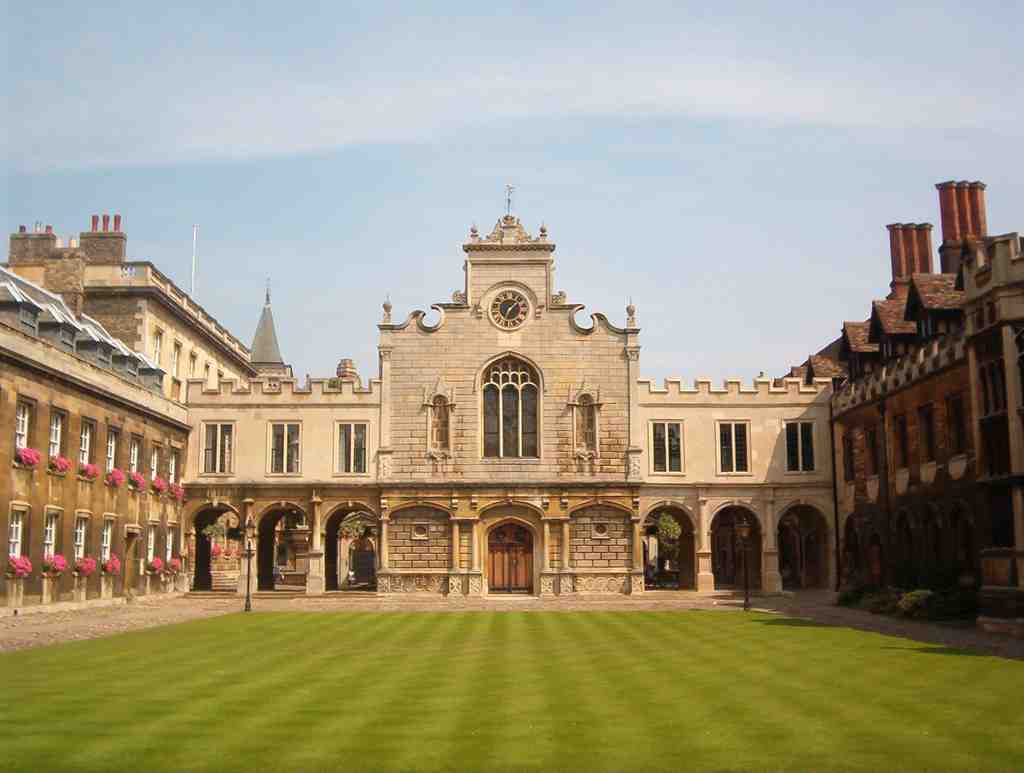
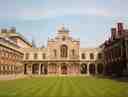
Right in front of you is the stately face of Peterhouse, with its elegant stone façade, arched windows, and a clock tower rising above the main entrance-just look straight ahead across the neat green lawn and you can’t miss it! Now, let’s step back in time and imagine the air filled with the echo of Latin graces and the soft shuffle of students in long, sweeping gowns. Peterhouse is no ordinary college-in fact, it’s the oldest at Cambridge, having been founded way back in 1284 by a Bishop named Hugh de Balsham. Just think, when Peterhouse was opening its doors to those first 14 scholars, people were still getting used to the idea of knights in shining armor rather than students in black robes! Back then, the original students lived according to the rules of another famous college, but a disagreement with their hosts led Bishop Hugh to move them here, right to this very spot on the edge of town by Trumpington Gate. He not only gave them a place to live, but he also made sure they had a church-St. Peter’s, which is where the college gets its name. The college grew slowly-sometimes with money, sometimes not. In the early years, Peterhouse was so poor it had to get creative to stay afloat. Yet, the story changed when it inherited a huge chunk of land and, a bit later, the rights to a local church-suddenly, things weren’t so tight anymore. Over the centuries, Peterhouse has seen it all: rowdy royal politics, religious squabbles, and academic intrigue. Picture, for a moment, standing here in the 16th century during the reign of Queen Elizabeth I. The wind blows, and the letters on the weather vane atop the church may say “Andrew Perne, Papist” or “Andrew Perne, Protestant” depending on which way the wind (and the government) was turning. That was Perne, a master who kept his job by being clever-and perhaps a touch slippery! The stories only get stranger in the 1600s. Imagine a chapel full of statues and decoration, all swept away when Puritan zealots barged in during England’s Civil War. Peterhouse really was at the center of the action. Even the college’s famous Perne Library was the site of dramatic book burnings and debates over faith and knowledge. There’s a cheeky hole in Andrew Perne’s own copy of Foxe’s Actes and Monuments-legend has it he burnt the page where he himself was criticized! If you wander into Old Court, you’ll see the very dining hall where scholars have gathered since the 13th century. It’s the oldest collegiate building in all of Cambridge, still serving candlelit formal dinners-or “Formal Hall” as the students here call it. Picture students rising as the fellows in their ancient gowns file in, the sound of a gong marks the beginning, and two graces are read in Latin. Rumor has it, even the forks here feel more sophisticated! Peterhouse has always been small but mighty. It’s produced a whole parade of famous minds: Lord Kelvin, Charles Babbage-the father of the computer-James Clerk Maxwell, even Frank Whittle who invented the jet engine, and five Nobel prize winners in science. Not to mention a prime minister or two, an Oscar-winning director, and at least one comedian who must have found the candlelight inspiring for jokes. Of course, not every chapter of Peterhouse’s history has been peaceful. In the 1980s, it gained a reputation for right-wing debate, with internal feuds that would put even the wildest university drama to shame. Some called it a “lunatic asylum” during that time, but eventually things settled and the college moved into a modern, friendlier era. Look around at the buildings: the elegant lines of the Burrough’s Building in front, the chapel with its grand, golden ceiling, and the modern additions tucked further back. It’s a jumble of time periods, each stone telling a different story. Imagine the musical notes drifting out from the choir, singing pieces not heard since Shakespeare’s day; the electric excitement when Lord Kelvin helped light up the hall-the first in Cambridge to get electric lighting (second only to the Palace of Westminster!). And tucked away in the grounds, no more deer, but stories of a “deer park” declared the smallest in England, and libraries stacked high with treasures old and new. Today’s Peterhouse may be small-just a handful of students compared to other colleges-but it stands rich in tradition, innovation, and occasionally, candle wax. As you pass through its ancient archways, think of the generations who’ve stood exactly where you are now, ready to transform the world-and maybe enjoy a good meal in the Hall. After all, some things at Cambridge never go out of style! Intrigued by the buildings and grounds, arms or the grace? Explore further by joining me in the chat section below.
Open dedicated page →To spot the Cambridge University Botanic Garden, look ahead for a large wrought iron entrance gate set beside a small wooden ticket booth, surrounded by lush greenery and a banner…Read moreShow less
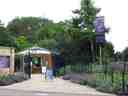
To spot the Cambridge University Botanic Garden, look ahead for a large wrought iron entrance gate set beside a small wooden ticket booth, surrounded by lush greenery and a banner with a purple flower marking the garden’s boundary. Welcome to the Cambridge University Botanic Garden! Right here, on the edge of Trumpington Road, you’re at the gateway to a living laboratory, bursting with the scent of 8,000 plants from around the globe. Imagine stepping through these gates and being greeted by a chorus of leafy rustling and birdsong, where every plant has traveled-from tropical mountains and Arctic tundras-to grow side by side in this peaceful corner of Cambridge. But it wasn’t always this magnificent! Picture Cambridge in the 18th century: scientific curiosity running wild, but not a proper garden in sight. After a few false starts, a clever chap named Dr. Richard Walker, Vice-Master of Trinity College, snapped up a chunk of land for £1,600-about the cost of a decent second-hand car today! Back then, the garden was squeezed into just five acres in the noisy town center, filled with curious students and the clink of glass from the first greenhouses. This early physic garden, inspired by London’s famed Chelsea Physic Garden, was a place to study the medicinal powers of plants-imagine undergraduates earnestly sniffing herbs, hoping to cure headaches or learn a bit of botany before heading off to treat patients. For a while, things bloomed beautifully under Professor Thomas Martyn’s care, but when he left, the weeds nearly won! Enter John Stevens Henslow-a man with muddy boots and even muddier ideas about science. Henslow, who would later become Charles Darwin’s teacher, knew the cramped town plot just wouldn’t do. He dreamed big: a huge, flat expanse where botany could blossom. In 1831, the university bought this very site-forty acres just waiting to be transformed. By 1846, the first tree was planted, and Henslow and his team wrestled with the heavy earth, carving lakes and raising mounds, designing beds in careful botanical sequence so each shrub and fern had its perfect home. Don’t be fooled by today’s peaceful setting; the early days were a gardening adventure full of muddy drama! Funds were tight, so only half the land was planted-while the rest was rented out as allotments. But little by little, the garden grew: a lake emerged from a stubborn gravel pit, glasshouses shot up to shelter tropical wonders, and even one of the country’s first rock gardens took shape. Some of the rarest trees you’ll find in Britain started their lives here and, if you listen, you might hear them whisper stories of plant-hunters and scientific breakthroughs over the centuries. Through two world wars, this garden became a hotbed for scientific experiments that would change biology forever. Pioneers like William Bateson and Edith Rebecca Saunders worked here, unlocking the secrets of plant genetics in the crisp morning air. Later, researchers like Frederick Blackman and George Edward Briggs explored how plants breathe and grow, using these grounds as their green laboratory. Let’s fast-forward to recent times-on 25 July 2019, this tranquil spot rocketed into the headlines. On a day when even the cacti wilted, the garden made UK weather history by blazing to a record-shattering 38.7°C-oh, what a sizzle! Flowers drooped, staff squinted into the sun, and the ancient trees whispered, “We’ve never been this hot!” The record stood proud until 2022, when a fiery blast in Lincolnshire snatched the crown, but the garden hit its own new high at 39.9°C. You might say: it’s a hot spot for science… and for sunbathing plants. Look out for Cory Lodge, built in the 1920s as the director’s home, and let your nose follow the fragrance of Indian bean trees and rare Ginkgo biloba trained along the walls. In recent years, the Sainsbury Laboratory has taken root-a gleaming center where cutting-edge plant science and computer wizardry combine to solve nature’s greatest mysteries. And for a touch of gravity-until 2022, you could visit a real descendant of Isaac Newton’s famous apple tree, right here, before Storm Eunice blew it down. So take a deep breath, step through those iron gates, and wander where Darwin once dreamed. Who knows what secret you’ll discover among the petals and leaves? Welcome to Cambridge’s most extraordinary garden!
Open dedicated page →
Frequently asked questions
How do I start the tour?
After purchase, download the AudaTours app and enter your redemption code. The tour will be ready to start immediately - just tap play and follow the GPS-guided route.
Do I need internet during the tour?
No! Download the tour before you start and enjoy it fully offline. Only the chat feature requires internet. We recommend downloading on WiFi to save mobile data.
Is this a guided group tour?
No - this is a self-guided audio tour. You explore independently at your own pace, with audio narration playing through your phone. No tour guide, no group, no schedule.
How long does the tour take?
Most tours take 60–90 minutes to complete, but you control the pace entirely. Pause, skip stops, or take breaks whenever you want.
What if I can't finish the tour today?
No problem! Tours have lifetime access. Pause and resume whenever you like - tomorrow, next week, or next year. Your progress is saved.
What languages are available?
All tours are available in 50+ languages. Select your preferred language when redeeming your code. Note: language cannot be changed after tour generation.
Where do I access the tour after purchase?
Download the free AudaTours app from the App Store or Google Play. Enter your redemption code (sent via email) and the tour will appear in your library, ready to download and start.
If you don't enjoy the tour, we'll refund your purchase. Contact us at [email protected]
Checkout securely with 




