
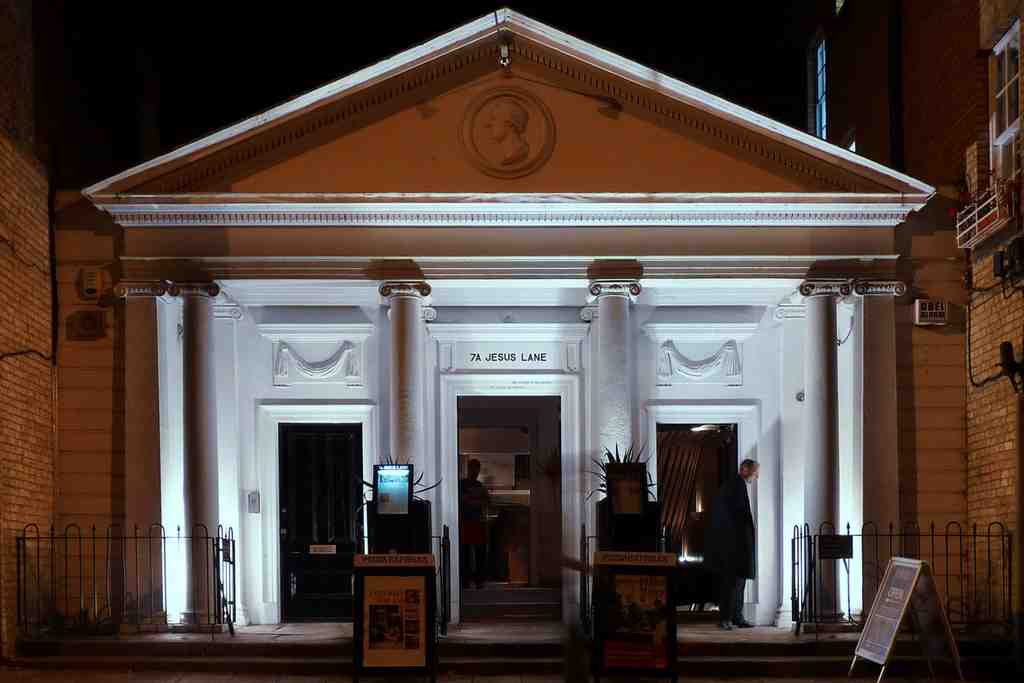
To spot the University Pitt Club, look ahead for a striking white building with classical columns and a triangular pediment above-if you glance up, you’ll see a round plaque featuring the profile of William Pitt the Younger right above the entrance at 7a Jesus Lane.
Now, let’s step right into the heart of Cambridge tradition-though, watch your step; history has a habit of tripping people up around here! The University Pitt Club, or simply “the Pitt Club” to those in the know, has been one of the city’s most exclusive haunts since 1835. It was started in the name of William Pitt the Younger-once Britain’s youngest ever Prime Minister, and a former Pembroke College student who probably found Cambridge’s winters as chilly as its politics.
Originally, the club was rather serious business: a place for up-and-coming Tory students to strategize, support local politicians, and maybe even practice their rousing political speeches over a good dinner. They’d dress in party uniforms, toast to the glory of Pitt, and let the wine-and political fervor-flow. But as decades passed, the politics quietly left the table, replaced by stories, laughter, and plenty of socializing-because, let’s face it, no one wants to debate taxes after dessert.
But the club's history is far from dull. It spent its early years roaming Cambridge, meeting in bookshops, above furniture dealers, anywhere students could gather for heated conversation. Then, in 1866, it landed right here at 7a Jesus Lane, and what a peculiar spot it is! This grand neo-classical building looks purpose-built for student secrets and late-night intrigue, but originally it was opened in 1863 not for plotting or partying, but as “Roman (improved Turkish) Baths” designed by Sir Matthew Digby Wyatt. The baths venture sank quicker than a stone in the Cam-open barely a year before closing down. The building was put up for auction, and, probably with a wink and a nudge, Sir Wyatt bought it himself. Half went to the Pitt Club, the other half became Orme’s Billiards Rooms-a perfect pairing, as billiards and brandy solve more arguments than politics ever did.
By 1907, the Pitt Club became the sole master of the house, which underwent a fresh lick of paint after a fire that same year. A few years later, in 1933, a rather grand, slightly snobby stone plaque bearing William Pitt’s head was mounted on the pediment-a gift from General Sir Neill Malcolm. That plaque originally came from Bowling-Green House in Putney, the very place where Pitt drew his last breath. Now it keeps a watchful (and possibly disapproving) eye on the foot traffic along Jesus Lane, judging every pedestrian’s political credentials-or maybe just their taste in restaurants.
Speaking of restaurants-did you know that the ground floor has hosted everything from the exotic “Xanadu” to a Pizza Express? During the Covid pandemic, even the endless parade of dough and cheese paused. Now, the scent drifting out comes from The Kibou Japanese Kitchen & Bar. Imagine, all those old Tory clubmen from the 1800s would hardly know whether to order sushi or just ask for bread and dripping. The Pitt Club keeps its traditions upstairs, while the ground floor brings a new flavor to historic walls.
The building has lived through dramatic times. During the World Wars, its routines were upended: The Great War thinned the club’s membership, with the minutes bemoaning a “horrible scarcity of whisky”-a tragedy for any proper club! In World War II, the club was commandeered for use as a public restaurant, earning the scornful look from Pitt’s stone head and forcing club members to form the tongue-in-cheek “Interim Club” above the Trinity Street post office-a far cry from fine dining on Jesus Lane.
But perhaps the greatest drama came just recently, in 2017. For nearly 200 years, the club admitted only men. Change was brewing, as more and more Cambridge traditions modernized. After a heated referendum (with only resident members getting a vote-a classic club manoeuvre), the Pitt Club opened its doors to women. You can almost hear the echoing gasps of centuries of alumni... or maybe they’re just groaning about missing out on the vote.
The Pitt Club has counted among its members kings, Nobel laureates, spies, actors, and even the original namesake of James Bond! But despite the grandeur, it remains, at its heart, an undergraduate club-young minds, old traditions, and the reassuring sense that, whatever changes, somewhere in Cambridge there will always be a secret stairway, lively debate, and perhaps a sly nocturnal toast to Mr. Pitt.




