
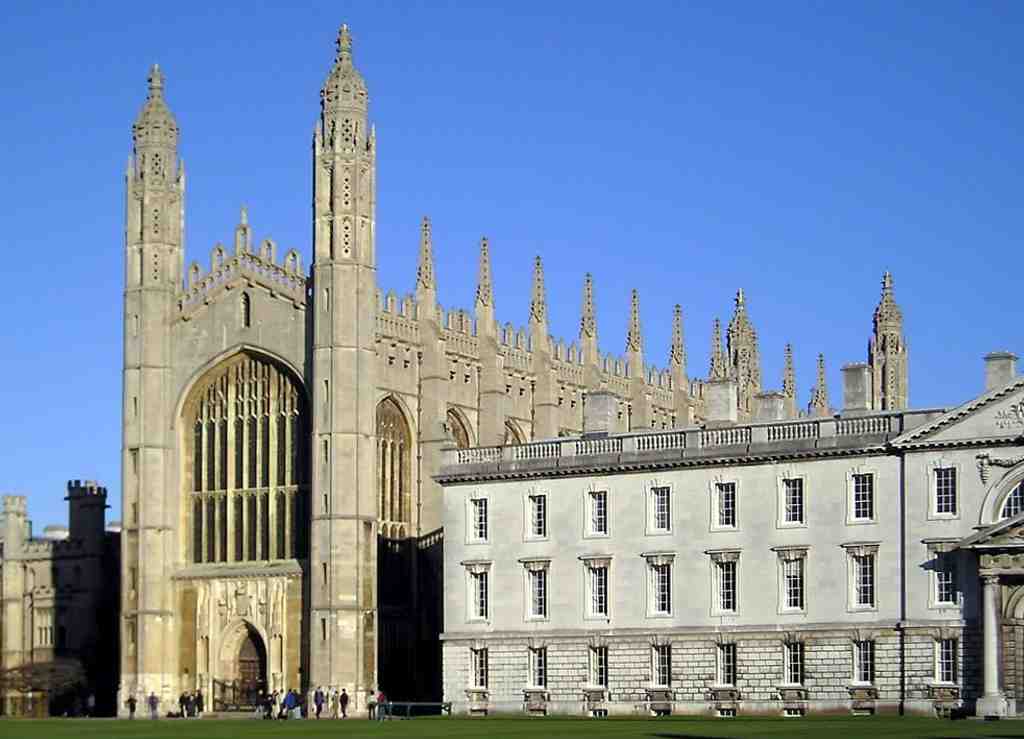
Look to your left-towering above you is a magnificent stone chapel with tall spires, vast arched windows full of intricate glass, and buttresses reaching for the sky, shimmering gently in the sunlight.
Now, take a deep breath and imagine the world 600 years ago, with the ground beneath your feet echoing the sounds of builders hard at work. This spectacular chapel, the King's College Chapel, was King Henry VI’s dream-he wanted to create something to rival the grandest churches in all of England! Picture the king himself, cloak clasped tight against the wind, laying the first stone here on a summer’s day in 1446.
But plans rarely go smoothly, do they? Wars broke out-the famous Wars of the Roses-and for years, work ground to a halt. Still, decades tumbled by, and every new king felt compelled to add his own piece to this wonder. Imagine Reginald Ely, the architect, scratching his head trying to find the best stone or craftsmen, while bishops supervised every move and masons argued about which vaulting style looked grander!
So what you see rising before you now, with its soaring stone ribs and immense stained-glass windows, took more than half a century just to reach its full height. There’s a twist in the tale: originally, the inside was meant to look different. As the years passed, ideas changed and the master masons switched to a fan vault-now, that’s the world’s biggest! Step closer in your mind’s eye and picture sunlight filtering through the stained glass, splashing colored patterns onto the cool stone floor.
The stained glass itself is a jewel box of stories. Twelve tall windows on each side, and great east and west windows too-most made by Flemish hands in the early 1500s, with bright reds and blues that would dazzle even the dullest Cambridge morning. During World War II, these windows were carefully taken out and hidden away to keep them safe-a heroic rescue mission worthy of a movie. Imagine the relief when the war ended and each delicate pane was restored, one by one, and the colors glowed again.
Let’s not forget the living heart of the chapel-the King’s College Choir. The building is world-famous for its soaring acoustics. Each December, the choir’s voices float through this great stone shell for the BBC’s Christmas broadcast, carrying carols to every corner of Britain. You can almost hear the echoes of centuries of song.
But there’s a bit of drama too! In the 1960s, a spectacular painting-the Adoration of the Magi by Rubens-was added above the altar. Some people thought it looked fabulous, while others said, “Wait, does it clash with the stained glass? Isn’t it too small for that huge space?” It was even compared to a postage stamp stuck on a grand window! Eventually, clever architects put up plain shutters on either side, so now Rubens has a proper stage to shine on. And beneath your feet, there’s a secret: when workers altered the floor here, they discovered centuries-old coffins hidden below-hidden stories, not all of them resting quietly!
And what about times of trouble? During the English Civil War, many churches were smashed by soldiers who destroyed anything too decorative. But here, the chapel was used as a training ground-some say Oliver Cromwell himself, who studied at Cambridge, made sure no harm came to it. Even today, look closely near the altar and you might see graffiti scrawled by bored soldiers away from battle.
That’s not even the end-King’s College Chapel is still in use: for worship, for music, for special college moments. Each detail, from the mighty organ to the stunning stone screen Henry VIII had built to impress Anne Boleyn, is alive with centuries of stories. Maybe, just maybe, if you stand quietly long enough, the history in these walls will whisper a secret just for you.
Exploring the realm of the construction, great windows or the rood screen? Feel free to consult the chat section for additional information.




