
The Hague Audio Tour: The Grand Snapshots of The Hague.
Where kings once made secret pacts and the fate of nations was argued beneath grand chandeliers, The Hague pulses with hidden power. Unlock its stories on a self-guided audio tour designed for seekers of truth and intrigue. Wander leafy boulevards while discovering corners and legends that most travelers miss entirely. What explosive dispute at the Peace Palace sent shockwaves through global diplomacy? Which shadowy figures moved behind Noordeinde Palace’s stately façade, changing royal history forever? Why did a minor courtroom outburst at the International Court of Justice echo into an international scandal? Trace a path from majestic palaces to silent chambers where justice is forged and whispers echo louder than crowds. Find yourself in the heart of decisions that reshaped the world, walking through unexpected beauty, tension, and secrets each step unveils. Ready to unravel what The Hague refuses to say out loud? Start your journey into its real story now.
Tour preview
About this tour
- scheduleDuration 70–90 minsGo at your own pace
- straighten2.9 km walking routeFollow the guided path
- location_onLocationThe Hague, Netherlands
- wifi_offWorks offlineDownload once, use anywhere
- all_inclusiveLifetime accessReplay anytime, forever
- location_onStarts at Kloosterkerk, The Hague
Stops on this tour
lock_open 3 free previews · 5 unlock with purchase
To spot the Kloosterkerk, just look for the large, striking brick church with tall, pointed stained glass windows and a trio of steep gables facing the street, standing at the…Read moreShow less
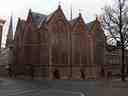
To spot the Kloosterkerk, just look for the large, striking brick church with tall, pointed stained glass windows and a trio of steep gables facing the street, standing at the corner where the tram tracks curve around the Lange Voorhout. Alright, you’ve found it! Take a deep breath, because you’re standing right on the edge of more than 600 years of adventure, drama, and even a royal scandal or two. Imagine the air bristling with the sound of chanting monks, flickering candlelight reflecting off tall, arched windows-this is the Kloosterkerk, a true survivor amongst the grand buildings of The Hague. Back in 1397, when the ground beneath your feet was first chosen by the Dominicans, things around here were a little more… medieval. Picture black-robed friars drifting in and out, the scent of incense swirling, and the echo of prayers bouncing off fresh stone. This church wasn’t just a place to pray-it was once the heartbeat of a bustling arts scene! While the rest of Europe was still figuring out how to paint proper faces, the Court of Albrecht of Bavaria and Margaret of Cleves nearby were commissioning masterpieces like the Hours of Margaret of Cleves and elaborate “Biblia pauperum” picture-books, all as precious as royal jewels. The church welcomed thinkers and artists-one of them, Dirc van Delf, even traveled from here to lecture at German universities. Imagine dodging horses instead of bicycles in the streets! But even in peaceful places, disaster lurks. In 1420-just as everything seemed to be going perfectly-a fire raged through the monastery. Yet the people of The Hague weren’t discouraged. By the 1500s, after much building and even more rebuilding, this place grew and grew: new chapels, a majestic southern transept, and a central aisle so high you could practically launch prayers straight to heaven. Crowds came from all over to walk through, light a candle, or maybe just enjoy the peaceful hum of everyday spiritual life. Here’s where things take a dramatic turn: in the 1500s, with the Protestant Reformation sweeping across Europe, the Kloosterkerk found itself right in the line of history’s cannon-fire-literally. Religious riots swept the country. Furious townspeople stripped away the old Catholic decorations in 1566. The monks held out a few more years, but by 1583 most of the monastery was demolished, and the once-proud place of worship stood empty. Or did it? Suddenly, it was filled by a…cavalry troop needing shelter! Then, just a year later, the nave and choir were walling each other off-one as a cannon foundry, the other a dusty ammunition store. Imagine the church trembling as gunpowder and iron rolled in. In 1690, the worst case came to pass-a massive explosion shattered everything but a single wall. Talk about a bumpy ride! Yet, like any good hero in a story, the Kloosterkerk bounced back. By 1617, it was “squatted” by Counter-Remonstrants-a splinter group in a heated argument with the Remonstrants over free will, predestination, and who got to use the best pulpit. Even Maurice of Nassau, the Prince of Orange, weighed in by attending a service here. After political drama and royal arrests, the church settled into its role as a second city church. In 1620, a mechanical clock was added-finally, sermons could end on time! Through the 17th century, the church was a favorite burial place for poets, painters, generals, and queens. If you could read ghosts, you’d spot Margaret of Cleves in a lead coffin, Jacob Cats by his own pillar, and somewhere in the shadowy corners, the Dutch architect Pieter Post. Fast-forward to the 20th century, and the Kloosterkerk nearly met its end again! With crumbling stone and leaks aplenty, some folks wanted to demolish her in favor of something shiny and new. Luckily, after a few heart-stopping public protests, the city chose restoration instead. Over the years, the nave and choir were rejoined, works of art and furniture from other vanished churches found a home here, and in 1966, the building received a majestic Marcussen organ. The best part? Royalty keeps popping by. Almost every generation of Dutch royals has been baptized, married, or confessed inside these ancient walls. King Willem-Alexander himself had his confession here in 1997-and if you look up, you might just see shadows of the past princes, artists, and poets grinning down. Today, the church is alive and kicking hosting everything from classical concerts to lively cantata services and welcoming visitors like you-though perhaps without the risk of cannon fire. So next time you hear music drifting out on a Sunday, or glimpse those golden stained glass windows catching the Dutch sun, remember: every stone here has hundreds of stories to tell-some sacred, some scandalous, and a few that might just still be echoing as you walk by! If you're curious about the notable events, notable burials or the church today, the chat section below is the perfect place to seek clarification.
Open dedicated page →Look for a grand, elegant building ahead with tall white columns, stately arched windows, and a beautiful cupola right above the main entrance-it stands proudly on the corner,…Read moreShow less
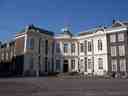
Look for a grand, elegant building ahead with tall white columns, stately arched windows, and a beautiful cupola right above the main entrance-it stands proudly on the corner, almost like it’s striking a royal pose just for you. Welcome to Kneuterdijk Palace! If these old walls could talk, they’d probably tell you tales of powdered wigs, glittering banquets, and royal whispers floating down these very steps. Built way back in 1716 for Count Johan Hendrik of Wassenaer-Obdam, this place was designed in the flashy Louis XIV style-imagine enough gilded mirrors and ceilings painted with clouds to make any Instagrammer jealous-though back then, you’d need a powdered face and courtly manners to get through the door. Now picture the early 1800s: handsome Crown Prince William (soon to be King William II) walks through that grand doorway, his arm linked with Queen Anna Paulowna. They called this palace home and decided to mix things up by adding their own touch. William, remembering his Oxford days, had a “Gothic Hall” built-modeled after the great dining hall of Christ Church. Yes, he missed school dinners that much! Years passed, and their grandson Crown Prince William used this palace too, until his untimely death in 1879. In the 1930s, if you had sharp eyes, you might’ve spotted Princess Juliana popping in now and then. But not every chapter was sparkling; after World War II, the grand ballroom became a courtroom where Dutch war criminals faced justice-a reminder that even fairy tale settings can hold dark secrets. For a while, the Ministry of Finance shuffled papers here. But don’t worry, after a royal-sized makeover in 2001, the palace regained its dignity and now serves as the headquarters of the Council of State. With its long lineage and a few ghosts from the past (metaphorically speaking-I hope!), this palace is more drama-filled than a Dutch soap opera. And it’s officially a National Heritage Site, so it can keep dazzling passersby like you for centuries more. Ready to stroll on to our next royal chapter?
Open dedicated page →To spot Noordeinde Palace, just look straight ahead for a grand, cream-colored classical building crowned with golden royal gates and a statue of a regal knight on horseback in…Read moreShow less
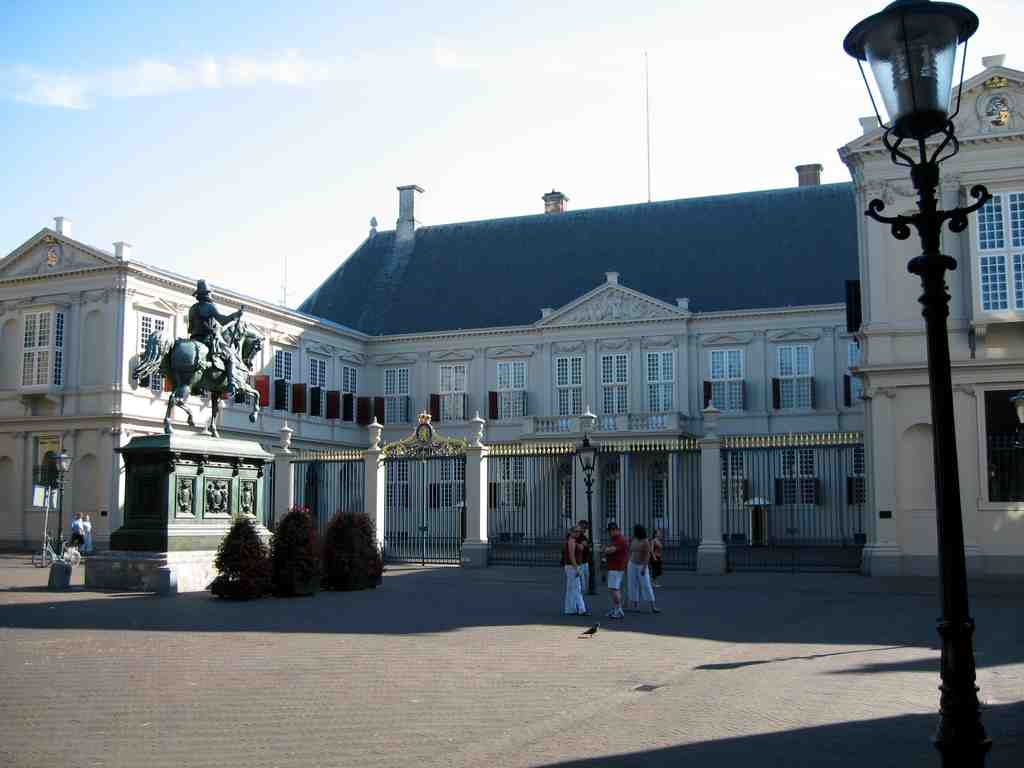
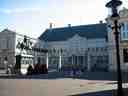
To spot Noordeinde Palace, just look straight ahead for a grand, cream-colored classical building crowned with golden royal gates and a statue of a regal knight on horseback in front-if you see the beautifully aligned windows and crisp lines, you know you’ve arrived! Now, imagine you’re standing right at the heart of Dutch royalty, feeling the hush of centuries pressing in through grand iron gates. Noordeinde Palace has worn many faces in its lifetime-if these walls could talk, they’d have the juiciest royal gossip in all The Hague! Believe it or not, this opulent palace didn’t begin as the grand winter home it is today; back in the 16th century, it was simply a humble farmhouse, nestled at the very edge of the city, where cows were probably more common than carriages. Willem van de Goudt, steward of the States of Holland, transformed this farmhouse into a cozy residence-little did he know that he was laying the foundations for centuries of royal drama. The original cellars from that farmhouse are still beneath the palace, guarding their secrets like a set of stone lungs breathing history into every brick above. Fast-forward to the 1590s: Louise de Coligny, widow of William the Silent, and her young son were gifted this house by the States of Holland in honor of William’s service to the Dutch people. You can almost imagine her here, walking the corridors with a lantern, whispering advice to her son, Frederick Henry, as he gazed out at the dark city dreaming of the future. Frederick Henry wasn’t one for small plans; soon, he was snapping up land, urging on brilliant architects like Pieter Post and Jacob van Campen-think of them as the Rembrandts of royal construction! By the mid-1600s, they’d stretched and shaped the house into the H-shaped palace you see today-a brand new “Oude Hof” rising with proud gables and wings. Yet, even palaces need friends. After Frederick Henry’s death, Amalia of Solms-Braunfels, his formidable widow, would spend much of her time here, ruling behind the scenes, before the palace fell eerily quiet for decades. Ghost stories, anyone? Then came kings, queens, politicians, and even a few unexpected tenants-like King Frederick I of Prussia (imagine his surprise trading Berlin winters for Dutch drizzle) and, for a brief spell, the famous philosopher Voltaire, who argued and plotted from a cozy apartment as he wrangled with a local publisher! Fast-forward again, and in the late 1700s, it’s William I who brought Noordeinde Palace back to royal life. But not for long-those were turbulent times! In 1795, as the French swept across the Netherlands, the family had to make a royal dash for Britain, leaving the old farmhouse-turned-palace to the Batavian Republic. Imagine the echo of hurried footsteps in these halls! After the fall of Napoleon, history came full circle. William returned, the Dutch wanted their sovereign well-housed, and once more the hammers and saws rang out as the palace got a ballroom and a grand new look by 1814. Now the winter home of the burgeoning Dutch monarchy, Noordeinde once saw a parade of kings, queens, and little princesses-the future Queen Wilhelmina was even born here in 1880. Picture the little princess running down the corridors, her laughter mingling with the bustle of royal staff. As times changed, so did the palace’s fortune. From sheltering monarchs to briefly burning-can you imagine the palace bursting into flames in 1948?-and housing everything from the International Institute of Social Studies to the priceless royal archives, Noordeinde has proven it’s as versatile as any royal should be. Today, while you stand among the pigeons and gaze at the finely tended gardens-open to everyone from sunrise to sunset-remember those grand stables out back, the archive jam-packed with secrets, and the Dome of Fagel rising quietly within the royal grounds. And here’s a little twist-while you can’t waltz inside without a royal invite (trust me, I’ve tried), the palace still pulses with official life. It’s the workplace of King Willem-Alexander and Queen Máxima, where decisions shaping the Netherlands are made, and even the occasional fairytale royal wedding unfolds. So take a deep breath and let the history wash over you: from farmhouse roots to royal power, this palace has seen everything but a flying Dutchman. Now, ready for our next stop? To delve deeper into the palace grounds, from farmhouse to palace or the royal palace, simply drop your query in the chat section and I'll provide more information.
Open dedicated page →
Show 5 more stopsShow fewer stopsexpand_moreexpand_less
Keep your eyes peeled for a broad, tree-lined street stretching ahead of you, with buildings old and new lining the way-just as you see in the image, where the old path is framed…Read moreShow less
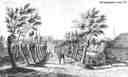
Keep your eyes peeled for a broad, tree-lined street stretching ahead of you, with buildings old and new lining the way-just as you see in the image, where the old path is framed with tall, leaning trees on each side. That’s Parkstraat, which once began its days as a sandy path called the Nachtegaalspad, humming with the song of nightingales and the shuffling of people heading home as far back as 1614. Imagine standing here centuries ago: instead of the bustle of city life, you would have found yourself on a quiet lane flanked by rows of trees, with a boat-worthy but dead-end canal behind them. The lane was nothing more than a sandy trail, but it already marked an important route, leading all the way from Kloosterkerk right up towards what’s now Mauritskade. Back then, city life would have felt a little sleepy, with the only sounds being the rustling leaves above and maybe the distant clip-clop of horses. Time didn’t stand still, though! When King William II decided it was time for a bit more grandeur, the area around Parkstraat transformed into the Willemspark, lifting this landscape into something both stately and lively. By 1859, the street itself was split into two-right about where you’re standing, actually! The wider, bolder stretch took on the name Parkstraat, while the narrower bit flirted with the name Kloosterkerkstraat (though that one didn’t stick around long). Now, here’s a fun tidbit-a dash of urban drama, if you will! In the 18th century, when folks needed to cross the canal between Parkstraat and Alexanderstraat, a smart little drawbridge came to the rescue. It was the lifeline before your options were either the far-off Scheveningseveer crossing, or the Nassaubrug, nicknamed the bridge of Takma after a character from Louis Couperus’ novels. Makes you wonder what stories and secret meetings that bridge might have witnessed in the midnight fog! As you look along the street now, you’ll see a delightful mix: historic facades sharing space with modern offices, embassies flying their colors, and maybe even a few echoes of the past tucked into corners. For example, to your right at numbers 15-25 once stood the proud offices of the newspaper Het Vaderland, their presses churning out the day’s headlines until 1982. A bit further, on 65A, the stunning Jacobus de Meerderekerk, or Parkstraat Church, still stands tall. On the left, banks like Landry & van Till once bustled with business, while families like the Domhoffs lived just above their shops-a proper upstairs-downstairs, Dutch style! Speaking of international flair, Parkstraat is now home to embassies from Rwanda, Chile, and a rotating cast-like Thailand, sometimes making a temporary stop at number 83. And if you spot the building on the corner with Mauritskade, that’s where Brazil flies its flag, while at number 99 you’ll find offices handling passports and visas for India. But what’s a great street without a little excitement? Parkstraat hosted the very first horse-drawn tram in the whole of the Benelux in 1864-the original tram line chugged right down this road to the seaside at Scheveningen, much as Line 1 does today. And the lines kept coming: electric trams, line changes, re-routings-Parkstraat thrummed with the clang and whistle of trams for well over a century. Imagine the rattle of tracks and the bright uniforms of conductors as the world sped up around them. Now for the part that still gets the locals talking-a real royal tram collision! Picture it: February, 1908. Prince Hendrik himself, possibly daydreaming about royal matters, manages to have a close encounter with tram number 8 at the corner of Oranjestraat. The tram driver pulls off a daring rescue, the prince admits fault, the queen is unharmed-phew! The driver soon finds himself famous, showered with praise and, after a bit of royal intervention, he’s awarded a gold watch, a medal, and even a job at the palace. Talk about being in the right place at the right (tram) time! So as you stand here, let the breeze hint at the past-the sandy lane, the creak of wooden bridges, the bells of trams and the gossip of embassies. Parkstraat has always had a front-row seat to history, even if it sometimes took a detour on the nightingale’s path.
Open dedicated page →Look straight ahead and you’ll spot a grand, oval-shaped square with an imposing stone monument rising proudly in the middle, surrounded by tram lines and leafy horse chestnut…Read moreShow less
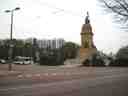
Look straight ahead and you’ll spot a grand, oval-shaped square with an imposing stone monument rising proudly in the middle, surrounded by tram lines and leafy horse chestnut trees. Welcome to Plein 1813, a place where history isn’t just remembered, it practically leaps out at you-hopefully not literally, or you might spill your coffee! Right in front of you sits the grand National Monument, a statue unveiled in 1869 that marks the end of Napoleon’s rule, the victory over French forces, and the birth of a new Dutch kingdom in 1813. Imagine the scene centuries ago-proud citizens, uniforms and banners, perhaps a little less traffic and a lot more excitement. Picture Prince Frederik himself on that chilly November day, pulling back the curtain on this monument-no pressure when the whole nation’s watching! This square wasn’t always called Plein 1813; once, it was Willemsplein. But in 1863, as the first stone for the monument was laid, people decided it was high time for a name that suited the scale of what was to come-Plein 1813 was born. All around you, four stately villas stand in a noble semicircle, each one dripping with stories of its own. These mansions, built with that wild mix of architectural styles called Eclecticism, are almost neighbors to history’s VIPs. There’s Villa 1, once home to a former finance minister-and, somewhat awkwardly, later commandeered during World War II for the top Dutch Nazi, Anton Mussert. Don’t worry, he wasn’t much for interior decorating. These days, the British ambassador gets the keys, so keep an eye out for top hats or stray teabags. Villa 2, designed by Q. Wennekers, even comes with its own bunker-handy if you’re expecting unexpected guests. Once it housed Joseph Luns, the famous Foreign Minister, while Villa 3 is home to the Pakistani ambassador, and Villa 4 has a long, mysterious history. You’re standing where statesmen and spies might easily have crossed paths. In fact, that fourth villa was a hive of war plans and diplomacy, and almost became the new Israeli embassy… until the deal was abruptly called off. The drama and intrigue! All around the square stand 36 horse chestnut trees, the oldest planted way back in 1936, which makes them true survivors. During World War II, they were wrapped in barbed wire to keep desperate woodcutters at bay-guess everyone wanted central heating, but the trees stood firm. But Plein 1813 isn’t just about statues and government secrets; it’s teeming with the comings and goings of daily life. Picture the clatter of the oldest Dutch trams, starting as horse-drawn carriages in 1864 and evolving to roaring electrified trams by 1905. Even now, trams and buses wind around the monument like dancers at a particularly well-organized party. So as you circle the square, surrounded by villas, trees, and travelers from every part of the world, remember: you’re standing in the exact spot where Dutch history twisted itself into a new beginning, and where life, in all its bustling, leafy, and occasionally dramatic glory, just keeps rolling along.
Open dedicated page →Look for a grand, classic Dutch building on Zeestraat with “PANORAMA MESDAG” boldly written above the arched entrance and two tall banners flanking the front doors-if you see…Read moreShow less
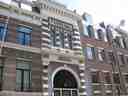
Look for a grand, classic Dutch building on Zeestraat with “PANORAMA MESDAG” boldly written above the arched entrance and two tall banners flanking the front doors-if you see stripes of white stone on reddish-brick, you’ve arrived! Now, imagine standing here in the late 1800s and hearing a wave of excitement ripple through the streets about something truly spectacular inside: a ‘virtual reality’ experience before anyone even knew what that meant. Welcome to Panorama Mesdag! What lies behind these elegant walls is not just a painting-oh no, it’s a portal to another world captured on a colossal canvas, one that sweeps around you in a full circle like a hug from history. Let’s take a little journey back to 1881. Picture Hendrik Willem Mesdag, a passionate artist famous for his powerful seascapes, pacing on top of the Seinpostduin-then the highest sand dune in Scheveningen. With a keen eye and probably a good head for heights, he gazed out over the North Sea, rolling dunes, and the city of The Hague, and thought, “How do I share this grand view with people who may never leave the city?” The answer wasn’t to take a photo-cameras then were rather slow pokes-but to create a 14-meter-high, 120-meter-around panorama painting, one of the oldest still surviving in the world. But Mesdag didn’t work alone; this was a real team adventure. His wife, Sientje Mesdag-van Houten, was at his side paintbrush in hand, joined by his friends Théophile de Bock, George Hendrik Breitner-who, fun fact, was more into painting cavalry practice-and Bernard Blommers, expert in capturing mothers and daughters watching the world go by. These artists spent four months, brushes flying, on a masterpiece so grand you have to walk into the center of it just to take it all in. In the middle of the old glass cylinder they used to trace the skyline, you can still stand and imagine seeing what Mesdag once saw-the dunes, the bustling Scheveningen beach, boats being pulled across the sand, the sky stretching out forever. Here’s a clever detail: where most artists slap on a big signature, Mesdag chose to paint his wife Sientje sitting quietly under a white parasol in the thick of the scene, right among the fishing boats. That’s devotion-and a real 19th-century shoutout! In fact, this painting was so lifelike that, when the legendary Vincent van Gogh paid a visit just weeks after opening, he declared, “The only thing wrong with this painting is that nothing is wrong with it.” High praise, though perhaps Van Gogh could’ve given them a few color tips. The building itself, designed by Gerard Klomp, cleverly funnels daylight through a glass roof, so the whole scene glows as if you’ve truly stepped outside. But getting this giant cylinder of art from dream to reality was fraught with drama! The company that first commissioned it went bankrupt-maybe because panorama paintings, the blockbuster entertainment of the 19th century, were already starting to lose their wow factor. But Mesdag, undaunted and not short of funds, bought back his masterpiece, shipping it off to Munich and Amsterdam before ultimately bringing it home to The Hague. Around you now is not just a museum for this spectacle, but also a gallery filled with the Mesdag family’s works-seascapes, beaches, and more. And the adventures haven’t stopped! When a new parking garage was built nearby in the 21st century, the building began to sink-a suspenseful twist no one wants in an art story! Luckily, some clever engineering (with a grout-injection worthy of a sci-fi film) brought the Panorama both literally and figuratively back up, just in time for more generations to step inside this time machine of paint and light. So as you stand here, let your imagination spiral through those painted dunes and crashing waves. It’s not every day you come face-to-face with a 360-degree portal to the 19th century, powered not by pixels, but by the will, vision, and teamwork of dreamers like the Mesdags-plus a bit of daring Dutch engineering to keep the whole spectacle firmly above sea level! Fascinated by the context, arise or the management? Let's chat about it
Open dedicated page →In front of you, the Palace Garden can be spotted by its grand, cream-colored iron gates standing open beneath old stone urns, inviting you to step through into the lush greenery…Read moreShow less
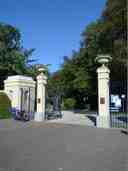
In front of you, the Palace Garden can be spotted by its grand, cream-colored iron gates standing open beneath old stone urns, inviting you to step through into the lush greenery beyond. Welcome to the enchanting Palace Garden, or as it was once called, the Princess' Garden! Can you smell the hint of fresh grass and ancient trees as you stand here? If these gates could talk, oh, the royal gossip they’d spill! You’re about to walk where queens, princes, and even daredevil balloonists once strolled, and I promise, you won’t need a fancy invitation or a top hat-sunrise to sunset, this garden is your kingdom, unless a Very Important Guest is nearby! Imagine the scene in 1598-behind the original palace, which was called the Oude Hof, there was a delicate little garden straight out of a fairy tale, surrounded by unfenced meadows and country air so fresh it could turn anyone poetic. Now, a few years later, just after 1609, the garden really blossomed, thanks to Louise de Coligny, the sharp-witted widow of William of Orange. The States of Holland and West-Friesland granted her the Oude Hof, and together with her son, she lived here, adding more green, more flair, and probably a healthy dash of royal drama. Mapmakers in 1616 and 1618 captured a vast and stylish garden, joined neatly to the palace. This garden had grand walks and clipped hedges, and by the mid-17th century, under Frederik Hendrik, the palace and its garden were glamorized into proper royal splendor. Picture musicians, elaborate parties, and maybe even a squirrel or two scurrying by, instantly regretting their lack of a powdered wig! Through the years, the garden changed hands faster than a royal scepter at a family reunion. After Prince William III died in 1702, it went to King Frederick I of Prussia, whose envoys used the palace. Then, in a twist of fate, Anna of Hanover bought it, and it stayed in the Orange-Nassau family until 1795, when the last stadtholder, William V, hastily left the country after the Batavian Revolution-leaving behind his garden, but, probably, taking his favorite shovel. The 18th century saw a wild makeover: gone were the strict geometric beds, replaced by winding paths that would make anyone dizzy if they’d had too much royal punch. A stone wall was built after the city expanded, turning the garden into a secret green oasis, surrounded on the west and north by newly-laid streets. Between 1876 and 1879, a bit of ground vanished as the Royal Stables were built and, in 1895, the Royal House Archives were squeezed into the garden. Yes, this garden’s a survivor, losing space here and there, but always sprouting back. Now, lean in for a secret: in 1783, the Princess’ Garden hosted the very first hot air balloon launch in all of the Netherlands. And guess what happened two years after that? On a bright July day in 1785, daredevil Jean-Pierre Blanchard and his mustache (I imagine it was magnificent) soared above these very trees in the first manned balloon flight. Imagine the crowd below, craning their necks and probably hoping Blanchard wouldn’t land on the palace roof! After Napoleon’s troops finally packed up and left in 1813, the garden became Dutch state property, and for over a century, only the palace’s royal guests could ramble through these paths. The garden was remodeled in English landscape style, making every turn feel like the backdrop for a romantic novel. And after World War II, when Queen Wilhelmina decided not to return to the palace, part of it even became home to international students-think philosophy debates, laughter, and perhaps the occasional homesick guitar. Today, the Palace Garden is a public wonder. It’s given freely to the city, a place of picnics, daydreams, and even art: keep your eyes open for sculptures peeking through the green! In 2008, a playground was built here, so creativity blooms alongside history. And remember, if a visiting monarch shows up, the garden gates might close for the day-just another chapter for this royal retreat. Now, take a breath and gaze back at Noordeinde Palace through the open trees, and let yourself imagine centuries of footsteps weaving through sunlight and shade.
Open dedicated page →You’re now at the grand finale of our tour: the International Court of Justice, standing proudly in front of the Peace Palace. Take a deep breath and soak it in-this is the…Read moreShow less
You’re now at the grand finale of our tour: the International Court of Justice, standing proudly in front of the Peace Palace. Take a deep breath and soak it in-this is the beating heart of international law, the actual World Court! Picture it: elegant pillars, enormous arched windows, and an air of dignified calmness that’s almost as thick as the legal tomes inside. It’s as if the building itself whispers, “Order in the court!”-except you won’t find a single powdered wig here. The story of this place is like an epic global drama-complete with debate, disputes, a quest for peace, and the occasional bureaucratic cliffhanger. Let’s rewind to the late 19th century, when the world’s leaders, troubled by endless wars, gathered in The Hague for the 1899 Peace Conference. Imagine the cobblestone streets of the city outside buzzing in dozens of different languages as diplomats from powerful empires and tiny states alike debated how to resolve their differences without artillery. It’s a wonder the city didn’t run out of coffee. Out of those anxious discussions came the Permanent Court of Arbitration, housed here in The Hague. But as the world soon found out, it wasn’t quite “permanent” enough. Fast forward to the grim aftermath of World War I-a time when the air over Europe was heavy with smoke, loss, and hope for a better future. The League of Nations, a fresh (if slightly naive) attempt at world peace, set up the Permanent Court of International Justice in 1920, also in this very city. It was a bold experiment: judges from all corners of the globe, representing the world’s different legal traditions, working side by side in the stately Peace Palace. Sounds civilized, doesn’t it? Well, at least until history intervened-again. As World War II threw Europe into chaos and the world into despair, the old court ground to a halt. Cue suspenseful music and a whisper of tension: would the idea of global justice survive? Just when it seemed everything might collapse, a new era dawned in 1945. The United Nations was born at the San Francisco Conference, with fierce determination to stop world wars-permanently, this time. Delegates debated deep into the night, sometimes in English, sometimes in French, and just occasionally in a blend best described as “Diplomatese.” Their groundbreaking result: the International Court of Justice, established by the UN Charter and formally beginning its work right here in 1946. The judges even inherited a stylishly grand building-and perhaps a few stern-looking statues-from their predecessors. As you stand here, picture a panel of 15 judges, none from the same country, elected for nine-year terms through a tricky mix of Security Council and General Assembly votes. No judge can be dismissed except by a unanimous vote of all the others-a level of job security even your local postman would envy! Every judge has to be a legal superstar-high character, international reputation, and, I dare say, an appetite for endless paperwork. Oh, and those robes? They’re called “His or Her Excellency.” Makes your old graduation gown look humble, doesn’t it? Inside, the courtroom is filled with the gentle hum of translators switching between English and French, the Court’s official languages. When judges rule, their decisions are binding for states-but here’s the plot twist: the ICJ doesn’t have police officers or bailiffs to enforce its judgments. Instead, if a country ignores the ruling, the matter goes to the UN Security Council, where things can get…political. (If you think sibling arguments are tricky, imagine 193 countries at the table-and five of them with veto power!) Over its long history, the Court has handled dramatic cases: boundary disputes, wars, hostage crises, environmental disasters, and the occasional accusation of genocide. Sometimes states comply, sometimes they protest, and sometimes-well, let’s just say power politics gets in the way of perfect justice. But still, the ICJ stands as a beacon, guiding the world’s nations towards fairness, reason, and, just maybe, the occasional compromise. It’s seen over 191 cases since 1947 and recently heard its largest ever, on climate change, drawing nearly 100 countries and the attention of the world. So here you are, at the crossroads of history, law, and hope. The International Court of Justice isn’t flawless, but every day, it gives the world a place to argue with words instead of weapons. And honestly, if you’re going to have an argument, it’s hard to imagine a more beautiful setting-or more serious judges. Ready for your next stop? Oh wait, this is the last one! Congratulations-you’ve just toured peace, justice, and a little bit of global drama right in the heart of The Hague. Safe travels, and remember: if you ever have a dispute with your neighbor, maybe try mediation before you petition the ICJ. It could save you a plane ticket! Interested in knowing more about the activities, composition or the jurisdiction
Open dedicated page →

Frequently asked questions
How do I start the tour?
After purchase, download the AudaTours app and enter your redemption code. The tour will be ready to start immediately - just tap play and follow the GPS-guided route.
Do I need internet during the tour?
No! Download the tour before you start and enjoy it fully offline. Only the chat feature requires internet. We recommend downloading on WiFi to save mobile data.
Is this a guided group tour?
No - this is a self-guided audio tour. You explore independently at your own pace, with audio narration playing through your phone. No tour guide, no group, no schedule.
How long does the tour take?
Most tours take 60–90 minutes to complete, but you control the pace entirely. Pause, skip stops, or take breaks whenever you want.
What if I can't finish the tour today?
No problem! Tours have lifetime access. Pause and resume whenever you like - tomorrow, next week, or next year. Your progress is saved.
What languages are available?
All tours are available in 50+ languages. Select your preferred language when redeeming your code. Note: language cannot be changed after tour generation.
Where do I access the tour after purchase?
Download the free AudaTours app from the App Store or Google Play. Enter your redemption code (sent via email) and the tour will appear in your library, ready to download and start.
If you don't enjoy the tour, we'll refund your purchase. Contact us at [email protected]
Checkout securely with 




