
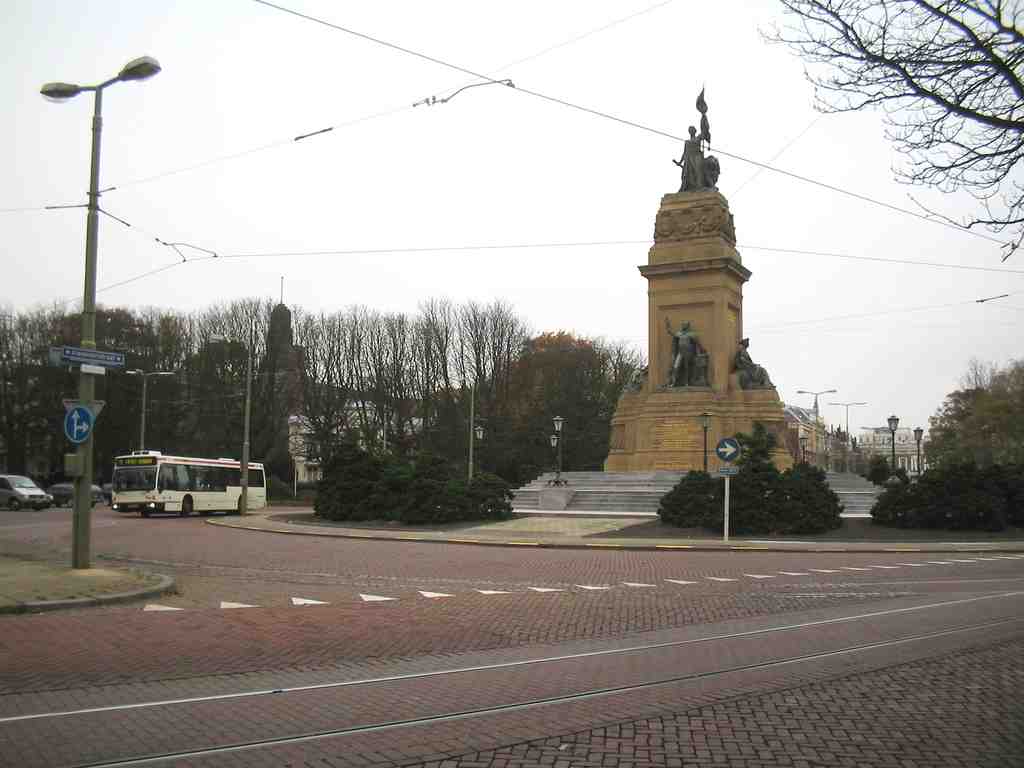
Look straight ahead and you’ll spot a grand, oval-shaped square with an imposing stone monument rising proudly in the middle, surrounded by tram lines and leafy horse chestnut trees.
Welcome to Plein 1813, a place where history isn’t just remembered, it practically leaps out at you-hopefully not literally, or you might spill your coffee! Right in front of you sits the grand National Monument, a statue unveiled in 1869 that marks the end of Napoleon’s rule, the victory over French forces, and the birth of a new Dutch kingdom in 1813. Imagine the scene centuries ago-proud citizens, uniforms and banners, perhaps a little less traffic and a lot more excitement. Picture Prince Frederik himself on that chilly November day, pulling back the curtain on this monument-no pressure when the whole nation’s watching!
This square wasn’t always called Plein 1813; once, it was Willemsplein. But in 1863, as the first stone for the monument was laid, people decided it was high time for a name that suited the scale of what was to come-Plein 1813 was born. All around you, four stately villas stand in a noble semicircle, each one dripping with stories of its own. These mansions, built with that wild mix of architectural styles called Eclecticism, are almost neighbors to history’s VIPs. There’s Villa 1, once home to a former finance minister-and, somewhat awkwardly, later commandeered during World War II for the top Dutch Nazi, Anton Mussert. Don’t worry, he wasn’t much for interior decorating. These days, the British ambassador gets the keys, so keep an eye out for top hats or stray teabags.
Villa 2, designed by Q. Wennekers, even comes with its own bunker-handy if you’re expecting unexpected guests. Once it housed Joseph Luns, the famous Foreign Minister, while Villa 3 is home to the Pakistani ambassador, and Villa 4 has a long, mysterious history. You’re standing where statesmen and spies might easily have crossed paths. In fact, that fourth villa was a hive of war plans and diplomacy, and almost became the new Israeli embassy… until the deal was abruptly called off. The drama and intrigue!
All around the square stand 36 horse chestnut trees, the oldest planted way back in 1936, which makes them true survivors. During World War II, they were wrapped in barbed wire to keep desperate woodcutters at bay-guess everyone wanted central heating, but the trees stood firm.
But Plein 1813 isn’t just about statues and government secrets; it’s teeming with the comings and goings of daily life. Picture the clatter of the oldest Dutch trams, starting as horse-drawn carriages in 1864 and evolving to roaring electrified trams by 1905. Even now, trams and buses wind around the monument like dancers at a particularly well-organized party.
So as you circle the square, surrounded by villas, trees, and travelers from every part of the world, remember: you’re standing in the exact spot where Dutch history twisted itself into a new beginning, and where life, in all its bustling, leafy, and occasionally dramatic glory, just keeps rolling along.




