
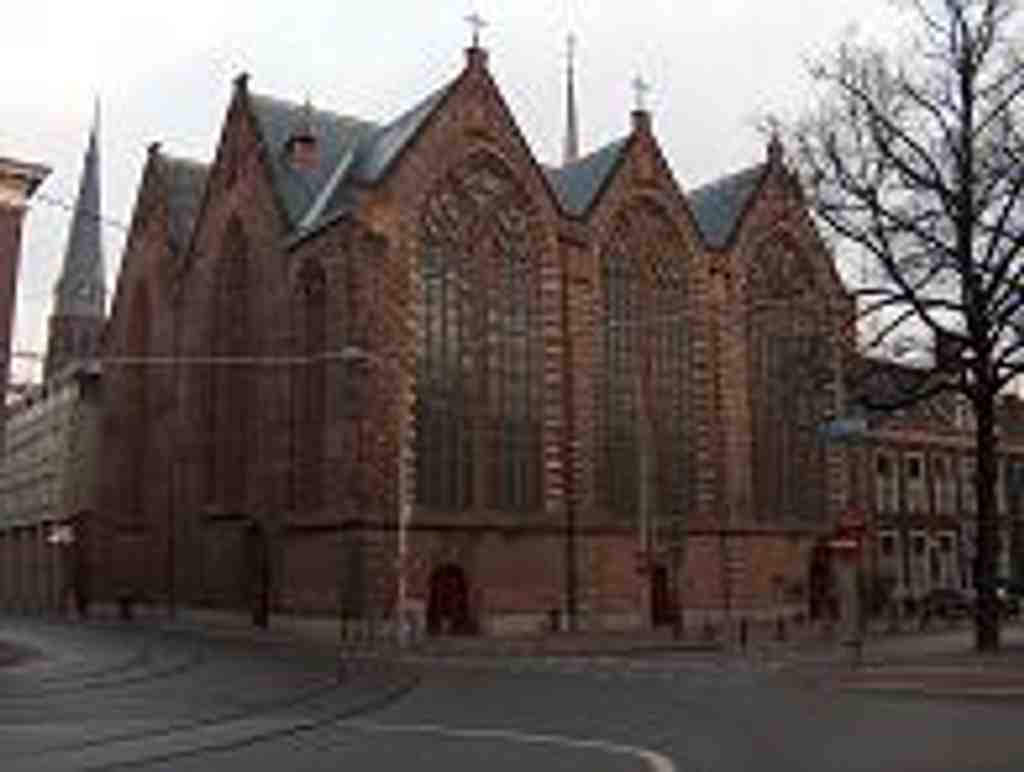
To spot the Kloosterkerk, just look for the large, striking brick church with tall, pointed stained glass windows and a trio of steep gables facing the street, standing at the corner where the tram tracks curve around the Lange Voorhout.
Alright, you’ve found it! Take a deep breath, because you’re standing right on the edge of more than 600 years of adventure, drama, and even a royal scandal or two. Imagine the air bristling with the sound of chanting monks, flickering candlelight reflecting off tall, arched windows-this is the Kloosterkerk, a true survivor amongst the grand buildings of The Hague.
Back in 1397, when the ground beneath your feet was first chosen by the Dominicans, things around here were a little more… medieval. Picture black-robed friars drifting in and out, the scent of incense swirling, and the echo of prayers bouncing off fresh stone. This church wasn’t just a place to pray-it was once the heartbeat of a bustling arts scene! While the rest of Europe was still figuring out how to paint proper faces, the Court of Albrecht of Bavaria and Margaret of Cleves nearby were commissioning masterpieces like the Hours of Margaret of Cleves and elaborate “Biblia pauperum” picture-books, all as precious as royal jewels. The church welcomed thinkers and artists-one of them, Dirc van Delf, even traveled from here to lecture at German universities. Imagine dodging horses instead of bicycles in the streets!
But even in peaceful places, disaster lurks. In 1420-just as everything seemed to be going perfectly-a fire raged through the monastery. Yet the people of The Hague weren’t discouraged. By the 1500s, after much building and even more rebuilding, this place grew and grew: new chapels, a majestic southern transept, and a central aisle so high you could practically launch prayers straight to heaven. Crowds came from all over to walk through, light a candle, or maybe just enjoy the peaceful hum of everyday spiritual life.
Here’s where things take a dramatic turn: in the 1500s, with the Protestant Reformation sweeping across Europe, the Kloosterkerk found itself right in the line of history’s cannon-fire-literally. Religious riots swept the country. Furious townspeople stripped away the old Catholic decorations in 1566. The monks held out a few more years, but by 1583 most of the monastery was demolished, and the once-proud place of worship stood empty. Or did it? Suddenly, it was filled by a…cavalry troop needing shelter! Then, just a year later, the nave and choir were walling each other off-one as a cannon foundry, the other a dusty ammunition store. Imagine the church trembling as gunpowder and iron rolled in. In 1690, the worst case came to pass-a massive explosion shattered everything but a single wall. Talk about a bumpy ride!
Yet, like any good hero in a story, the Kloosterkerk bounced back. By 1617, it was “squatted” by Counter-Remonstrants-a splinter group in a heated argument with the Remonstrants over free will, predestination, and who got to use the best pulpit. Even Maurice of Nassau, the Prince of Orange, weighed in by attending a service here. After political drama and royal arrests, the church settled into its role as a second city church. In 1620, a mechanical clock was added-finally, sermons could end on time! Through the 17th century, the church was a favorite burial place for poets, painters, generals, and queens. If you could read ghosts, you’d spot Margaret of Cleves in a lead coffin, Jacob Cats by his own pillar, and somewhere in the shadowy corners, the Dutch architect Pieter Post.
Fast-forward to the 20th century, and the Kloosterkerk nearly met its end again! With crumbling stone and leaks aplenty, some folks wanted to demolish her in favor of something shiny and new. Luckily, after a few heart-stopping public protests, the city chose restoration instead. Over the years, the nave and choir were rejoined, works of art and furniture from other vanished churches found a home here, and in 1966, the building received a majestic Marcussen organ.
The best part? Royalty keeps popping by. Almost every generation of Dutch royals has been baptized, married, or confessed inside these ancient walls. King Willem-Alexander himself had his confession here in 1997-and if you look up, you might just see shadows of the past princes, artists, and poets grinning down. Today, the church is alive and kicking hosting everything from classical concerts to lively cantata services and welcoming visitors like you-though perhaps without the risk of cannon fire.
So next time you hear music drifting out on a Sunday, or glimpse those golden stained glass windows catching the Dutch sun, remember: every stone here has hundreds of stories to tell-some sacred, some scandalous, and a few that might just still be echoing as you walk by!
If you're curious about the notable events, notable burials or the church today, the chat section below is the perfect place to seek clarification.




