
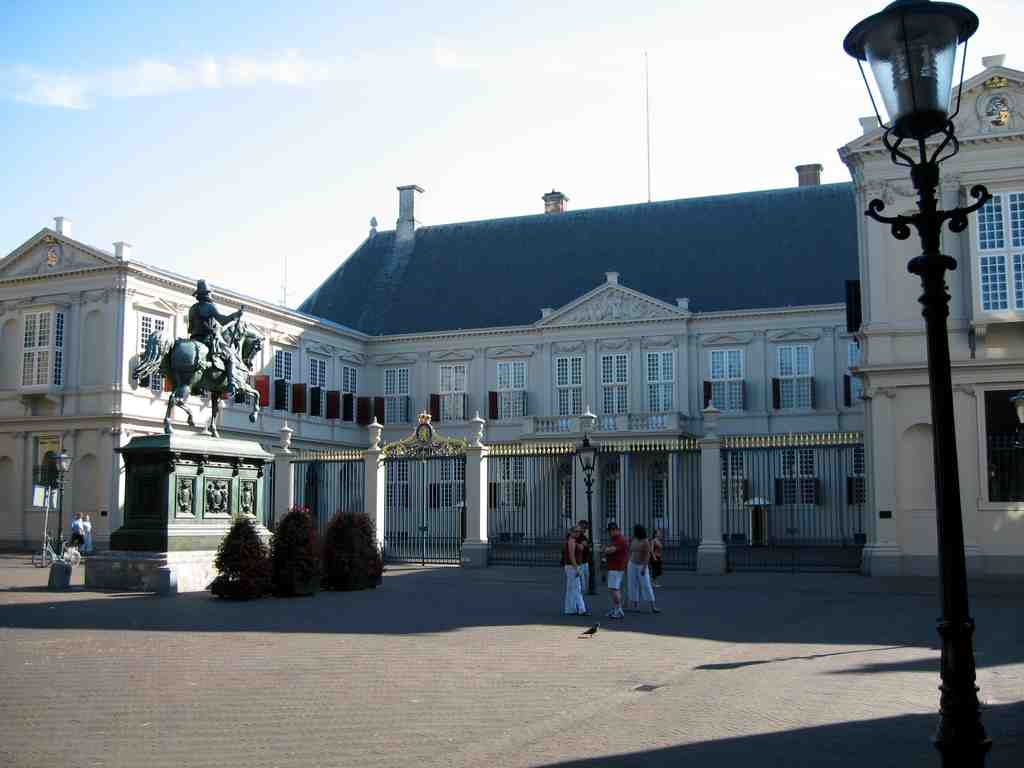
To spot Noordeinde Palace, just look straight ahead for a grand, cream-colored classical building crowned with golden royal gates and a statue of a regal knight on horseback in front-if you see the beautifully aligned windows and crisp lines, you know you’ve arrived!
Now, imagine you’re standing right at the heart of Dutch royalty, feeling the hush of centuries pressing in through grand iron gates. Noordeinde Palace has worn many faces in its lifetime-if these walls could talk, they’d have the juiciest royal gossip in all The Hague! Believe it or not, this opulent palace didn’t begin as the grand winter home it is today; back in the 16th century, it was simply a humble farmhouse, nestled at the very edge of the city, where cows were probably more common than carriages.
Willem van de Goudt, steward of the States of Holland, transformed this farmhouse into a cozy residence-little did he know that he was laying the foundations for centuries of royal drama. The original cellars from that farmhouse are still beneath the palace, guarding their secrets like a set of stone lungs breathing history into every brick above.
Fast-forward to the 1590s: Louise de Coligny, widow of William the Silent, and her young son were gifted this house by the States of Holland in honor of William’s service to the Dutch people. You can almost imagine her here, walking the corridors with a lantern, whispering advice to her son, Frederick Henry, as he gazed out at the dark city dreaming of the future. Frederick Henry wasn’t one for small plans; soon, he was snapping up land, urging on brilliant architects like Pieter Post and Jacob van Campen-think of them as the Rembrandts of royal construction! By the mid-1600s, they’d stretched and shaped the house into the H-shaped palace you see today-a brand new “Oude Hof” rising with proud gables and wings.
Yet, even palaces need friends. After Frederick Henry’s death, Amalia of Solms-Braunfels, his formidable widow, would spend much of her time here, ruling behind the scenes, before the palace fell eerily quiet for decades. Ghost stories, anyone? Then came kings, queens, politicians, and even a few unexpected tenants-like King Frederick I of Prussia (imagine his surprise trading Berlin winters for Dutch drizzle) and, for a brief spell, the famous philosopher Voltaire, who argued and plotted from a cozy apartment as he wrangled with a local publisher!
Fast-forward again, and in the late 1700s, it’s William I who brought Noordeinde Palace back to royal life. But not for long-those were turbulent times! In 1795, as the French swept across the Netherlands, the family had to make a royal dash for Britain, leaving the old farmhouse-turned-palace to the Batavian Republic. Imagine the echo of hurried footsteps in these halls!
After the fall of Napoleon, history came full circle. William returned, the Dutch wanted their sovereign well-housed, and once more the hammers and saws rang out as the palace got a ballroom and a grand new look by 1814. Now the winter home of the burgeoning Dutch monarchy, Noordeinde once saw a parade of kings, queens, and little princesses-the future Queen Wilhelmina was even born here in 1880. Picture the little princess running down the corridors, her laughter mingling with the bustle of royal staff.
As times changed, so did the palace’s fortune. From sheltering monarchs to briefly burning-can you imagine the palace bursting into flames in 1948?-and housing everything from the International Institute of Social Studies to the priceless royal archives, Noordeinde has proven it’s as versatile as any royal should be.
Today, while you stand among the pigeons and gaze at the finely tended gardens-open to everyone from sunrise to sunset-remember those grand stables out back, the archive jam-packed with secrets, and the Dome of Fagel rising quietly within the royal grounds. And here’s a little twist-while you can’t waltz inside without a royal invite (trust me, I’ve tried), the palace still pulses with official life. It’s the workplace of King Willem-Alexander and Queen Máxima, where decisions shaping the Netherlands are made, and even the occasional fairytale royal wedding unfolds.
So take a deep breath and let the history wash over you: from farmhouse roots to royal power, this palace has seen everything but a flying Dutchman. Now, ready for our next stop?
To delve deeper into the palace grounds, from farmhouse to palace or the royal palace, simply drop your query in the chat section and I'll provide more information.




