
Bergamo Audio Tour: Echoes of Nobles, Saints, and Ancient Walls
Sharp stone lions glare from ancient archways while gilded secrets shimmer above Colleoni Chapel—Bergamo’s past is anything but silent. This self-guided audio tour leads you through winding alleys and sun-kissed piazzas, unlocking stories that most visitors walk right past. Find hidden depths behind Renaissance façades and step into chapters where power, beauty, and rebellion collide. Why did a private vendetta inside Palazzo del Podestà trigger citywide turmoil? What secret plots brewed in the shadows of the Convent of San Francesco? And what odd relic lies forgotten just footsteps from a bustling café? Move through lively squares and quiet cloisters as the drama of Bergamo’s history comes alive. Feel whispers of intrigue at every turn and witness the soul of the city revealing itself layer by layer. Begin now and see what glares beneath Bergamo’s stone lions. The true stories wait for you.
Tour preview
About this tour
- scheduleDuration 40–60 minsGo at your own pace
- straighten5.2 km walking routeFollow the guided path
- location_on
- wifi_offWorks offlineDownload once, use anywhere
- all_inclusiveLifetime accessReplay anytime, forever
- location_onStarts at Colleoni Chapel
Stops on this tour
If you’re searching for the Colleoni Chapel, look for a spectacular building right next to the Basilica di Santa Maria Maggiore, adorned with diamond-patterned pink and white…Read moreShow less
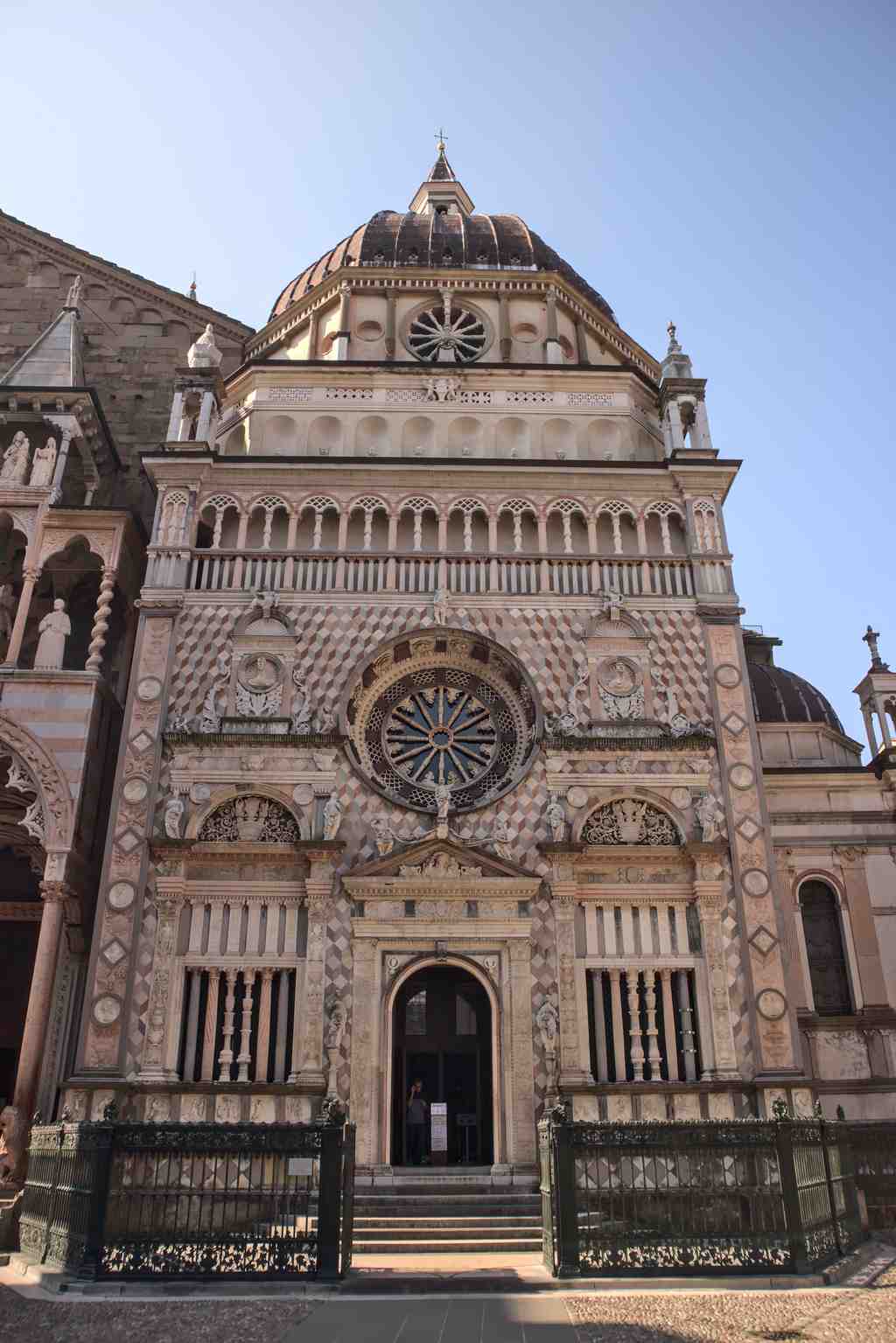
If you’re searching for the Colleoni Chapel, look for a spectacular building right next to the Basilica di Santa Maria Maggiore, adorned with diamond-patterned pink and white marble and a grand, round rose window above the ornate front door. Welcome to the legendary Colleoni Chapel! Picture yourself in the bustling Bergamo of the late 1400s: church bells ringing, merchants chatting, the air buzzing with the energy of a city on the rise. Here stands Bartolomeo Colleoni’s ultimate gesture-a Renaissance masterpiece he insisted on building as his final resting place, right where everyone could see it, just to make sure no one forgot him. Seriously, if the phrase “Go big or go home” existed back then, Colleoni would’ve adopted it as his family motto! Colleoni, a famed war captain and ruler, wanted a mausoleum worthy of a hero-or maybe even a Roman emperor. To make room, he famously ordered the demolition of part of the basilica’s sacristy. Some say he bulldozed ahead with military force, sword drawn, impatient with endless church debates. Others insist it was peaceful, with the right paperwork, all very civil-though where’s the fun in that? His architect, Giovanni Antonio Amadeo, set to work in 1472, fashioning this bold structure-a whimsical carnival of shapes, colors, and stories sculpted in marble. The façade is a riddle of Christian and pagan symbols: white, red, and black diamonds, a spinning rose window, statues of ancient heroes, and mysterious medallions. Above the door, look for two round reliefs of Caesar and Trajan giving Colleoni a sort of “thumbs up” from history. Now, here’s where things get mysterious. For centuries after it was finished, the townspeople whispered that Colleoni wasn’t actually buried here at all. Every time they opened a sarcophagus-empty! Some suspected his remains were hidden under another church, maybe to avoid a ghostly lawsuit from locals who wanted the sacristy back. The plot thickened so much that even royalty got involved: In 1922, King Vittorio Emanuele III himself visited and demanded to know where the infamous warrior was. Embarrassed city officials could only shrug. Once, they even found a giant skeleton with a wooden sword under the church floor…but it didn’t quite fit. Too tall. Where was the real Colleoni? Finally, in 1969, during some clever "CSI: Renaissance" investigating, experts peered inside the main sarcophagus with modern equipment and-wait for it-there he was! Colleoni in full captain’s dress, arms crossed, hat on, with his trusty baton. It only took almost 500 years, a king’s curiosity, and a scientific team with a knack for drama. Step inside (if you get the chance), and you’ll spot Colleoni’s golden statue on horseback, perched above his tomb in eternal triumph, flanked by scenes from his favorite bible and mythic tales, including Samson, Hercules, and even a parade of cheeky putti (those little naked cherub boys-you’ll see them carrying Colleoni’s shield!). His daughter, Medea, rests nearby, in a gentle and touching scene of quiet dignity. And everywhere, the Colleoni coat of arms, so proud and… well, anatomically suggestive (which led to some rather colorful jokes throughout Bergamo history-let’s just say Colleoni’s legacy is a bold one, in every sense). So, as you stand before this extravagant chapel, with sunlight catching every glint of colored marble, imagine the clash of egos, the whispers of secrets, the art, the ambition, and the centuries-long game of hide-and-seek with a warrior’s bones. Bartolomeo Colleoni wanted you to remember him-mission accomplished!
Open dedicated page →Straight ahead, you’ll spot the Palazzo del Podestà-just look for the long, sand-colored building with arched windows and flags by its main door, and the imposing stone Campanone…Read moreShow less
Straight ahead, you’ll spot the Palazzo del Podestà-just look for the long, sand-colored building with arched windows and flags by its main door, and the imposing stone Campanone tower rising up just behind it. Imagine you’re standing in this lively Piazza Vecchia on a market day, the air buzzing with voices and the sound of footsteps across the paving stones. Right in front of you stands the Palazzo del Podestà, an old building that’s been at the center of Bergamo’s power games for almost a thousand years. Back in the 1100s, before it became this symbol of authority, the site was a wealthy family’s home-owned by the Suardi clan, who were the kind of neighbors you’d rather not upset during medieval feuds between the city’s powerful families. They lost the building after one particularly nasty bout of in-fighting. Picture armored men storming through doorways, shouting over property lines! Eventually the town took over, turning it into headquarters for the Podestà, the top boss of the city-sort of Bergamo’s head referee and notary rolled into one. But nothing in Bergamo’s history goes without a fiery twist. In 1360, a massive fire gutted parts of the building, sending the poor Podestà running to rent a place nearby while repairs dragged on-imagine the city’s leader grumbling about not having a kitchen or having to dodge carpenters at every corner. Over the centuries, parts of the building were chopped off or rebuilt, making it the patchwork palace you see today. When Venice took over Bergamo in the 1400s, everything changed again. Large staircases were added, the southern facade transformed, and the palace got a fresh nickname-the “Palace of the Jurists”-because it became the law-and-order epicenter, with judges and officials holding court right inside these rooms. Just above your head, the artist Bramante painted enormous frescoes of ancient wise men, seven of them looming over the square; they were larger than life, keeping an eye on everyone as if to say, “You’d better behave!” Sadly, most were lost as the centuries passed, but a couple were found hiding beneath later renovations, now showcased in the museum next door. Bergamo thrived under Venetian rule with markets and fairs, even as the city’s layout was reshaped by new walls and the removal of churches that stood in their way-some sacrifices were made so that Bergamo could have those mighty Venetian fortifications! Want to know an odd twist? By the time of Napoleon and modern Italy, the palace was no longer a center of power. Instead, it found itself hosting everything from a natural history museum filled with stuffed birds to a journalism school full of students tapping away on typewriters-who knows what some medieval notary would’ve thought of that! In the last couple of decades, things took a dramatic turn when archaeologists started digging beneath the palace. Suddenly, they were unearthing layers reaching back to Roman times and even earlier. The story here isn’t just above ground, it’s below your feet-well, don’t worry, no one’s going to ask you to pick up a shovel! Thanks to these discoveries, you can really see how the present is built right on top of the past… sometimes literally! Oh, and if you want a proper taste of drama, try to picture disputes between church and city council right where you’re standing, each trying to outdo the other with frescos, decorations, and public ceremonies. Trompe-l’oeil columns, painted angels, and grand processions-this square has seen power plays worthy of its own soap opera. Now, the Palazzo del Podestà houses the interactive museum of Venetian history, where you can wander through rooms that bring Bergamo’s glory days to life with sights and sounds (and, thankfully, far fewer fires). From ancient Suardi feuds to Venetian commerce, from devastating blazes to modern scholarship, it’s a place where every century left its mark-sometimes with a flourish, other times with charred beams, but always bursting with stories. So, before we move on, give a little wave to those imaginary wise men who once watched over the square-let’s hope they approve of your sightseeing choices today! Seeking more information about the collocation, description or the historical museum of the venetian age? Ask away in the chat section and I'll fill you in.
Open dedicated page →To spot the Civic Archaeological Museum of Bergamo, look ahead for a stone building with grand Gothic arches and an entrance framed by a patterned iron gate-right under the…Read moreShow less
To spot the Civic Archaeological Museum of Bergamo, look ahead for a stone building with grand Gothic arches and an entrance framed by a patterned iron gate-right under the historic portico in Piazza Cittadella. Now, gather round-because just through that arch, you’re about to step into a true time machine, disguised as a museum! Imagine the echoes of over four centuries, starting way back in 1561, when Bergamo’s very first archaeological treasures huddled underneath the loggia of a grand palace. The treasures didn’t stay put for long, though; in 1770 they were whisked away to a spot just above the Fontanone, and then, after some noble collectors decided their artifacts looked lonely, everything got bundled together and found a home at the fortress called the Rocca. It wasn’t until 1960 that the museum landed right here in the Visconti Palace of the Citadel, in the heart of Bergamo’s upper city. But don’t let those ancient stones and solemn arches fool you. This isn’t a graveyard for dusty relics! With a wink to children and grown-ups alike, the museum has always been a place where history gets up and stretches its legs-sometimes even tap dances! Teachers lead their eager students through recreated scenes of prehistoric villages, Roman streets, and Longobard halls. In fact, since 1981, the museum has run a center just for hands-on history-and there’s even a club for “Friends of the Museum,” where I hear lively debates over whose ancient necklace is glitzier. Let’s peek through history’s keyhole, shall we? In the dim, stone-walled halls lurk prehistoric axes, gleaming from ages ago when the only way to conquer a problem was with a sharp stone and a little muscle. Some of these date all the way back to the dawn of civilization-a time when Bergamo’s earliest inhabitants carved their mark on the land. There’s a necklace of ancient teeth and calcite beads found in distant fields, and bronze axes from when metal was the wonder material of the moment. Each artifact is a whisper from a person who lived, loved, and probably stubbed their toe just like the rest of us. But wait! The plot thickens with a dash of Egyptian mystery-sarcofagi brought over from Luxor, statues and objects that seem to glow with a golden light. Think about it: a sarcophagus that’s been sleeping for nearly three thousand years, now on display! Don’t worry, I promise no surprises or curses (as far as I know). Moving on, you’ll find letters from the past-Roman epitaphs, chipped with emotion. There are stones that tell of long-lost loves, ancient donations, and even one monumental shout-out to a Roman emperor. Picture a busy Roman street, with Bergamo’s citizens hurrying by, never guessing their stories would be told centuries later in a museum. And finally, there’s the dramatic story of the early Christians and the Longobards-graceful golden crosses, sturdy swords, and brooches found in ancient tombs. Imagine the tension of changing times, when Christian crosses began to appear next to the warlike trappings of the Lombard conquerors. It’s not just old bones and bronze in here-this place is the heart of Bergamo’s memory. Every stone, every statue, every glittering trinket is a piece of the grand puzzle, showing just how many tales are buried in Bergamo’s streets. Forget silent, lonely relics-these artifacts are eager storytellers, ready to share every battle, every mystery, and every laugh. So don’t just peek in-step closer and listen. The real adventure is just beginning! Curious about the prehistoric section, egyptian section or the early christian and lombard section? Don't hesitate to reach out in the chat section for additional details.
Open dedicated page →
Show 11 more stopsShow fewer stopsexpand_moreexpand_less
 4
4Paolo Sarpi Classical High School
Buy tour to unlock all 18 tracksTo spot the Paolo Sarpi Classical High School, just glance ahead for a grand, neoclassical building with an impressive porch supported by four giant Corinthian columns-it stands…Read moreShow less
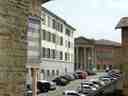
To spot the Paolo Sarpi Classical High School, just glance ahead for a grand, neoclassical building with an impressive porch supported by four giant Corinthian columns-it stands proudly at the far end of the square, slightly set back behind all the parked cars. Now, let’s step into the world of knowledge, ambition, and maybe a little nervous sweating-welcome to the Paolo Sarpi Classical High School! If these stone walls could whisper, you’d hear Latin declensions drifting through the air and the murmurs of anxious students just before final exams. Founded in Bergamo’s historic heart, this school’s story is richer than a library’s special collection. Your eyes are now met with a regal neoclassical palace dreamt up in 1842 by architect Ferdinando Crivelli, finally finished in 1850-imagine the anticipation! It wasn’t until 1865, though, that the school took on the name of Paolo Sarpi, a sharp-witted Venetian theologian who probably could have debated his way out of a locked room. Travel back in time-the roots of classical education in Bergamo stretch all the way to 1506, when the city’s thirst for knowledge kicked off with grammar, the humanities, and rhetoric taught by the “Congregazione della Misericordia Maggiore.” By 1566, these halls buzzed as the “Accademia della Misericordia,” only to be suppressed in 1610 (apparently, even schools need a sabbatical). But as resilient as a student pulling an all-nighter, the academy sprang back to life in 1617. Then the plague of 1630 swept through, leaving the school gasping for air. Slowly it recovered, morphing into the Collegio Mariano, where you could almost hear the giggles and groans of students filing in after renovation in 1663. Fast forward to the 1800s and the Napoleonic era-imagine French uniforms, serious faces, and sweeping reforms. That’s when the school was officially born, on November 15, 1803, first finding shelter in cramped rooms nearby before moving here on the ruins of an old convent. Picture the demolition dust swirling as the old Convent of Santa Maria di Rosate came down in 1844, making way for this stately building with its dramatic U-shaped layout, stone and brick walls, and a sweeping entrance hall where the scurrying of feet echoes history. Pass through those giant columns and stretch your neck skyward-a playground for young minds, but also a parade ground for nerves before oral exams! Strangely enough, the classrooms have seen transformations that would make even the most seasoned chameleon jealous. The old chapel was once repurposed as a gym, while science labs got a 20th-century makeover, balancing tradition and test tubes. A grand conservation project in the early 1980s brought back lost details and preserved its noble air. But don’t let all that grandeur fool you. Sarpi is known for its tough love-the academic environment is famously strict. Imagine being an “A” student elsewhere, but here... 6 to 8 out of 10 is pretty common, and the professors guard those top grades like dragons with gold. Many students worry about being "sent to September" (no, it’s not a holiday, but summer study obligations!). Still, the school is a top performer-students have consistently outshone others in national exams, even prompting double-checks from the authorities, just to be sure Sarpi’s excellence wasn’t some sort of wizardry. As you stand here, know that you’re looking at more than a school-it’s practically a movie star. These halls were the backdrop for films like “Call Me By Your Name” and “Gli Anni e i Giorni,” so if you sense some déjà vu, you might have seen its imposing portico on screen! Today, Sarpi even has its own museum, curated by students and teachers, filled with rare books and scientific treasures, testifying to centuries of local history and the endless pursuit of learning. So, as you take in its quiet dignity, remember: generations have sweated, dreamed, and even filmed a scene or two right where you stand. If you listen closely, you might just hear the echoes of school bells, history lessons, and someone whispering, “I hope I pass!” Ready to delve deeper into the statistics, architecture or the image gallery? Join me in the chat section for an enriching discussion.
Open dedicated page →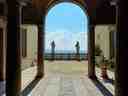 5
5Terzi Palace
Buy tour to unlock all 18 tracksTo spot Palazzo Terzi, look ahead for an elegant 17th-century palace with grand arches and columns, perched dramatically near the city edge, and offering a sweeping view over…Read moreShow less
To spot Palazzo Terzi, look ahead for an elegant 17th-century palace with grand arches and columns, perched dramatically near the city edge, and offering a sweeping view over Bergamo from its terrace guarded by statues. Alright, now picture yourself standing here in front of Bergamo’s most important Baroque palace, where grand stories practically shout from every stone. Imagine the sound of carriage wheels clattering on the old cobbles, ladies in billowing skirts and gentlemen with feathered hats arriving, all for a glimpse of the Terzi family’s latest grand event. The Terzi family built this palace not just for comfort but as a badge of their prestige. These weren’t just local big-shots-they had roots stretching all the way back to the first millennium, with members who commanded armies for emperors and governed distant cities. Ottobuono de’ Terzi was so famous, he managed to rule Parma, Piacenza, and Reggio Emilia, only to meet his dramatic end by betrayal in 1409-a reminder that power always comes at a price. Other Terzis became church leaders, scholars, and thinkers-no wonder the family needed a home as grand as their ambitions. But there’s a romantic twist, too! Part of this palace was built to celebrate two important weddings. The first, in 1631, between Luigi Terzi and Paola Roncalli, inspired the majestic facade and bustling southern wing. A century later, another marriage, between Gerolamo Terzi and Giulia Alessandri, meant an even grander terrace had to be added-because nothing says marital bliss like extra real estate. Now, look up at that stone balcony with its ornate windows and statues. The facade wasn’t easy to fit into the tight spaces of Bergamo Alta; clever architects squeezed it in beside the gardens of Palazzo Lupi and right up against the edge of the city’s cliffs. If you could peek into the cellars, you’d see traces of medieval buildings hidden away, almost like architectural Russian dolls-layers upon layers of history. In the 1800s, the palace got an unexpected dash of Russian drama. When Giuseppe Terzi married Elizaveta Micajlovna from the noble Golicyn family in St. Petersburg, he brought a little bit of Russia home with him. Elizaveta’s Orthodox faith caused a small stir in Bergamo, and soon this Baroque beauty had its very own “corner of Russia”-complete with an Orthodox priest under its roof. You could say the palace knew how to host a party-and a diplomatic incident! Let’s talk about artistry. The grand entrance square, Piazzetta Terzi, was designed in 1747, so impressive it even charmed the writer Hermann Hesse. Look for the statue of Architecture with two stone cherubs showing off the seasons of summer and spring. As you walk in, those two grand Tuscan columns welcome you, and above, two more cherubs parade winter and autumn-a bit like a year-round fashion show for statues. Peer at the first floor windows-you’ll spot busts of historic figures peeking out from their pediments. Inside, the palace is a masterpiece of stucchi, frescoes, and gilded flourishes. The grand salon-two stories tall-boasts massive paintings by Cristoforo Storer, and the walls are alive with mythic scenes painted by Domenico Ghislandi and Gian Giacomo Barbelli. The fireplace is so enormous, with stone lions and the family crest, that it’s a miracle no one tried to roast an ox in it during the weddings. If you could wander through, you’d discover a room with mirrors from Venice, reflecting both light and gossip, and imagine the soft melodies of baroque music echoing from the family’s music room-a space built just big enough for quiet concerts and maybe some passionate arguments about the latest sonata. In the Sala Soprarizzo, the sun goddess Aurora chases away sleep in a painting by Carpoforo Tencalla-fitting, as the room once hid the tricolor flag from Austrian eyes during a tense moment in Bergamo’s story. Even today, the art and decorations inside are a testament to the incredible talents of the craftsmen and painters whose hands shaped this palace. In the salon, the stunning Allegory of the Arts and Sciences by Giuseppe Orelli gathers figures for mathematics, rhetoric, science, and more-a painted party celebrating knowledge, perhaps proof that the Terzis knew their geometry as well as their politics. So, next time someone accuses you of being extravagant, just tell them you need a new wing for your palace to celebrate “family achievements.” Between you and me, the Terzis would approve.
Open dedicated page →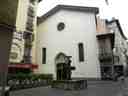 6
6Chiesa di San Pancrazio
Buy tour to unlock all 18 tracksRight in front of you is a simple, pale church façade, slightly set back from the street, with a pointed stone arched doorway topped by old sculptures, flanked by two narrow…Read moreShow less
Right in front of you is a simple, pale church façade, slightly set back from the street, with a pointed stone arched doorway topped by old sculptures, flanked by two narrow windows-and you'll spot it easily as it faces a little piazza with a charming 16th-century fountain in the center. Now, let’s jump into the curious tale of the Church of San Pancrazio. Imagine yourself not in the busy heart of Bergamo, but in a small bustling patchwork of winding medieval streets up here in the Città Alta. The year is 888-yes, more than a millennium ago!-and already a church stands here, giving its name to the whole neighborhood. The roots run so deep that you can almost sense the centuries layered in the stones beneath your feet. For a long time, this was no ordinary parish-it was the beating heart of its own little community, right up until 1805, when its role shifted, becoming a sidekick to the grand Cathedral of Sant’Alessandro. Back in those medieval days, the original church was pretty modest. But Bergamo loves a good renovation project! In 1280, the church started expanding, and by the time the 15th century rolled around-with the Black Death and wandering condottieri swirling in the background-masons had crafted the lovely grey-stone ogival arch at the doorway. You might have already noticed the cluster of carved angel faces grinning down like cheeky town guardians. In 1452, a sculptor stamped history onto the church by decorating the little lunette above the portal. Here, you can still make out San Pancrazio, the Madonna cradling little Jesus, a bishop giving his blessing, and-way above-an image of the Trinity, all surrounded by saints painted when Giovanni Barozzi was bishop. But it gets livelier! For centuries, this square was a daily crossroads for families, traders, and even the occasional goat (hopefully not on market day). The church wasn’t just a place to pray-it was a neighbor, a guardian, and for quite a while, even the local cemetery wrapped its way right around it. When Saint Carlo Borromeo, the impressively energetic bishop, showed up in 1575 for an inspection, he found the altar lists overflowing and the presbytery so tiny and gloomy you’d almost want to bring a candle-or sunglasses, given how Italian churches tend to surprise you with unexpected shafts of light. Fast forward to after the Council of Trent-when the church world was getting shaken up and artists had plenty of work-San Pancrazio got another lift. From the 1600s right into the 1800s, workmen put in a new grand vault, added the sacristy, gave the bell tower a makeover, and jazzed up the walls with stucco, all with the occasional interruption. Imagine the locals gathering in 1624, hassling the bishop for a renovation because the vault looked saggy and the rain started doing its bit as an unwanted guest. The Moroni family-real “movers and shakers”-became important sponsors and today their coat of arms is right there, above the church’s triumphal arch. Inside, you’ll find a single long nave lined with five chapels a side, graced with marble, paintings, statues, and enough artistic flair to convince you Renaissance and Baroque artists were some of Italy’s first interior designers. The main altar is a dramatic swirl of baroque style, and above, paintings by great masters like Cristofano Allori, Ermanno Stroiffi, Gian Paolo Cavagna, and, rumor has it, even Jacopo Palma the Younger. Jump forward again to the 20th century-by this time someone had the bright idea to repaint the church’s façade and vault, and after a quake in 2004, the upper artwork got a much-needed rescue. Today, the church still sits slightly apart from the flow of tourists shopping or sipping coffee in the 15th-century shopfronts nearby, watching the centuries roll by from its quiet, stoic candor. So here you are at San Pancrazio, where saints and townsfolk, artists and architects, goats and bishops have all played a part in crafting a story that’s as old as Bergamo’s own stones. Don’t forget to tip your hat to that little fountain, too-it’s been gurgling away since 1549 with stories of its own!
Open dedicated page →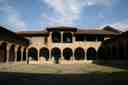 7
7Convento di San Francesco | Museo della fotografia Sestini | Bergamo 900
Buy tour to unlock all 18 tracksTo spot the Convent of San Francesco, look for a broad rectangular courtyard framed with rows of elegant stone arches, topped by a rustic two-level loggia right at the…Read moreShow less
To spot the Convent of San Francesco, look for a broad rectangular courtyard framed with rows of elegant stone arches, topped by a rustic two-level loggia right at the center. Welcome to the Convent of San Francesco! Take in the cool breeze on Sant’Eufemia hill and stand tall, because you’re in one of Bergamo’s most intriguing spots-just imagine monks quietly walking where you are now, the buzz of the old hay market nearby, and an incredible view that sweeps over the valley and lush mountains, the very same view that has greeted people for centuries. Our story begins in the early 1200s, when a humble band of Franciscan friars arrived in Lombardy, carrying nothing but faith, a knack for hard work, and a tendency to sleep almost anywhere. At first, they moved from place to place-helping, praying, and probably wondering if someone could invent indoor heating. Legend has it Saint Francis himself may have wandered these hills! After a few hopping attempts, in 1230, the friars finally landed this plot, a generous gift from the Bonghi family. The convent grew, stone by stone, echoing with simple prayers and the sounds of medieval life. Over time, this became not just any convent. It was a place where a traveling Saint Bernardino da Siena stayed, his visits so famous that even the frescoes in Bergamo record them-picture a wise, gentle man deep in conversation with wide-eyed young friars. A little later, in the 1500s, none other than San Carlo Borromeo called this place home for three action-packed months. Imagine him bustling about, perhaps muttering, “So many churches, so little time…” But convent life wasn’t always peaceful. Fast forward to the late 1700s, and the air is crackling with excitement-and science! From the church dome and the bell tower, the scholarly Mascheroni and Tadini ran experiments to see how heavy objects fell, racing to test whether things dropped straight down or curved slightly east. It was a real high-stakes gravity show-take that, Newton! Things took a dark turn when the French rolled in and set up the short-lived Republic of Bergamo. Out went the Venetian lions, and in came soldiers, order after order of religious houses closed, treasures “borrowed” (spoiler, nobody ever returned them), and all sorts of local drama. The convent was seized, its wealth carefully tallied, and-plot twist-turned into a prison for political troublemakers, and later down the line, for just about anyone unlucky enough to get caught. If these stones could talk, they’d whisper stories of hope, fear, and some pretty grumpy monks. The original three-naved church, grand and bright, is long gone-torn down for a prison in the 1800s. Only the apse and three side chapels remain, but they still hold magical fragments of 1300s frescoes. Look closely and you might see vibrant scenes painted by mysterious masters like the Maestro dell’Albero della Vita and the Maestro della Cappella Bonghi. These fragments, full of gentle faces and deep color, were offerings, prayers in paint, clutching at mercy and beauty in tough medieval times. Walk this cloister-the Chiostro delle Arche-where noble families once buried their dead. Its arcades, with lovely twin columns and carved Gothic capitals, circle peacefully. The smaller Chiostro del Pozzo, named after its big old well in the center, once featured bright frescoes of Saint Francis’ miracles, though those are mostly lost to time. Through wars, plagues, prison bars, and even stiff competition for “best yard with a cloister,” the convent has survived. Today, it holds the Bergamo Museum of History’s archives and photos. The old stones may be silent now, but they’ve seen a thousand lives-just don’t try to sleep here overnight, unless you fancy ghostly monks or a stern librarian! Wondering about the architecture, master of the tree of life or the image gallery? Feel free to discuss it further in the chat section below.
Open dedicated page →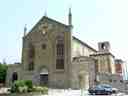 8
8Church of Sant'Agostino
Buy tour to unlock all 18 tracksYou’ll spot the Church of Sant’Agostino rising in front of you with its striking, sturdy stone facade, tall pointed windows, and gothic arches-just look for the two slender…Read moreShow less
You’ll spot the Church of Sant’Agostino rising in front of you with its striking, sturdy stone facade, tall pointed windows, and gothic arches-just look for the two slender pinnacles reaching skyward and the central statue perched above the main entrance. Take a deep breath and imagine: it’s the late 1200s, and this quiet corner on the edge of Bergamo is an in-between land, not quite city, not quite countryside. The air is fresh, carrying the hum of distant bells and, if you believe the legends, the whispers of hermit monks tracing a life of prayer and simplicity. In 1290, when most people worried more about surviving than building, a group of Augustinian hermits dreamed up a huge stone sanctuary here. There was an even older church before, dedicated to Saints Philip and James-archaeologists digging under your feet found its crumbling bones, just 40 square meters, simple walls of rough stones, all that remained of a time when every May 1st, bread was handed out to Bergamo’s poor right on this very ground. The years passed, and those early monks, with the blessing of Bishop Roberto Bonghi, started anew, combining their eremitic ways with a fresh dedication: not just to their old saints, but to the legendary St. Augustine. The church grew bigger than anyone first imagined, a single, grand nave with the gothic face you see now-smooth sandstone blocks, a central rose window, and dramatic pointed arches. In 1347, Bishop Bernardi himself consecrated it, probably with more than a gentle splash of holy water. But let’s not get too peaceful-life back then was full of drama. The old chronicles tell of years where the church was bustling. In 1399, over ten thousand people, including the Bishop of Milan himself, crowded in to listen to a fiery sermon by the prior. Yet there was risk: rival factions, the Guelfs and the Ghibellines, kept Bergamo on edge, and in 1403 the convent was set on fire during an attack. Miraculously, the church stood unharmed-even if the convent ended up looking like a hedgehog after a dog-fight. By 1443, things got so bad that an old monk, Brother Benigno, wandered into the half-ruined church and found… a wolf and her cubs had made it their home! Talk about a rough congregation. Still, out of the ashes-sometimes literally-the place revived, with the arrival of reform-minded Observant monks from Crema, including two brothers, Bartolomeo and Agostino, who’d soon become legends in Lombardy. These new friars adored learning-one even made the library their top priority, long before Netflix was around. At its height, the church’s interior was a gallery of family chapels-noble Bergamaschi used them as a kind of stone LinkedIn, each with a favorite saint and room for the family bones. There were epic altars, colored frescoes, and even stories claiming Martin Luther slept here on his way home from Rome. The Baroque period amped up the sparkle: marble railings, airy saints painted with dashing flair… even if sometimes, like fashion, it all went out of style again. But then, the winds changed. When Napoleon rolled in and the Republic of Cisalpine took over, the church was seized, stripped, and turned into a military barracks. Imagine the crash of boots where prayers once echoed and-brace yourself-the vast field out front became the city’s guillotine stage. There’s even a ghostly story about a famous brigand’s head on display, but I wouldn’t look for it-it’s long gone. For almost two centuries, the building decayed, used for everything from a riding school to army storage. In the 20th century, efforts at restoration began. These days, the old sacred nave has gone academic-it’s now the grand hall for the University of Bergamo, alive again with bustle and the hopeful (sometimes nervous) chatter of students. So, as you stand here, imagine the centuries of footsteps-monks, warriors, students, nobles, and maybe, just maybe, a mother wolf and her pups padding beneath these ancient stones. Not bad for a building on the edge, don’t you think?
Open dedicated page →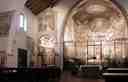 9
9Chiesa Di San Michele Al Pozzo Bianco
Buy tour to unlock all 18 tracksDirectly in front of you, you’ll spot the Church of San Michele al Pozzo Bianco by its simple exterior, capped with a pale 20th-century facade and a short set of steps leading…Read moreShow less
Directly in front of you, you’ll spot the Church of San Michele al Pozzo Bianco by its simple exterior, capped with a pale 20th-century facade and a short set of steps leading inside, just off the small piazza-it doesn’t shout for attention, but those in the know never walk past without a glance at its serene arched entryway and hints of ancient stonework. You’re standing where centuries of stories swirl in the air, and trust me, this little church could out-humble any modest monument in Italy…though it might quietly boast about its treasures if pressed! The Church of San Michele al Pozzo Bianco is older than most pizza recipes, its roots stretching back to the 8th century, when the Lombards-long-haired, sword-toting folks-founded the very first chapel here. Its original name included “Pozzo Bianco,” or “White Well,” likely from a mysterious white marble well that once graced the area. And let’s face it: everyone loves a good well story-especially if it’s marble. Even in 774 AD, the “Basilica of Saint Michael the Archangel Outside the Walls” popped up in local wills, so people were thinking of this place even in the afterlife! In the shadow of the Roman Empire’s fading glory, this church quietly thrived, gathering up stories and secrets like a squirrel with holy acorns. The oldest bit left is probably the crypt, or “scurolo,” hiding below like some secret passage. The main church saw a rebuild in the 12th and 13th centuries… and another refresh in the 15th… and then, for good measure, its current main face was painted up stylishly in the 20th century (1915, to be exact). So if you sense a little identity crisis about the architecture, you’re not wrong-this is a building that knows every style on the timeline. To your left is a house once belonging to the local vicar, its ancient walls decorated with faded 15th-century frescos, while just across the way, the memory of a civic brotherhood lingers-the lay group that helped Bergamo’s needy until 1805, when Napoleon swept in and packed up their treasures. (Rumor has it, French troops couldn’t resist a good Bergamasque painting.) Let’s go inside for a moment with our imaginations-the air here smells faintly of old books, candle wax, and maybe a hint of mystery. There’s only one central nave, divided by those proud old 15th-century arches, their stone bruised by centuries of prayers and perhaps a few overheard confessions. Sunlight cuts through arched windows, glancing off walls that are a patchwork of votive frescos-some painted by masters, others by artists whose names got lost in the shuffle of time. Every family had their favorite protector, so you’ll see a riot of saints, especially Sebastian and Rocco, who were the top picks during a certain pestilence-filled era (no need to explain, right?). Many frescos overlap, reworked or layered like someone’s favorite coat, with humble promises of gratitude mingling with more showy masterpieces. But the real showstopper is tucked to the left: the Chapel of the Life of Mary. Painted in 1525 by none other than Lorenzo Lotto, who lived just down the street, these frescos tumble with color, emotion, and more than a little Renaissance drama. Let your mind picture the faces-gentle, worried, exuberant-and notice how the paint nearly sings out from the walls in colors that would make a modern Instagram filter blush. Here, dramatic biblical tales unfold: angels swoop, halos glow, and everyday humanity peeks through even the holiest of moments. If you had x-ray glasses, you’d spot the crypt underneath-three chambers, with some of the oldest frescos in the whole region lurking in the shadows. Madonna with Child, Saint Christopher, doctors of the church wielding giant quills like literary swords-it’s like stumbling into a medieval comic book, drawn across centuries. Even the altar has a twist in its tale. The painting of the Madonna of Good Counsel, now peacefully blessing visitors, made a perilous journey during the Napoleonic seizures. Once from Santa Maria Maggiore (Bergamo’s big basilica), it was snapped up and gifted to this church-thankfulness incarnate, as if art itself could repay a kindness. And if you hear footsteps echoing or soft whispers on your skin, maybe it’s just the memory of faithful vicar Taidone, Lotto painting after midnight, or the six old men of the brotherhood-still holding their spiritual council in paint and plaster, after all these years. Now, that’s some serious staying power for a little church on a little piazza.
Open dedicated page →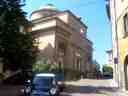 10
10Sant’Andrea, Bergamo
Buy tour to unlock all 18 tracksTo spot the Church of Sant’Andrea, look ahead for a simple, almost fortress-like building with a plain facade and a telltale rounded green dome peeking up above its square…Read moreShow less
To spot the Church of Sant’Andrea, look ahead for a simple, almost fortress-like building with a plain facade and a telltale rounded green dome peeking up above its square brownish walls, standing firmly at the bend in the cobbled road. Welcome to Sant’Andrea! It might look a bit shy with its unfinished facade-no grand columns or statues out front-but don’t let appearances fool you. Behind these quiet walls is centuries’ worth of dramatic history, art, and even a dash of mystery. Let’s head back in time: imagine standing here in the year 785, when this spot was barely more than a little basilica surrounded by silence except for the toll of simple church bells. The church would grow up with the city, its story layered brick by brick, rebuilt and reshaped each time fate threw something new its way. There’s a legend that in 1295, the church revealed hidden treasures: a crown, a chalice, and a silver spoon buried in its walls-maybe ancient gifts to saints who were venerated here. But the real moment of drama came in 1401, when, under the altar, locals discovered bones and a stone carved with ancient names-Domnione and his nieces and nephews, long believed to be martyrs. “BM,” the slab said, and for centuries people whispered it stood for “Blessed Martyrs,” though really it just meant “of good memory.” Simple, right? Historical misunderstanding: 1, Truth: 0. Now, picture the tension when, in the late 1500s, the mighty Venetian walls went up and accidentally damaged dear Sant’Andrea. The Republic of Venice, probably feeling a bit sheepish, coughed up 300 scudi to help fix things-and the church rose again, finally reopening in 1592, shiny (well, maybe not THAT shiny) and ready for a bigger congregation. Fast forward to the 1800s, and the city was changing fast, with important families building elegant palaces along this very road. Sant’Andrea needed an upgrade. Enter Ferdinando Crivelli, a young, creative architect who, after a false start by a rival, was picked to design something new right here. He was clearly inspired by a little trip to Russia-he borrowed ideas straight from a chapel in St. Petersburg! Only, Crivelli added a dramatic dome of his own, inspired by Rome’s Pantheon. All this effort, and yet, the church’s impressive facade remained unfinished. Maybe the construction crew ran out of coffee? Inside, the church is a feast for the eyes. Golden Corinthian columns, playful faces peering from the walls-one with a glowing eye for Faith, another with an anchor for Hope. And above, an oculus crowned with a lantern lets sunlight spill over the checkerboard floor. The main altar, glowing with Carrara marble and golden angels, draws your gaze. Sant’Andrea is also a treasure chest of paintings. Just inside you’ll find masterpieces by Moretto da Brescia, depicting a Madonna as grand as a Renaissance queen, and Andrea Previtali’s sorrowful “Compianto sul Cristo morto”-enough drama to make a modern soap opera jealous! And don’t miss the works of local favorites like Cavagna, Salmeggia, and Padovanino, recently restored so their colors sing once more. If you’re up for adventure, peek below: in the crypt, a theater has brought laughter and applause (and maybe a few forgotten stage props) since the 1950s. Today, it’s where students test their acting chops, not unlike Bergamo’s own version of “Shakespeare in the Cellar.” Down here you’ll also discover the MuSA museum, bursting with relics-paintings, carved altars, and even old documents showing how the city and its families grew, squabbled, and celebrated across the centuries. So next time you spot a plain church with a greenish dome and think “Is that it?”-remember, Sant’Andrea holds more stories, treasures, and a few good laughs than most palaces ever will!
Open dedicated page →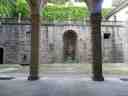 11
11Palazzo e Giardini Moroni
Buy tour to unlock all 18 tracksTo spot Moroni Palace, look for a grand, stone courtyard with a large arched niche in the back wall housing a statue of Neptune, framed by elegant columns and an upper terrace…Read moreShow less
To spot Moroni Palace, look for a grand, stone courtyard with a large arched niche in the back wall housing a statue of Neptune, framed by elegant columns and an upper terrace lined with decorative urns and statues. Now, as you stand here outside Palazzo Moroni, take a deep breath and imagine yourself stepping into a living storybook of Bergamo’s past. The Moroni Palace might seem humble from the street, but it hides a world of secrets, drama, and family twists behind those stately walls. Picture the Moroni family: rising from the town of Albino, where some ancestors were clever engineers and warriors, and later, successful in the business of silkworms and mulberry trees-a detail so important that the mulberry, called murù in the local dialect, even gave the family its name! And let’s be honest, how many noble families can say they owe their title to a silkworm’s lunch? The story here kicks off in true “movie-style.” In the early 1600s, after Francesco Moroni married Lucrezia Roncalli, the family bought land from the Pesenti family and decided it was time for a palace worthy of their growing reputation. Though the outside doesn’t shout for attention-thanks to a rival building that blocked the view for years-the interior is pure Italian drama. As you walk under these arches, imagine frescoes and grand staircases, gilded decorations, mysterious symbols, and portraits gazing at you from every corner. These spaces were painted by Gian Giacomo Barbelli, a masterful artist, who filled the ceilings and walls with stories of noble virtues-and more than a few classical legends. But things weren’t always rosy for the Moroni family! Just across the street once stood Palazzo Marenzi, built apparently out of spite, by neighbors with whom the Moroni had quite a few disagreements. Eventually, the Moroni family demolished it, not only for the view but perhaps for peace of mind-because nobody wants a grumpy neighbor blocking their sunshine! There’s more dramatic flair inside. Walk up the grand staircase, and you’re surrounded by statues and paintings celebrating the family’s nobility and wisdom. You’ll spot the mighty Jupiter hurling lightning bolts at the giants, and dazzling scenes from Amore and Psyche, all hinting at the Moroni’s hopes for social ascent and a reputation to rival the stars. Each room has its own story: some decorated in the 1600s with scenes of peace and plenty, others updated in the 1800s with exotic styles like the Chinese and Turkish salons. Just imagine guests from long ago, whispering and laughing under these painted ceilings, with fresh flowers from the terraced gardens wafting in through open windows. And let’s not forget the palace’s collection: priceless paintings by the likes of Giovan Battista Moroni-a local legend! His works, such as “The Knight in Pink,” have traveled to countless art shows and set a high bar for what it meant to look fashionable in Lombardy. Mixed in among the canvases and sculptures you’ll also find pottery from Meissen, Wedgwood, Sèvres, as well as a huge trove of paper treasures. Some documents date all the way back to the 1300s and reveal tales of love and scandal-like the “first divorce” in Bergamo’s history, where the bride was sent home for lack of a proper dowry. Courtroom drama, 1600s style! Step outside again, and you’ll find yourself in lavish gardens stretching up to Sant’Eufemia’s hill-each terrace lined with flowers, stone putti, and even a little tower for a count to dream in. It’s easy to imagine a Moroni or two enjoying some fresh air, keeping an eye on their beloved mulberry trees and maybe, just maybe, planning another chapter in this amazing family’s story. So, next time someone says “money doesn’t grow on trees,” you can say “Well, in Bergamo, it kind of did-for the Moronis, anyway!” Welcome to a place where art, nature, and a thousand secrets are waiting to be discovered.
Open dedicated page →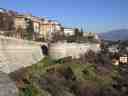 14
14Mura Veneziane
Buy tour to unlock all 18 tracksTo spot the Venetian walls, look to your left for the mighty stone barrier running along the ridge, towering above the green slope and lining the edge of Bergamo Alta with its…Read moreShow less
To spot the Venetian walls, look to your left for the mighty stone barrier running along the ridge, towering above the green slope and lining the edge of Bergamo Alta with its centuries-old strength. Welcome to the grand finale of our tour! Here before you stands the Venetian walls of Bergamo, a colossal fortress of stone that stretches for more than six kilometers around the old city-a sleeping giant basking in the Lombard sun. Can you imagine it’s the 1500s? The city hums with tension as rumors swirl: Spanish armies lurking, French soldiers plotting, and Venetian officials scurrying around the narrow streets, deciding how to keep their precious Bergamo safe. Suddenly, with a thunderous clatter, hundreds of workers arrive, ready to transform the city into an impenetrable fortress. These walls sprang up in the late 1500s, built not just as a show of power but as a last, proud gasp of medieval fortification before the age of cannons and gunpowder changed everything. Picture it: fourteen mighty bastions, two gunpowder magazines, and more than a hundred gun slots, all bristling with the hope-and fear-that Bergamo could withstand anything. But here’s the twist: the new weapon of the age, the bombarda cannon, could fire over walls, making these defenses a bit like showing up to a laser tag game in a suit of armor! Yet, for all their military splendor, not a single soldier ever had to defend these stones in battle. The walls’ reputation was fierce enough to keep invaders away without a single shot fired. Now take a look around: can you see the city gates? Four grand portals open through the walls-Sant’Agostino, San Giacomo (the prettiest and with a view to match!), Sant’Alessandro, and San Lorenzo, which generations later would be renamed Porta Garibaldi in honor of the famous Italian hero’s dramatic entrance here. Beneath your feet and within these stones lies a warren of tunnels, forgotten passages, and military corridors-some so mysterious that their purpose is still lost to time. Legends even whisper about hidden doors and escape routes, just in case things got really hairy inside. But, the story of defense didn’t start here-oh no! Bergamo’s hills have seen everything from ancient Roman camps to ducal castles, from Lombard dukes like Wallari to the powerful Visconti family, who wrestled control from Venice, making the whole region a battlefield chessboard. In those days, the city’s heartbeat echoed from the imposing Rocca fortress (still visible if you crane your neck) and from the bustling citadel, where armies gathered and where, if you had an itchy trigger finger, you could practice at the Bombardiers’ School. Alas, what’s a fortress without a little drama? During construction, so many churches and homes had to be sacrificed-over 250 civilian buildings and seven churches, including the ancient Cathedral of Saint Alexander. The poor count Sforza Pallavicino, overseeing it all, racked up enough excommunications to open his own church-if only he could find a bishop who would talk to him! He eventually managed to smooth things over, probably by slipping a few extra coins into the collection plate. When you run your hands along these ancient stones, you’re touching more than just rock. You’re tracing the wounds and dreams of a city that’s weathered empires, revolutions, and centuries of stubborn peace. With the fall of Venetian power, the walls slipped quietly into semi-retirement-no more thunder of cannons, just the gentle chatter of Bergamaschi strolling, the laughter of children echoing off the stones, and the occasional sound of wheels or footsteps on the cobblestones. These walls have transformed into the city’s pride and joy, finally earning a spot as a UNESCO World Heritage Site in 2017. On weekends, they become an island for people on foot, lovers arm in arm, and, during the quirky Soap Box Rally, even makeshift racecar drivers! And thanks to local explorers, you can actually walk inside the hidden heart of the walls themselves. So take a moment-breathe in the mountain air, imagine the clang of ancient weapons, the hush of great secrets, and the long shadows cast by hope and history. You’re standing on the last line of defense, now the first stop for breathtaking views and unforgettable stories. And don’t worry-you don’t need a sword to get in! Intrigued by the the origins of the fortifications of the hills of bergamo, the fortress, the citadel and the muraine or the the project of a new city wall? Explore further by joining me in the chat section below.
Open dedicated page →
Frequently asked questions
How do I start the tour?
After purchase, download the AudaTours app and enter your redemption code. The tour will be ready to start immediately - just tap play and follow the GPS-guided route.
Do I need internet during the tour?
No! Download the tour before you start and enjoy it fully offline. Only the chat feature requires internet. We recommend downloading on WiFi to save mobile data.
Is this a guided group tour?
No - this is a self-guided audio tour. You explore independently at your own pace, with audio narration playing through your phone. No tour guide, no group, no schedule.
How long does the tour take?
Most tours take 60–90 minutes to complete, but you control the pace entirely. Pause, skip stops, or take breaks whenever you want.
What if I can't finish the tour today?
No problem! Tours have lifetime access. Pause and resume whenever you like - tomorrow, next week, or next year. Your progress is saved.
What languages are available?
All tours are available in 50+ languages. Select your preferred language when redeeming your code. Note: language cannot be changed after tour generation.
Where do I access the tour after purchase?
Download the free AudaTours app from the App Store or Google Play. Enter your redemption code (sent via email) and the tour will appear in your library, ready to download and start.
If you don't enjoy the tour, we'll refund your purchase. Contact us at [email protected]
Checkout securely with 


