
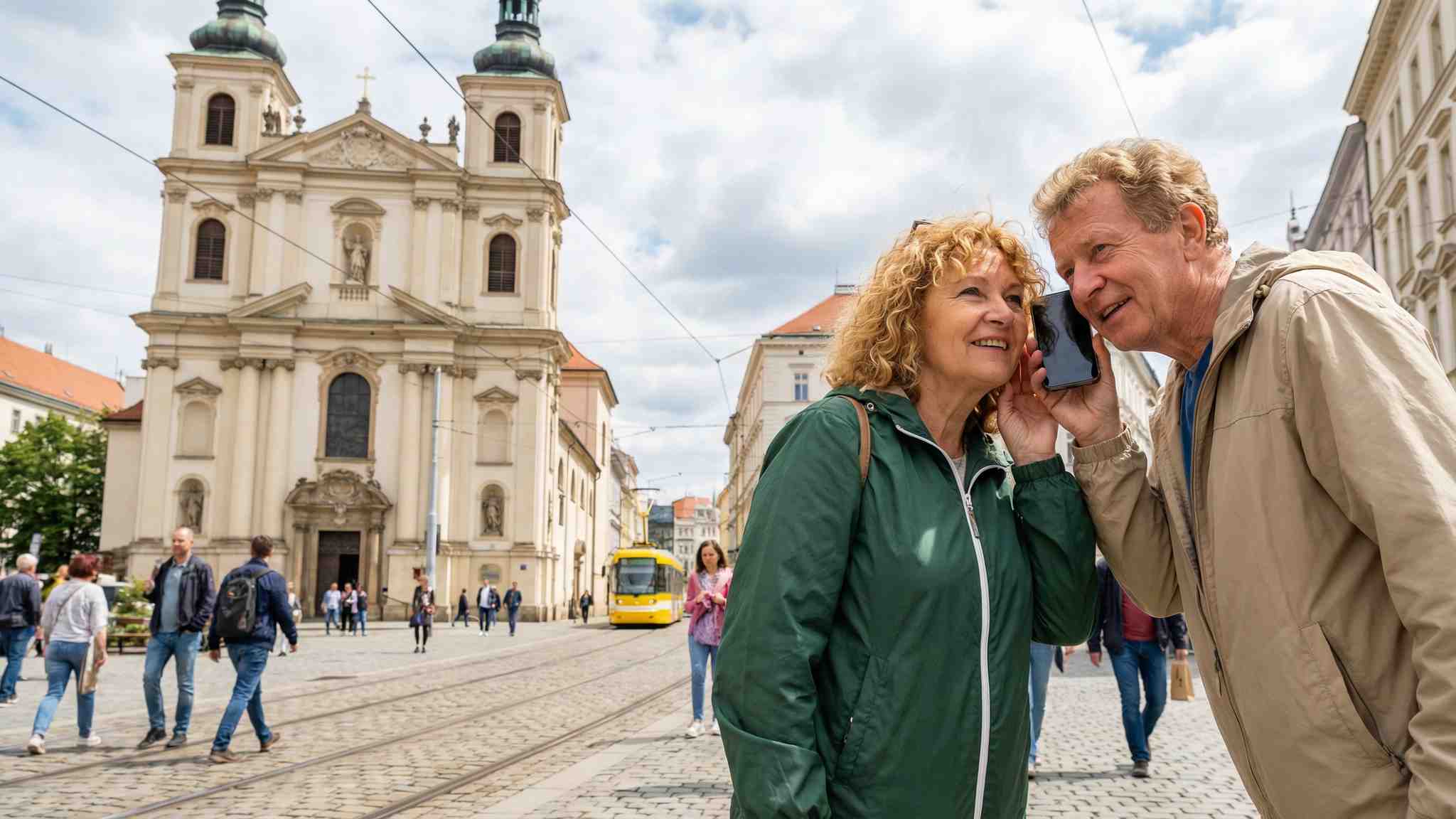
Brno Audio Tour: Echoes of Theaters, Crypts, and City Legends
Beneath Brno’s vibrant pulse, gothic spires and revolutionary secrets collide in somber silence and riotous laughter. Shadows linger in centuries-old chapels as wild spirits haunt the city’s avant-garde theaters. Set out alone with this self-guided audio tour to peel back Brno’s layers. Walk alleys threaded with legends and find the true stories even locals overlook. Why did a midnight rebellion echo behind the Church of St. James’s carved doors? What truths about betrayal whisper from St. Mary Magdalene’s hushed sanctuary? Which infamous actor vanished during Hadivadlo’s most daring opening night? Every step cracks open new mysteries, from holy intrigue to scandalous artistic revolts. Drift beneath vaults where power was wielded and stumble onto the city’s oddest urban fables. Old stones and neon lights reveal Brno’s stormy soul to those who look twice. Start your journey where shadows and stories meet. Brno is waiting.
Tour preview
About this tour
- scheduleDuration 90–110 minsGo at your own pace
- straighten3.1 km walking routeFollow the guided path
- location_on
- wifi_offWorks offlineDownload once, use anywhere
- all_inclusiveLifetime accessReplay anytime, forever
- location_onStarts at Brno Main Railway Station
Stops on this tour
lock_open 3 free previews · 12 unlock with purchase
To spot Brno Main Railway Station, look for a grand white building with a clock tower and two winged statues perched on either side of its ornate roof, right at the bustling…Read moreShow less
To spot Brno Main Railway Station, look for a grand white building with a clock tower and two winged statues perched on either side of its ornate roof, right at the bustling southern edge of the city center, just across from busy tram stops and modern glass storefronts. So here we are at Brno's busiest travel hub-Brno Main Railway Station, known to locals as "Hlavas" (and among trainspotters as "Rola"). If you feel a faint vibration under your feet, don’t worry, it’s just the thousands of people hurrying off to see grandmas, business partners, or maybe the local hockey team. This station has seen more comings and goings than a comedy circus! Imagine it's the late 1830s. Trains are a brand-new idea, steam engines belching dramatic clouds, travelers filled with nervous excitement-will the train even make it to Vienna, or will they wind up in a potato field by accident? The very first train sputtered into Brno in November 1838, a trial run from the nearby village of Rajhrad, making this place one of the oldest stations in all the Czech Republic. Regular service began in July the next year, and ever since, this spot has been a meeting point for journeys in seven different directions! Originally, the station’s building was set at a funny angle-it actually stood at the end of dead-end tracks before they realized turning trains around was less fun than it sounds. In 1841, an enormous new building was tacked on, stretching alongside the tracks, and if you look at the southeast wing today, the bones of that old station are still hidden inside! Over time, this station did a bit of shape-shifting. It started as two separate ends-the private company’s line and the grand new “Northern State Railway.” They even had two separate station buildings, with a connecting lobby in the middle-talk about a train rivalry! It wasn’t until 1898 that the mighty Brno engineers merged it all into a thoroughfare station, allowing trains to glide straight through, the way they do now. From 1902 to 1905, the main hall was transformed by the architect Josef Oehm. Towers sprouted on either side, and the building got its current elegant, almost palatial look. Back then, arriving at Brno’s railway station felt a bit like you’d ended up in Vienna: the surrounding avenue was styled after the Ringstraße, with posh buildings to match. Of course, the beating heart beneath all of this is the business of trains-two islands of platforms and a maze of tracks curved into what can only be described as a squished backwards S. Fancy a sprint? The total walking distance down those platforms is over 300 meters. There are also podchod, or underpasses, tiled in smooth travertine and granite, to keep the rain off travelers and the drama to a minimum. Trams arrived here in 1869, connecting the station to everywhere in Brno. The tradition lives on. Right in front of you is the main public transport terminal, packed with clanging trams whisking people off to work, classes, or maybe just for a bit of shopping and a coffee. But there’s always been tension. For a hundred years, people have argued passionately about moving the station farther south. The current battle plan is to build a brand new main station in the Trnitá district, about a kilometer from here, set to open by 2035. It’s become almost a local sport, with referenda, petitions, and heated debates. Some want to keep the station right here in the heart of Brno, where it connects everything. Others say the extra space will let their train obsessions run wild-or maybe just mean fewer delays. So as you stand before this grand, slightly dramatic building, think about the millions of journeys, little dramas, forgotten suitcases, frantic sprints for the platform, and all the fierce debates still shaping what Brno’s railway future will look like. And hey, enjoy the show-there’s always another act about to pull in.
Open dedicated page →To spot the Church of St. Joseph, just glance up and look for the tall, pale, almost fortress-like Baroque facade with a sharply pointed tower crowned by an onion-shaped dome,…Read moreShow less
To spot the Church of St. Joseph, just glance up and look for the tall, pale, almost fortress-like Baroque facade with a sharply pointed tower crowned by an onion-shaped dome, sitting boldly on Josefská street-it's the tallest, brightest building on the block, and you can't miss its simple, commanding white face. Now, as you stand before it, picture this street not with modern shopfronts, but echoing with the distant clang of hammers and the silent prayers of nuns. Let’s set the stage: it’s the mid-1600s, and Brno has just survived a dramatic siege. The Swedish army packed up and left in 1645-talk about house guests who overstay their welcome-and the city is licking its wounds. Just after this tense moment, a group of Franciscan nuns, determined and undeterred, decide to rebuild their home and church outside Brno’s historic walls. “How hard can it be?” they probably asked. Spoiler alert: their first effort was so strategically inconvenient, they were forced to tear it down! But help was at hand from the powerful Dietrichstein family, whose two bold coats of arms you’ll see right up there above the main entry-one with a bishop’s hat, the other with a prestigious Order of the Golden Fleece. These marks are the fingerprints of power and faith in old Brno, and the family helped the nuns secure fresh land by the Měnínská Gate. As the old burgher houses slowly gave way to the new, the stones of the Church of St. Joseph began to rise in 1651 under the care of local builder Paul Weinberger. It took over 20 years and several phases before the church was finally consecrated in 1673. Imagine the happy faces-some likely relieved, and some probably exhausted. The church stood through times of reform, wartime chaos, and even the closure of the convent in 1782 when the Ursulines took over. These resourceful women gave the interior a whole new look in the early 1800s, blending baroque and classicist touches with help from Brno’s master sculptor Ondřej Schweigl. If you could look inside, you’d see beautifully matched decorations, golden details, and paintings that seem to glow in the half-light. But don’t let this calm white facade fool you; it’s seen centuries of drama. In the 1990s, during modern construction below the street, cracks appeared, walls shivered, and soon the church had to shut its doors-just when things were going so well! Restoration teams swooped in, shoring up walls, fixing the roof, and (probably) muttering, “Next time, let’s dig tunnels somewhere else.” Fast forward to 2009-and an exciting new chapter. The Ursulines handed the church to the Greek Catholic community, and right away, the sound of hammers and hope filled the air again. From a fresh coat of paint outside (restoring its early crisp white), to the careful restoration of its unusual onion dome and original art, the church came back to life. Just in time, too-the first Greek Catholic service was held here in October 2014, and the building now hosts not just prayers, but concerts full of soaring voices and mellow instruments. Look up at those hollowed-out niches and imagine them once holding regal saints; if you squint, you can almost picture the statues of St. Clare and St. Agnes by Jaroslav Vaněk watching over passersby in the early 20th century. The obelisks perched up on the triangular gable are there to make sure the church is never caught without a little flair. Today, the Church of St. Joseph isn’t just a monument; it’s a survivor with stories in its stones, from siege panic and starched habits to roof repairs and music festivals. And like any building that’s spent centuries adapting, it’s got a terrific sense of humor-after all, how many churches can say they were rebuilt, closed, shored up, and then thrown open again, all without losing a single pilaster?
Open dedicated page →You’re looking for a tall, yellow church with a triangular roof and a slender tower-just look for the building with statues flanking its front entrance right at the corner of…Read moreShow less
You’re looking for a tall, yellow church with a triangular roof and a slender tower-just look for the building with statues flanking its front entrance right at the corner of Masarykova and Františkánská streets! Let’s paint a lively picture here: It’s Brno in the middle of the 17th century. Imagine the echoes of footsteps from the crowds shuffling through a tightly packed Jewish quarter, the air buzzing with merchants’ calls and children’s laughter. On this very spot stood a synagogue, the heart of a vibrant Jewish community that, by order of King Ladislaus the Posthumous in 1454, was forced to leave the city. Suddenly, a silence fell where song and conversation once filled the streets. But as history tends to do, the story took another turn. The Franciscan monks-thanks in part to a fiery Italian preacher named Jan Kapistrán-transformed the synagogue into a humble chapel dedicated to Mary Magdalene. Then, after Brno’s old Franciscan monastery was torn down in 1643 because city defenders feared the Swedes, the monks took over the chapel here and set about rebuilding it. Imagine the sound of stone being stacked, hammers striking, plans unfurling as Italian builder Ondřej Erna, fresh from Milan, laid its foundation in 1651. By 1654, the church was ready-a new chapter, standing atop centuries of layered stories. Drama followed drama. The church was decorated through generous donations from local nobility. Yet, there were neighborly squabbles-a grand palace next door started to cast a literal shadow, sparking an argument so big that it finally took cash compensation and an extra floor on the monastery to put everyone at peace. You can almost imagine the friars and aristocrats crossing arms, bargaining like today’s reality show contestants. And that’s not the end of the surprises! In 1852, a devastating fire broke out in an inn by the gate. Flames leapt and smoke billowed-imagine the crackle as the church’s tower and five nearby houses got battered by fire. The tower you see today, with its sharp lines and neo-Romanesque touches, was built when they restored the church after the fire. Later, during the upheavals of the twentieth century, the church watched armies come and go, monks and priests shifting in and out as governments changed hands. At one point, even communists gave the religious folk the boot! Of course, no great landmark is complete without some mechanical mishaps. Not long ago in 2019, an underground water leak caused cracks to streak through the church, the walls literally groaning as they were shored up. For a while, the doors closed-hardly anyone inside except for construction crews patching the wounds, and the great altar painting was taken down, hanging limply beneath the balcony. Even churches need a spa day from time to time. As you look up at those statues flanking the door-St. Nicholas on the left, St. Martin on the right-don’t miss the little details, from the patchwork of simple side windows to the imposing yet welcoming entryway, crowned by a stone plaque with ancient Latin. Peek around the corner, and you’ll spot a limestone statue of St. Florian with two adorable angels: one angel pours water on a burning house, the other clutches a mill wheel. Inside is a world of artistic treasures: carved altars, twisted cherubs, swirling angels, grand baroque pulpit, and a main altar painting by Josef Stern, who was inspired by Rubens. If you think church renovations are a twenty-first-century headache, just remember-this place has seen everything from fire to lawsuits to water disasters. No wonder the pews look so seasoned. So as you stand here, you’re not just next to a church-you’re at a crossroads of cultures, faiths, wrangling neighbors, and dazzling artists. Quite a history lesson, right? And it all began on a unique city corner, where each block whispers a story and sometimes even the statues look like they’re eavesdropping.
Open dedicated page →
Show 12 more stopsShow fewer stopsexpand_moreexpand_less
You’ll spot the theater just ahead-a striking salmon-red Baroque building with playful painted rainbows above the windows-look for the bright facade and balcony right on the Zelný…Read moreShow less
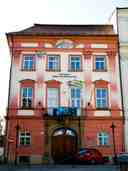
You’ll spot the theater just ahead-a striking salmon-red Baroque building with playful painted rainbows above the windows-look for the bright facade and balcony right on the Zelný trh square. Welcome to the famous “Goose on a String” Theater, where Czech theater shook off its feathers and really started to squawk. Now, picture the late 1960s-Brno is alive with the sound of ideas and laughter, and a bunch of rebellious, imaginative students and artists from the local JAMU academy gather around playwright Bořivoj Srba. Their dream? To create a theater as surprising as a goose climbing a tightrope. They borrowed their name from a mischievous local writer’s book, and set out to experiment with everything-text, stage, music, even the way audience and actors could interact. Back then, its earliest shows took place in the grand but echoing halls of the Brno House of Arts, where their first public performances in 1968 seemed to buzz in the air and every corner echoed with hope, tension, and the occasional burst of laughter. Very soon, the authorities got nervous-the word “husa” (goose) in the title was seen as a jab at the new communist leader, Husák. In a flash of midnight mischief, someone even changed theater posters to “Husák on a String.” Bam! Censorship swooped in, and for years, the word “goose” stomped offstage. And yet, the group was unstoppable. Through the 70s and 80s, they were at the heart of Brno’s most daring artistic moments-staging pieces with wild shapes and ambitious ideas, drawing artists like Bolek Polívka and Gabriela Wilhelmová, organizing festivals, and sneaking clever political and social themes past censors. Here, the stage wasn’t just for plays-it became a battlefield for free thought. Playwrights, musicians, painters, and even philosophers gathered in battered chairs and on makeshift sets, inventing new theater every night. As you look up now, imagine that by the late ‘80s, theater here was mixing carnivals, secret festivals, and sometimes, open protest against the regime. When big changes swept the country in 1989, the “Goose” led brave strikes, and right after the Velvet Revolution, it reclaimed its full name with triumph. The wild dreams of the 60s eventually found a physical home on this Zelný trh spot. The current building is part historic baroque palace, part inventive modern theater, complete with a hidden “cellar stage” and a courtyard open for summer performances. Inside, stages are endlessly changeable-no fixed footlights, audience and actors sometimes all mingling together. And its spirit? Still just as cheeky and experimental. Legendary productions have included anything from sprawling Shakespeare adaptations to wacky musical parodies, silent clowning, boundary-pushing puppet shows, and even marathon eleven-hour stage events. Today’s directors and actors keep finding new ways to surprise and occasionally baffle their audience. Theater here isn’t supposed to be comfortable-it’s a bit like a goose on a string: surprising, awkward, and somehow, beautifully brave. And hey, if you sniff the air right, you might catch that scent of adventure that has always shaped this place. Not to mention, on festival days, you can practically feel the building quiver with possibilities. So, if you ever see a rainbow above the windows or hear the echo of laughter, remember: you’re standing at the frontline of Brno’s wild, artistic heart.
Open dedicated page →Look for a tall white and beige building with a dramatic clocktower rising above, topped by a cluster of green spires and surrounded by an open courtyard, right along Radnická…Read moreShow less
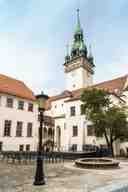
Look for a tall white and beige building with a dramatic clocktower rising above, topped by a cluster of green spires and surrounded by an open courtyard, right along Radnická street between Freedom Square and the Cabbage Market. Welcome to the Old Town Hall of Brno, the oldest secular building in the city-so old, in fact, that if its walls could talk, they’d probably charge you for hearing so many amazing stories. Take a breath and picture yourself in the swirling energy of the medieval city. It's the 1200s, the clatter of hooves and the chatter of merchants echo between marketplace stalls. Right here, the city’s leaders built their seat of power-a sturdy stone one-story house, which has watched Brno grow for nearly 800 years. In those ancient days, the market squares on either side thrived, and this building stood at their crossroads, ready to house the town’s precious legal books and Moravian records-basically, the medieval version of cloud storage, only with more chainmail. The city council met upstairs, while the lower halls buzzed with deals, decrees, and maybe the occasional heated argument about turnips. Thieves and troublemakers caught in Brno soon learned that the Old Town Hall came with a chilling feature: a brick jail wing where secrets (and unlucky prisoners) were kept under lock and key. Over the centuries, new buildings were grafted on, the main house stretched taller, and the dominant tower rose skyward, crowned with five elegant spires-except the one in the middle, which is, as you’ll see, a little... twisted. Ah, stories swirl around that peculiar feature. Legend says the original stonemason, Antonín Pilgram, built the main portal in a fit of creative rebellion-or maybe revenge. He wanted a fair wage, but the town council stiffed him, so he made the middle spire crooked. Was it creative genius or medieval payment protest art? You decide. Some say Pilgram called it a reminder that justice in Brno could sometimes be as bent as the spire above. Now, picture the laughter and grumbling in old taverns every time someone walked under that wonky spire-. But the wonders don’t stop there. Underneath the soaring tower arch, you’ll spot two more of Brno’s most bizarre treasures: a wooden wheel and, hanging not far away, the so-called Brno dragon. The wheel? There’s a tale behind it sharper than a blacksmith’s hammer: In the 1600s, a craftsman from Lednice bet his friends that he could chop down a tree, build a wheel, then roll it all the way-nearly 50 kilometers!-from Lednice to Brno, before sunset. He made it, and the wheel’s been here ever since, a monument to bravado and possibly, some very sore arms. Next, the dragon. Spoiler alert: it’s actually a crocodile-but don’t tell the folks who made up the legend. They claimed a terrible beast once tormented the city, only to be vanquished by clever townsfolk who tricked it into eating a bag of quicklime. After a long, thirsty gulp from the Svratka River, the “dragon” was history-except, of course, for the mummified crocodile that’s been hanging around the Old Town Hall, spooking visitors and making children point for centuries. If you fancy a climb, the tower is open to bold adventurers. Up 173 steps-don’t worry, there’s no dragon at the top-awaits a stunning view of Brno’s rooftops, church towers, and bustling streets. On your way, you’ll see the old clock mechanism and learn about the building’s life, from council hub to cultural center. Over the centuries, this place hosted solemn city meetings, legendary betrayals, and even a few city scandals. There’s the story of the “walled-up councilor”: A would-be traitor’s head, forever gazing out from the stone on nearby Mečová Street, reminder to other councilors to keep their oaths-and their secrets. So, as you stand here, surrounded by whispers of centuries, feel the cool draft swirling through the tower’s passage. Imagine all the footsteps that have echoed across this courtyard-from rulers, prisoners, and prankster stonemasons to visitors just like you. And listen closely, you might just hear a faint sound from inside--reminding you that Brno’s past is always just a step away. Ready to continue onward?
Open dedicated page →Look for a grand, pale yellow Baroque building with a high red-tiled roof and a small black clock tower right in the center-just ahead of you, standing proudly over Dominikánské…Read moreShow less
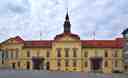
Look for a grand, pale yellow Baroque building with a high red-tiled roof and a small black clock tower right in the center-just ahead of you, standing proudly over Dominikánské náměstí. Welcome to the New Town Hall! Standing here, you’re surrounded by more than just impressive architecture-you’re surrounded by centuries of secrets, debates, and the echoes of political power. Imagine, if you will, the 1200s, when this spot was home to murmuring monks of the Dominican monastery building their quiet refuge beside the ancient Church of St. Michael. Their first rooms were not even meant for the business of government, but soon the rhythm of their prayers was interrupted by lawmen and nobles holding noisy provincial courts and assemblies in what was probably a chapter hall-somewhere between a refectory and a medieval court drama. By the 16th century, the cramped quarters just didn’t cut it anymore-imagine everyone squeezed in, elbowing for space. In 1578, the mighty Moravian estates said, “Enough! We need something grander!” Enter Italian brothers Pietro and Antonio Gabri, the Renaissance dream team. Between 1582 and 1585, they kicked off construction on the first real assembly rooms-the Sněmovní Hall, a Knight’s Hall (for moments of serious chivalry, or maybe just epic moustaches), and mysterious chambers for witness interrogations and clergy meetings. You could only get to these halls using an outdoor staircase still visible today, so picture important lords sweeping up, cloaks fluttering, and probably cursing the rain. Look closely-can you spot it? Soon, Brno was buzzing with all sorts of official business. In the 17th century, the building got even busier after King Ferdinand II moved the region’s administration here-Brno was suddenly the beating heart of Moravia. But any grand plans to expand the building slammed to a halt when, guess what, the city was besieged! No extensions when there are enemy soldiers at the gates. When peace finally returned, they picked up the tools again-in 1666, construction of a brand-new Tribunal House began, linking the complex into what you see in front of you. The busy hums of government continued. Architects came and went, reshaping the halls with Baroque flair-by the early 1700s, Mořic Grimm gave us the main yellow-faced frontage you see today, and new interior wings created not one but two courtyards where secrets could echo and, perhaps, wedding bells would one day ring. But in 1784, the Moravian nobility lost their seat-soldiers moved in, turning these noble chambers into echoing, dusty storerooms. The rich frescoes and ornamentation suffered, but the story wasn’t over yet! Brno’s city council bought the complex in 1874, slowly returning life to its faded rooms. In the early 1900s, the courtyards gained beautiful portals rescued from demolished city homes-check for the Renaissance portal at the smaller courtyard and the Baroque one on Husova Street, each one a historical orphan adopted by this building! Finally, in 1935, after centuries of bustle, sieges, and soldiers, the halls officially became Brno’s New Town Hall. Here, the city’s mayor still has an office, and the graceful Rytířský sál-decorated with Antonín Procházka’s lively country scene-hosts both council debates and joyful weddings. So as you stand here, take a breath and picture hundreds of years of chatter, decisions, and drama coming together in this one timeless spot. Today, this building welcomes big dignitaries, worried citizens, and happy couples-sometimes all in the same afternoon! Brno may one day get a shiny new city hall, but this place will always hold a special seat for history, love, and a little local mischief.
Open dedicated page →Freedom Square stretches wide before you-a huge, open plaza surrounded by a dramatic mix of pastel historic townhouses, modern glass buildings, and some rather curious…Read moreShow less
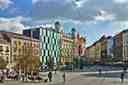
Freedom Square stretches wide before you-a huge, open plaza surrounded by a dramatic mix of pastel historic townhouses, modern glass buildings, and some rather curious statues-just follow the tramlines and look for the lively crowds and sunlight dancing on cobblestones. Now, let me whisk you back to the 13th century. Imagine this place not filled with shops and cafés, but as a bustling medieval market where three major trade routes collided. This quirky crossroads gave the square its unique triangle shape, perfect for people watching... or for getting totally lost, if you’re not careful! Traders would unload their carts while wealthy townsfolk and nobles built their fancy houses all around. The square quickly became the heart of Brno. You could say if Brno were a pizza, this square would be the gooey, cheesy center. Throughout the centuries, Freedom Square, which used to be called the Lower Market-yes, quite the downgrade-saw name changes fit for a chameleon! It was once known as the Great Square, then Emperor Franz Joseph Square, switched to Freedom Square, had a brief (and not-so-charming) spell as Adolf Hitler Square, before bouncing back to its much friendlier name again in 1945. Good thing, too-“Meet me at Adolf Hitler Square” wouldn’t exactly attract the right crowd. Back in 1679, a towering plague column shot up in the middle of the square, a bit like Brno’s very own giant “get well soon” card to the city. That Marian column, which you can still find looking skyward here today, quickly became the area’s centerpiece, a symbol of gratitude for surviving one of the worst pandemics Europe had to offer. There was even a church here once, dedicated to St. Nicholas. Sadly, it was torn down in 1869, and its last bits disappeared after World War II bombings. Folks in Brno must have wondered if squares had more lives than a cat! Trams began zipping through the square in 1901-imagine the clang, rattle, and delighted screeches of children seeing the future arrive on rails! While some routes have vanished, the main north-south tram that slices through the square is still going strong. Look closely and you’ll notice those tram tracks carving their way across the cobbles like ribbons through a birthday cake. The modern era brought some big changes. At the turn of the 20th century, entire buildings were knocked down and rebuilt, especially in the grand neo-Renaissance style on the west side. And in 1929 a massive, functionalist bank building appeared, designed by Bohuslav Fuchs. Sure, a bank isn’t the most exciting thing-but hey, they say the real treasure is the friends you make along the way. (Or maybe the pastries from the nearby cafés.) Most recently, this square had a big makeover in 2006. Workers relaid every single stone-ouch, talk about a tough assignment-and installed a beautiful bronze fountain, decorated with verses by beloved Czech poet Jan Skácel. These poems, inspired by water and its many moods, circle the fountain’s rim, inviting you to pause and ponder while the kids dodge the sprays. Getting these verses cast in bronze wasn’t easy; I heard the city nearly made a poet’s widow both sad and rich! And let’s not forget the “Brno Astronomical Clock”-a massive object that looks suspiciously like a giant bullet, made of African granite. It commemorates the 1645 Swedish siege, when the clever townsfolk of Brno fooled their attackers by ringing church bells at 11:00 instead of noon. The Swedes, thinking time was up, packed up and left. Who knew a clock could save a city? History can be as strange as fiction. Today, Freedom Square is the city’s social stage: concerts, markets, Christmas fairs-always something going on. Seven streets lead away from it like spokes on a wheel, pulling you toward Brno’s next adventure. So take a moment, soak up the atmosphere, and-if you have a coin-maybe try your luck in the fountain. Who knows, maybe the square still has a touch of medieval magic left.
Open dedicated page →You’ll spot HaDivadlo by its glowing sign above the glass doors in the Alfa Passage-just look ahead for a lively crowd gathered right outside, as if waiting for an important…Read moreShow less
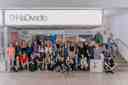
You’ll spot HaDivadlo by its glowing sign above the glass doors in the Alfa Passage-just look ahead for a lively crowd gathered right outside, as if waiting for an important announcement or maybe a curtain to rise. Now, let’s dive into the whirlwind tale of HaDivadlo-a theater that’s never stopped changing, surviving, and kicking up a dramatic fuss! Picture the 1970s in Prostějov: the scent of dust mixing with old velvet as a small group of dreamers, led by Svatopluk Vála, convinced the city to let them start an experimental troupe. It began with just four official staff: a director, a dramaturg, a technician, and a secretary. Their “office” was more likely filled with coffee cups and half-finished scripts than actual paperwork. The first cast included poets, aspiring musicians, amateur theatricals, and a parade of students ready to turn every rehearsal into a creative adventure-sometimes to the despair of the local authorities, who never quite knew what to expect next. By the late 1970s, the sound of hurried footsteps echoed through the halls as HaDivadlo moved to the National House in Prostějov. With this new, smaller venue, their productions became uniquely intimate. It wasn't long before a new artistic trio emerged-Vála, Kovalčuk, and Goldflam-shaping a style as quirky as it was rebellious. You can almost imagine the faint as they drew an eclectic audience craving something different from the state-run theaters. Their shows started drawing attention not just locally, but all across Czechoslovakia-though always with a whiff of trouble, as authorities anxiously tried to keep these avant-garde artists in line. By the 1980s, the company was on the move again, landing a gig in Brno and making a name for themselves at the Klub školství a vědy Bedřicha Václavka, and soon after, at the legendary Kabinet múz. The 1980s were dramatic-literally and politically. The state tried to keep a close eye on such “unruly” actors, but HaDivadlo only grew bolder, with smuggled scripts and secret late-night debates. When the Velvet Revolution came, HaDivadlo’s halls were alive with shouts, flyers flying, and sometimes a few nervous laughs as they joined the protests-these were actors, after all, and rallies were just a different kind of performance. They even worked with Václav Havel on the Rozrazil project, until the authorities pulled the plug, probably fearing the plot would get too thick. After the revolution, the theater went through a massive facelift, both in location and in spirit. They moved to the space you see today in the Alfa Passage, which used to be a cinema-so if you sense an urge to dramatically announce the start of a blockbuster, you’re not the first! This big move brought new ideas, new faces, and even more drama-a happy mix of chaos and brilliance. Through the ‘90s, the theater forged new creative bonds, put on innovative new plays, and filled the city with theatrical energy, usually accompanied by debates over the best staging or most unusual costume choices. In recent years, directors like Ivan Buraj and Anna Stránská have made sure HaDivadlo keeps taking risks, launching projects exploring everything from the end of illusions to the weirdest quirks of modern society. Today, the theater is a home for bold, opinionated, and sometimes very funny artists who still believe the stage can change the world-one thoughtful play or unexpected laugh at a time. And there you are, right outside those doors, in a spot that’s witnessed almost half a century of plans, protests, parties, and curtain calls. So if the urge strikes to improvise your own monologue, I say-go for it. After all, HaDivadlo is living proof that you never really know where a small group of passionate misfits may lead a city. On to the next stop, star of the Brno stage!
Open dedicated page →Right in front of you, you’ll spot a modern glass façade set into an old stone building-look for the big, clear windows reflecting the surrounding architecture and a sign for…Read moreShow less
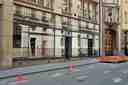
Right in front of you, you’ll spot a modern glass façade set into an old stone building-look for the big, clear windows reflecting the surrounding architecture and a sign for Kabinet Múz above the entrance. Now, let me take you into the world of the Feste Theater-no need for a ticket, just your imagination. Picture the scene: it’s 2006, and in Brno, a fresh graduate from the theatre academy, Jiří Honzírek, is cooking up something special. Instead of heading off to join a big, stuffy institution, he decides to create his very own theatre project. At the time, it feels less like starting a company and more like causing a small, creative revolution. Honzírek’s first steps are humble, but soon, this little project bursts out of its shell and evolves into a true professional theatre, with Honzírek himself becoming its constant captain, always steering towards the bold and unexpected. Let’s have a pause for a quick fact: the name ‘Feste’ isn’t a random pick from a hat, but comes straight from Shakespeare’s own “Twelfth Night.” Feste is the fool-always poking at the powerful, joking, but also holding up a mirror to society’s bigwigs. And let’s be honest, every city needs a clever jester now and then, especially in the theatre. In its early days, Feste Theater had no permanent home. It roamed Brno, performing wherever it could find a corner and a curious audience. In 2012, it settled into the club Kabinet Múz-which, if you’re checking your map, is literally right here by your feet. But, in 2017, the theatre packed up its props and costumes again and moved to a sleek, industrial space called Industra, far from the velvet curtains of traditional playhouses. Quite the upgrade-think less chandeliers, more concrete and raw creative energy. But what makes Feste Theater really stand out? It’s all about diving headfirst into the big, messy questions of the day. The plays staged here take on everything from politics to religion, violence, xenophobia, gender, and power-occasionally serving it all with a witty wink or even a daring joke. Their performances might be documentary-style, brimming with movement, traditional drama, improvisations, even wild crossovers that leave the room buzzing with questions. Feste’s actors and directors come from all walks-some old pros, others wide-eyed students just out of art school, and plenty in between. And if you think Feste likes to keep things simple-oh no, not at all! Imagine performances where the station concourse of Brno’s main train station becomes the stage, where actors invite the audience to swap roles and strangers getting swept into the story. Think of plays that turn historic political backstaging into drama, or heartfelt comedic flashes about parenthood or the nerve-wracking fear on a child's first day at nursery. This is theatre that never sits still. Then there’s the SPECIFIC festival-think of it as Feste’s world tour without ever leaving Brno. Every year, the festival hones in on writers from a different country: from Belarusian and Yugoslavian voices to African, Ukrainian, Norwegian, Finnish, and Spanish playwrights, all getting their Czech premiere. One year, they performed in a café, the next in a textile factory, or scattered across six venues, their stories stirring up conversations about everything from war and migration to solidarity and tragedy. Feste’s team handpicks these stories, sometimes tackling the toughest themes, always aiming to set the stage for change. While the company has hosted some familiar faces from other Brno theaters, the one common trait is a fearless urge to stand up and challenge the status quo-sometimes making the audience actors themselves, sometimes offering a shoulder to cry on, and sometimes, well, just making everyone roar with laughter at the world’s absurdities. So as you stand outside, imagine the energy simmering behind those glass walls-thought-provoking debates, experimental spectacles, and always that dash of Feste’s oppositional spirit. They’re not just putting on plays-they’re inviting Brno’s citizens to face up to the world together, one scene at a time. And who knows? You might just leave with more questions than answers (and maybe, if you’re lucky, a good punchline to share at your next dinner party).
Open dedicated page →In front of you is a grand cream-colored building with ornate columns, a statue-crowned gable, and elegant decorations - just look for the tallest, most theatrical palace on the…Read moreShow less
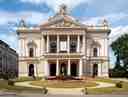
In front of you is a grand cream-colored building with ornate columns, a statue-crowned gable, and elegant decorations - just look for the tallest, most theatrical palace on the square and you’ve found the National Theater Brno! So, you’re standing where the stars once peeked nervously from behind velvet curtains and where Brno’s heart has thumped to the rhythm of opera, drama, and ballet for generations. This majestic institution began its journey back in 1884, inspired by Prague’s National Theater. But wait, Brno wasn’t exactly Czech-speaking paradise then! In the early 1880s, Brno was largely German, so the Czech community had to work hard (with a bit of stubbornness, you know, the best kind!) to build a home for Czech culture. Imagine September 1881, when a group called “The Cooperative for the Czech National Theater in Brno” finally snatched up the right to put on plays. Their new stage? Not exactly glamorous - just the huge hall of Besední dům. The spot wasn’t safe, so they found a backup: a festive old restaurant with a dance hall named Orfeum, perched on the corner of Veveří and what’s now Žerotín Square. Not the opera house you see here, but it worked! After a tiny fire threatened the grand opening--they flung open the doors in December 1884 with a play by Josef Jiří Kolár. The theater passed through more directors than a spinning door, each one adding their own drama-onstage and off. Fires, closures, political storms and even wars tried to slow it down, but drama, opera, and eventually ballet danced on. Sometimes shows were hurried from place to place-the Mahen Theater, the Reduta, and even gymnasiums. At one point during World War II, performances had to go underground (not literally-I promise there’s no secret lair down there, or is there...?). After the war, a new era began. Now, this isn’t just one building; the National Theater Brno is a whole family! Mahen Theater, which you see here, holds the dramatic soul; Janáček Theater houses grand operas; Reduta, the oldest building, is a quirky little sibling that’s hosted everything from Mozart to modern art. And, quick fun fact: in 1925, Mahen Theater broadcast the very first live radio play from here. That’s one way to bring the curtain up across the entire nation! This theater isn’t just about famous plays; it’s about people rallying around a dream. There have been rumblings of political intrigue, a parade of visionary directors (and a few who left under less-than-dramatic circumstances), and a great swirl of artistic ambition. Through the decades, the place has stitched together actors, composers, and conductors-some following strict rules, some breaking them with style-always performing against the backdrop of history’s storms and celebrations. Today, if you’re lucky (you are, you’re with me!), you might catch a world-class festival here, such as Divadelní svět Brno, or hear a world-renowned Janáček opera. The Mahen, Janáček, and Reduta theaters have seen more pirouettes, sword-fights, and dramatic monologues than you can count. Ever wanted to see a ballet dancer and an opera singer harmonize over a canteen lunch? Well, this is the place! And so Brno’s National Theater stands as a temple to stories-old, new, tragic, and hilarious. And who knows, maybe tonight, when the lights go down and the curtains rise, a whole new adventure will begin.
Open dedicated page →If you look ahead you’ll spot a tall white church with a crisp red-tiled roof, a sturdy tower trimmed with golden accents, and an entrance set neatly at the street corner-an…Read moreShow less
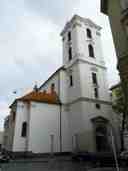
If you look ahead you’ll spot a tall white church with a crisp red-tiled roof, a sturdy tower trimmed with golden accents, and an entrance set neatly at the street corner-an elegant sight standing out amidst the surrounding buildings. Welcome to the Church of the Assumption of the Virgin Mary, right in the heart of Brno! You’re now outside a building that’s seen more costume changes than an opera diva. Imagine: it’s the 1200s, and behind these walls stands a peaceful nunnery called Cella Sanctae Mariae, packed with Augustinian nuns. The city’s old stone fortifications ran right beside it. This spot was peaceful-until, that is, an unlucky fire interrupted the construction of the original Gothic church. They had barely finished singing the first hymn before the place needed rebuilding! But never fear, by 1280, the church was resurrected. Fast-forward to the late 1500s. The nuns packed up and moved, handing the keys to the Jesuit order, a group famously enthusiastic about studying, teaching, and, yes, occasionally changing the wallpaper. In 1599, the Jesuits began building the grand, mannerist church you see now. It only took four years before the new church was ready to dazzle the city-faster than most people today can finish DIY furniture assembly. But the drama didn’t end there. The Jesuits weren’t satisfied-they wanted the church bigger, flashier, fit for the growing congregation and their massive ambitions. So in the 1660s, they handed blueprints to the talented Jan Křtitel Erna and watched their church swell in size and style. Later, in the 1730s, the famous architect Mořic Grimm brought in even more flair. Yet the Jesuits were destined to leave: Emperor Joseph II dissolved their order in 1773, and the former monastery became... army barracks! Try picturing soldiers instead of monks marching through here. But what would a Brno church be without disaster in the 20th century? Imagine the bombs falling during World War II, glass shattering, precious works of art ruined. The church was heavily damaged, but, like a phoenix (or a determined Czech granny), it was restored through decades of effort, with even more careful repairs between 1995 and 2014. Step inside-if the doors are open-and you’ll find a treasure trove: stunning paintings by Felix Anton Scheffler, including a glowing scene of the Assumption of Mary; sculptures by Jan Jiří Schauberger; and elegant, centuries-old woodwork from Emerich Thurn’s workshop. Keep an ear out-since 2014, magnificent Mathis organs have filled the space with sound. If you’re here at Christmas, peek at the nativity. The figurines, all donated by parishioners, have survived decades (despite a few sticky-fingered visitors early in the 21st century). And oh! In the crypt rest remarkable people, including P. Martin Středa, a local hero of the Thirty Years’ War-if Brno handed out medals for courage, he’d have one. So, take a breath, look up at the white facade gleaming even on a cloudy Czech day, and listen for echoes of prayers, marching boots, or maybe just your own footsteps-each a tiny part of this church’s story. Let’s move on before the ghosts of old nuns start questioning our dress code!
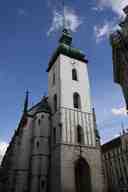
Open dedicated page →To spot the Church of St. James The Elder, look for the tall, white, stone tower with a sharp green spire rising dramatically above the other buildings, right ahead of you-almost…Read moreShow less
To spot the Church of St. James The Elder, look for the tall, white, stone tower with a sharp green spire rising dramatically above the other buildings, right ahead of you-almost impossible to miss on Jakubské náměstí. Alright, let’s take you on a little time-wandering adventure! Picture yourself here at the heart of Brno, facing this mighty late Gothic church-a true giant with its 92-meter-high tower pointing like a magic wand at the sky. Built on foundations laid in the early 1200s, the church was born from the ambition of rulers and the devotion of townsfolk. In the beginning, it was a Romanesque basilica for foreign settlers, but as the city grew, so did the church, morphing over centuries into this grand, three-nave Gothic hall. Now imagine: old bells tolling across a bustling medieval marketplace. The church was a place of prayer but also a fortress-during the Swedish siege in the Thirty Years’ War, it was even the final resting place for the city’s legendary marshal, Louis Raduit de Souches, who defended Brno against its enemies. His grand tomb still stands inside, watched over by the solemn, stony gaze of statues. For centuries, every stone and window of St. James has its own epic. Fires struck and storms raged-the whole roof was once lost, and crafty masons had to rebuild nearly everything, adding ornate buttresses, twisting gargoyles, and glorious stained glass. At one point, a prankster stonemason even sculpted a bare-bottomed little man up in the tower, mooning the rival cathedral of St. Peter and Paul. It was a not-so-subtle way for St. James to declare victory in the “whose tower is taller” contest! (Spoiler: This one really is taller-by 8 meters.) But the best part? He’s not alone-if you look closely, you’ll spot a mischievous “Mrs. Mooner” by his side. Inside, there are treasures galore. Marble altars, towering organ pipes, and wooden benches carved by local legends are all waiting. The glow of saints and angels watches over you, alongside twelve apostles perched above the choir. Baroque and Gothic blend together in a colorful patchwork of devotion and artistry. But there’s a secret beneath your feet. The vast underground ossuary, discovered by chance and now open to visitors, houses the bones of up to fifty thousand souls-making it Europe’s second largest. Every stone has been touched by those who once walked these streets, from bustling merchants to rebel priests. The church was constantly changing and growing: chapels rose and fell, baroque artists jazzed up its altars, and in the 19th century, the city decided to restore its medieval beauty-kicking out “ugly” modern pieces in favor of shimmering stained-glass windows and tracery. Even in recent years, major renovations have breathed new life into the building, with daring engineers climbing up to replace thousands of glass panes and masons patching up old gargoyles. In 2024, after three years of restoration, this church once again threw open its doors-with a brand new light show sparkling high in the rafters, and an epic city viewing platform ready to open soon. So while you stand here, just imagine being a medieval craftsman, perched atop bamboo scaffolds, chiseling out tiny dragons, or a market lady dodging puddles as thunder rolls over that mighty spire. The Church of St. James hasn’t just survived centuries of storms, sieges, and stonecutters' jokes-it has become a living memory box for Brno, always ready for its next story... or a new mooning contest! Intrigued by the construction development, architectural description of the exterior or the interior equipment? Explore further by joining me in the chat section below.
Open dedicated page →
Frequently asked questions
How do I start the tour?
After purchase, download the AudaTours app and enter your redemption code. The tour will be ready to start immediately - just tap play and follow the GPS-guided route.
Do I need internet during the tour?
No! Download the tour before you start and enjoy it fully offline. Only the chat feature requires internet. We recommend downloading on WiFi to save mobile data.
Is this a guided group tour?
No - this is a self-guided audio tour. You explore independently at your own pace, with audio narration playing through your phone. No tour guide, no group, no schedule.
How long does the tour take?
Most tours take 60–90 minutes to complete, but you control the pace entirely. Pause, skip stops, or take breaks whenever you want.
What if I can't finish the tour today?
No problem! Tours have lifetime access. Pause and resume whenever you like - tomorrow, next week, or next year. Your progress is saved.
What languages are available?
All tours are available in 50+ languages. Select your preferred language when redeeming your code. Note: language cannot be changed after tour generation.
Where do I access the tour after purchase?
Download the free AudaTours app from the App Store or Google Play. Enter your redemption code (sent via email) and the tour will appear in your library, ready to download and start.
If you don't enjoy the tour, we'll refund your purchase. Contact us at [email protected]
Checkout securely with 




