
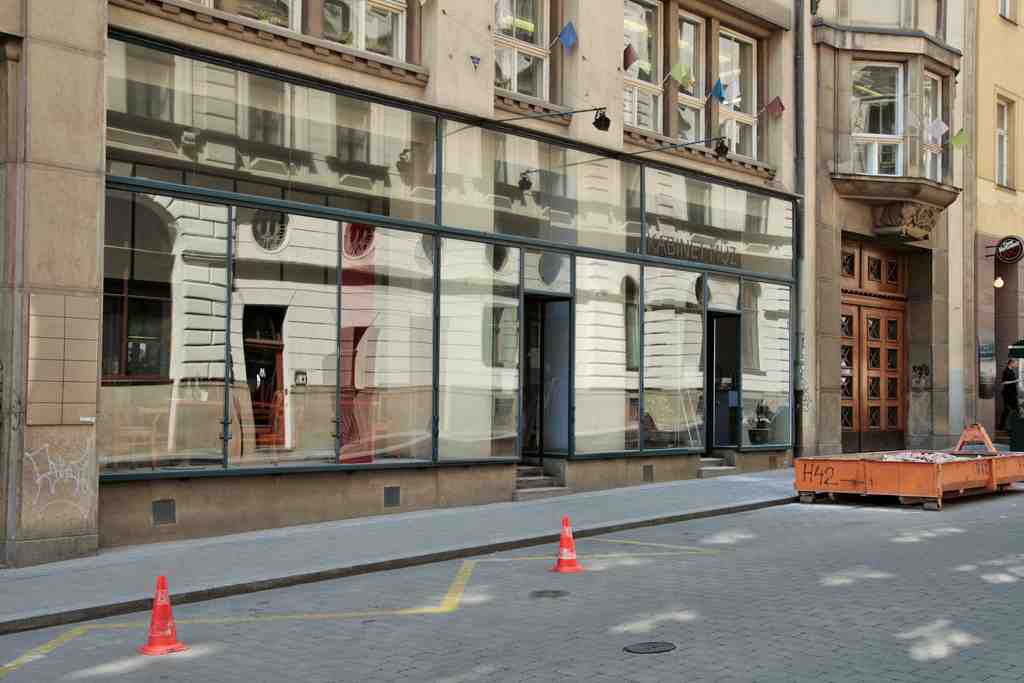
Right in front of you, you’ll spot a modern glass façade set into an old stone building-look for the big, clear windows reflecting the surrounding architecture and a sign for Kabinet Múz above the entrance.
Now, let me take you into the world of the Feste Theater-no need for a ticket, just your imagination. Picture the scene: it’s 2006, and in Brno, a fresh graduate from the theatre academy, Jiří Honzírek, is cooking up something special. Instead of heading off to join a big, stuffy institution, he decides to create his very own theatre project. At the time, it feels less like starting a company and more like causing a small, creative revolution. Honzírek’s first steps are humble, but soon, this little project bursts out of its shell and evolves into a true professional theatre, with Honzírek himself becoming its constant captain, always steering towards the bold and unexpected.
Let’s have a pause for a quick fact: the name ‘Feste’ isn’t a random pick from a hat, but comes straight from Shakespeare’s own “Twelfth Night.” Feste is the fool-always poking at the powerful, joking, but also holding up a mirror to society’s bigwigs. And let’s be honest, every city needs a clever jester now and then, especially in the theatre.
In its early days, Feste Theater had no permanent home. It roamed Brno, performing wherever it could find a corner and a curious audience. In 2012, it settled into the club Kabinet Múz-which, if you’re checking your map, is literally right here by your feet. But, in 2017, the theatre packed up its props and costumes again and moved to a sleek, industrial space called Industra, far from the velvet curtains of traditional playhouses. Quite the upgrade-think less chandeliers, more concrete and raw creative energy.
But what makes Feste Theater really stand out? It’s all about diving headfirst into the big, messy questions of the day. The plays staged here take on everything from politics to religion, violence, xenophobia, gender, and power-occasionally serving it all with a witty wink or even a daring joke. Their performances might be documentary-style, brimming with movement, traditional drama, improvisations, even wild crossovers that leave the room buzzing with questions. Feste’s actors and directors come from all walks-some old pros, others wide-eyed students just out of art school, and plenty in between.
And if you think Feste likes to keep things simple-oh no, not at all! Imagine performances where the station concourse of Brno’s main train station becomes the stage, where actors invite the audience to swap roles and strangers getting swept into the story. Think of plays that turn historic political backstaging into drama, or heartfelt comedic flashes about parenthood or the nerve-wracking fear on a child's first day at nursery. This is theatre that never sits still.
Then there’s the SPECIFIC festival-think of it as Feste’s world tour without ever leaving Brno. Every year, the festival hones in on writers from a different country: from Belarusian and Yugoslavian voices to African, Ukrainian, Norwegian, Finnish, and Spanish playwrights, all getting their Czech premiere. One year, they performed in a café, the next in a textile factory, or scattered across six venues, their stories stirring up conversations about everything from war and migration to solidarity and tragedy. Feste’s team handpicks these stories, sometimes tackling the toughest themes, always aiming to set the stage for change.
While the company has hosted some familiar faces from other Brno theaters, the one common trait is a fearless urge to stand up and challenge the status quo-sometimes making the audience actors themselves, sometimes offering a shoulder to cry on, and sometimes, well, just making everyone roar with laughter at the world’s absurdities.
So as you stand outside, imagine the energy simmering behind those glass walls-thought-provoking debates, experimental spectacles, and always that dash of Feste’s oppositional spirit. They’re not just putting on plays-they’re inviting Brno’s citizens to face up to the world together, one scene at a time. And who knows? You might just leave with more questions than answers (and maybe, if you’re lucky, a good punchline to share at your next dinner party).




