
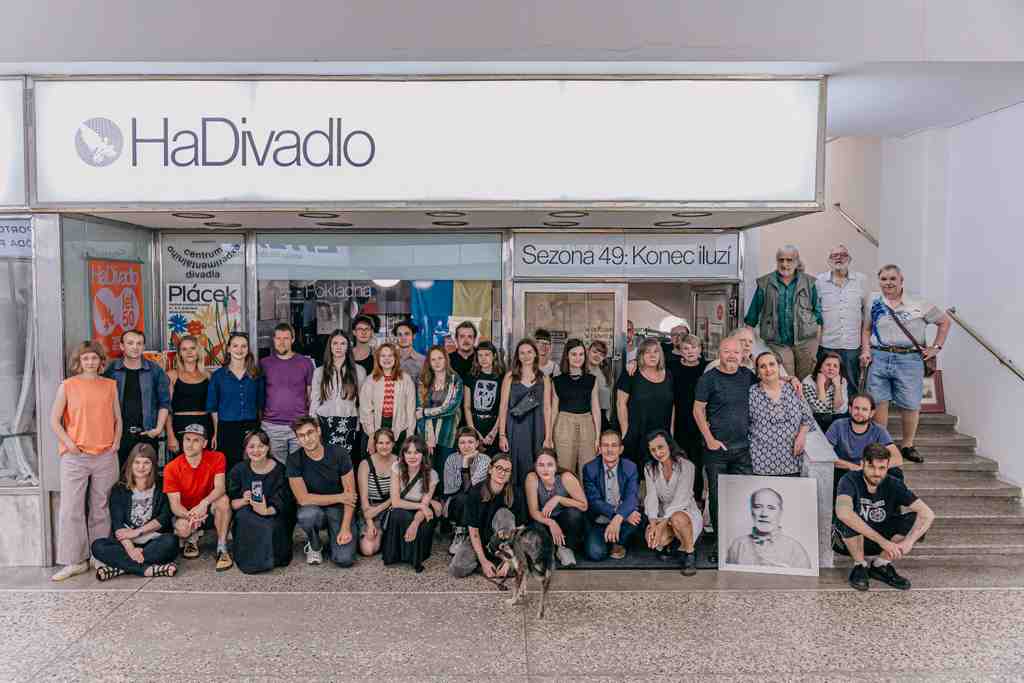
You’ll spot HaDivadlo by its glowing sign above the glass doors in the Alfa Passage-just look ahead for a lively crowd gathered right outside, as if waiting for an important announcement or maybe a curtain to rise.
Now, let’s dive into the whirlwind tale of HaDivadlo-a theater that’s never stopped changing, surviving, and kicking up a dramatic fuss! Picture the 1970s in Prostějov: the scent of dust mixing with old velvet as a small group of dreamers, led by Svatopluk Vála, convinced the city to let them start an experimental troupe. It began with just four official staff: a director, a dramaturg, a technician, and a secretary. Their “office” was more likely filled with coffee cups and half-finished scripts than actual paperwork. The first cast included poets, aspiring musicians, amateur theatricals, and a parade of students ready to turn every rehearsal into a creative adventure-sometimes to the despair of the local authorities, who never quite knew what to expect next.
By the late 1970s, the sound of hurried footsteps echoed through the halls as HaDivadlo moved to the National House in Prostějov. With this new, smaller venue, their productions became uniquely intimate. It wasn't long before a new artistic trio emerged-Vála, Kovalčuk, and Goldflam-shaping a style as quirky as it was rebellious. You can almost imagine the faint as they drew an eclectic audience craving something different from the state-run theaters. Their shows started drawing attention not just locally, but all across Czechoslovakia-though always with a whiff of trouble, as authorities anxiously tried to keep these avant-garde artists in line.
By the 1980s, the company was on the move again, landing a gig in Brno and making a name for themselves at the Klub školství a vědy Bedřicha Václavka, and soon after, at the legendary Kabinet múz. The 1980s were dramatic-literally and politically. The state tried to keep a close eye on such “unruly” actors, but HaDivadlo only grew bolder, with smuggled scripts and secret late-night debates. When the Velvet Revolution came, HaDivadlo’s halls were alive with shouts, flyers flying, and sometimes a few nervous laughs as they joined the protests-these were actors, after all, and rallies were just a different kind of performance. They even worked with Václav Havel on the Rozrazil project, until the authorities pulled the plug, probably fearing the plot would get too thick.
After the revolution, the theater went through a massive facelift, both in location and in spirit. They moved to the space you see today in the Alfa Passage, which used to be a cinema-so if you sense an urge to dramatically announce the start of a blockbuster, you’re not the first! This big move brought new ideas, new faces, and even more drama-a happy mix of chaos and brilliance. Through the ‘90s, the theater forged new creative bonds, put on innovative new plays, and filled the city with theatrical energy, usually accompanied by debates over the best staging or most unusual costume choices.
In recent years, directors like Ivan Buraj and Anna Stránská have made sure HaDivadlo keeps taking risks, launching projects exploring everything from the end of illusions to the weirdest quirks of modern society. Today, the theater is a home for bold, opinionated, and sometimes very funny artists who still believe the stage can change the world-one thoughtful play or unexpected laugh at a time. And there you are, right outside those doors, in a spot that’s witnessed almost half a century of plans, protests, parties, and curtain calls.
So if the urge strikes to improvise your own monologue, I say-go for it. After all, HaDivadlo is living proof that you never really know where a small group of passionate misfits may lead a city. On to the next stop, star of the Brno stage!




