
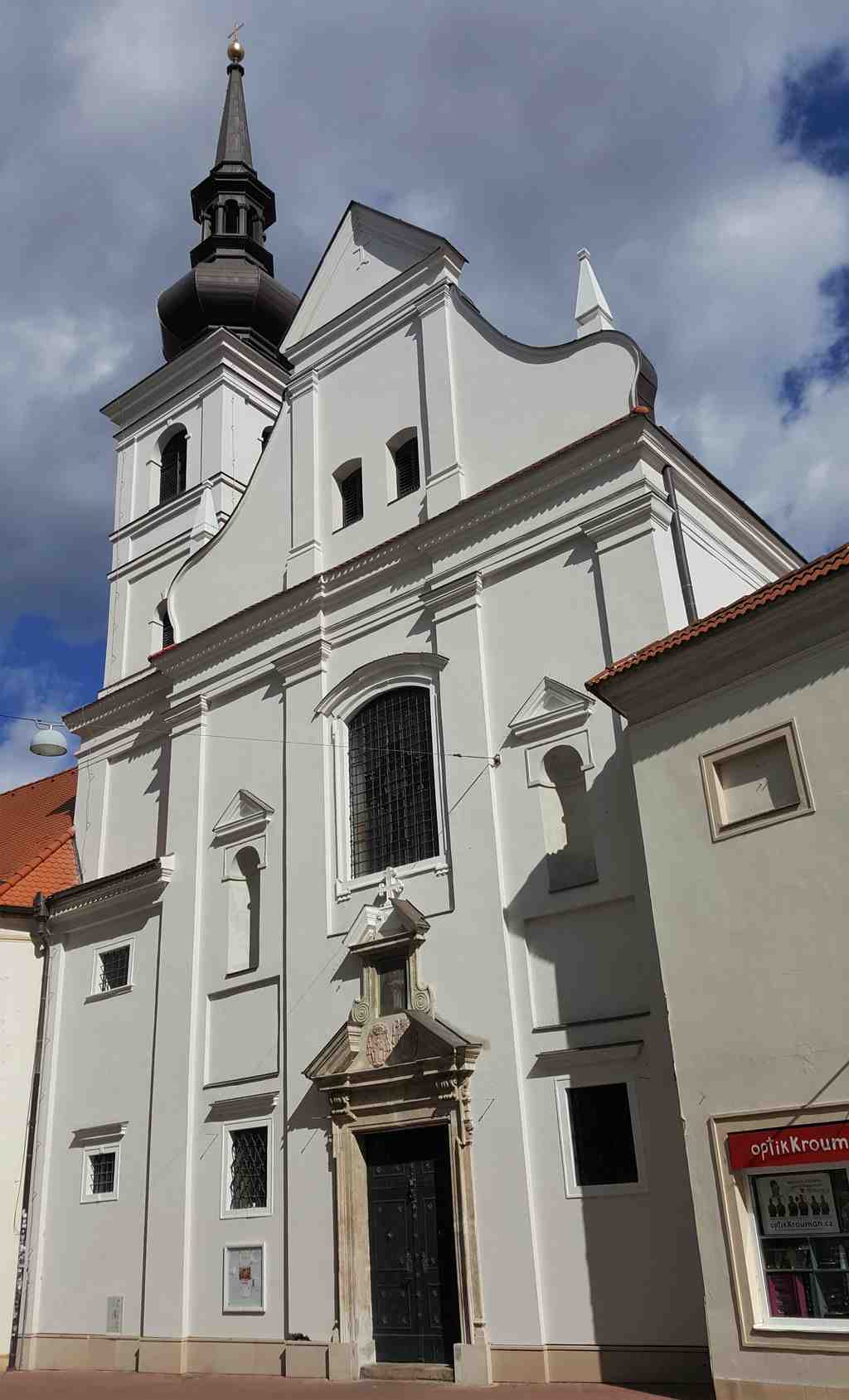
To spot the Church of St. Joseph, just glance up and look for the tall, pale, almost fortress-like Baroque facade with a sharply pointed tower crowned by an onion-shaped dome, sitting boldly on Josefská street-it's the tallest, brightest building on the block, and you can't miss its simple, commanding white face.
Now, as you stand before it, picture this street not with modern shopfronts, but echoing with the distant clang of hammers and the silent prayers of nuns. Let’s set the stage: it’s the mid-1600s, and Brno has just survived a dramatic siege. The Swedish army packed up and left in 1645-talk about house guests who overstay their welcome-and the city is licking its wounds. Just after this tense moment, a group of Franciscan nuns, determined and undeterred, decide to rebuild their home and church outside Brno’s historic walls. “How hard can it be?” they probably asked. Spoiler alert: their first effort was so strategically inconvenient, they were forced to tear it down!
But help was at hand from the powerful Dietrichstein family, whose two bold coats of arms you’ll see right up there above the main entry-one with a bishop’s hat, the other with a prestigious Order of the Golden Fleece. These marks are the fingerprints of power and faith in old Brno, and the family helped the nuns secure fresh land by the Měnínská Gate. As the old burgher houses slowly gave way to the new, the stones of the Church of St. Joseph began to rise in 1651 under the care of local builder Paul Weinberger.
It took over 20 years and several phases before the church was finally consecrated in 1673. Imagine the happy faces-some likely relieved, and some probably exhausted. The church stood through times of reform, wartime chaos, and even the closure of the convent in 1782 when the Ursulines took over. These resourceful women gave the interior a whole new look in the early 1800s, blending baroque and classicist touches with help from Brno’s master sculptor Ondřej Schweigl. If you could look inside, you’d see beautifully matched decorations, golden details, and paintings that seem to glow in the half-light.
But don’t let this calm white facade fool you; it’s seen centuries of drama. In the 1990s, during modern construction below the street, cracks appeared, walls shivered, and soon the church had to shut its doors-just when things were going so well! Restoration teams swooped in, shoring up walls, fixing the roof, and (probably) muttering, “Next time, let’s dig tunnels somewhere else.”
Fast forward to 2009-and an exciting new chapter. The Ursulines handed the church to the Greek Catholic community, and right away, the sound of hammers and hope filled the air again. From a fresh coat of paint outside (restoring its early crisp white), to the careful restoration of its unusual onion dome and original art, the church came back to life. Just in time, too-the first Greek Catholic service was held here in October 2014, and the building now hosts not just prayers, but concerts full of soaring voices and mellow instruments.
Look up at those hollowed-out niches and imagine them once holding regal saints; if you squint, you can almost picture the statues of St. Clare and St. Agnes by Jaroslav Vaněk watching over passersby in the early 20th century. The obelisks perched up on the triangular gable are there to make sure the church is never caught without a little flair.
Today, the Church of St. Joseph isn’t just a monument; it’s a survivor with stories in its stones, from siege panic and starched habits to roof repairs and music festivals. And like any building that’s spent centuries adapting, it’s got a terrific sense of humor-after all, how many churches can say they were rebuilt, closed, shored up, and then thrown open again, all without losing a single pilaster?




