

Ottawa Audio Tour: A Somerset Odyssey
Beneath Ottawa’s official façade, legends linger in quiet corners—hidden among parade grounds, defiant statues, and the sharp winter air by the canal. This self-guided audio tour winds through Centretown, revealing the overlooked drama, scandal, and resilience etched into its very streets. Which long-buried secret at Cartier Square Drill Hall once sent military authorities scrambling? Why does Confederation Park echo with both music and protest—sometimes on the very same day? What surprising battle of identity and language still reverberates from Inuit Tapiriit Kanatami’s front doors? Stride from fortress-like halls to lively green spaces, through rallies, rebellions, scandals, and moments when courage was demanded. Every step peels back a new layer—a city alive with conflict, celebration, struggle, and hope. Ready to look past Ottawa’s surface and discover the hidden currents that shaped its heart? Start your journey now where legends stand guard.
Tour preview
About this tour
- scheduleDuration 40–60 minsGo at your own pace
- straighten4.4 km walking routeFollow the guided path
- location_on
- wifi_offWorks offlineDownload once, use anywhere
- all_inclusiveLifetime accessReplay anytime, forever
- location_onStarts at Cartier Square Drill Hall
Stops on this tour
Look to your right and spot a striking, red-brick fortress-like building with two tall towers-each flying a proud flag-standing right along the Rideau Canal just south of Laurier…Read moreShow less
Look to your right and spot a striking, red-brick fortress-like building with two tall towers-each flying a proud flag-standing right along the Rideau Canal just south of Laurier Avenue; this is the Cartier Square Drill Hall. Welcome to the legendary Cartier Square Drill Hall, where history stands thick in the air-unless it’s parade night, in which case the only thing thicker might be the scent of boot polish and fresh coffee. This impressive building, stretching a whopping 70 metres long with those two unmistakable 43-metre-high mansard-roofed towers, isn’t just an eye-catcher-it’s a living monument to Canada’s military might and proud traditions. Picture it now, over a hundred years ago, when this was the edge of a bustling field, the sound of marching boots echoing, and the promise of a young country establishing itself. Cartier Square Drill Hall was constructed way back in 1879, designed by Thomas Seaton Scott, Canada’s very first chief architect. Back then, the build wasn’t just about bricks and beams-it was about showing the world that the new Dominion of Canada meant business, and wasn’t about to let its feet get cold while standing guard. This place is an exceedingly rare example from the post-Confederation era, when Canada was flexing its muscles and making sure the federal government’s presence was felt-cleverly hidden behind some very impressive mustaches and epaulettes. Now, fun fact! If you stand outside, sometimes you can squint just right and almost see the old parade ground-a sweeping field where now you’ll find Ottawa City Hall and the courthouse instead. Back in those days, soldiers drilled in tight formation and officers barked orders, all under the watchful eye of Lieutenant Paul Weatherbee. This man, who oversaw a whole generation of militia buildings, made sure armories and munitions stores-like the huge one that used to stand behind this very building-were ready for anything, from storing uniforms and weapons to stashing, I assume, a truly heroic amount of shoe polish. Of course, this magnificent drill hall was built to house some of Canada’s proudest units-the Governor General’s Foot Guards and, what we now call, The Cameron Highlanders of Ottawa (Duke of Edinburgh’s Own). These aren’t just names you’d find on fancy regimental banners (though, let’s be honest, they do sound excellent on banners); these are the folks who, to this day, play key roles in the nation’s military reserve. Every summer, you might even spot the gleaming Ceremonial Guard stepping smartly out of the hall, heading up for the Changing of the Guard on Parliament Hill-a tradition that never fails to impress or to call up goosebumps on a crisp morning. And this hall isn’t just about polished boots and banners-think of the personal stories and echoes of history hiding behind those brick walls. For more than 125 years, it’s served as the central hub for mobilizing Ottawa’s soldiers, sending brave men and women off to conflicts near and far-from the North-West Rebellion in 1885, to the Great War, the Second World War, Korea, countless peacekeeping missions, and even all the way to Afghanistan. Imagine all the hopes, fears, and camaraderie that have filled this space over generations! Right outside, you’ll spot the statue dedicated to Privates William B. Osgoode and John Rogers, fallen at the Battle of Cutknife Hill in 1885. It’s a somber reminder that, though we often celebrate the pageantry, the heart of this building is bound up with the bravery and sacrifice of real people. The tablets and plaques you’ll find inside honor everyone from the local regiments to heroes awarded the Victoria Cross, to those who lost their lives in fires, far-off wars, or sudden disaster. It’s enough to put a thoughtful lump in even the stiffest military collar. Yet don’t think it’s all uniforms and solemn parades. This enormous hall, with its grand Officers’ Mess, is also home to laughter and music. It has, over the years, hosted everything from the City of Ottawa Christmas Party to regimental balls to-believe it or not-serving as an emergency medical space for the annual Ottawa Race Weekend. Where else in Canada can you find a place that can host a regimental reunion, a battalion of cadets, and a phalanx of exhausted marathon runners? So as you stand here before those brick towers, think of the Drill Hall as a stage for over a century of Canadian stories-where every echo of footsteps, every clang of a distant rifle, or roar of a cheering crowd becomes part of the living, breathing story of Ottawa’s heart. And hey, if you clear your throat now and then, maybe it’ll sound a bit like an officer about to make history-just don’t forget the mustache wax.
Open dedicated page →To spot Confederation Park, look for a broad, flat stretch of green with wide paved paths, ringed by city buildings, and most importantly-a grand stone fountain right in the…Read moreShow less
To spot Confederation Park, look for a broad, flat stretch of green with wide paved paths, ringed by city buildings, and most importantly-a grand stone fountain right in the middle, standing proudly as if waiting to grant wishes or, at the very least, offer a great place to sit and people-watch. Now, welcome to Confederation Park-Ottawa’s very own patch of tranquil green, neatly woven into the busy fabric of the city. As you stand here, you’re not just in “any old park,” but a place where history, celebration, and a touch of whimsy meet. If you listen closely, you can almost hear the echoes of jazz saxophones, the clinking of fountain water, the excited shrieks of festival goers, and maybe even a hushed debate about whether modern art is “brilliant” or, well... something best tucked away. This land hasn’t always been a park. Imagine yourself here in the early 20th century-the smell of fresh wood wafting from Dey’s Boat Works nearby, and crowds gathering for a hockey game at The Arena, the original ice home of Ottawa’s beloved Senators. After the arena and boat works disappeared, the area was transformed, bit by bit-some plans promised museums, others dreamed of a lush park to crown the capital. Eventually, in 1967, to celebrate Canada’s 100th birthday, the government gifted the city this open, green space-born from dreams both realized and left on the drawing board. Wander around and you’ll notice the park’s “flat earth” design-no dramatic hills, just inviting lawns and sapphire-smooth walkways that double as shortcuts through the downtown maze. You never know who you’ll meet: office workers escaping their towers for lunch, festival crowds swirling to the rhythm of the Jazz Festival, or wintertime visitors marveling at shimmering ice sculptures during Winterlude. And let’s not forget 2016, when clusters of determined Pokémon Go hunters shuffled through the park, smartphones poised, united on their noble quest for virtual Pikachu. I suppose you could say Confederation Park has always had a bit of magic about it. But don’t just take in the scenery-look deeper, because the monuments and sculptures scattered throughout speak to the park’s unique past. That handsome fountain at the heart? It’s not from Ottawa at all, but came sailing across the Atlantic from Trafalgar Square in London, England, after gracing British eyes for over 100 years. Its twin lives in Regina, but I’d wager this one’s the more photogenic sibling. From there, stroll a bit further for a glimpse of memory and respect: you’ll find the National Aboriginal Veterans Monument, a powerful tribute to First Nations, Inuit, and Métis contributions to Canadian military history. The striking totem pole is a special gift from British Columbia, marking their centennial in 1971. And next to the South African War Memorial, you’ll see a dog with an attentive gaze-the Canadian Animals in War Memorial. It’s not every park that offers such a heartfelt acknowledgment of the animals-horses, dogs, even pigeons!-who served alongside Canadians. For a touch of international flavor, take a moment with the large plaque from the Polish Home Army Ex-Servicemen’s Association, remembering the Canadian airmen who courageously flew support missions with the Polish resistance during World War II. In 1993, their sacrifice was formally recognized with a bronze Home Army Cross. But not all the park’s stories are so solemn-some are downright controversial! Picture a time when a massive brown fiberglass tube-lovingly nicknamed “The Worm” or, less affectionately, “The Dung”-dominated the park. Ed Zelenak’s sculpture “Traffic” split opinion right down the middle, sparking heated debates about art, taste, and public spaces, before quietly relocating to a quieter corner of the city. And don’t be surprised if, in the shade of the trees or on the sun-drenched lawns, you sense the energy of protest. In 2011, Confederation Park pulsed with the Occupy Ottawa movement-a sea of tents filling the green while voices rang out, calling for change and justice. Every corner here tells part of Ottawa’s vibrant city tale-one of transformation, celebration, memory, and even a little bit of mischief. So find a bench, soak up the atmosphere, and know you’re standing right where Ottawa’s past and present meet, in a park that never seems to sleep! If you're keen on discovering more about the situation, events or the occupy ottawa, head down to the chat section and engage with me.
Open dedicated page →To spot the Inuit Tapiriit Kanatami, look straight ahead for a building decorated with a unique logo: four stylized Inuit figures in blue and gold, holding hands to form a circle,…Read moreShow less
To spot the Inuit Tapiriit Kanatami, look straight ahead for a building decorated with a unique logo: four stylized Inuit figures in blue and gold, holding hands to form a circle, along with writing in both Inuktitut syllabics and English below. Alright, take a moment right here and let your senses drift north. Imagine it’s the early 1970s, the wind biting at the edge of the Arctic, the snow crunching underfoot, and a group of determined Inuit leaders are gathered-bundled against the cold, their faces serious, their voices united. At the time, the North was changing fast. More and more Southerners were moving up, filling civil service jobs and bringing their own ways. Traditional skills like hunting and survival? Suddenly, those didn’t count for much in the new job market, and many Inuit felt pushed aside in their own homeland. But here’s where the story takes a turn! Led by visionaries-Noah Qumak, Jacob Oweetaluktuk, Celestino Makpah, and several others-they decided to make some noise. In 1970, with a little help from a southern group called the Indian-Eskimo Association, Inuit leaders from across the Arctic gathered in Coppermine. What came out of that chilly meeting was a telegram sent straight to Prime Minister Pierre Trudeau (not the current one, but his dad) asking for Inuit land rights to be recognized. It was the first time the Inuit sent a collective message to Canada’s top brass. That was just the beginning. In 1971, the Inuit Tapirisat of Canada was born, right at a conference in Toronto. The name would later change to Inuit Tapiriit Kanatami-which means “Inuit are united in Canada.” Their mission? To be a powerful, united voice for over 65,000 Inuit across the country, fighting for land, education, culture, and more. Think of it like assembling the world’s most stubborn, determined superhero team-minus the capes, plus the parkas. Since then, this organization has been right at the heart of every major Inuit breakthrough you can think of. Want an example? How about the creation of Nunavut in 1999, the largest and boldest set of indigenous land claims and self-determination agreements in Canadian history? Or their action in courtrooms-like when they fought to protect caribou hunting grounds near Baker Lake and made Canada finally recognize Aboriginal Title in the Arctic? Here’s another twist: one of ITK’s first presidents was Tagak Curley, a man who once worked as a development officer in the Arctic and then decided he’d rather be a change-maker than a clipboard-holder. He pushed hard for the government to ditch the word “Eskimo” and use “Inuit” instead on all official documents. He lost a federal election once but turned out to be a lifelong hero for Inuit rights. But ITK’s fight wasn’t just about land and names. Imagine television for a moment-before Netflix, even before cable. In the late 1970s, ITK launched the Inukshuk Project, breaking into broadcasting by creating television programs in Inuit languages. Soon after, the Inuit Broadcasting Corporation appeared on the scene, telling stories in Inuktitut and letting Inuit people see themselves on TV. And education? Only about one in four Inuit students finished school, so ITK kicked off a national strategy to turn that around, supporting kids to stay in school while learning both Inuktut and Canada’s official languages. They didn’t stop with textbooks-they’ve even teamed up with Canada Goose on Project Atigi, a collection of striking parkas inspired by Inuit culture and designed by Inuit artists. Of course, not everything has been smooth sledding. The organization demanded an apology and compensation for the forced High Arctic relocations of the 1950s. They went up against the government again and again-and their efforts led to the Canadian Human Rights Commission recommending formal recognition and apologies, even if every demand wasn’t fully met. Today, the ITK continues to push forward. Working with the federal government, they focus on everything from the environment and housing to reconciliation-and of course, strengthening the knowledge, language, and spirit that keeps Inuit culture thriving. Every time you see their blue-and-gold logo, remember: this is more than a building; it’s the tip of an iceberg that represents decades of resilience, wit, and unity. Alright, take a deep breath and let’s get ready for our next adventure-modern Canada wouldn’t be the same without the stories written right here. To delve deeper into the goals, activities or the governance, simply drop your query in the chat section and I'll provide more information.
Open dedicated page →



Show 12 more stopsShow fewer stopsexpand_moreexpand_less
 4
4St. Peter's Lutheran Church
Buy tour to unlock all 19 tracksTo spot St. Peter’s Lutheran Church, just look ahead for a classic stone building with a tall, square tower rising above steep gabled rooftops-its limestone exterior stands out…Read moreShow less
To spot St. Peter’s Lutheran Church, just look ahead for a classic stone building with a tall, square tower rising above steep gabled rooftops-its limestone exterior stands out against the modern buildings around it. Alright, take a moment and soak in the charm of this stone sentinel! On Ottawa’s ceremonial route, overlooking both the Garden of the Provinces and the rolling Gatineau Hills, St. Peter’s Evangelical Lutheran Church has watched over the city for more than a century. Imagine: the year is 1910, there’s a sense of excitement and hope in the air, and a small but determined group of 66 people gathers together, dreaming of a new faith community. They didn’t have this lovely building yet-not even close! Their first services took place not in a church, but in a humble hall on Laurier Avenue, with mismatched chairs and the sound of footsteps echoing on wooden floors. You can almost hear the laughter and nervous chatter as those very first members-many of them recent arrivals from Europe or small Canadian towns-shake hands and introduce themselves over coffee, talking about the new city, wishing for a place that would truly feel like home. It would take grit, faith, and just a sprinkle of stubbornness to get there. Soon, they scraped together enough to buy land at Lyon and Nepean Streets: three tiny houses on a plot just big enough to dream about more. In 1914, the first stones were laid on Lyon Street, and by Easter Sunday that year, their little church was ready. But life wasn’t easy-pastors came and went, money was tight, and at one point in 1918, the congregation shrank to just 40, facing foreclosure. Picture a few worried members, passing a hat, counting coins, hoping it’d be enough to keep the doors open another week. That’s when Pastor Luther McCreery arrived with sleeves rolled up and a can-do attitude. He knocked on doors, shared hope, and slowly, the community began to grow-one handshake, one home-cooked meal, one hymn at a time. By the late 1930s and ’40s, the church was buzzing; donations paid for a new organ, fresh candlesticks, and even a new altar cross. But space was tight-the congregation, like a giant hymn-singing family, was running out of elbow room! So in true Ottawa fashion, they dusted off their mittens and set their sights higher. In 1951, old buildings at Sparks and Bay made way for this stunning Gothic-style church designed by Cecil Burgess. Fun fact: the same quarry that supplied stone for Parliament Hill provided the blocks for St. Peter’s-so in a way, the church and Canada’s government are built from the same bedrock. Now, as you look up at the church tower, picture the grand opening in 1954 with the Governor General reading the lesson, and the local CBC crew bustling about with their cameras-it was the very first Lutheran service broadcast on national television, right here! Imagine families all across Canada, gathered around black-and-white TVs, seeing the light streaming through these same windows. Through the decades, St. Peter’s lived many lives. There was the fire that tore through the Queen Street building, and the relief when membership and funds were finally on the upswing. There was joy in clearing old debts-and triumph when the church tower got eleven feet taller, thanks to members who swapped Sunday shoes for work boots and hammers. St. Peter’s doesn’t just tell the story of bricks and mortar; inside, you’ll find incredible stained-glass windows by Canadian artist Russell Goodman, glowing with scenes from Christ’s life and the Lutheran tradition, each panel a riot of color and story. And because faith and community go hand in hand, you’ll discover quirky traditions too: the annual Mitten Tree sprouting with warm donations for chilly Ottawans, the whimsical “Tree of Life” food drive, and even a weekly prayer calendar, each page turned with hope and care. So, as you stand outside-maybe with the wind teasing your scarf, the stone walls solid and strong-imagine all the voices, the laughter, the prayers, and even the tap of TV cameras that have filled these halls over the past century. St. Peter’s isn’t just a landmark; it’s a living, breathing part of Ottawa’s heart. And if those walls could talk, oh, the neighborly stories they’d tell!
Open dedicated page → 5
5Transport Canada
Buy tour to unlock all 19 tracksTo spot Transport Canada, just look skyward for a sleek glass and metal tower marked “Place de Ville, Tower C,” rising tall and sharp against the Ottawa sky. Welcome to the…Read moreShow less
To spot Transport Canada, just look skyward for a sleek glass and metal tower marked “Place de Ville, Tower C,” rising tall and sharp against the Ottawa sky. Welcome to the headquarters of Transport Canada! You’re standing before a tower that’s more than just steel and glass-it’s the brain behind every airplane gliding overhead, every train whistle echoing across prairie fields, and every ship’s horn cutting through Canada’s chilly coastline. Close your eyes for a second-can you sense the electricity of travel routes, the faint rumble of engines, the thrill of connections being made from sea to shining sea? Back in 1935, Canada’s transportation scene was a bit like a suitcase with too many socks-disorganized, and a little lumpy. The government of William Lyon Mackenzie King decided it was time to pack smarter. They created what we now know as Transport Canada by merging three separate departments: railways and canals, marine, and civil aviation. Imagine the hustle in this very city as people scrambled to fit Canada’s brand new modes of travel into one grand plan-a combination of bureaucratic bustle and distant dreams of jet engines. Under the wizardry of C. D. Howe, Canada’s “Minister of Everything,” the nation got itself a National Harbours Board and even launched the legendary Trans-Canada Air Lines-truly flying into the modern age. Picture the excitement as the Department of Transport Act landed in 1936-a crisp autumn morning, papers rustling, coffee cups clinking, and Canada’s future unfolding right here in Ottawa. But the story of Transport Canada isn’t static. In the 1990s, things got bumpy. The department lost some of its operational “luggage”-the Coast Guard set sail under Fisheries and Oceans, major rail lines like CN became private, and myriad airports and seaports got new local bosses. Yet, Transport Canada emerged a little leaner and a lot more focused, shifting from running the trains to making sure the tracks-and skies, and waterways-were safe and fair for all. Nowadays, they write policy, set safety standards, and make sure that, whether you’re crossing the Rockies by train or zipping across the tundra by plane, you get there in one piece. And if you listen closely, this building seems to buzz with the stories of accidents investigated, ships steered to safety, and rules written to keep travelers from coast to coast secure. There are whole teams here devoted to enforcing laws, like the Aeronautics Act and Motor Vehicle Safety Act, and inspectors whose job badge might just be the shiniest thing in their wallet-official credentials, charged with the power to keep Canada’s vast highways, rail lines, and skies in tip-top shape. Speaking of trains, in 2008, the building shook (metaphorically) as the government dove into a major review of rail freight services. Imagine intense meetings, hands waving, coffee being gulped, as Canada’s biggest railroads-the Canadian Pacific and Canadian National-were called to answer to shippers’ grievances. It all led to the Fair Rail Freight Service Act in 2013, piling another chapter onto the tale. Head inside today, and you’ll find experts orchestrating the grand ballet of roadways, runways, and harbors across every province. Since the Motor Vehicle Safety Act in 1971, they’ve tracked crashes, collaborated with provinces, and kept drivers safe despite the blizzards and black ice that Mother Nature is so generous with. Aviation, though, is where things get truly high-flying. For decades, Transport Canada didn’t just write the rules-they operated airports and managed the skies. But in 1996, NAV CANADA took the controls for air traffic, while Transport Canada kept watch from above, adjusting regulations to keep things “plane” safe. They’ve certified pilots, kept records of every knuckle-biting near-miss and accident, and even played a part in the digital modernization of airports-yes, including handy self-serve kiosks where your selfies do double duty as border checks. Let’s not forget their fleet-helicopters whisking over forests, planes monitoring the frigid Arctic-for, in a country as sprawling and wild as Canada, sometimes the only way to keep watch is from the wind-whipped skies. Of course, not every chapter is a smooth ride. There have been controversies-lost memory sticks packed with secrets, reporters knocking on locked doors, even a touch of scandal over electric cars and drones. And there’s the ever-present balancing act between transparency and security; after all, you can’t oversee a country of this size without the occasional bumpy patch. So, as you stand here gazing up at Place de Ville Tower C, listen as the echoes of decisions, debates, and dreams ripple through Ottawa’s air. In many ways, every trip you take in Canada starts right here, with a few clever minds and an awful lot of paperwork. Makes you want to tip your hat to every traffic light, doesn’t it? Exploring the realm of the headquarters, structure or the enforcement? Feel free to consult the chat section for additional information.
Open dedicated page →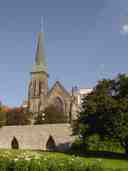 6
6Christ Church Cathedral
Buy tour to unlock all 19 tracksUp ahead, you’ll spot Christ Church Cathedral by its dramatic stone façade, pointed arches, and the tall, elegant green spire reaching up from behind leafy trees-just look for the…Read moreShow less
Up ahead, you’ll spot Christ Church Cathedral by its dramatic stone façade, pointed arches, and the tall, elegant green spire reaching up from behind leafy trees-just look for the building perched on the slope above Sparks Street, gazing out over the Ottawa River. Now, stop and take a deep breath-let’s travel back in time. Picture yourself in the early 1800s, with thick forests stretching along the Ottawa River and settlers carving out homes from wild land. That’s where our story begins: a chap named Philemon Wright arrives from Massachusetts, finds himself enamored with the land by the roaring Chaudière Falls, and decides, “Yep, this’ll do nicely!” Just a bit later, across the river, Nicholas Sparks-yes, just like the author, except this one really existed-takes his axe and starts building what will become Bytown, and later, Ottawa. Around then, a dedicated Reverend named Amos Ansley arrives by canoe, determined to spread the Gospel despite the Ottawa mosquitoes and the challenges of open water. The Anglican folk of early Bytown found themselves worshipping in a cramped schoolhouse in Hull, so, with the generosity of local founders like Wright and Sparks, the very first Christ Church was built in 1826 from simple stone. Reverend Ansley-imagine the dedication-would paddle his canoe from township to township along the river to hold services, rain or shine. Services in the church were much appreciated, but let’s just say, heating was a challenge. Winters got so cold that only one stove could battle the chill, and churchgoers would shiver on rough wooden planks hoping for spring. But Ottawa boomed, pews filled, and soon plans were hatched to expand. Sparks donated more land-he must’ve been feeling generous, since he’d already handed over some to the Presbyterians and Methodists. In 1841, the church was enlarged, thanks to funding from all over and a real sense of mission. These early services might’ve echoed with the creak of unfinished wood and shifting stone, but the spirit of the place was alive. Time marches on and, come the early 1870s, “Let’s build a grander church!,” the congregation agreed. The old Christ Church came down, and a new, majestic English Gothic design began to rise over Sparks Street. The spire, the grand windows, even a time-capsule tucked in the cornerstone-this was a church that wanted to last. The East Window was dedicated to the Sparks family-a fitting tribute for a man who had shaped the city. Over the years, the church kept growing, adding a Sunday school, parish hall, and beautiful new chancel in 1932, just in time to celebrate a century of worship. But Christ Church Cathedral is more than just stone and stained glass. In 1897, it was crowned as the cathedral for the brand-new Diocese of Ottawa, and memorials began to fill its walls and windows. Plaques and stained glass remember local heroes-mounties, soldiers lost in the World Wars, and the 77th Overseas Battalion. Each story told gives the place a feeling of quiet reverence and living memory. Let’s talk music, because if you stand quietly, you might just imagine the soaring voices of the Cathedral Choir of Men and Boys, ringing through the vaulted ceilings. Picture rows of choirboys in crisp robes, and the only ensemble of girls’ voices of its kind in a Canadian Anglican Cathedral, making music that even drew praise in cathedrals across Europe and the U.S. The cathedral boasts both a modern digital organ-something of a controversy for traditionalists-and an antique pipe organ that occasionally shakes the stone walls. Over nearly two centuries, this place has welcomed everyone: locals, visitors, soldiers, children, and even Canada’s leaders. It’s hosted state funerals for Prime Ministers and royalty, and on Sundays and feast days, the air still fills with music and hope, just as it did when people sat here on simple planks. So, as you stand before those soaring windows and gothic arches, you’re looking not just at a building, but at a living thread through the city’s history-a place where joy, grief, music, and memory linger in the Ottawa breeze. And hey, if the walls seem to whisper, that’s just a couple hundred years’ worth of stories catching up with you! Wondering about the stained glass, present or the dean of ottawa? Feel free to discuss it further in the chat section below.
Open dedicated page → 7
7Library and Archives Canada
Buy tour to unlock all 19 tracksTo spot the Library and Archives Canada, just look for the large, pale stone building ahead with rows of small square windows stretching across its wide, modern facade-it’s…Read moreShow less
To spot the Library and Archives Canada, just look for the large, pale stone building ahead with rows of small square windows stretching across its wide, modern facade-it’s impossible to miss with its grand, symmetrical design standing right by the street. Welcome to the Library and Archives Canada, where the echoes of Canadian history are tucked away in shelf after shelf-imagine 250 kilometres of records wrapped up in one building! If you listen closely, maybe you can hear the rustle of a million stories. This isn’t just any old library; it’s the 16th largest in the whole world, and it’s here in Ottawa, dedicated to preserving every curled photograph, ancient newspaper, and government memo that tells the story of the nation. Travel back to 1872, when the Dominion Archives began its journey-believe it or not, it started as a humble division in the Department of Agriculture. Yes, Canada’s first guardians of knowledge were the same folks dealing with crops! By 1912, these record keepers grew into the mightily named Public Archives of Canada, expanding their collection to manage everything from parchment scrolls to photographs, and eventually morphing into the National Archives in 1987. Meanwhile, thanks to passionate people like Freda Farrell Waldon (the Canadian Library Association’s first president), the National Library of Canada was founded in 1953. For decades, the two institutions lovingly gathered important papers, maps, and music scores, while perhaps also shushing a few noisy researchers along the way. The modern Library and Archives Canada, or LAC, was born from a marriage of both institutions in 2004. The union was a bit like mixing peanut butter and jelly-suddenly, everything came together in a blend of rich collections, clever staff, and an even bigger responsibility to protect Canadian heritage. That meant not just books, but 22 million of them, stacked alongside 24 million photographs, 3 million maps and architectural plans, half a million works of art, and wonderful oddities-like the chair Glenn Gould used for piano performances, and a 1470 printing of "Antiquities of the Jews." There’s even the Proclamation of Canada’s Constitution Act-complete with rain marks from when Queen Elizabeth II signed it on a very Canadian, very rainy April day. But not all stories here have been smooth. If you’d walked these halls in the 2010s, you might have heard some worried whispers about budget cuts-over 400 employees faced job changes, and 20% of the staff were trimmed. The tensions rose higher than a stack of newspaper archives! LAC’s strict new rulebook even warned staff against doing risky things like... attending library conferences. Talk about living dangerously! Critics worried LAC was now more about cutting corners than discovering stories. At the same time, the world of information was racing from dusty shelves to glowing screens. So, LAC began a massive push for digitization, wrestling collections into the twenty-first century. This meant that while the public reading rooms on Wellington Street (where you stand now) became harder to access-by appointment only-the dream was to let curious Canadians search archives from the comfort of their homes, maybe in fuzzy slippers. Of course, with such an important job, LAC has stepped into some pretty serious moments. During Canada’s Truth and Reconciliation Commission, the LAC faced tough scrutiny over providing essential records about residential schools. After being nudged by court order, LAC responded-eventually sharing records and supporting public access to these important materials, as the path toward reconciliation continues today. Behind these grand doors, secrets are kept not only through state-of-the-art preservation vaults, but even in specialized eco-buildings for highly flammable old film reels and a gigantic high-density storage warehouse in Gatineau. Imagine a vault big enough for all the country’s tales, from war veterans’ legacies to stacks of national newspapers. And the fun doesn’t stop at the front desk-LAC’s sprawling online collections reach Canadians everywhere, even through podcasts and social media. While the Library and Archives Canada may look calm and quiet from the outside, it’s a hive of activity and intrigue on the inside-an endless adventure for those searching for answers, or those just hoping to peek at Glenn Gould’s famous piano chair. So, take a moment, soak in the atmosphere, and picture history all around you, quietly humming below the everyday noise of Ottawa traffic. Wondering about the facilities, collection or the operations? Feel free to discuss it further in the chat section below.
Open dedicated page → 8
8East and West Memorial Buildings
Buy tour to unlock all 19 tracksTo spot the East and West Memorial Buildings, look for two large, stone towers with copper-green roofs standing face-to-face across Lyon Street, with a unique bridge-like…Read moreShow less
To spot the East and West Memorial Buildings, look for two large, stone towers with copper-green roofs standing face-to-face across Lyon Street, with a unique bridge-like structure connecting them overhead. Now that you’re standing right in front of these impressive buildings-take a good look! Do you see how the twin stone giants seem to rise proudly above the street, almost like sentinels keeping watch over Wellington? These are the East and West Memorial Buildings, a little slice of history just steps away from Ottawa’s bustling government district. Let’s imagine it’s 1949: People are bustling about, cars are fewer, and there’s a real sense of anticipation in the air. Canada has just finished fighting the deadliest war in its history, and veterans are coming home by the thousands. There’s a challenge humming in the city: How do you welcome home so many heroes and help them start again? That’s where these buildings come into the story. Originally named the Veterans Memorial Buildings, they were designed by George Roper Gouinlock and H.L. Allward-masters of blending sturdy stone with a sleek, stripped-down Art Deco style. Just think: architects with a sense of style, government officials armed with blueprints instead of battle plans, all chasing the same dream-making sure no veteran was left behind. These walls weren’t just for files and typewriters; to many, they were a promise written in stone. The memorial arch linking the two buildings isn’t really an arch at all-it’s more like a bridge, and in more ways than one. Sure, it literally connects the East and West Buildings, but it also symbolically connects the past to the future. Pause here for a moment and picture Lyon Street as it once was: lined with proud veterans, office workers rushing through, maybe even a few happy reunions as people began rebuilding their lives. Between the lanes, among the carefully tended gardens, is a remarkable stone relief by the sculptor Ivan Meštrović, dedicated to those who fought in the Second World War. Touches like that add a heartbeat to the cold stone, don’t you think? Story time! As the Second World War drew to a close, Canadians watched as their troops crossed the Rhine and liberated one Dutch town after another. Can you hear the celebrations-the shouts, the laughter, maybe even the pop of a few champagne bottles as the Dutch flooded into the streets to thank their liberators? When the veterans came home, Canada stepped up with more than just parades. They offered education, health care, homes, and jobs-a Veterans Charter that many countries still admire today. Take Stanley Lolley, for example-a survivor of two World Wars who turned his skills to study or business, with a bit of help from the government. Then there’s Edward Dunlop, blinded saving others from a grenade, honored for his courage and later helping countless disabled vets. Their stories echo quietly within these walls. Through the decades, the buildings have changed hands-from Veterans Affairs to the Department of Justice and even the National Archives. The West Memorial Building now waits for big renovations, so it’s a little like a superhero in disguise-temporarily out of action, but ready for a comeback. Plans are in place for a grand restoration, and soon it’ll host Canada’s highest courts while the Supreme Court itself gets a facelift. Funny thing: although these might look like just more government offices at first glance, they’re really monuments to resilience, service, and new beginnings. So next time you walk by, give the towers a nod. After all, they’re two of Wellington Street’s most loyal veterans-standing tall, rain or shine, as stewards of Canada’s memories.
Open dedicated page → 9
9Supreme Court of Canada
Buy tour to unlock all 19 tracksStanding right in front of you is the Supreme Court of Canada, an impressive stone building crowned with a steep, château-style roof and flanked by grand metal lamp posts-just…Read moreShow less
Standing right in front of you is the Supreme Court of Canada, an impressive stone building crowned with a steep, château-style roof and flanked by grand metal lamp posts-just glance up past the lawns to spot its bold Art Deco lines and welcoming bronze doors. Now, as you stand at the edge of the highest law in the land-imagine drifting back to April 8, 1875. Ottawa was bustling with excitement as, finally, talk of a Supreme Court became reality after years of political back-and-forth. The first bills to create this court fizzled and faded away, until-like anyone waiting for the bus in the Canadian winter-persistence paid off and the court was born. But if you thought becoming the ultimate court was easy, think again! For decades, even after cases were decided right here, they could be whisked off to London’s Privy Council for a final ruling. It took until 1949 for the court to claim its full Canadian authority-like a superhero learning to use all its powers at last. Today, the Supreme Court is where decisions are made that ripple through every province and territory. With nine justices-carefully chosen to represent both civil law from Quebec and common law from the rest of Canada-they gather beneath that château roof, hearing cases that challenge not only everyday rules but the very Constitution itself. Picture this: nine judges in solemn black silk robes filing into the marble and stone courtroom, sometimes switching to vibrant scarlet trimmed with mink on special occasions. Each year, only a select few cases-out of thousands-get to climb to this legal peak. After all, not just anyone gets to ring the Supreme Court’s bell! Let’s not forget, this building itself is a masterpiece. Designed by Ernest Cormier, it opened in 1946 and was crowned by Queen Elizabeth, the Queen Mother, who noted that “a woman’s place in society has always depended on the growth of law”-and she was right. The entrance is flanked by those massive fluted lamp posts, and the lobby floors and walls gleam with marble, creating a sense of grandeur designed to impress even someone who’s just popped in for a quick constitutional crisis. Wander the grounds, and you’ll find statues: Veritas (Truth), Justitia (Justice), and a likeness of Prime Minister Louis St. Laurent looking thoughtful, probably wondering whether anyone will ever understand all the appeal processes. There are two flagpoles out front-watch for the court’s own flag to go up, signaling that Canadian justice is in session. And if your timing is perfect, you might step inside and hear the quiet rustle of lawyers preparing in both official languages. That’s right-the court is not only bijural, hearing cases from different legal traditions, it’s also perfectly bilingual. English and French arguments swirl together as judges listen, aided by a symphony of simultaneous translation. The cases that land here are the big ones. They might be about freedom of speech, criminal law, or questions so thorny even the government punts them here for advice. Remember when Parliament wanted to know if same-sex marriage was required by the Charter? The court politely declined to answer-after all, sometimes even judges love a bit of mystery. Inside, when a decision comes down, it’s binding for everyone-unless the Charter’s “notwithstanding clause” comes into play. Like a magician’s escape trick, it lets federal or provincial governments temporarily bypass certain decisions, but only for five years at a time before the court’s word becomes law once again. Of course, behind all this seriousness, there’s a bit of pride and competition. In 2014, with the appointment of Justice Suzanne Côté, and again in 2023 with Justice Mary T. Moreau, the court reached a landmark: it became one of the world’s most gender-balanced high courts, and finally, a female majority. So, if you sense the weight of history here, you’re right-for more than a century, these halls have echoed with tough questions, spirited debate, and the sharp tap of the gavel. So take a moment to admire the elegance and significance of this building. You’re not just looking at some old government office-you’re gazing at the high temple of Canadian law, where the fate of crucial rights, freedoms, and even the language of the nation itself have been debated. Now, onward to the next stop! Let's keep walking-just be careful not to argue too loudly out front, or you might catch the attention of nine very sharp minds inside… Wondering about the canadian judiciary, sessions or the appointment of justices? Feel free to discuss it further in the chat section below.
Open dedicated page →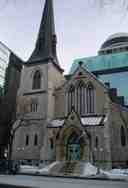 10
10St. Andrew's Presbyterian Church
Buy tour to unlock all 19 tracksTo spot St. Andrew’s Presbyterian Church, just look ahead for the striking stone building with twin arched windows and an impressive black spire-the one flying both the Canadian…Read moreShow less
To spot St. Andrew’s Presbyterian Church, just look ahead for the striking stone building with twin arched windows and an impressive black spire-the one flying both the Canadian and Scottish flags above its pointed, mint-green door. You’re standing before Ottawa’s oldest Presbyterian congregation, and I hope you’re ready for a story that’s as layered as the frosting on a wedding cake-minus the calories, of course. Imagine it: It’s 1827, and the city doesn’t even have an Anglican church yet. Thanks to Nicholas Sparks-not the romance novelist, but the generous landowner-this spot was donated for the Scottish and Irish workers sweating away on the Rideau Canal to come together and build a spiritual home that opened its doors in 1828. The land? Bought for just 200 pounds sterling. I’d say, “What a steal!” but don’t try it in front of the police station. The laughter and the sound of hammers and saws must have filled the air as these canal labourers built the first church during their rare spare moments. With their strong arms and stronger faith, they shaped not just the church, but eventually the whole neighborhood-the Glebe-which still bears the mark of those early days thanks to a huge land grant that started right here. But a congregation isn’t just wood and stone-St. Andrew’s holds stories of joy and heartbreak. In the 1840s, with changing winds in the Church of Scotland, some families split away to form Knox Free Church-so much drama, it could’ve been a reality TV show, “Presbyterians of Bytown.” Then came a tragic chapter: Reverend William Durie caught typhus while caring for sick immigrants and passed away, a quiet hero in the city’s rough early years. With time, the church grew-a new stone manse, an extended sanctuary, and in 1872, the building here today rose like a Gothic dream courtesy of William Tutin Thomas, right amid all the construction noise and clang of Wellington Street. It’s not just impressive on the outside: the inside holds gleaming plaques and stained glass windows honoring those who fought and fell in both World Wars. During the Great War, the congregation became a hub of hope and grief, with Reverend A. M. Gordon heading overseas to serve. Names like Brigadier General William St Pierre Hughes and Matron Margaret H. Smith echo in these halls, honored by well-worn memorials. Now, let’s fast-forward a bit-because St. Andrew's loved a good plot twist. In the 1920s, there was Presbyterian drama of epic proportions, with votes over whether to join the new United Church of Canada. Spoiler alert: they stayed Presbyterian, but some members left-never a dull moment, eh? During the Second World War, Canadian hospitality took center stage when none other than Princess Juliana of the Netherlands found refuge in Ottawa. She felt so at home that her family donated a lectern, emblazoned with the Dutch Royal Coat of Arms, still gracing the sanctuary. Princess Margriet was even baptized here, adding a royal sparkle to Ottawa’s church history. St. Andrew’s ties to Canadian history run deep. Prime Minister Mackenzie King sat in these pews, and when Lord Tweedsmuir-aka famed author John Buchan-passed away, his funeral was held in this very sanctuary. Faith has blended with leadership and literature right here! But the church had to keep up with the times, too. When fires and the march of progress made changes inevitable, St. Andrew’s built new rooms, rented land, and let modern offices snuggle up to its stony walls, so today, Department of Justice employees might share a hallway with church staff…hopefully no one confuses the coffee machines. With over 175 years-and counting-of ministry, St. Andrew’s has thrived on resilience and reinvention. Its current minister, Dr. Karen Dimock, followed her own winding road from Scotland to Canada (with a pit stop in neuroscience!) to lead the community. Through war and peace, celebration and sorrow, this church has shaped, sheltered, and inspired generations of Ottawans. So as you gaze up at those soaring arches and listen for echoes of century-old hymns, remember: you’re not just looking at a building, but at a living patchwork quilt of stories, stitched together by faith, community, sacrifice, and just a touch of Presbyterian stubbornness-plus a whole lot of heart.
Open dedicated page → 11
11Bank of Canada
Buy tour to unlock all 19 tracksLook ahead for a stately stone building with tall, narrow windows, a greenish copper roof, and a Canadian flag waving proudly at its summit, flanked by modern glass towers-this is…Read moreShow less
Look ahead for a stately stone building with tall, narrow windows, a greenish copper roof, and a Canadian flag waving proudly at its summit, flanked by modern glass towers-this is the Bank of Canada. Welcome, intrepid explorer! You’re now standing before the mighty Bank of Canada, also known in French as the Banque du Canada-which, for nearly a century, has been the silent force that keeps the rhythm of Canada’s economy going strong. Take a deep breath of that crisp Ottawa air, gaze up at those solemn, classical columns, and imagine the hundreds of big financial decisions that have echoed through these walls. The story of this building isn’t just about dollars and cents… it’s about power, crisis, and a few surprises along the way! Picture the early 1930s: Great Depression shadows loom, banks teeter, and Canada is tangled in a web of influence that stretches all the way to New York. Who would dare to tame the wild Canadian dollar? Cue Prime Minister R.B. Bennett, who thought maybe, just maybe, Canada needed its own financial superhero-a central bank-so he rounded up a cast that included a Scottish lord, bank directors, and Canadian policymakers. If you listen closely, you can almost hear anxious debates bouncing down Wellington Street! The Bank of Canada was born from these stormy times in 1934, not as a simple government department, but as a Crown corporation. That means it’s owned by the government, but with enough distance that it wouldn’t become a political toy-think of it like a referee who also prints the tickets for the big game! Its mission was-and still is-to keep the economy stable, control inflation, and, most dramatically, create every Canadian banknote you’ve ever tucked into your wallet. (By the way, since 1935, the very first year the bank opened its vaults, a local company-Canadian Bank Note Company-has been crafting your cash.) Before the Bank of Canada, believe it or not, it was the Bank of Montreal who acted as the government’s banker. But the wild swings of the economy and the magnetic pull of American banks convinced Canada it was time to strike out on its own. The new Bank of Canada opened its doors on March 11, 1935, nervously clutching its fresh charter and a mandate to protect Canadians from boom and bust. Only a few years later, it became a full-fledged crown corporation, led by a government-appointed governor and a hand-picked board (all of whom swore an oath of “fidelity and secrecy”-which sounds much more cloak-and-dagger than most bank board meetings!). World War II brought its own drama, as the bank helped organize Canada’s war finances, sold Victory Bonds, and kept the money flowing. After the war? Its powers expanded, and it launched the forerunner of the Business Development Bank to help Canadians rebuild and grow. Every era brought a new twist-like the late 1940s, when the Bank of Canada became the only institution in the country allowed to mint legal-tender banknotes. If you’re a Sherlock Holmes fan, you might get a thrill knowing the signatures of the bank’s leaders are on every note, a tiny piece of officialdom traveling from coast to coast to coast. In peacetime, the Bank of Canada tackles rough waters of a different kind-inflation, recession, booms, and the odd financial storm. In the 1990s, the bank squeezed inflation and kept interest rates famously low, even as the rest of the world zigged and zagged. Fast forward to the 2008 financial crisis-the central bank leapt into action, buying assets, expanding credit, and keeping the machine humming. No gold bars moved by hand anymore, but you can imagine the digital “ka-ching!” of billions moving through computers. When the COVID-19 pandemic hit, this place became ground zero for economic survival. Never before had the bank shoved so much new money into the system-some critics called it risky, but desperate times call for innovative (and sometimes controversial) measures! These strategies aren’t just chosen from a shelf. The bank's toolkit includes “forward guidance” (like an economic crystal ball), “quantitative easing” (a fancy way to pick up a bunch of financial assets), and-for the brave-negative interest rates! Inside, an army of economists, scientists, and researchers work not just on counting coins but on predicting the economy’s next surprise. And if you’ve ever admired a snazzy new polymer bill-with clear windows and hidden holograms-thank the Bank of Canada’s dedicated team of currency wizards. Collaborating with other central banks around the world, they make sure your money is tough to fake and easy to trust. But hey, not everyone agrees with every move the bank makes. From politicians to everyday folks, the Bank of Canada has had its share of critics. Some say it’s too cautious. Others say it’s too bold. Debate about the bank’s choices, especially after the pandemic, rages on-proof that the heartbeat of Canada’s economy is still very much alive behind these silent stone walls. So, next time you pull a Canadian banknote from your pocket, give it a wink. The Bank of Canada has likely lost sleep making sure it’s worth every penny! Let’s tip our hats to this gatekeeper of Canadian fortunes before we wander on to see what adventures await us at the next landmark! For a more comprehensive understanding of the roles and responsibilities, type of government institution or the bank of canada's balance sheet, engage with me in the chat section below.
Open dedicated page → 13
13Centennial Flame
Buy tour to unlock all 19 tracksRight in front of you, you'll notice a round stone fountain with a flickering orange flame at its center, surrounded by bronze shields-just keep your eyes on the glowing fire…Read moreShow less
Right in front of you, you'll notice a round stone fountain with a flickering orange flame at its center, surrounded by bronze shields-just keep your eyes on the glowing fire within the low, octagonal structure and you can’t miss it! Now, if you’re feeling the heat, you’re in the right place-this is the legendary Centennial Flame, Ottawa’s own fire-breathing fountain! Picture the scene: it was a frosty January 1st, 1967, and all of Canada was buzzing with excitement for the country’s 100th birthday bash. Here on Parliament Hill, right beside the famous Queen’s Gates and in front of the looming Peace Tower, the prime minister himself, Lester B. Pearson, stood beside guests and thousands of shivering but cheerful Canadians. Together, they saw the very first spark light up this monument, and what a sight it must have been-carrying the warm hope of a new century of confederation. But here’s the twist: this fire wasn’t meant to burn forever! The government installed the flame as a temporary symbol-a sort of birthday candle for the nation-expecting it to be blown out soon after. But the people of Canada had other ideas. They loved the glow, the warmth, and the meaning of the Centennial Flame so much that it became a permanent fixture right here outside Parliament, now burning strong since that first celebration. Take a look at the flame’s base. You’ll notice it’s ringed by a shallow fountain-no matter how much Ottawa winter throws at it, the water never freezes because the flame above keeps it cozy. Around the fountain’s ledge, the shields of Canada’s provinces and territories stare up at you like a circle of watchful guardians. When this monument was first built, there was a blank spot where Nunavut would later join, and it wasn’t until December 2017 that a plaque for Nunavut finally took its place alongside the others. So if you spot that one, you’re gazing at a little slice of living history. Here’s a fun challenge-peer into the fountain. You might see coins glinting underwater. People toss them in for luck (or maybe to test their coin-tossing aim). But this isn’t just for wishes: all the money is gathered, carefully washed, and given away to fund the Centennial Flame Research Award. It’s a prize given to someone with a disability, helping them research and share stories of other Canadians who’ve made a big impact on public life or Parliament. Some recipients have received over $5,000, with amazing stories and research lighting up our understanding just as this flame does the winter night. Sometimes, even the greatest flames need a break. High winds or major protests have, on rare occasions, forced the Flame into hibernation under a steel-and-concrete cap-turning the ever-burning fire into the ever-napping fire, at least for a little while. But today, with water bubbling, shields shining, and fire blazing, you’re standing at the very heart of 100 years of Canadian celebration and spirit. Go ahead-make a wish, and know you’re part of the story too.
Open dedicated page →
Frequently asked questions
How do I start the tour?
After purchase, download the AudaTours app and enter your redemption code. The tour will be ready to start immediately - just tap play and follow the GPS-guided route.
Do I need internet during the tour?
No! Download the tour before you start and enjoy it fully offline. Only the chat feature requires internet. We recommend downloading on WiFi to save mobile data.
Is this a guided group tour?
No - this is a self-guided audio tour. You explore independently at your own pace, with audio narration playing through your phone. No tour guide, no group, no schedule.
How long does the tour take?
Most tours take 60–90 minutes to complete, but you control the pace entirely. Pause, skip stops, or take breaks whenever you want.
What if I can't finish the tour today?
No problem! Tours have lifetime access. Pause and resume whenever you like - tomorrow, next week, or next year. Your progress is saved.
What languages are available?
All tours are available in 50+ languages. Select your preferred language when redeeming your code. Note: language cannot be changed after tour generation.
Where do I access the tour after purchase?
Download the free AudaTours app from the App Store or Google Play. Enter your redemption code (sent via email) and the tour will appear in your library, ready to download and start.
If you don't enjoy the tour, we'll refund your purchase. Contact us at [email protected]
Checkout securely with 


