
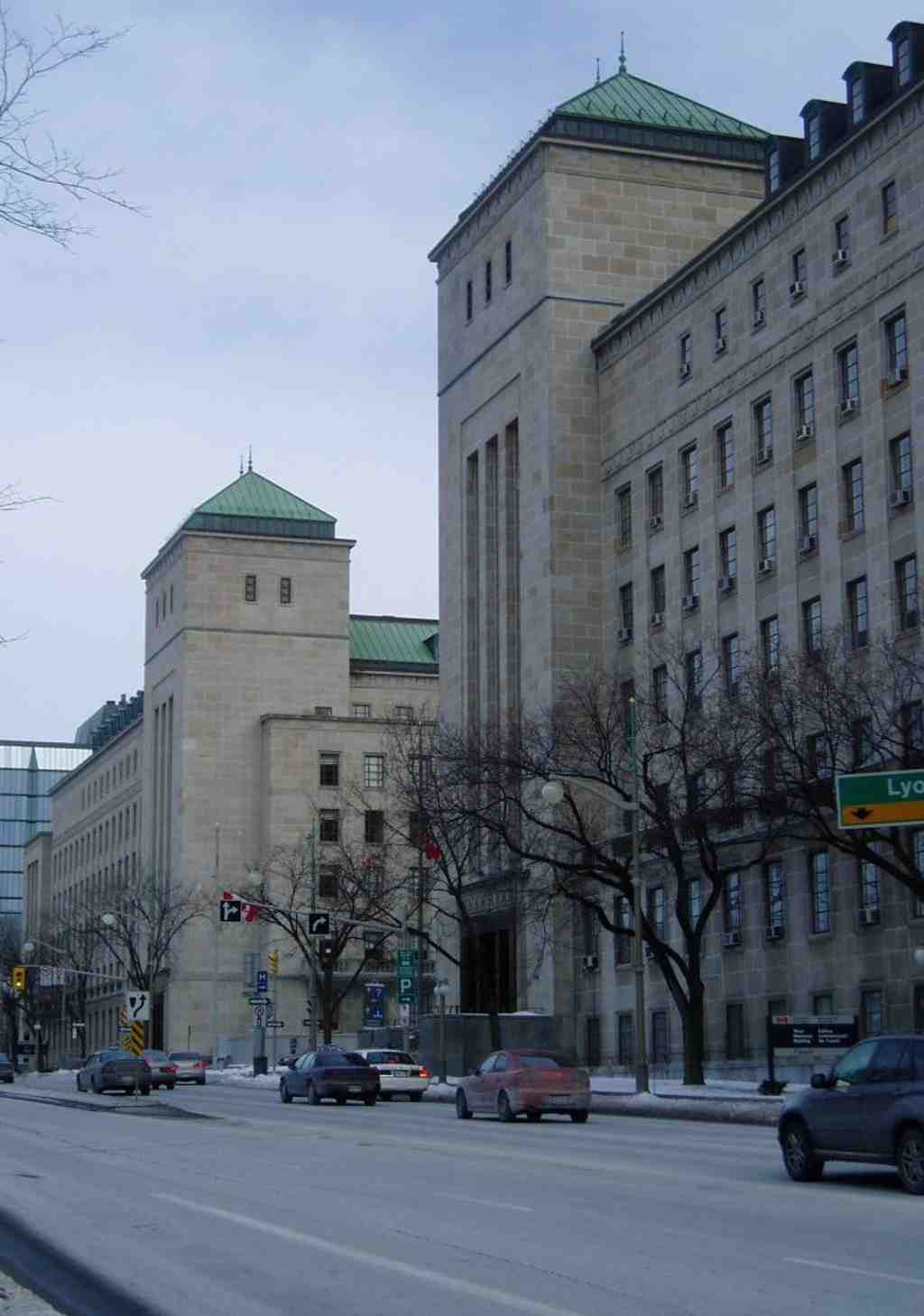
To spot the East and West Memorial Buildings, look for two large, stone towers with copper-green roofs standing face-to-face across Lyon Street, with a unique bridge-like structure connecting them overhead.
Now that you’re standing right in front of these impressive buildings-take a good look! Do you see how the twin stone giants seem to rise proudly above the street, almost like sentinels keeping watch over Wellington? These are the East and West Memorial Buildings, a little slice of history just steps away from Ottawa’s bustling government district. Let’s imagine it’s 1949: People are bustling about, cars are fewer, and there’s a real sense of anticipation in the air. Canada has just finished fighting the deadliest war in its history, and veterans are coming home by the thousands. There’s a challenge humming in the city: How do you welcome home so many heroes and help them start again?
That’s where these buildings come into the story. Originally named the Veterans Memorial Buildings, they were designed by George Roper Gouinlock and H.L. Allward-masters of blending sturdy stone with a sleek, stripped-down Art Deco style. Just think: architects with a sense of style, government officials armed with blueprints instead of battle plans, all chasing the same dream-making sure no veteran was left behind. These walls weren’t just for files and typewriters; to many, they were a promise written in stone.
The memorial arch linking the two buildings isn’t really an arch at all-it’s more like a bridge, and in more ways than one. Sure, it literally connects the East and West Buildings, but it also symbolically connects the past to the future. Pause here for a moment and picture Lyon Street as it once was: lined with proud veterans, office workers rushing through, maybe even a few happy reunions as people began rebuilding their lives. Between the lanes, among the carefully tended gardens, is a remarkable stone relief by the sculptor Ivan Meštrović, dedicated to those who fought in the Second World War. Touches like that add a heartbeat to the cold stone, don’t you think?
Story time! As the Second World War drew to a close, Canadians watched as their troops crossed the Rhine and liberated one Dutch town after another. Can you hear the celebrations-the shouts, the laughter, maybe even the pop of a few champagne bottles as the Dutch flooded into the streets to thank their liberators? When the veterans came home, Canada stepped up with more than just parades. They offered education, health care, homes, and jobs-a Veterans Charter that many countries still admire today. Take Stanley Lolley, for example-a survivor of two World Wars who turned his skills to study or business, with a bit of help from the government. Then there’s Edward Dunlop, blinded saving others from a grenade, honored for his courage and later helping countless disabled vets. Their stories echo quietly within these walls.
Through the decades, the buildings have changed hands-from Veterans Affairs to the Department of Justice and even the National Archives. The West Memorial Building now waits for big renovations, so it’s a little like a superhero in disguise-temporarily out of action, but ready for a comeback. Plans are in place for a grand restoration, and soon it’ll host Canada’s highest courts while the Supreme Court itself gets a facelift.
Funny thing: although these might look like just more government offices at first glance, they’re really monuments to resilience, service, and new beginnings. So next time you walk by, give the towers a nod. After all, they’re two of Wellington Street’s most loyal veterans-standing tall, rain or shine, as stewards of Canada’s memories.




