
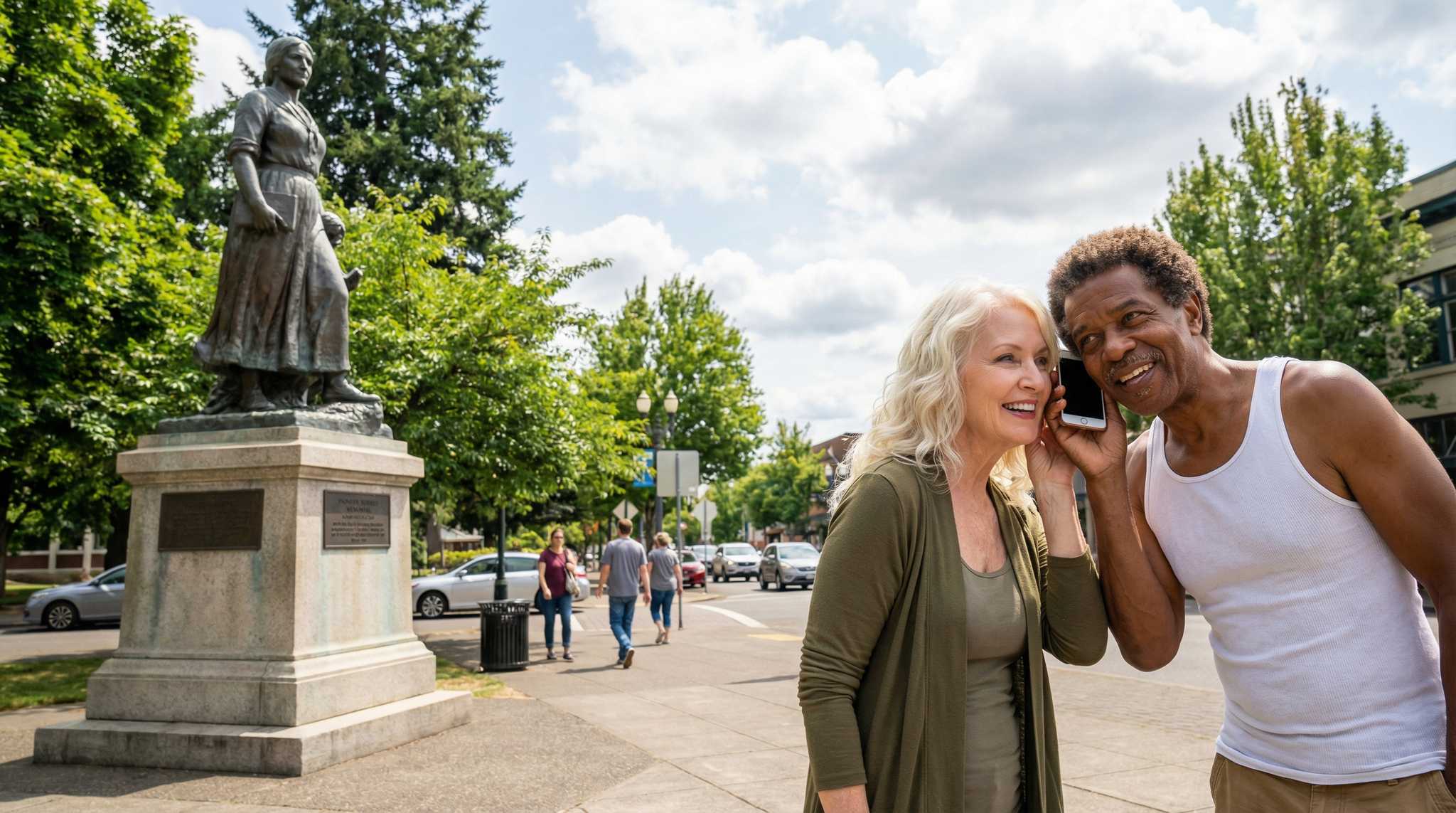
Vancouver Audio Tour: Echoes & Legends of Esther Short's Heart
A cannon once shook Esther Short’s quiet square and an ancient cathedral concealed fierce political ambitions within its stone walls. This is not just a riverside town. It’s a crossroads shaped by rivalries, mothers of revolutions, vanished pioneers, and unsolved mysteries. Take this self-guided audio tour to peel back Vancouver’s everyday face and discover hidden legends only locals whisper about. Roam between the Proto-Cathedral of St. James the Greater, the Pioneer Mother Memorial, waterfront secrets, and unexpected corners history forgot. Why did a monumental scandal unfold behind cathedral doors? Who vanished without a trace by the river’s edge one foggy night? What’s the story behind a certain carved signature near the Pioneer Mother Memorial? Traverse under leafy canopies and along shimmering water. Feel tension ripple through stolen glances, whispered rebellions, and vanished dreams. See Vancouver as a stage for intrigue and transformation. Press play and step inside the city’s most closely guarded stories.
Tour preview
About this tour
- scheduleDuration 90–110 minsGo at your own pace
- straighten3.6 km walking routeFollow the guided path
- location_onLocationVancouver, United States
- wifi_offWorks offlineDownload once, use anywhere
- all_inclusiveLifetime accessReplay anytime, forever
- location_onStarts at Vancouver Waterfront Park
Stops on this tour
lock_open 3 free previews · 10 unlock with purchase
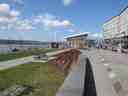
Look out across the wide concrete promenade that curves gently past the manicured green lawns, leading your eye straight toward that striking modern building with a slanted…Read moreShow less
Look out across the wide concrete promenade that curves gently past the manicured green lawns, leading your eye straight toward that striking modern building with a slanted wood-and-glass roof and a towering white mast reaching into the sky. Standing here looking out at the Columbia River, you are witnessing the end of a fight that lasted well over a century. It actually started way back in 1855, when a local civic leader named Esther Short donated this very property to the city. She laid down a strict condition for the gift, demanding the land be used for economic development while forever preserving public access to the waterfront. But her dream was completely hijacked. For generations, heavy industry, including the massive Boise Cascade paper mill, took over the shore, contaminating the ground and totally blocking the community from their own river until the mill finally closed in 2005. But reclaiming this shore was an absolute rollercoaster. When developers finally bought the site in 2008, the timing was terrible because they slammed right into the Great Recession. Developer Barry Cain was suddenly staring down a massive forty-four million dollar infrastructure bill just to build an earthen wall, or berm, under the railroad tracks to connect the city streets, and he nearly abandoned the whole project. He took his concerns to Mayor Royce Pollard, who boldly guaranteed the city would find the money. Then, just as things got moving, a massive oil terminal was proposed just three miles downriver in 2013. Cain had to fight tooth and nail, warning the media that safety fears surrounding an oil terminal would completely scare off financing for his one point three billion dollar vision, and thankfully, the terminal was defeated. Now, look at that incredible focal point suspended over the water, the Grant Street Pier. It stretches one hundred feet out over the river, held up by cables attached to a striking seventy-five foot tall beam designed to look like a sailboat mast. Remarkably, they engineered it entirely without putting support columns in the water, ensuring local fish could migrate safely below. If you walk up to the base of the pier, you will see actual structural engineering math etched into the stone, along with an image of the Columbia Rediviva, the famous American ship that gave this mighty river its name in 1792. Nearby is the Headwaters Wall, a stunning twelve foot stone and bronze water feature with a cast bronze map of the Columbia Basin. Right after it opened in 2019, city officials panicked when unsightly white chalky stains appeared on the polished black granite. They had already spent fifteen years battling similar stubborn stains on a bell tower in town! Fortunately, smooth granite is easier to clean than porous brick. When this park finally opened to an emotional crowd of thousands, the mayor proudly declared that Vancouver had grown up. The community finally clawed back its shoreline. So, let us trace this resilience back to its roots. Our next stop is a ten minute walk away, where we will visit Captain George Vancouver Monument Plaza, honoring the man who supposedly started it all.
Open dedicated page →Look to your left for a sweeping concrete wall covered in colorful painted murals, anchored by a tall white flagpole and a polished black granite slab. This is the Veterans of…Read moreShow less
Look to your left for a sweeping concrete wall covered in colorful painted murals, anchored by a tall white flagpole and a polished black granite slab. This is the Veterans of Foreign Wars Memorial Plaza. It is a deeply sacred space, born entirely from the sheer determination of local veterans refusing to let this corner of the city succumb to urban neglect. The creation of this plaza was a pure feat of grassroots grit. The entire six thousand dollar project was funded exclusively through community donations from VFW Post 7824, individual contributors, and an organization called the forty et eight's Voiture ninety nine, an exclusive veterans honor society originally named after World War One French railway boxcars that could hold forty men or eight horses. The sprawling Remembrance Wall you see here actually started as a passing conversation. An English immigrant named Jerry Rolling was walking along the nearby waterfront with his colleague Nikki White, telling her about a Canadian town that revived its economy with public murals. White became absolutely obsessed with bringing that idea to Vancouver. Rolling later joked her persistence was like being pecked to death by a duck, but it worked. They co-founded the Clark County Mural Society, which eventually painted these massive concrete panels right under the active BNSF railway line. When this plaza was dedicated in September 2013, the murals became incredibly personal. Veterans and their families were invited to actually paint their own names directly onto the wall. A former Marine named Gary Barker eagerly painted his name, reflecting on the famous Vietnam Veterans Memorial in Washington DC which holds the names of over fifty eight thousand fallen soldiers. Barker looked at this local wall and said, this is the wall I want my name on. I have friends on the other wall. I am thankful my name is not there. People honored generations of service here. A young boy named Sean Crotty even climbed up a ladder to paint his family's names high above the ground. Maintaining this space is an ongoing battle against nature and industry. Because the wall sits in the shade right below the railroad tracks, it gets caked in moss, street grime, and heavy train dust. In 2016, a mural showing the sinking of the USS St. Lo was almost completely obscured. Volunteers spent hours scrubbing the twenty four foot wide painting with handfuls of ordinary household baking soda just to bring the vibrant colors back to life. It is a living testament to those who served, still fiercely protected by the community today. Speaking of recognizing those who shaped this region, let us head toward another monument dedicated to the absent captain we learned about earlier. The Statue of George Vancouver is just a five minute walk away.
Open dedicated page →
Show 10 more stopsShow fewer stopsexpand_moreexpand_less
Look up right in front of you at the Evergreen Hotel, a five-story concrete building with a strong, symmetrical block shape, topped by a striking red Spanish tile roof. In 1927,…Read moreShow less
Look up right in front of you at the Evergreen Hotel, a five-story concrete building with a strong, symmetrical block shape, topped by a striking red Spanish tile roof. In 1927, Vancouver locals were tired of lacking a high-quality social hub, so they took matters into their own hands. Talk about grassroots grit! Four hundred and thirty five everyday citizens pooled their own money, buying shares to fund this Italian Renaissance style marvel, a design featuring the grand, symmetrical elements inspired by the palaces of fifteenth-century Italy. This massive crowdfunding spirit proved that when this community wanted a premier gathering place, they fought for it and built it from the ground up. When it opened on March 17, 1928, the mayor literally declared a public holiday. Police cleared Main Street of traffic so thousands could pack the sidewalks. Inside, the hotel boasted sixty five modern sleeping rooms and a geometric hard maple floor that was widely considered the finest dance floor in town. But the absolute highlight was the dedication ceremony. You remember the intense, sometimes deadly pioneer clashes we talked about earlier with the British Hudson's Bay Company? Well, time heals all wounds. In a wildly ironic twist, the streetlights outside were turned off, plunging the crowd into a canyon of darkness. Then, using what was the longest trans-continental telegraph cable of its time, the governor of the Hudson's Bay Company pulled a lever all the way over in London, England. In a flash, Vancouver's new downtown electric lights blazed to life, officially opening the hotel. For decades, this place was the city's commercial heartbeat. It was also home to Robert Kimbrough's shoe shine and repair business. Before the World War Two shipyard boom brought thousands of new workers, Kimbrough was one of the very few verified African American residents in a predominantly white city, making his shop a vital and respected community fixture. The hotel eventually declined and was condemned in the late seventies, but local owners stepped in to rescue and restore the structure. Today, it serves as retirement housing, though local history guides still love sharing eerie legends about its past. Let us keep exploring. Head down the street, and in about seven minutes we will find another architectural marvel, the Elks Building.
Open dedicated page →Look to your left for a striking three-story brick building with tall arched windows and elegant iron balconies. In nineteen oh seven, the Vancouver Elks Lodge pooled their…Read moreShow less
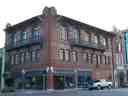
Look to your left for a striking three-story brick building with tall arched windows and elegant iron balconies. In nineteen oh seven, the Vancouver Elks Lodge pooled their resources to purchase this corner lot for ninety five hundred dollars, a sum equal to over three hundred thousand dollars today. Much like the community crowdfunding that built the Evergreen Hotel we just saw, these fraternal brothers banded together to forge a grand sanctuary of their own, cementing a permanent stronghold in a rapidly shifting city. They hired Portland architect Robert F. Tegan to design their temple, completed in nineteen eleven. Tegan's architectural ambition shines through the ornate brickwork and Mission Revival style, an aesthetic inspired by old Spanish colonial missions, which served as a bold symbol of the city's growing prestige. Tegan was an Elk himself, and quite the local celebrity, once making headlines for a grueling forty two hundred mile road trip to Mexico. His personal life was rockier, however. He divorced his wife Winifred in nineteen twenty and abruptly abandoned the Pacific Northwest for San Francisco. Still, his masterpiece endured. This was once the tallest building in downtown Vancouver! The lodge leased the ground floor to shops while reserving the upper floors for billiards, card rooms, and massive civic gatherings. They cultivated deep patriotism here, launching elaborate honor guard ceremonies for Flag Day. Eventually, as membership dwindled, the overwhelming financial weight of the massive structure forced them to sell in nineteen seventy three. Today, it survives as the last fraternal lodge building downtown, preserving the memory of a brotherhood that fought to build a lasting civic anchor. Keep an eye out for the fascinating Art Deco building nearby, and then let us continue our four minute walk to the Vancouver Telephone Building.
Open dedicated page →Look to your right and you will spot a sturdy rectangular structure made of decorative glazed brick with elegant terra cotta accents tracing along its top edge. This is the…Read moreShow less
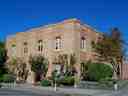
Look to your right and you will spot a sturdy rectangular structure made of decorative glazed brick with elegant terra cotta accents tracing along its top edge. This is the historic Vancouver Telephone Building, completed in nineteen thirty four right in the middle of the Great Depression. Think about what a massive leap in architectural ambition this was for the city. Back in eighteen ninety five, the local exchange connected just fifteen telephones total. By the nineteen thirties, the city was desperate for a dedicated facility to handle the booming demand. Connecting a rapidly growing frontier town during an economic collapse took serious muscle. That muscle came from the Pacific Telephone and Telegraph Company, backed by the financial giant J.P. Morgan. They aggressively bought out independent operators across Washington and Oregon, fiercely claiming control over the entire Pacific Coast communications network. To project that new, untouchable power, they hired a prominent Seattle architectural firm. The lead architect, Abraham Albertson, was famous for his towering modernistic designs. He embraced the Art Deco style, an aesthetic that used sleek geometric lines and industrial materials to symbolize progress and the future. He believed worldly styles could be domesticated to fit local environments. But despite designing this gorgeous reinforced concrete frame with its glazed brick and terra cotta veneer, Albertson could not outrun the Depression. When commissions dried up, the renowned architect was forced to take a government job with the Federal Housing Authority just to survive. While the outside looked polished, the inside was all about relentless industry. The quiet first floor was where customers paid their bills. But up on the second floor? That was the bustling nerve center. Dozens of operators frantically plugged cords into giant switchboards, manually connecting every single call over the deafening noise. Except for adding a fire escape to meet modern safety codes, the exterior remains wonderfully intact. It stands as a powerful reminder of how a community fought to build its voice against overwhelming economic odds. Now, let us walk five minutes down the road to the Hidden Houses, to see the homes of the very family who manufactured the bricks that built this city.
Open dedicated page →On your right, you will spot a pair of striking historic brick mansions, the older one showcasing decorative brick patterns and ornate stained glass, while a smaller blue carriage…Read moreShow less
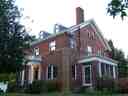
On your right, you will spot a pair of striking historic brick mansions, the older one showcasing decorative brick patterns and ornate stained glass, while a smaller blue carriage house sits right between them. You are looking at the Hidden Houses, the absolute epicenter of Vancouver's grassroots grit. This is the ultimate story of building a community from the ground up, quite literally. Lowell M. Hidden was born into deep poverty in Vermont and was bound out at just six years old. Being bound out meant he was handed over as an indentured servant to a farmer in exchange for an education. Well, the farmer broke his promise, so at thirteen, Lowell ran away. He eventually fled west to escape the Civil War, arriving right here in Vancouver in 1864 hoping to harvest crops. Instead, he found the Columbia River had completely flooded the fields. Unfazed, he pivoted. He cut hay, built a city dock, started a fence business, and soon leased a hotel with his wife, Mary. Then came the twist of fate. A formidable nun named Mother Joseph approached him with an impossible request. She wanted to build a massive academy and needed one million bricks. Lowell had never been a brickmaker, but he boldly agreed, opening his brickyard in 1871. He sold those first bricks for eight dollars per thousand, roughly two hundred dollars today. That accidental business venture turned into an empire. Over his lifetime, his company produced an estimated sixty million iconic red bricks, shaping the very face of the city against overwhelming odds. If you look closely at older buildings downtown, you might spot bricks with the name HIDDEN stamped directly into the frog, the small indentation on the flat side meant to hold mortar. He built his own family home right here in 1884 in the Queen Anne style, an architectural design known for its elaborate details like those fancy, stepped out brick chimney caps you can see on the roof. His son built the equally grand Colonial Revival house next door in 1913, though despite their immense wealth, the family remained incredibly frugal, even keeping a chicken coop out back to supply their own eggs. Between the homes, the blue carriage house features a garden planted by his son to honor the women of the family. As you walk by Lowell's house, you might even hear a ghostly melody. For decades, restaurant workers in the building have reported phantom footsteps, self unlocking doors, and the beautiful singing of a woman, believed to be the spirit of Lowell's daughter, Julie, who loved entertaining guests. From a runaway child to the literal architect of a city, Lowell left a towering legacy. One magnificent structure built from his sixty million bricks is a nearby church that sparked a decades long power struggle. Let us take a three minute walk to see the Proto-Cathedral of St. James the Greater.
Open dedicated page →On your left, look for the massive red brick structure with its towering, sharply pointed Gothic steeple and the large circular window set above the main arched entrance. This…Read moreShow less
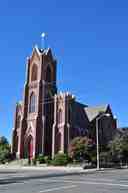
On your left, look for the massive red brick structure with its towering, sharply pointed Gothic steeple and the large circular window set above the main arched entrance. This imposing building is the Proto-Cathedral of Saint James the Greater. Its history is a rollercoaster of fierce turf wars and desperate escapes. Consider the French Canadian workers for the Hudson's Bay Company stationed here in the eighteen thirties. In a bizarre twist of geography, they actually petitioned the bishop in their native Quebec, thousands of miles across a rugged continent, just to send priests to the wild Oregon Country. The church responded by sending François Norbert Blanchet. His arrival here wasn't a triumphant march. It was a frantic run for his life. Blanchet was originally stationed in Walla Walla. Just eight weeks after arriving, the terrifying Whitman Massacre erupted when Cayuse tribal members killed a Presbyterian missionary and a dozen others. Escaping that escalating violence, Blanchet made a desperate retreat to Fort Vancouver for the armed protection of the Hudson's Bay Company and the United States Army. Because he sought refuge here, the modest wooden church they had just built was unexpectedly elevated to a full cathedral. But safety was short lived. By eighteen forty nine, the United States Army had established the Vancouver Barracks, and a bitter, forty year power struggle began. The military and the Catholic Church fought tooth and nail over a six hundred forty acre land claim. This fierce legal battle dragged all the way to the United States Supreme Court. The church suffered a crushing defeat. The court ruled they were only entitled to about half an acre, effectively evicting them from their own sprawling footprint. They were forced to relocate right here to Twelfth Street. Bishop Blanchet secretly entrusted Mother Joseph, a local missionary, with five thousand dollars, roughly one hundred fifty thousand today, to secure a new site. The timing was eerily perfect. On June twenty first, eighteen eighty nine, their original wooden church mysteriously burned to the ground. Arson was strongly suspected, though no one was ever charged. Amidst the flames, brave parishioners dashed inside to rescue priceless paintings Blanchet had brought from his travels. Six historic artworks survived and still hang inside today, underneath a spectacular ceiling painted with gold stars meant to remind parishioners of heaven. By the time this grand masonry building was completed, it carried a staggering twenty five thousand dollar debt. That is nearly eight hundred thousand dollars today. That financial ruin caused intense behind the scenes pressure. A priest in Seattle spent years relentlessly urging the bishop to relocate to that rapidly growing port city. Burdened by the massive debt, the diocese leader finally abandoned Vancouver. He packed up the episcopal see, the official headquarters of the bishop, and moved away, leaving this grand structure behind as a mere parish church. It was not until two thousand thirteen that it was finally designated as a proto-cathedral, a term meaning former cathedral. Oh, and there is one deeply mysterious detail. For decades, the diocese's first two bishops were buried in a crypt right inside. When church officials exhumed them in nineteen fifty five, a priest examining Blanchet's remains reportedly declared his body was incorrupt, a phenomenon where a body is miraculously preserved from natural decay. Now, let us walk four minutes to our final destination, the very seat of county power, the Clark County Courthouse.
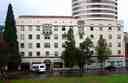
Open dedicated page →Look straight ahead at this massive five-story peach-colored concrete building, featuring a geometric stepped-back shape and a dark metal sculpture perched right above the…Read moreShow less
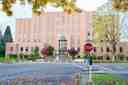
Look straight ahead at this massive five-story peach-colored concrete building, featuring a geometric stepped-back shape and a dark metal sculpture perched right above the towering central glass entrance. Leaving the Proto-Cathedral of St. James the Greater behind, we arrive at our final landmark, the Clark County Courthouse. This sleek Art Deco masterpiece, with its towering vertical lines and geometric massing, is the defining legacy of architect Day Walter Hilborn. He designed it to be the absolute pinnacle of southwest Washington's built environment. But bringing a monument like this to life was a massive, unexpected battle. Originally, federal New Deal programs, which were government initiatives meant to boost the economy during the Great Depression, were supposed to foot the bill. But suddenly, those funds were slashed. The county was left holding the bag for a whopping five hundred forty-six thousand dollars, which is roughly twelve million dollars today. Local taxpayers had to scrape together the funds themselves to finish this monolithic structure. It was an enormous financial sacrifice to build their community. And you see that metal sculpture above the doors? That is the Buckskin Brigade, depicting an Iroquois man and two trappers. The original was actually poured directly into the concrete wall itself. In nineteen seventy-eight, a disastrous power-washing attempt completely crumbled the original artwork. Salli Hilborn, a relative of the architect, called it a foolish mistake, and citizens had to launch a years-long grassroots campaign just to cast the metal replica you see today. Yet, the most chilling chapter of this building's story is its opening day. Governor Arthur B. Langlie dedicated this courthouse on November twenty-ninth, nineteen forty-one. Thousands of locals gathered in a spirit of triumph to celebrate their hard-won civic centerpiece. Exactly eight days later, the attack on Pearl Harbor plunged the United States into the Second World War. The trajectory of this community, and the very lives of those who just stood cheering on these steps, were altered forever. As we stand before Hilborn's monumental achievement, let the weight of that history settle in. Gather your thoughts as we prepare for some final reflections on everything we have explored today.
Open dedicated page →
Frequently asked questions
How do I start the tour?
After purchase, download the AudaTours app and enter your redemption code. The tour will be ready to start immediately - just tap play and follow the GPS-guided route.
Do I need internet during the tour?
No! Download the tour before you start and enjoy it fully offline. Only the chat feature requires internet. We recommend downloading on WiFi to save mobile data.
Is this a guided group tour?
No - this is a self-guided audio tour. You explore independently at your own pace, with audio narration playing through your phone. No tour guide, no group, no schedule.
How long does the tour take?
Most tours take 60–90 minutes to complete, but you control the pace entirely. Pause, skip stops, or take breaks whenever you want.
What if I can't finish the tour today?
No problem! Tours have lifetime access. Pause and resume whenever you like - tomorrow, next week, or next year. Your progress is saved.
What languages are available?
All tours are available in 50+ languages. Select your preferred language when redeeming your code. Note: language cannot be changed after tour generation.
Where do I access the tour after purchase?
Download the free AudaTours app from the App Store or Google Play. Enter your redemption code (sent via email) and the tour will appear in your library, ready to download and start.
If you don't enjoy the tour, we'll refund your purchase. Contact us at [email protected]
Checkout securely with 




