
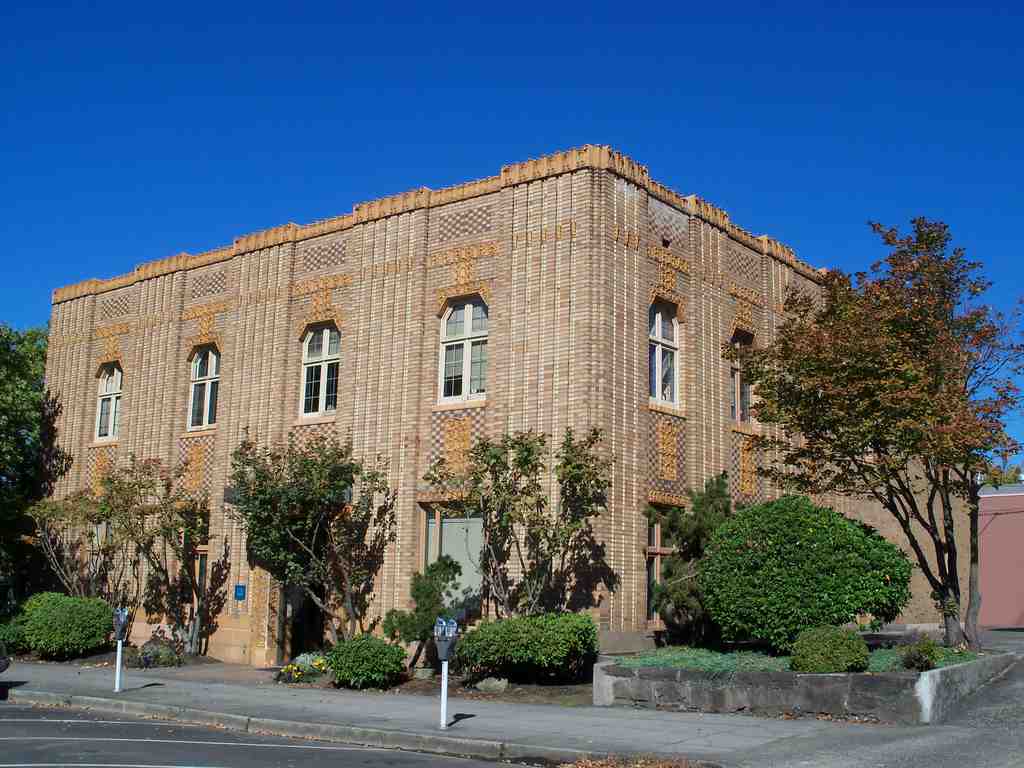
Look to your right and you will spot a sturdy rectangular structure made of decorative glazed brick with elegant terra cotta accents tracing along its top edge. This is the historic Vancouver Telephone Building, completed in nineteen thirty four right in the middle of the Great Depression.
Think about what a massive leap in architectural ambition this was for the city. Back in eighteen ninety five, the local exchange connected just fifteen telephones total. By the nineteen thirties, the city was desperate for a dedicated facility to handle the booming demand. Connecting a rapidly growing frontier town during an economic collapse took serious muscle. That muscle came from the Pacific Telephone and Telegraph Company, backed by the financial giant J.P. Morgan. They aggressively bought out independent operators across Washington and Oregon, fiercely claiming control over the entire Pacific Coast communications network.
To project that new, untouchable power, they hired a prominent Seattle architectural firm. The lead architect, Abraham Albertson, was famous for his towering modernistic designs. He embraced the Art Deco style, an aesthetic that used sleek geometric lines and industrial materials to symbolize progress and the future. He believed worldly styles could be domesticated to fit local environments. But despite designing this gorgeous reinforced concrete frame with its glazed brick and terra cotta veneer, Albertson could not outrun the Depression. When commissions dried up, the renowned architect was forced to take a government job with the Federal Housing Authority just to survive.
While the outside looked polished, the inside was all about relentless industry. The quiet first floor was where customers paid their bills. But up on the second floor? That was the bustling nerve center. Dozens of operators frantically plugged cords into giant switchboards, manually connecting every single call over the deafening noise.
Except for adding a fire escape to meet modern safety codes, the exterior remains wonderfully intact. It stands as a powerful reminder of how a community fought to build its voice against overwhelming economic odds. Now, let us walk five minutes down the road to the Hidden Houses, to see the homes of the very family who manufactured the bricks that built this city.




