
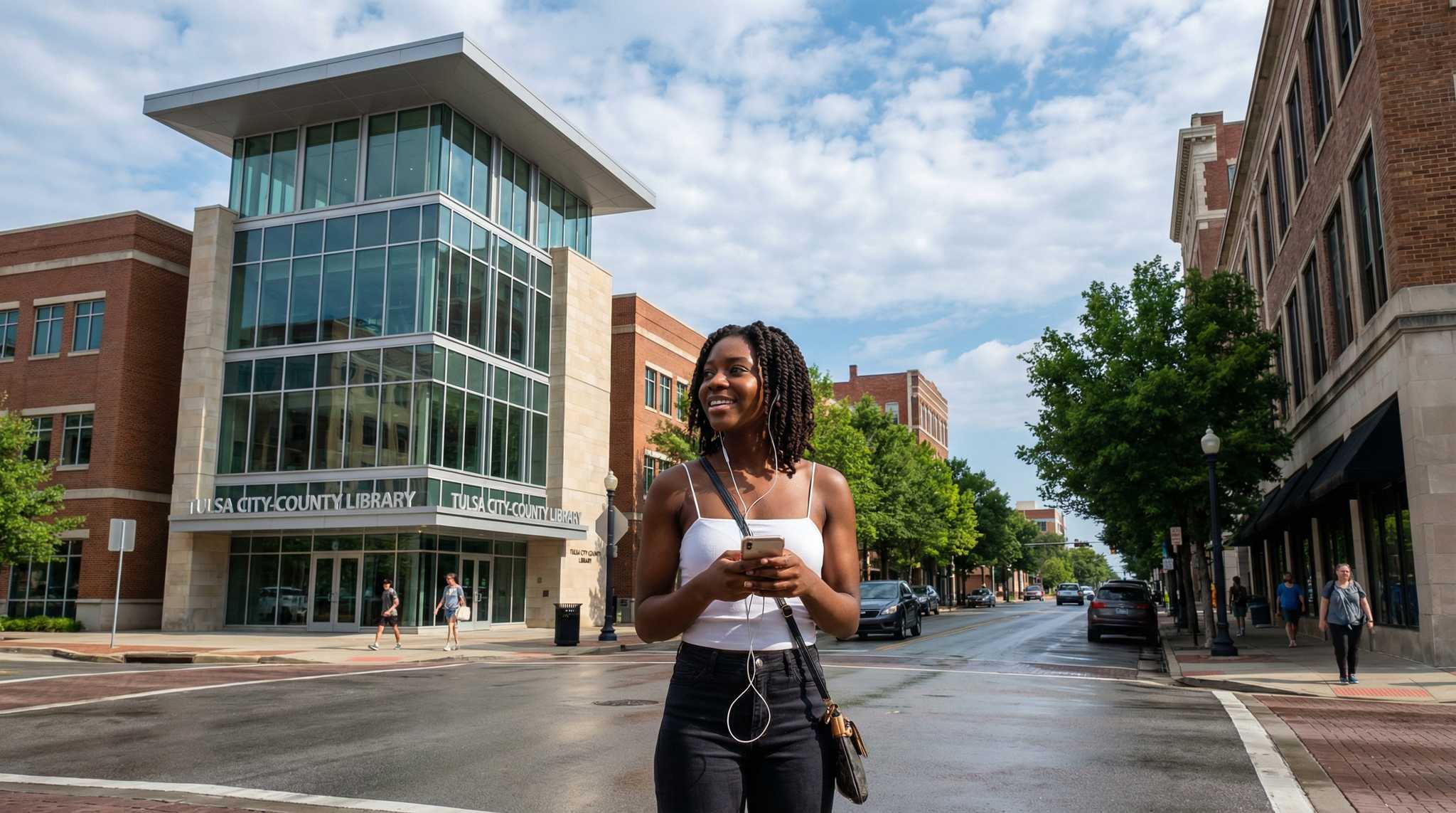
Tulsa Audio Tour: Art Deco Echoes & Jazz Trails Downtown
Downtown Tulsa glitters with Art Deco pride, but beneath the terrazzo and brass, a rougher story hums like a late night riff. This self guided audio tour threads the Tulsa City County Library, the Tulsa Performing Arts Center, the Oklahoma Jazz Hall of Fame, and nearby corners most visitors rush past. Hear the whispers behind the headlines, catch the clues in plain sight, and let the streets deliver their own footnotes. What broke loose when politics turned personal in the heart of downtown, and the fight spilled into public life? Which backstage rumor still clings to the Performing Arts Center like perfume in velvet seats? Why does a single catalog card, a missing name, and a date in pencil keep resurfacing at the library? Move block by block through scandals, rebellions, mysteries, and forgotten moments. Feel Tulsa shift from polished facade to charged, intimate revelation. Press play and chase that hidden rhythm.
Tour preview
About this tour
- scheduleDuration 70–90 minsGo at your own pace
- straighten2.7 km walking routeFollow the guided path
- location_onLocationTulsa, United States
- wifi_offWorks offlineDownload once, use anywhere
- all_inclusiveLifetime accessReplay anytime, forever
- location_onStarts at Mincks-Adams Hotel
Stops on this tour
lock_open 3 free previews · 8 unlock with purchase
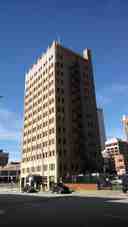
Look for the tall, tan-brick high-rise with a bright, ornate white strip of decoration running up the left front corner, plus a black metal fire escape zigzagging down the darker…Read moreShow less
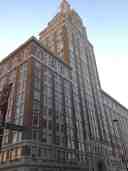
Look for the tall, tan-brick high-rise with a bright, ornate white strip of decoration running up the left front corner, plus a black metal fire escape zigzagging down the darker side wall. You’re standing by the Mincks-Adams Hotel, a 13-story blast from Tulsa’s boom days at 403 Cheyenne. Back in 1927 and 1928, businessman I. S. “Ike” Mincks built this place as the Mincks Hotel-pure luxury, meant to pull in traveling oil men with heavy briefcases and heavier confidence. The timing was no accident: it opened in time for the first International Petroleum Exposition, when Tulsa was eager to show off and sell the dream. Architect Alfred C. Fabry gave the building a mash-up of Gothic, Italian Renaissance, and Baroque flair-because why choose just one personality? Up close, that creamy, patterned skin isn’t stone at all; it’s glazed terra cotta, inside and out, made by the Northwestern Terra Cotta Company. Even the lobby and stairwells got the same treatment, like the building was dressed for dinner at all hours. Mincks spent about $802,800 to build it-around $14 million in today’s money-and for a while, it worked. Then the Great Depression had other plans. Mincks went bankrupt in 1935, and the hotel was sold off and reborn as the Adams Hotel. Later, in the early 1980s, it swapped room keys for office keys as the Adams Office Tower. It’s handsome enough to land on the National Register of Historic Places in 1977, and stubborn enough to keep reinventing itself-developers bought it in 2017 aiming to turn it into apartments. When you’re set, Tulsa City-County Library is a 4-minute walk heading southeast.
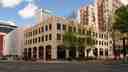
Open dedicated page →On your right, look for the low, cream-colored Art Deco building with a jagged, “stepped” crown along the roofline and tall, arched openings at street level. This is the Pythian…Read moreShow less
On your right, look for the low, cream-colored Art Deco building with a jagged, “stepped” crown along the roofline and tall, arched openings at street level. This is the Pythian Building, and it’s basically downtown Tulsa in one snapshot: big ambition, a hard economic left turn, and then a stubborn decision to finish the job anyway. Construction kicked off in 1929-timing that, in hindsight, feels almost like a prank. Two local oilmen, J. M. Gillette and H. C. Tyrrell, started it with a bold plan: an office building topped by a ten-story hotel. Then the Great Depression hit, and the dream stalled out at the third floor. Tulsa wasn’t alone-across the country, projects froze mid-stride-but it’s still something to picture: cranes quiet, cash tight, and this half-finished shell waiting at the corner. In 1931, the Knights of Pythias bought the place and decided they weren’t in the mood for an architectural shrug. They completed it as an office building and gave it the name it still carries. It later landed on the National Register of Historic Places in 1982, thanks to its Art Deco mix-sleek “Modern” lines with those punchy “Zig Zag” details that feel like the building is lightly clenching its jaw. Now, take in the facade. See those thin vertical strips running upward? They’re like ribs, and they’re decorated with back-to-back diamond patterns-little zigzags that repeat all over, including in the lobby tile work inside. The accents pop in blue terra cotta, and along the roofline you’ll catch bands of blue, green, and burnt sienna, like someone finally let the color back into the budget. At street level, the openings have a Tudor-arch shape, but the framing is very 1930s: steel and geometric, more machine-age than medieval. Even in modern times, it’s had its plot twists-listed for a sealed-bid sale in 2012 with a minimum of $1.4 million (about $1.9 million today), then absorbed into a major downtown portfolio a few years later. Ready for First Place Tower? Just walk southeast for 5 minutes.
Open dedicated page →
Show 8 more stopsShow fewer stopsexpand_moreexpand_less
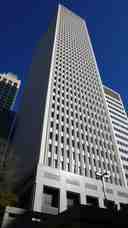
On your left, look for the tall, pale-gray tower with tight rows of small square windows, rising like a clean-lined cliff against the sky. This is First Place Tower, planted at…Read moreShow less
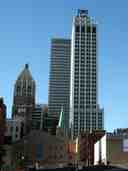
On your left, look for the tall, pale-gray tower with tight rows of small square windows, rising like a clean-lined cliff against the sky. This is First Place Tower, planted at 15 East Fifth and facing Boston Avenue like it wants to be noticed. What you’re seeing is really two eras stacked into one address: the lower, midrise portion came first in 1949, a 20-story statement that Tulsa meant business. Then, in 1973, the city went bigger-adding the 41-story tower that shoots up to about 516 feet, making it one of Tulsa’s tallest. Standing here, you can almost feel that 1970s confidence: straight lines, no frills, just height and hustle. Ownership has had its own plot twists. From 2006 to 2017, it belonged to Maurice Kanbar, a California entrepreneur with a serious downtown portfolio, before he sold it to his operating partner, Stuart Price. Ready for Mid-Continent Tower? Just walk northwest for 0 minutes.
Open dedicated page →Look for the tall, bright-white tower with a dark copper-green roofline and little Gothic-style details near the top-it’s the Mid-Continent Tower, and it stands out against the…Read moreShow less
Look for the tall, bright-white tower with a dark copper-green roofline and little Gothic-style details near the top-it’s the Mid-Continent Tower, and it stands out against the sky like Tulsa decided to wear a dress shirt to work. This is the Mid-Continent Tower at 401 South Boston Avenue: 36 stories, about 513 feet tall, and one of the easiest buildings downtown to recognize thanks to that clean white terra cotta skin and the unmistakable copper crown. But here’s the twist: this “one” tower is really two eras pretending to be one body. Down at the base is the original 1918 Cosden Building-16 stories tall, built for oilman Joshua Cosden when Tulsa was booming hard and fast. And it sits on a site with even deeper roots: the first Tulsa schoolhouse, started as a mission in 1885 on Creek land. So, yes, you’re standing near a place that’s been educating people in one way or another for well over a century-first kids, later oil executives. Kansas City architect Henry F. Hoit designed the original, in a modern take on Gothic style-more “cathedral vibes” than Art Deco glitz. Then in 1984, Tulsa pulled off a very careful architectural magic trick: a new 20-story section was added and cantilevered so it looks like it’s resting on the older building, even though the real support is tucked to the east. Built 66 years apart, but dressed to match so well you’d swear it was always whole. When you’re set, 320 South Boston Building is a 1-minute walk heading northwest, and it will be on your left.
Open dedicated page →On your left, look for the big brick-and-cream tower that fills the whole block, topped with a stepped crown and a little cupola like a hat perched on its head. This is the 320…Read moreShow less
On your left, look for the big brick-and-cream tower that fills the whole block, topped with a stepped crown and a little cupola like a hat perched on its head. This is the 320 South Boston Building, and it’s been doing the most in Tulsa since the day it showed up. It started life in 1917 as a ten-story headquarters for Exchange National Bank, planted right here at Third and Boston. Then Tulsa hit its growth spurt, and in 1929 they stacked on a major expansion, pushing it to 22 stories and about 400 feet tall. For a moment, it was the tallest building in all of Oklahoma-Tulsa basically standing on tiptoe and waving. The title didn’t last past 1931, but in Tulsa it stayed the tallest until 1967. Architecturally, it’s Beaux Arts-think: formal, confident, and slightly overdressed on purpose. You can spot the terra cotta wrapping the lower floors, the long vertical lines of windows, and that tower that steps back near the top before finishing with a temple-like section and the cupola. And that cupola wasn’t just decoration. For years it doubled as a giant weather signal: green lights for fair skies, red when trouble was coming. Downtown had its own built-in forecast, no app required. In 1949, KOTV put a transmitter on the roof-an exciting upgrade with a tragic footnote when a dropped wrench killed a woman on the street below. The station eventually moved broadcasts to a taller tower in 1954. Also, no, the top wasn’t a Zeppelin parking spot-fun myth, zero evidence. When you’re set, Tulsa Performing Arts Center is a 2-minute walk heading northwest.
Open dedicated page →On your left, look for the big, blocky cream-and-tan building with a wide dark entrance canopy and glass doors sitting low against a nearly windowless wall. You’re standing at…Read moreShow less
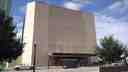
On your left, look for the big, blocky cream-and-tan building with a wide dark entrance canopy and glass doors sitting low against a nearly windowless wall. You’re standing at the Tulsa Performing Arts Center, and from the outside it has that “serious business” look-like it’s politely holding all its drama, music, and jazz hands on the inside where it belongs. This place opened in 1977, built with a mix of public and private money, and it’s been Tulsa’s main indoor gathering spot for the performing arts ever since. But getting here wasn’t automatic. In the early 1970s, Tulsa realized the older venue downtown-the old Municipal Theatre-wasn’t cutting it anymore. A Theatre Advisory Committee formed, led by Charles E. Norman, and they studied a bunch of options: fix up the old 1914 theater, use the Akdar Shrine theater from the 1920s…or do the scary thing and build something new. Then a major opportunity landed: John H. Williams of The Williams Companies had bought up a huge nine-block area for development. Plans shifted, as plans do, and land between 2nd and 3rd became available. Williams donated that parcel to the city for a performing arts center, and in 1973 he teamed with philanthropist Leta Chapman with a very Tulsa-style challenge: if the voters funded half, they’d raise the other half. The bond vote passed big-about 69%-and the project was originally set at $14 million at the time, roughly around $100 million in today’s dollars, give or take depending on whose inflation calculator you trust. The architect was Minoru Yamasaki-yes, the same guy who designed the former World Trade Center towers. That connection adds a little gravity to the story, even if what you’re looking at right now feels more “stoic arts bunker” than “soaring skyline icon.” Inside, though, it’s a whole complex: four main theaters, studio space, an art gallery, and room for receptions. The largest space is Chapman Music Hall with 2,365 seats, and on opening night-March 19, 1977-Ella Fitzgerald helped christen the place. Not a bad way to say “welcome to the neighborhood.” This center runs on variety. Local anchors like Tulsa Ballet, Tulsa Opera, and Tulsa Symphony keep the calendar packed, and big names have rolled through too-Michael Bublé, Kelly Clarkson, Steve Martin, even Anthony Bourdain. And because Tulsa passed an ordinance requiring 1% of public building costs to go to art, the PAC ended up with a permanent collection-76 works-mixing local, national, and international artists, with significant Native American representation. It also evolved: a major accessibility retrofit in the early 1990s, then a big expansion in 2000 that added more space and, mercifully, lots more restrooms. When you’re ready, BOK Tower is next-just walk northeast for about 4 minutes.
Open dedicated page →On your left, look for the big sandy-colored Art Deco building with two square towers and a long canopy out front-the façade still reads like a train station because it used to be…Read moreShow less
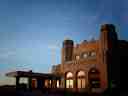
On your left, look for the big sandy-colored Art Deco building with two square towers and a long canopy out front-the façade still reads like a train station because it used to be one. This is the Oklahoma Jazz Hall of Fame, and it lives inside the former Tulsa Union Depot-now called the Jazz Depot. If the building feels like it was designed for arrivals and departures, that’s because it was. Back in the day, people rolled in here with suitcases, timing their lives to a timetable. These days, it’s more about timing in the musical sense: swing, groove, improv-the kind of timing you can’t print on a ticket. The Hall of Fame is a nonprofit with a pretty clear mission: honor Oklahoma’s jazz, blues, and gospel musicians, and make sure their stories don’t get lost in the shuffle. Inside, it’s part performance space, part museum-photos, bios, and memorabilia tied to names like Chet Baker, Charlie Christian, Don Cherry, Earl Bostic, Barney Kessel, and Jimmy Rushing. It’s the sort of place where you can go from a display case to a live set without changing gears. The organization was created by the Oklahoma Legislature in 1988, during a push to help rebuild and reinvest in North Tulsa’s historic Greenwood district. It first operated out of the Greenwood Cultural Center and even helped host “Juneteenth on Greenwood,” celebrating Black music traditions in Oklahoma. In the early 2000s, public funding helped move the Hall into this depot: Vision 2025 set aside $4 million for purchase and renovation-about $6.7 million in today’s money. The building reopened in June 2007. Like a lot of arts organizations, it’s also lived through some hard measures. By late 2020, a lease and payments dispute spiraled into a lawsuit, then bankruptcy in early 2021. But the music didn’t get the final word-later that year, a new nonprofit took over, pledging fresh investment for repairs and operations, and renovations pushed forward. When you’re set, Oneok Field is a 13-minute walk heading southwest.
Open dedicated page →On your right, look for the big steel-and-brick entrance topped by a tall frame and a bold “ONEOK FIELD” sign-hard to miss unless you’re actively trying. This is ONEOK…Read moreShow less
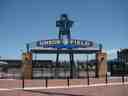
On your right, look for the big steel-and-brick entrance topped by a tall frame and a bold “ONEOK FIELD” sign-hard to miss unless you’re actively trying. This is ONEOK Field-pronounced “WUN-ohk”-Tulsa’s modern ballpark, sitting right here on the edge of downtown in the historic Greenwood District. It’s home base for the Tulsa Drillers, and since 2015 it’s also hosted FC Tulsa soccer, which means this place has seen its share of both slow summer innings and “no time to blink” late-game drama. The story starts with a problem: by the late 1990s, the Drillers’ old home out at the fairgrounds was feeling… let’s say, a little tired. Around 2008, they even flirted with moving to Jenks. But city leaders-including then-mayor Kathy Taylor-pushed hard for something that brought crowds back into the heart of Tulsa. The downtown move became official June 26, 2008, and even when a major donor, SemGroup, collapsed financially, the project didn’t fold. Groundbreaking still happened on December 19, 2008. A month later, ONEOK and the ONEOK Foundation secured the naming rights with $5 million for 20 years-about $7.4 million in today’s money. The park opened April 8, 2010, and the Drillers dropped the first game 7-0, in front of 8,665 people-more than 800 over capacity. Tim McGraw threw the first pitch, which is a pretty classy way to start a new neighborhood hangout. Designed by Populous and built by Manhattan Construction, the field sits about 13 feet below street level, with 23 suites and a “big-league comforts” mindset-built to feel connected to the city, not stranded outside it. And in 2025, it packed in a record 9,507 fans for a USL Championship final-proof this place can crank up the volume when it needs to.
Open dedicated page →
Frequently asked questions
How do I start the tour?
After purchase, download the AudaTours app and enter your redemption code. The tour will be ready to start immediately - just tap play and follow the GPS-guided route.
Do I need internet during the tour?
No! Download the tour before you start and enjoy it fully offline. Only the chat feature requires internet. We recommend downloading on WiFi to save mobile data.
Is this a guided group tour?
No - this is a self-guided audio tour. You explore independently at your own pace, with audio narration playing through your phone. No tour guide, no group, no schedule.
How long does the tour take?
Most tours take 60–90 minutes to complete, but you control the pace entirely. Pause, skip stops, or take breaks whenever you want.
What if I can't finish the tour today?
No problem! Tours have lifetime access. Pause and resume whenever you like - tomorrow, next week, or next year. Your progress is saved.
What languages are available?
All tours are available in 50+ languages. Select your preferred language when redeeming your code. Note: language cannot be changed after tour generation.
Where do I access the tour after purchase?
Download the free AudaTours app from the App Store or Google Play. Enter your redemption code (sent via email) and the tour will appear in your library, ready to download and start.
If you don't enjoy the tour, we'll refund your purchase. Contact us at [email protected]
Checkout securely with 




