
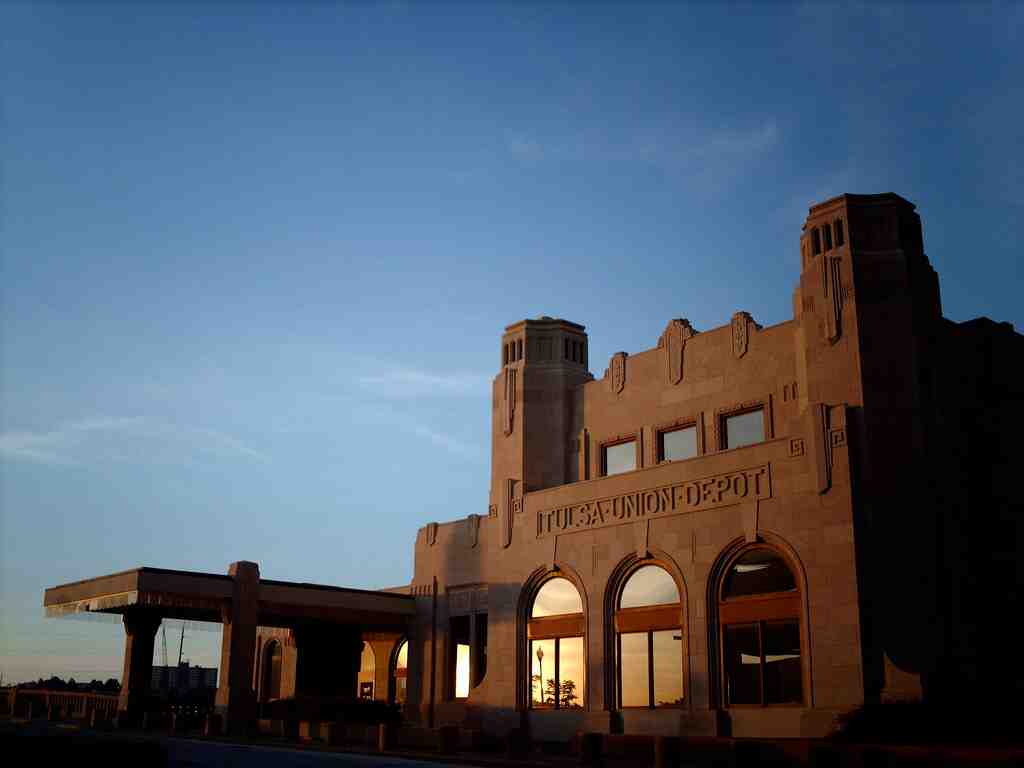
On your left, look for the big sandy-colored Art Deco building with two square towers and a long canopy out front-the façade still reads like a train station because it used to be one.
This is the Oklahoma Jazz Hall of Fame, and it lives inside the former Tulsa Union Depot-now called the Jazz Depot. If the building feels like it was designed for arrivals and departures, that’s because it was. Back in the day, people rolled in here with suitcases, timing their lives to a timetable. These days, it’s more about timing in the musical sense: swing, groove, improv-the kind of timing you can’t print on a ticket.
The Hall of Fame is a nonprofit with a pretty clear mission: honor Oklahoma’s jazz, blues, and gospel musicians, and make sure their stories don’t get lost in the shuffle. Inside, it’s part performance space, part museum-photos, bios, and memorabilia tied to names like Chet Baker, Charlie Christian, Don Cherry, Earl Bostic, Barney Kessel, and Jimmy Rushing. It’s the sort of place where you can go from a display case to a live set without changing gears.
The organization was created by the Oklahoma Legislature in 1988, during a push to help rebuild and reinvest in North Tulsa’s historic Greenwood district. It first operated out of the Greenwood Cultural Center and even helped host “Juneteenth on Greenwood,” celebrating Black music traditions in Oklahoma.
In the early 2000s, public funding helped move the Hall into this depot: Vision 2025 set aside $4 million for purchase and renovation-about $6.7 million in today’s money. The building reopened in June 2007.
Like a lot of arts organizations, it’s also lived through some hard measures. By late 2020, a lease and payments dispute spiraled into a lawsuit, then bankruptcy in early 2021. But the music didn’t get the final word-later that year, a new nonprofit took over, pledging fresh investment for repairs and operations, and renovations pushed forward.
When you’re set, Oneok Field is a 13-minute walk heading southwest.




