
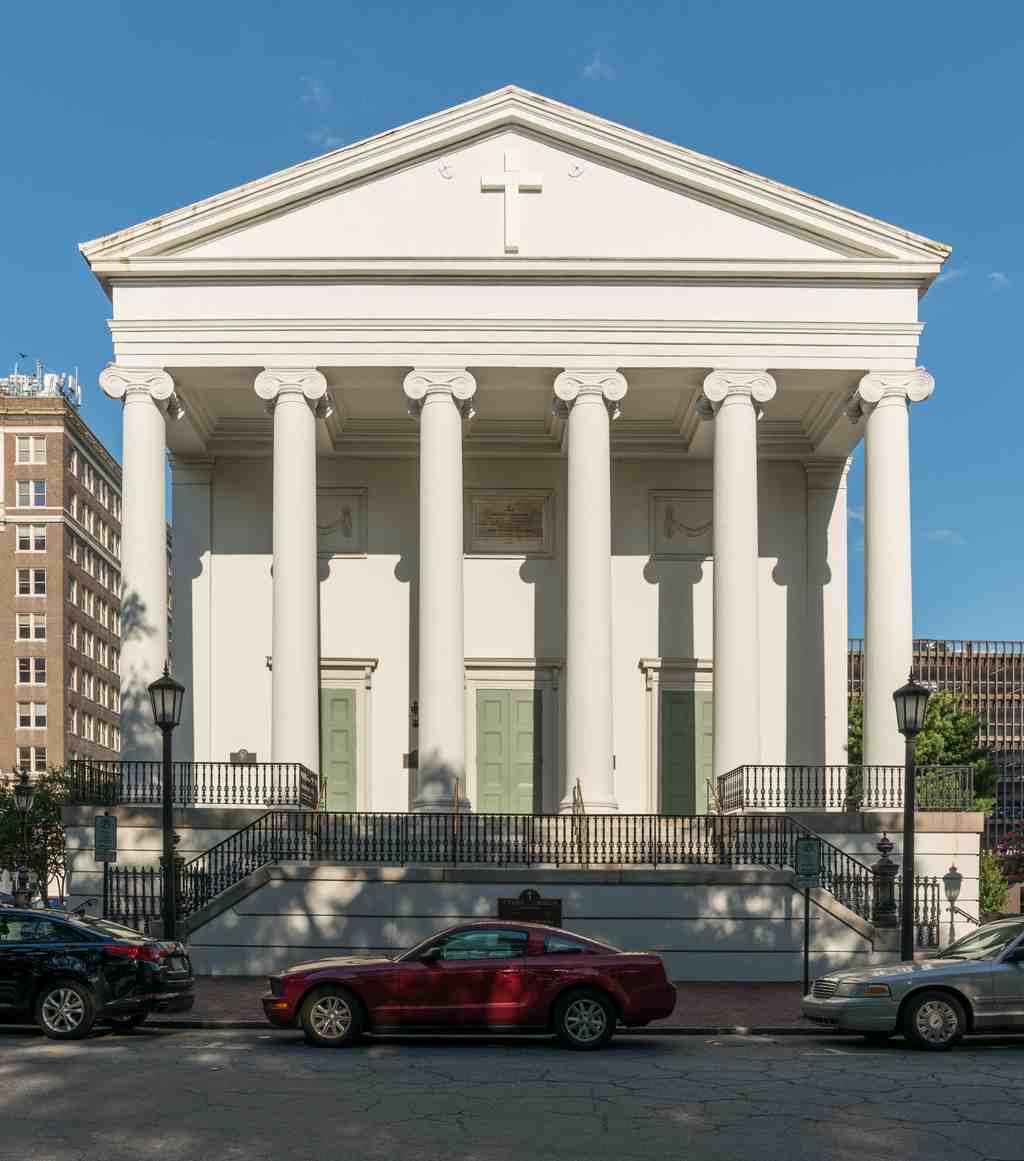
Look to your left for the imposing white Neo-Classical building, defined by its six massive fluted columns supporting a wide triangular pediment with a simple recessed cross near the top. This is Christ Church, affectionately known as the Mother Church of Georgia. It was founded in 1733, and while those pristine white columns project absolute peace and harmony today, do not be fooled. There is a deeply personal, hidden scandal behind this splendor.
Back in 1736, a young, intensely serious minister arrived to serve this parish. His name was John Wesley. Long before he became a legendary figure who catalyzed the global Methodist movement, he was a stressed out young missionary caught in a massive colonial soap opera.
Enter Sophy Hopkey. She was the charming niece of Savannah's chief magistrate, and Wesley fell head over heels for her. But Wesley was a man divided. He agonized over his strict commitment to clerical celibacy, a religious vow to remain unmarried, and his desperate desire to be a pioneering missionary. He kept Sophy waiting in a romantic limbo. Finally, frustrated by his endless hesitation, Sophy abruptly broke off the courtship and married another man named William Williamson.
Wesley was absolutely devastated. Convinced that Sophy's spiritual devotion was rapidly declining, he retaliated in the most public way possible. During a Sunday service, Wesley strictly enforced a minor technicality in the Book of Common Prayer, the official rulebook for church ceremonies. Because Sophy had not given prior notice of her intention to take Holy Communion, Wesley publicly denied her the sacred ritual.
It was a calculated, devastating public humiliation. But the move backfired spectacularly. The young colony exploded in outrage. Sophy's new husband filed a massive defamation lawsuit against Wesley, and a local magistrate issued a warrant for his arrest. Suddenly, Wesley was facing severe legal trouble, a hostile trial he believed was a sham, and a congregation completely fed up with his rigid, unforgiving discipline.
The pressure became unbearable. In December 1737, Wesley fled Georgia in the dead of night, sneaking away under the cover of darkness to escape his mounting legal battles. He later wrote that he shook the dust off his feet as he left Savannah behind.
The actual building where all this dramatic tension went down did not survive. A devastating fire wiped out the first permanent church in 1796, and a massive hurricane completely destroyed the congregation's second attempt in 1804. Finally, in 1838, the resilient parish constructed the grand Neo-Classical masterpiece you are looking at right now. Take a quick look at the before and after image in the app to see how this incredible street view has stood the test of time.
This site is a perfect reflection of Savannah itself, continually rising from the ashes of bitter disputes, fire, and storm to project an enduring image of grace. Come on, let us jump forward into the true architectural grandeur of the nineteenth century as we take a seven minute walk over to the stunning Owens-Thomas House.




