
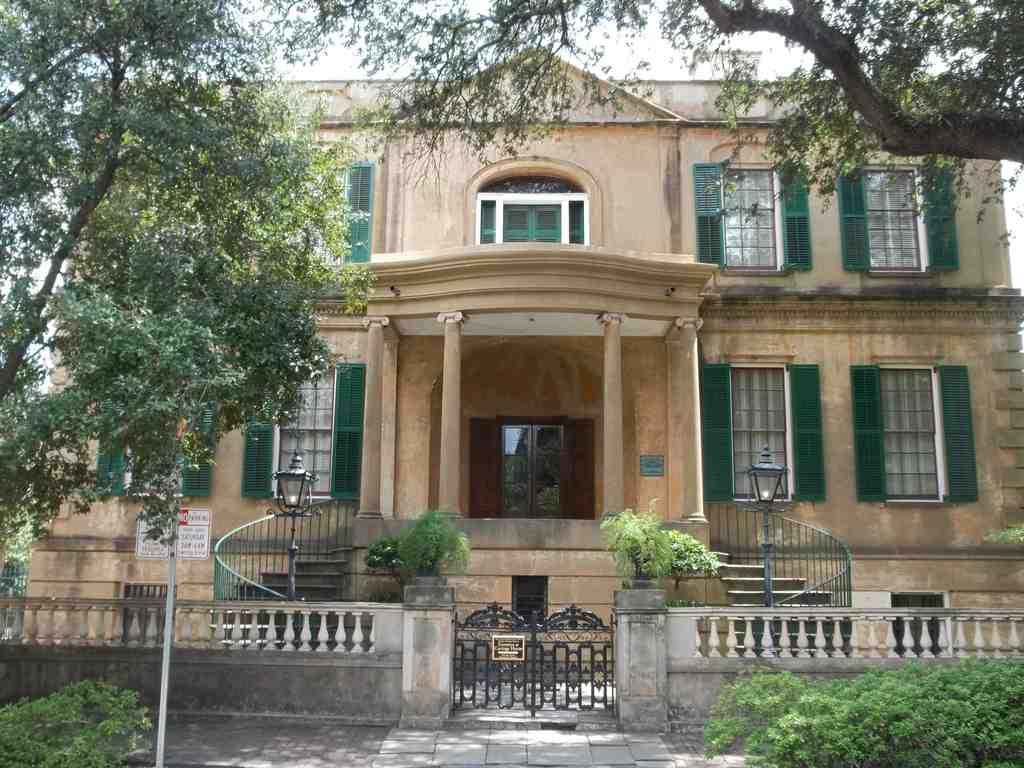
Right in front of you stands a grand mansion built of smooth tan Bath stone, featuring a striking curved entrance portico supported by columns and framed by a pair of winding iron staircases. It is an absolute masterpiece of English Regency architecture, a style defined by its clean, classical symmetry.
It was commissioned in 1816 by Richard Richardson, a massively wealthy shipping merchant and domestic slave trader who wanted a house that proved his supreme status. He hired an English architect, a young visionary named William Jay, who actually drew the plans in England and shipped them over. Richardson spared no expense, even installing Savannah's very first indoor plumbing system, utilizing massive attic cisterns to catch rainwater that supplied a basement bathing room.
But this grand monument to his success rapidly became a house of horrors. Shortly after moving in, Richardson lost his wife Frances and two of their children to a brutal yellow fever epidemic. Then came the financial panic of 1819, followed by a massive fire that destroyed half of Savannah in 1820. He was completely ruined. In a harsh twist of fate, the very bank he had served as president of seized this mansion in 1824.
The bank leased the home out as an elegant boarding house. Pull out your phone and take a look at the first picture. That is the home's side veranda, wrapped in elaborate cast iron shaped like swirling acanthus leaves. In 1825, the Marquis de Lafayette stayed here and stood right on that balcony, addressing an adoring crowd in both English and French.
In 1830, a politician named George Welshman Owens bought the estate at auction for ten thousand dollars, which is roughly a third of a million today. He brought his wife, six children, and up to fifteen enslaved laborers. For decades, the museum here used the carriage house out back as a simple gift shop, ignoring its true history. But renovations in the 1990s uncovered one of the oldest and best preserved urban slave quarters in the American South.
Tap to the next photo on your screen to see the brick exterior of these quarters. This is where a woman named Emma lived. She was an enslaved nursemaid forced to raise the Owens children, spending far more time with them than their own parents did. She had a biological daughter of her own on the property, but the brutal demands of bondage meant she had to prioritize her enslavers' children over her own flesh and blood.
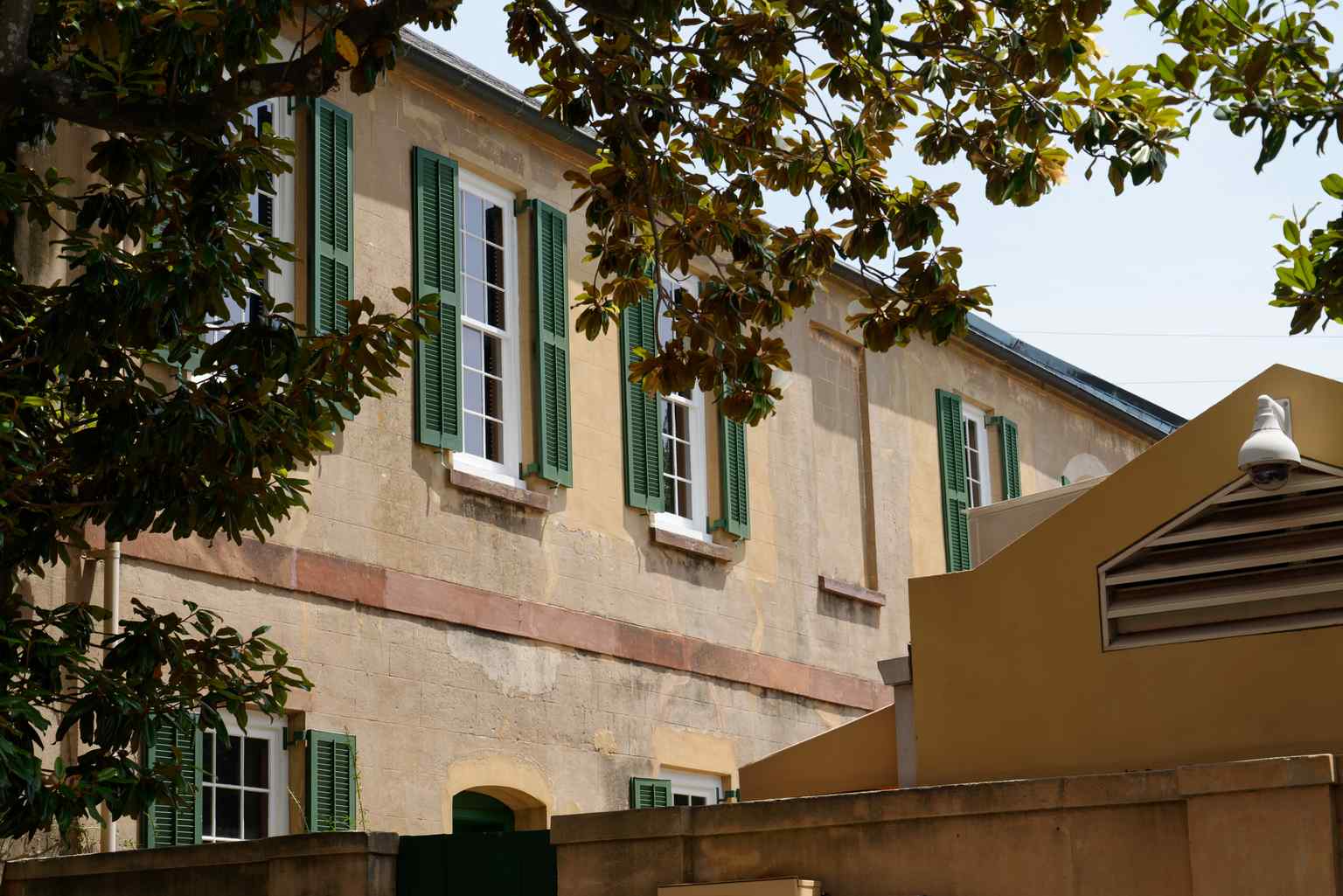
Inside those quarters, the ceiling is painted a striking shade called haint blue. This was a deep tradition in Gullah culture, an African American community of the coastal South, used to ward off ghosts and malevolent spirits. It is actually the largest surviving swath of haint blue paint in North America. Even after slavery was abolished in 1865, the carriage house was simply renamed servant quarters. Stripped of education and resources, many formerly enslaved people had no choice but to stay, continuing their grueling labor to maintain this very estate.
It is a stark reminder that the most breathtaking architectural facades often conceal the deepest human sorrow. If you want to explore the interior and the slave quarters yourself, the museum is open Tuesday through Sunday from 10 AM to 5 PM. Our next stop is the Juliette Gordon Low Historic District, which is just a seven minute walk from here.





.jpg)