
Providence Audio Tour: Icons, Ivy & Intrigue on College Hill
Beneath Providence’s stately skyline, secret rebellions, scandalous showdowns, and hidden masterpieces wait for those who know where to look. Ancient bells once called revolutionaries to worship, while bold artists and forgotten inventors left clues tucked behind museum walls and bustling plazas. This self-guided audio tour invites you to wander at your own pace and uncover stories echoing far beyond the city’s cobblestones. Trace tangled legends, political clashes, and stunning moments of creativity most travelers never suspect. Which insurrection nearly shattered the unity of the First Baptist Church in America? What secret getaway is hidden inside the Rhode Island School of Design Museum? Why did a single velvet glove trigger a feud that reached the halls of Providence Place? Move through sun-splashed streets and shadowed corners where the city’s real drama unfolded. Every stop brings a new surprise and a deeper, richer view of Providence. Ready to reveal what the city keeps just out of sight? Press play and set out.
Tour preview
About this tour
- scheduleDuration 40–60 minsGo at your own pace
- straighten3.9 km walking routeFollow the guided path
- location_onLocationCentral Falls, United States
- wifi_offWorks offlineDownload once, use anywhere
- all_inclusiveLifetime accessReplay anytime, forever
- location_onStarts at Rhode Island State House
Stops on this tour
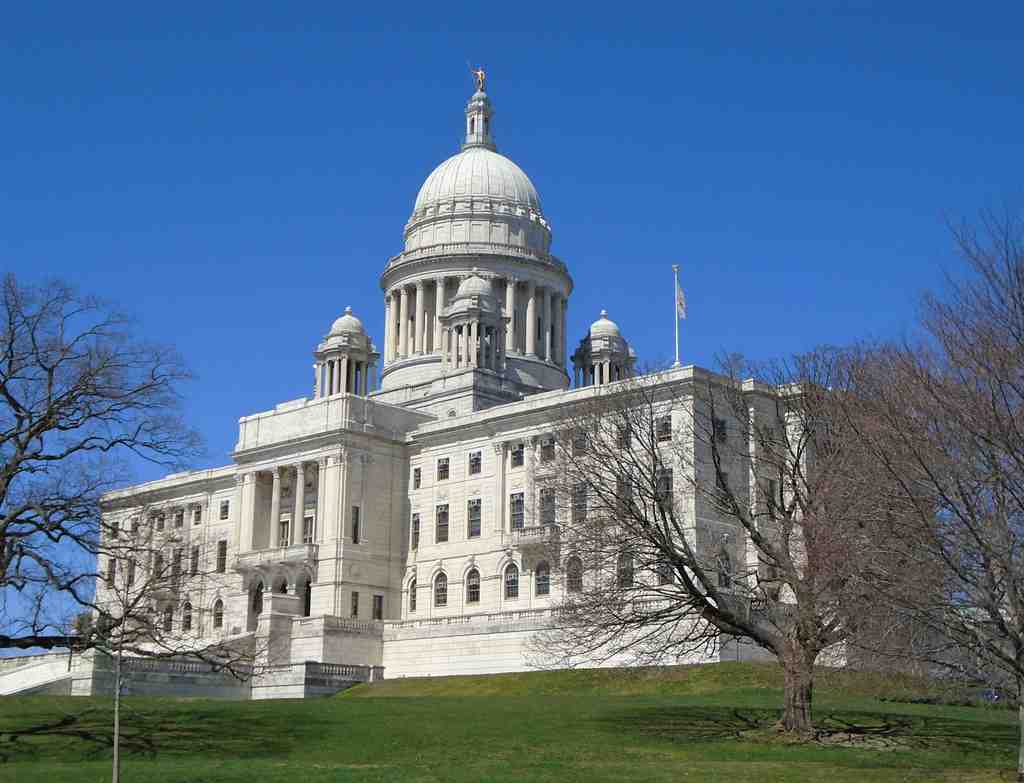
Look up the hill to spot a bright white neoclassical building with a massive marble dome and a shining golden statue perched on top, gleaming in the sunlight over the city-trust…Read moreShow less
Look up the hill to spot a bright white neoclassical building with a massive marble dome and a shining golden statue perched on top, gleaming in the sunlight over the city-trust me, this stately beauty is hard to miss! Welcome to the Rhode Island State House, where marble meets political magic (and the occasional Christmas tree catastrophe). Just picture it: over 327,000 cubic feet of gleaming Georgia marble rising above Smith Hill, with one of the world’s largest self-supported marble domes. If you squint, you might notice “The Independent Man” glinting at the very top-he’s Rhode Island’s own superhero, representing freedom and independence, and he’s been striking classic poses up there since 1899, decades before comic books made heroes in capes fashionable. Fun fact: at eleven feet tall and more than 500 pounds, you wouldn’t want to help lift him onto the roof during your lunch break. But the State House isn’t just about looking pretty. Designed by the famous architectural dream team McKim, Mead & White back in the 1890s, this was Rhode Island’s seventh state house-and they clearly decided to go big. While the politicians inside the east and west wings work their legislative magic with the governor’s office and the state library nestled inside, people outside are often left awe-struck by the architecture. Those grand marble columns, all those bricks, and a dome you’d need a neck brace to fully appreciate from the ground. There’s a sense of excitement here, and maybe a little bit of suspense-especially when you think about the drama for the annual Christmas tree. Over the years, the rotunda has proudly displayed dozens of festive firs...and sometimes not so proudly. In 2017, the “saddest state capital Christmas tree” started losing needles so quickly it would’ve left Hansel and Gretel baffled. Replacements and controversies have made Rhode Island’s State House tree nearly as famous as the golden statue above-and probably twice as unpredictable. Inside, you’ll even find treasures that hint at the bold spirit of the state. Right near the entrance, a Civil War-era cannon called “The Gettysburg Gun” sits with a cannonball still wedged in its barrel, a reminder that Rhode Island’s history hasn’t always been this peaceful. The original Royal Charter of 1663 is also on permanent display, a legal document so old you’d half expect to see a quill pen lying next to it. If you’re curious about the lighting-this building was ahead of its time, one of the first big public places in Rhode Island to use electricity. Now, at night, it glows with more than a hundred floodlights and searchlights. It’s sort of like the world’s fanciest nightlight, except it’s not there to keep nightmares at bay-unless, of course, you count election season. The State House dome itself has seen its fair share of excitement, too. In 1976, “The Independent Man” needed a little R&R-restoration and repair, that is-so workers took him down and made a replica. In 2023, after a drone inspection spotted damage on his base, the statue had another dramatic trip to the ground. Imagine the suspense: a giant gold man dangling from a crane, reunited with earth after more than a century in the clouds, and getting spruced up with shiny gold leaf for his journey back up top. From starring as the United States Capitol in the film Amistad to masquerading as City Hall in Disney’s Underdog, this building has found fame beyond Rhode Island’s borders. Still, nothing matches the first impression of standing here yourself, gazing skyward as history, politics, and a touch of quirky state pride all come together in marble and gold. Alright, ready to march on to our next stop, or are you still dazzled by all that marble? To expand your understanding of the architecture, the independent man (1899) or the events and exhibits, feel free to engage with me in the chat section below.
Open dedicated page →Look to your left for a long, red-brick building with striking rooftop turrets and tall windows-Providence Place towers above the street, stretching wide and bold, like a…Read moreShow less
Look to your left for a long, red-brick building with striking rooftop turrets and tall windows-Providence Place towers above the street, stretching wide and bold, like a miniature city of its own. Alright, step right up and prepare for a little time travel-because you’re standing in front of not just a mall, but a living, breathing saga of Providence’s history, quirks, and reinventions. Imagine it: where all this glass and brick now rise, you’d once have heard the clanking of chains from the Rhode Island State Prison in the 1800s. Picture grim stone walls and the echo of footsteps; it was here, in 1845, that John Gordon became the last person legally executed in Rhode Island. Chilling, right? Flash forward and by the late 1850s, the air was full of chalk dust and lessons-this ground turned from prison to the Rhode Island Normal School, training generations of teachers. Eventually, the school packed up, left the city center, and the lot spent years as nothing fancier than a gravel parking lot. I suppose you could say it was the most educational parking lot in Rhode Island. Then came the big dreams. In the late 1980s and early ’90s, city leaders and developers licked their lips at the idea of a huge urban mall. Negotiations with Amtrak, department store deals, city council debates-imagine the hum of tense meetings and the tapping of pencils on tables. Plans stalled again and again, until Mayor Buddy Cianci-yes, Providence’s most colorful mayor-powered things forward as part of his grand “Renaissance.” He wheeled, dealed, and even flew to Seattle to woo the Nordstrom family. More than a few nights, the city must’ve held its breath, waiting for the next development. The first design for Providence Place? Picture a giant, gray concrete block, as inviting as a shoebox with no lid. The locals balked, and-thank goodness-the developers called in architect Friedrich St. Florian, who gave it the brickwork, turrets, and colorful presence you see today, fitting Providence’s industrial soul. But the history here isn’t just about shopping or business. In 2003, this mall became the stage for one of the wildest art heists-without-a-heist you’ll ever hear: a group of artists snuck in and secretly built an apartment within the mall’s walls, hidden beneath the movie theater. They lived there for weeks at a time on a mission to quietly rebel against their neighborhood’s transformation. Now, it wasn’t exactly the Ritz-no running water, sneaking into the regular mall bathrooms, a PlayStation stolen by someone (maybe security, maybe not!). The hideout lasted four years before being discovered-with Townsend, the ringleader, getting a lifetime ban that lasted until 2024, when news of a documentary brought a twist ending fit for Hollywood. I like to think he probably could’ve written “home sweet home” on those cinderblock walls. In the mall’s early days, the buzz was electric. Shoppers packed its floors, department stores like Lord & Taylor, Filene’s, Nordstrom, and movie theaters sparkled with crowds. But, like any good story, things change-by the 2010s, stores closed, foot traffic fizzled, and after the pandemic hit in 2020, the silence grew. Recently, a new chapter is unfolding. With anchor stores Boscov’s and Macy’s hanging on, Providence Place is trying to reinvent itself again, with gaming venues and pop-up shops. All while the state stepped in after financial storms in 2024, trying to keep the lights on and the crowds returning. Even the parking rates became part of the drama-a price hike inspired outrage, only to be canceled at the last possible second. So as you stand here, know you’re not just looking at a mall-you’re seeing a place that’s been a prison, a school, a parking lot, and an urban dream. Every brick has a story, every echo in the halls a piece of Providence’s wild, resilient spirit. And hey, keep an eye out-you never know what secret apartments might still be tucked away in those walls!
Open dedicated page →To spot the United States District Court for the District of Rhode Island, look for a dignified stone building with grand columns and the official seal you see here-an eagle…Read moreShow less
To spot the United States District Court for the District of Rhode Island, look for a dignified stone building with grand columns and the official seal you see here-an eagle clutching arrows and an olive branch-proudly displayed near the entrance. Now, picture yourself standing just footsteps from history’s courtroom-a place where power meets paperwork, and where the fate of Rhode Island has been debated for over two centuries. The United States District Court for Rhode Island is no ordinary building; since it appeared on the scene in 1908, it’s been the stage for legal drama, landmark decisions, and maybe a few nervous lawyers hoping their coffee kicks in before their case is called. Yet the story starts even earlier: back in 1790, when Rhode Island finally joined the party by ratifying the U.S. Constitution, Congress established this court, making it one of the nation’s oldest federal courts. Picture wig-wearing judges and candle-lit rooms, the hush broken only by the judicious rap of a gavel. Originally assigned to the Eastern Circuit-and then shuffled in a flurry of Congressional acts to the First Circuit-this court has seen laws change, judges appear and retire, and the addition of new seats, growing from just one to three over time. The chief judge here isn’t a president-for-life; every seven years, the role rotates like a game of high-stakes musical chairs, but only if the judge hasn’t hit the big 7-0. If so, it’s time for another robe to step up. But the excitement isn’t just in the rules-it’s the cases that have brought lasting fame. Imagine 1791, West v. Barnes, the very first case appealed all the way to the U.S. Supreme Court. Or the 1980 case Fricke v. Lynch, where the court weighed in on whether prom dates should be restricted by gender-high school drama has nothing on federal court! And in 1992, Lee v. Weisman, where prayers at graduation ceremonies made their way to the national spotlight. Behind the courtroom doors, U.S. attorneys fought the government’s battles-a list including local legends like Sheldon Whitehouse and Lincoln Almond. Today, that job falls to Zachary A. Cunha as of December 2021, making sure justice is served (hopefully before lunch). So whether you fancy yourself a future legal eagle or just like a good courtroom tale, enjoy imagining what dramas might be unfolding behind these grand columns as Providence’s legal story keeps going.
Open dedicated page →

Show 11 more stopsShow fewer stopsexpand_moreexpand_less
 6
6Market Square, Providence, Rhode Island
Buy tour to unlock all 18 tracksYou’re looking for a big brick building with a grand arched entrance and rows of tall windows-right at the intersection of North Main and College Street, at the foot of College…Read moreShow less
You’re looking for a big brick building with a grand arched entrance and rows of tall windows-right at the intersection of North Main and College Street, at the foot of College Hill-with a small tree-dotted plaza snuggled up beside it. Market Square is more than just bricks, mortar, and pigeons (although you’ll probably spot a few of those too). Imagine the square all the way back in the 1700s, when it was the hot spot of Providence-bustling with merchants, farmers, quirky townsfolk, and a whole lot of hay. This land was once owned by Chad Brown, the very Brown who’d leave his family name on a famous Ivy League university just up the hill. In 1738, a grand new highway made way for what became known as the Town Parade-a wide thoroughfare inviting trade and chatter. By 1744, hay bales were lining this square, turning it into the local center of commerce, and giving the area its earliest market vibes. The anchor here is the sturdy Market House, built between 1773 and 1775. Right before the American Revolution, this square sizzled with revolutionary energy. Locals, inspired by the Boston Tea Party, dragged a mound of English tea right here into the center of Market Square, drenched it in tar, and torched it in protest of unfair taxes. Imagine the crowd-it smelled like burnt leaves and rebellion, and surely someone grumbled about the wasted caffeine. But Market Square carries other, heavier stories. As the busy center of colonial Providence, it’s suggested this was once a site for slave sales, though much of that dark business happened inside nearby shops. Still, you’d find enslaved Black laborers building Market House itself-one stonemason, Pero Paget, helped shape not only this building but also University Hall at Brown. In the years that followed, free Black entrepreneurs staked their claim here too, adding their voices and dreams to the square’s busy hum. Leap ahead to the 19th century, and you’ll spot presidents and protestors crossing this space. In 1843, President John Tyler stopped here and enjoyed a meal across the street, pondering a presidential comeback-maybe he just came for the food. During the Civil War, Market Square pulsed with the sound of “war meetings” as citizens gathered to hear updates and urge enlistment. One sweaty August afternoon in 1862, the mayor’s voice rang out, announcing the draft and calling Black residents to form a regiment-an announcement that stirred cheers, some anxiety, and more than one person pulling their hat lower over their eyes as names for conscription were drawn from a spinning wheel. A little later, electric arc lights flickered to life here for the first time in Providence-no more stumbling home in the dark or blaming your neighbor’s cow for running off with your lantern. The square also hosted a good bit of drama, like in 1897 when the famous anarchist Emma Goldman was arrested mid-speech-a regular soapbox moment, until the mayor stepped in and the city told her to skedaddle. Eventually, the square found new energy. It’s now surrounded by the creative buzz of RISD, where art students have held protests and called for justice, demanding that the square’s shadows be honored with a memorial. In 2023, a bronze statue of Providence artist Edward Mitchell Bannister joined the scene-he’s sitting on a bench, maybe pondering the same ghosts and dreams as you are right now. Welcome to Market Square: a crossroads of commerce, protest, invention, and all the wild characters Providence can offer. Now that’s a market for every kind of story.
Open dedicated page →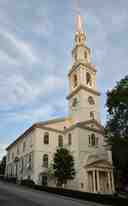 7
7First Baptist Church in America
Buy tour to unlock all 18 tracksTo spot the First Baptist Church in America, look for a grand cream-colored building with a soaring steeple and clock tower rising high above its entrance, standing tall near the…Read moreShow less
To spot the First Baptist Church in America, look for a grand cream-colored building with a soaring steeple and clock tower rising high above its entrance, standing tall near the corner of North Main Street-trust me, it’s the kind of building that makes you check your posture. Now, let’s step into a story that starts way back before there were streetlights or coffee shops on every corner. Here in 1638, a spirited man named Roger Williams, known as much for his brains as for his slightly stubborn attitude, gathered a small group in his home for worship-probably with fewer snacks than we’d have today. Little did Williams know, these house meetings would spark the birth of the oldest Baptist church in the United States, right where you’re standing now. Back then, Baptists were so wary of vanity that for sixty years, they refused to build any sort of meetinghouse. You can almost imagine neighbors whispering as the congregation met in fields and friendly living rooms, using nothing but open sky and stubborn hope as their roof. Eventually, even the most modest folks realized meeting outdoors in a Rhode Island winter is a quick way to freeze your faith-and maybe a toe or two. They built meetinghouses, plain and sturdy, much like the Quakers. But by 1774, something shifted: led by Pastor James Manning, this congregation decided to build something both useful and, for the first time, truly impressive. So began the construction of the building in front of you, right as the winds of revolution were blowing through New England. Due to the closure of Massachusetts ports, plenty of out-of-work shipbuilders and carpenters made their way here, their hammers ringing out as the First Baptist Meetinghouse rose higher, steeple and all. Some locals thought the steeple and bell a bit “fancy,” but the Baptists in Providence were out to prove they could keep up with the Anglicans and Congregationalists. The Meeting House became more than just a church-it turned into a community landmark. Ministers like Chad Brown, whose family went on to pretty much own half the street names around here, led the congregation. Over the years, the church grew alongside the college that Manning started-a school you might know: Brown University. The current building was designed by Joseph Brown, a stargazer and amateur architect, who borrowed style from an English architect’s designs, right down to the elegant steeple. This was so different from the older, humble buildings that it likely gave a few old-timers a real shock. Brown University presidents served as ministers here, and the church still hosts Brown’s undergraduate commencements, a tradition started when the meetinghouse was newly built. Fancy pipe organs and sparkling chandeliers arrived in the 1800s-one thanks to Hope Brown Ives and another to her generous brother Nicholas. Space for baptisms was added, and for a while, stained glass-although even that was eventually considered a bit too colorful and got shuttered over. The church you see is a National Historic Landmark, a title it earned in 1960. Inside, John D. Rockefeller Jr. once paid for a restoration that peeled back Victorian additions, bringing back much of the original look. Not everything, though, has returned: a gallery once built for Black and enslaved residents is now missing, silently hinting at complex stories woven into this building’s past. Through centuries of music, sermons, protests, and even Brown commencements packed with proud parents, this meetinghouse has hosted it all. Today, the doors open not just for worship, but also for concerts, lectures, and the kind of events that bring a community together. So take a moment to enjoy the view-it’s not every day you get to stand in front of the oldest Baptist church in America, wrapped in a story that includes shipbuilders, revolutionaries, and a little architectural showmanship that’s stood the test of centuries. And if the steeple looks extra tall, well, let’s just say Baptists figured out how to build their faith high-and make sure everyone could see it. Wondering about the architecture, today or the affiliations? Feel free to discuss it further in the chat section below.
Open dedicated page →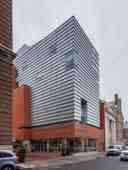 8
8RISD Museum
Buy tour to unlock all 18 tracksLook ahead toward the bold, modern building with sleek gray and glass panels stacked above a red-brick base - that’s the RISD Museum’s Chace Center, right on the corner in front…Read moreShow less
Look ahead toward the bold, modern building with sleek gray and glass panels stacked above a red-brick base - that’s the RISD Museum’s Chace Center, right on the corner in front of you. Welcome to the RISD Museum - you’re standing outside a portal to worlds of creativity, history, and even a little mischief. Picture Providence in 1877, a time when the city was humming loudly with the sounds of factories and local manufacturers were desperate for a new edge: better design. Right here, a group with serious artistic dreams-and a whopping $1,675 donated by the Rhode Island Women’s Centennial Commission-founded a school and museum determined to blend art with practical know-how. Makes you wonder what kind of “Monet” they had to work with starting off, right? The first galleries actually sprouted a few blocks from where you’re standing, in the Waterman Building. When five brand new galleries were built at the back in 1897 as a tribute to Helen Metcalfe, one of the school’s trailblazers, the museum started gathering up plaster casts with the kind of enthusiasm usually reserved for Black Friday shoppers. By the 1920s, donations were pouring in-furniture, ancient coins, even carpets found their way into the collection, courtesy of Charles Pendleton. To keep these treasures safe, they built Pendleton House in 1906. Oddly enough, it looked more like a swanky home than a museum, just to make the precious collection feel right at home. Now, as you gaze at the futuristic Chace Center, you’re seeing the museum’s boldest leap-opened in 2008, this angular glass and metal building stands exactly where a parking lot languished for years. Designed by Spanish architect Rafael Moneo, it rises up College Hill and creates a visually striking connector between old and new. Inside, it’s a network of bridges, ramps, and elevators-like a mini art maze for the curious-and, trust me, you’ll want a map! The Center’s bright open café and rolling gallery spaces serve up everything from ancient Egyptian mummies and Greek vases to Andy Warhol screenprints and dazzling Japanese kimonos. The collection now numbers around 100,000 objects-and about 2,000 are always on display. Whether you’re a fan of Monet, Picasso, or have a soft spot for Rhode Island silver spoons, RISD’s got it covered. Their ancient collections include a rare Greek marble head, Roman glass jewelry, and even a Ptolemaic coffin with its very own priestly mummy (no, it doesn’t give tours). Meanwhile, the Asian wing houses towering wooden Buddhas, brightly colored robes from the spectacular world of Japanese Noh theater, and Indian saris just waiting to be admired. Ready for a plot twist? In 1970, visiting artist Andy Warhol himself raided the museum’s storerooms for a legendary exhibition called “Raid the Icebox.” Apparently, wandering through RISD’s archives can be almost as wild as one of Warhol’s parties. The museum doesn’t just display works by old masters and global icons-it also celebrates the living, ever-changing world of art. You’ll find furniture by Charles and Ray Eames, radical glass by Chihuly, modern American painting, and stunning contemporary craft by RISD’s own alumni. It’s a true teaching museum-bringing students, artists, and visitors together around objects that span centuries and continents. So, standing outside this dramatic modern building, you’re at the crossroads of past invention and future inspiration-a place where industrial ambition, community creativity, and ingenious design collide in ever-surprising ways. Go on, step inside-just don’t get lost in the galleries!
Open dedicated page →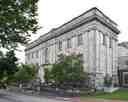 9
9John Hay Library
Buy tour to unlock all 18 tracksTo spot the John Hay Library, look for the majestic white marble building with grand, elegant windows and classical columns, sitting proudly along Prospect Street just across from…Read moreShow less
To spot the John Hay Library, look for the majestic white marble building with grand, elegant windows and classical columns, sitting proudly along Prospect Street just across from the iconic Van Wickle Gates. Now, let’s pull you back through time as you stand before this storied building. Imagine the year is 1910-horse carriages clatter by, and college students in stiff collars and long skirts bustle across the street. You’re looking at Brown University’s second-oldest library, a monument of stone and secrets, made possible thanks to a donation from industrialist Andrew Carnegie, who probably carried more cash in his pockets than most students could dream of in tuition bills. At Carnegie’s special request, it was named for his late friend, John Hay, who not only graduated from Brown but also happened to be Secretary of State-talk about having friends in high places! This gorgeous Beaux-Arts structure was crafted by Boston architects Shepley, Rutan and Coolidge, originally imagined in limestone but realized in marble from the green hills of Vermont. The opening in 1910 must have been a sight, with marble gleaming in the sunlight, faculty members whispering about how finally there’d be room for all those newfangled books, and maybe even a mischievous undergrad or two sneaking peeks inside. Over the years, this building has seen a few upgrades-1939 brought a new wing (now you know why one half is classy white marble and the other is dignified red brick). The library’s main reading room, once open and inviting, was chopped into three by bookshelves during that time. But, in true “home improvement” style, a few decades later, it was all lovingly restored, with renovations in 1981 and again in 2013 that doubled the exhibit space and brought that reading room back to its elegant roots. But wait, the real magic is inside-like a chest filled with treasure, the Hay houses some 2.5 million rare gems: think of ancient clay tablets, first editions by Galileo with his own scribbles in the margins, and even a copy of Orwell’s original manuscript for Nineteen Eighty-Four. Literary wizards might swoon to hear it’s also home to the world’s largest H. P. Lovecraft collection. And for the science fans, the Lownes Collection has a copy of Galileo’s Siderius Nuncius, annotated by the stargazer himself. If only those books could spill their secrets… There’s even more strangeness lurking in the archives. The Hay is famous-though maybe a bit notorious-for owning four books bound in actual human skin. Yes, you heard that right! These books came from the 19th century, and, no, you won’t find them on a casual stroll-they’re hidden away and treated as respectfully as any other human remains. As the official keeper of Brown’s history, the Hay is stuffed with documents about the university’s past. That means yellowed letters, records of George Washington’s visit in 1790, sporting trophies, and snapshots of students from every era-imagine flappers of the 1920s, or flyers from protests in the ’60s. And if you listen closely to the whispers of the library, you might even catch the voices of women whose lives are recorded in the Christine Dunlap Farnham Archive, or the pioneering scholars whose legacies fill the Feminist Theory Archive-proof that every kind of brilliance, protest, and persistence is housed in these walls. So as you stand here, you’re not just outside a library-you’re standing at the crossroads of a thousand stories. Maybe if you gaze at those marble walls long enough, you’ll start to feel the quiet thrill of history pressing in, full of curiosity and just a dash of mystery-don’t worry, the ghosts here are all bookworms. For further insights on the special collections, anthropodermic book collection or the brown university archives, feel free to navigate to the chat section below and inquire.
Open dedicated page →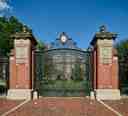 10
10Van Wickle Gates
Buy tour to unlock all 18 tracksRight in front of you, you’ll spot the Van Wickle Gates-a grand, wrought-iron gate flanked by hefty brick and stone pillars, with the Brown University coat of arms perched proudly…Read moreShow less
Right in front of you, you’ll spot the Van Wickle Gates-a grand, wrought-iron gate flanked by hefty brick and stone pillars, with the Brown University coat of arms perched proudly at the top and decorative seals on each side-standing tall at the intersection of College and Prospect, at the very crest of College Hill. Standing here, you’re face to face with the most famous entrance at Brown. Picture this scene in 1901: It's June, the air is bright with anticipation as a crowd gathers. Local dignitaries, eager students, and the chancellor himself line up before these gleaming, newly built gates. Their designer, Augustus Stout Van Wickle, wasn’t just a banker with an eye for ironwork-he was also a fan of impressive entrances (he built a pretty fancy one at Princeton, too). Imagine yourself as a first-year student in the early days, heart thumping as you walk through for Convocation, the gates swinging open to swallow up new dreams and, let’s be honest, a ton of textbooks. Wrought iron scrolls curl around the central arch, and if you look close, you’ll see classical Latin from Cicero on the side-so yes, you can tell your friends you learned some ancient philosophy just by standing here. The two side gates are almost always open, but the dramatic main gates are reserved for just three serious occasions a year. At the start of the academic year and again in spring, these majestic gates open inward to welcome the next generation of young minds. On Commencement Day, they swing outward, gently nudging graduates out into the world. But beware: rumor has it, any student who walks through these central gates more than twice is doomed to never graduate! The Brown University Band has turned this into a performance-hopping on one foot or even going in backwards to dodge the dreaded curse. Back in the early 1900s, imagine what the crest of College Hill looked like-horse-drawn carriages, the excitement of new construction, the pride swelling in Brown’s 259-year-old heart as the gates were dedicated. Fritz Pollard, the great athlete, was so taken by the sight on his visit in 1912 that he decided to come to Brown, changing football history. H.P. Lovecraft once sat right where you’re standing, though a biographer confused this with Brooklyn (as if you’d ever mix up Providence with Brooklyn-those gates are way too classy for that!). Today, the Van Wickle Gates appear in novels, pop culture, and legend. But there’s nothing quite like standing here for real, at the symbolic threshold of ambition and tradition, where every stone and scroll has played its part in welcoming generations. So, fancy trying your luck through the main gates, or are you sticking to the safe side? The superstitions start here!
Open dedicated page →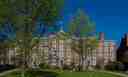 11
11University Hall
Buy tour to unlock all 18 tracksTo spot University Hall, look ahead for a grand, rectangular red-brick building with evenly spaced white-trimmed windows and a central cupola on the roof, framed by a bit of green…Read moreShow less
To spot University Hall, look ahead for a grand, rectangular red-brick building with evenly spaced white-trimmed windows and a central cupola on the roof, framed by a bit of green space and trees-if you see students lounging on the grass in front, you’ve got the right place! Alright, you’re standing in front of the legendary University Hall-the oldest building on Brown University’s campus and a real heavyweight in American collegiate history. Now, imagine the year is 1770: the air is buzzing with hammers against fresh timber and the clink of bricks being stacked. The College Edifice, as it was originally called, was only a dream on paper until a scrappy group of locals, merchants, revolutionaries, and even people from all walks of life-including slaves, free people of color, and indigenous folk-came together to erect this very building on land tied to Chad Brown, one of Providence’s original founders. Back in the day, this was the biggest building in all of Rhode Island-at least until the First Baptist Church popped up nearby. What you see in front of you was the talk of the town; people were so determined that the planners went out in the local newspaper asking for donations of timber. Imagine the columns of the Providence Gazette with “Help us build a college!” plastered across them. Even Aaron Lopez, a Newport merchant (and, awkwardly, a slave trader), chipped in some wood, while the Brown family-yes, that Brown-led the whole construction charge. The final plans were signed on a cold February day, and by March, the foundation was being dug up. By October, the roof was up. But the building’s story doesn’t just end with bricks and mortar. Fast forward a few years to the chaos of the American Revolution, and suddenly this noble hall turns into a barracks! French and American soldiers, following orders from General George Washington himself, fill up the rooms, bringing with them the scents of gunpowder, sweaty uniforms, and an ever-present uncertainty. When the French finally handed back the keys, the poor president of Brown had to beg the city to help air out “the intolerable stench” left behind. Apparently, offal houses and makeshift horse stables weren’t the best roommates-who knew? When peace returned, classes started up again, and University Hall continued its tradition as a seat of learning, but it flirted with military duty once more during the Dorr Rebellion in 1843. Over the years, the building saw renovations big and small-steam heat, gas lighting, even a cement makeover that gave way to its current look after a finicky restoration in 1905. Each renovation, from foundation to belfry, was like a facelift for an old friend; if you look closely, you might just hear the echoes of those bustling decades past. Today, inside these thick walls are the president’s offices-and probably a few secrets!-while outside, this four-story Georgian masterpiece stands as a proud symbol of Brown’s legacy. Take a look at those seventeen neat windows across the face and imagine the scenes they’ve witnessed: anxious students cramming for exams, generals plotting strategy, and reformers writing the future. Every brick, every balustrade, every squeaky window has soaked up over 250 years of American history. In 1962, the landmark got its crown as a National Historic Landmark-not bad for a building that once doubled as a makeshift hospital and, for a time, probably had the worst-smelling north end in Providence. If walls could talk, University Hall would have enough stories to fill a whole library, but lucky for you, you’ve just heard some of its best secrets.
Open dedicated page →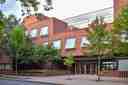 12
12Watson Institute for International and Public Affairs
Buy tour to unlock all 18 tracksAhead of you, you’ll spot a sleek, modern structure with panels of glass and a striking design, nestled beside a plaza-just look for that sophisticated contemporary building…Read moreShow less
Ahead of you, you’ll spot a sleek, modern structure with panels of glass and a striking design, nestled beside a plaza-just look for that sophisticated contemporary building accented by wide windows, at the southern edge of Brown’s campus. Standing here, you’re at the pulse point where the big, wild world meets academic ambition-the Watson Institute for International and Public Affairs! While most universities have regular old lecture halls, Brown serves up modern architecture designed by the world-renowned Rafael Viñoly and Toshiko Mori. Picture the first Watson building: sharp angles, bold glass, and sunlight bouncing in and out like ideas in a great debate. In fact, Watson is more than a single building-it's a collection of three, ringing this plaza in a neat triangle of what I like to call “serious brainpower real estate.” Just a heads-up: only at Brown would you find a place where an entire building feels like it’s prepping for a United Nations summit. Let’s rewind to a time before this was a centerpiece of global thinking. The roots trace back to 1981, when Brown University wanted to prick up its international ears and tune into the major world problems of the day, especially the looming threat of a nuclear standoff between the United States and the Soviet Union. Their solution? Found the Center for Foreign Policy Development, thanks to a little help (and, okay, a lot of support) from Thomas J. Watson Jr.-a Brown alumnus, former IBM chairman, and U.S. Ambassador to the Soviet Union. His motto was, “If you want things done, assemble the world’s best minds, put them in a room, and see what happens,” which, in Watson’s case, was clearly not just a metaphor. Fast forward to the '90s, as Brown’s global ambitions grew. The university merged its international centers, forming the Institute for International Studies, then in 1991, named it for the ever-generous Thomas Watson, following his whopping $25 million gift. No pressure, right? But the story doesn’t end there-as global politics got messier, Watson got bolder. In 2014, the Institute merged with the Taubman Center for American Politics and Policy, driven by the hunch that today, domestic and foreign policy are like peanut butter and jelly: inseparable, a bit sticky, but perfect together. That merger brought a new era of thinkers under one very imaginative architectural roof, and another $50 million gift (seriously, there’s a trend here) helped Watson grow into even more space, including a newly built, glass-walled showcase-Stephen Robert '62 Hall. Watson’s work isn’t just theoretical. Their “Costs of War Project” makes headlines across the world. Ever wondered how much money, how many lives, how much liberty is lost during modern conflicts? Watson’s team of researchers-economists, political scientists, anthropologists, and even some physicians-have been tallying it all up since 2011, producing what many believe is the most complete accounting of post-9/11 military operations. Talk about receipts! Watson isn’t just a playground for professors either. Undergraduates take on big questions in international and public affairs, with options to dig into development, security, governance, or, if they’re really ambitious, all three at once. The graduate programs are equally fascinating-think fast-paced, intensive master’s degrees in public policy or the unique, NSF-funded Ph.D. in Development. And for the overachievers out there, Brown offers a fifth-year M.P.A so you can keep the brain-juice flowing. And the faculty? It reads like a global “Who’s Who,” with former diplomats, ex-presidents (and not just student government!), and glass-walled ideas bouncing between Nobel-worthy economists and legendary journalists. Here, you might bump into a former President of Brazil, the ex-Chancellor of Austria, or someone who served as Ambassador to the U.N. No biggie-just everyday Watson things. By 2025, Brown made things official: Watson became a full-fledged school, standing shoulder to shoulder with Brown’s other giants, like the School of Engineering and the Warren Alpert Medical School. Its goal? To blend research, teaching, and public engagement so students can tackle today’s wild world head-on. Think of it as Brown’s launchpad for future world-changers-direct from a stunning plaza, just off Thayer Street, to every corner of the globe. And hey, if you feel smarter just standing here, don’t worry… it’s catching! For further insights on the location, academic programs or the area studies, feel free to navigate to the chat section below and inquire.
Open dedicated page →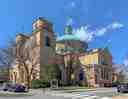 14
14Central Congregational Church
Buy tour to unlock all 18 tracksLook for a majestic tan-brick building with a green copper dome and two tall towers topped with golden crosses-it’s right at the corner, standing out like a regal crown above the…Read moreShow less
Look for a majestic tan-brick building with a green copper dome and two tall towers topped with golden crosses-it’s right at the corner, standing out like a regal crown above the trees. As you stand here, take a moment to imagine Providence back in the 1830s: dusty roads, carriages clattering past, and a group of determined Congregationalists asking themselves, “Where can we put down roots on this side of the river?” Land was tough to get, but their stubborn hope paid off. By 1850, after some bureaucratic wrestling and a fair bit of patience-because what’s a church without a few plot twists?-the Central Congregational Society was born. Fast forward through the Victorian bustle of College Hill to the roaring 1890s, when the community packed up from their brownstone Romanesque building and moved to the very corner where you’re standing. The new sanctuary before you is the handiwork of Carrère and Hastings, the same duo that designed the mighty New York Public Library. Since 1893, this Renaissance-style church has greeted generations with its copper dome-a first in the whole country designed by Rafael Guastavino, the “Tile King.” Can you picture that dome gleaming red before it was capped with copper? It certainly turned heads, especially among storm clouds-until, after a few too many rhode rage weather events, the original towers had to be rebuilt in 1958. Even Providence churches need a little facelift now and then. Now, let’s step inside with our imagination. The oak woodwork feels warm and sturdy; the air tinged with the quiet echo of prayers and laughter from countless communities. The real magic is at the front: look upward in your mind’s eye to the chancel. You’ll see not just the Lamb of God, but a powerful female figure of Providence herself and a helmet-clad Virtue, all painted by Herman Schladermundt. And right at the dome’s center, a golden cross dazzles, ringed by the Four Evangelists-Matthew the man, Mark the lion, Luke the ox, and John the eagle. The scene is alive with color and symbolism, blessed by a circle of blooming plants, peacocks of immortality, and deer sipping from living waters-a feast for the senses and the soul. Don’t miss the stained glass: each window tells a chapter in one grand story, from the primordial glow of creation to the shining glory of the Heavenly City. Each brilliant panel, by artists like Jacob Holzer and Duffner & Kimberly, bathes the sanctuary in rainbow light, giving the place an aura that changes with every hour of the day. There’s even a special pendant window-a tiny stained-glass masterpiece depicting this very church, gifted by a former organist who helped Londoners through WWII’s darkest days. That’s right, even the windows have their wartime secrets. The soundscape is dominated by the Aeolian-Skinner organ, whose pipes unleash music powerful enough to rattle your shoes, if not your soul. It’s been singing here since 1965, carrying hymns, weddings, and maybe the occasional off-key anthem from a brave soloist. Central Congregational Church has always worn its heart on its sleeve, leading not just religious services, but also crusades for justice. It helped start America’s very first Cape Verdean Protestant church and has published stories of its own journey for everyone to read and remember. So as you stand here looking at this proud, copper-topped landmark, know you’re gazing at more than bricks and glass. You’re witnessing a living story-a beacon built on hope, community, and a dash of divine drama. If only these walls could talk! I suspect they’d say, “Welcome! Don’t forget to check out the next organ recital-and keep your umbrella handy. Providence weather never goes easy on a dome.” Fascinated by the architecture, senior ministers or the gallery? Let's chat about it
Open dedicated page →
Frequently asked questions
How do I start the tour?
After purchase, download the AudaTours app and enter your redemption code. The tour will be ready to start immediately - just tap play and follow the GPS-guided route.
Do I need internet during the tour?
No! Download the tour before you start and enjoy it fully offline. Only the chat feature requires internet. We recommend downloading on WiFi to save mobile data.
Is this a guided group tour?
No - this is a self-guided audio tour. You explore independently at your own pace, with audio narration playing through your phone. No tour guide, no group, no schedule.
How long does the tour take?
Most tours take 60–90 minutes to complete, but you control the pace entirely. Pause, skip stops, or take breaks whenever you want.
What if I can't finish the tour today?
No problem! Tours have lifetime access. Pause and resume whenever you like - tomorrow, next week, or next year. Your progress is saved.
What languages are available?
All tours are available in 50+ languages. Select your preferred language when redeeming your code. Note: language cannot be changed after tour generation.
Where do I access the tour after purchase?
Download the free AudaTours app from the App Store or Google Play. Enter your redemption code (sent via email) and the tour will appear in your library, ready to download and start.
If you don't enjoy the tour, we'll refund your purchase. Contact us at [email protected]
Checkout securely with 


