
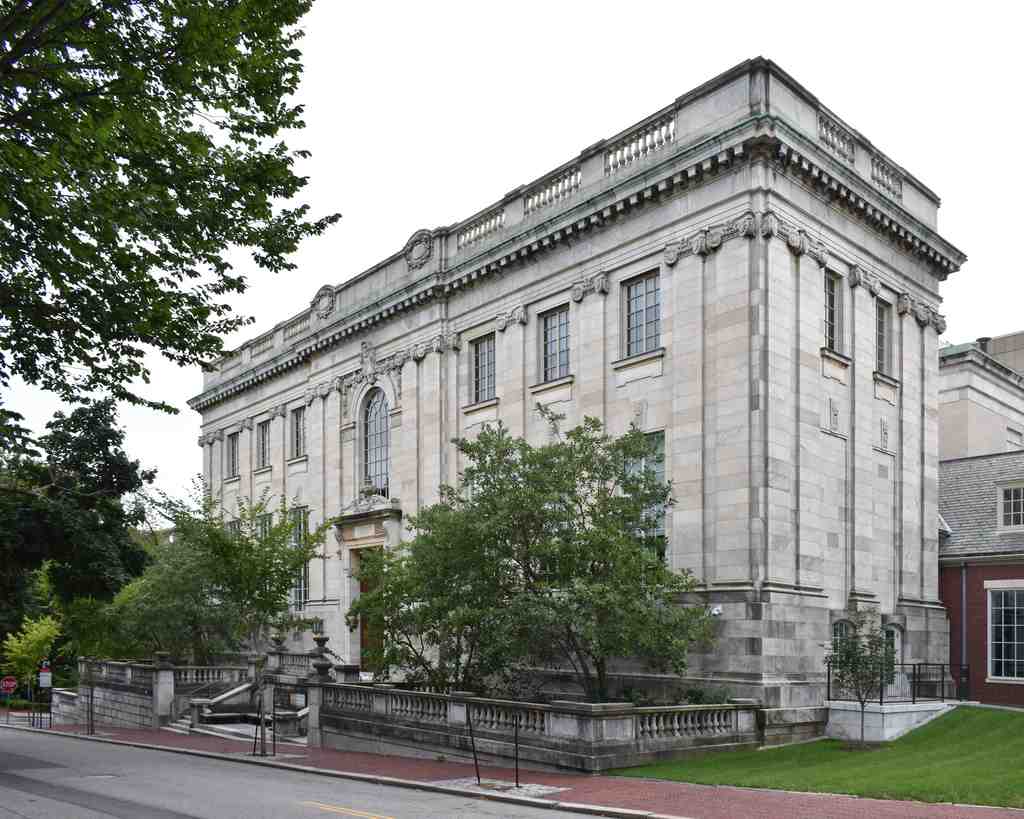
To spot the John Hay Library, look for the majestic white marble building with grand, elegant windows and classical columns, sitting proudly along Prospect Street just across from the iconic Van Wickle Gates.
Now, let’s pull you back through time as you stand before this storied building. Imagine the year is 1910-horse carriages clatter by, and college students in stiff collars and long skirts bustle across the street. You’re looking at Brown University’s second-oldest library, a monument of stone and secrets, made possible thanks to a donation from industrialist Andrew Carnegie, who probably carried more cash in his pockets than most students could dream of in tuition bills. At Carnegie’s special request, it was named for his late friend, John Hay, who not only graduated from Brown but also happened to be Secretary of State-talk about having friends in high places!
This gorgeous Beaux-Arts structure was crafted by Boston architects Shepley, Rutan and Coolidge, originally imagined in limestone but realized in marble from the green hills of Vermont. The opening in 1910 must have been a sight, with marble gleaming in the sunlight, faculty members whispering about how finally there’d be room for all those newfangled books, and maybe even a mischievous undergrad or two sneaking peeks inside.
Over the years, this building has seen a few upgrades-1939 brought a new wing (now you know why one half is classy white marble and the other is dignified red brick). The library’s main reading room, once open and inviting, was chopped into three by bookshelves during that time. But, in true “home improvement” style, a few decades later, it was all lovingly restored, with renovations in 1981 and again in 2013 that doubled the exhibit space and brought that reading room back to its elegant roots.
But wait, the real magic is inside-like a chest filled with treasure, the Hay houses some 2.5 million rare gems: think of ancient clay tablets, first editions by Galileo with his own scribbles in the margins, and even a copy of Orwell’s original manuscript for Nineteen Eighty-Four. Literary wizards might swoon to hear it’s also home to the world’s largest H. P. Lovecraft collection. And for the science fans, the Lownes Collection has a copy of Galileo’s Siderius Nuncius, annotated by the stargazer himself. If only those books could spill their secrets…
There’s even more strangeness lurking in the archives. The Hay is famous-though maybe a bit notorious-for owning four books bound in actual human skin. Yes, you heard that right! These books came from the 19th century, and, no, you won’t find them on a casual stroll-they’re hidden away and treated as respectfully as any other human remains.
As the official keeper of Brown’s history, the Hay is stuffed with documents about the university’s past. That means yellowed letters, records of George Washington’s visit in 1790, sporting trophies, and snapshots of students from every era-imagine flappers of the 1920s, or flyers from protests in the ’60s.
And if you listen closely to the whispers of the library, you might even catch the voices of women whose lives are recorded in the Christine Dunlap Farnham Archive, or the pioneering scholars whose legacies fill the Feminist Theory Archive-proof that every kind of brilliance, protest, and persistence is housed in these walls.
So as you stand here, you’re not just outside a library-you’re standing at the crossroads of a thousand stories. Maybe if you gaze at those marble walls long enough, you’ll start to feel the quiet thrill of history pressing in, full of curiosity and just a dash of mystery-don’t worry, the ghosts here are all bookworms.
For further insights on the special collections, anthropodermic book collection or the brown university archives, feel free to navigate to the chat section below and inquire.


