
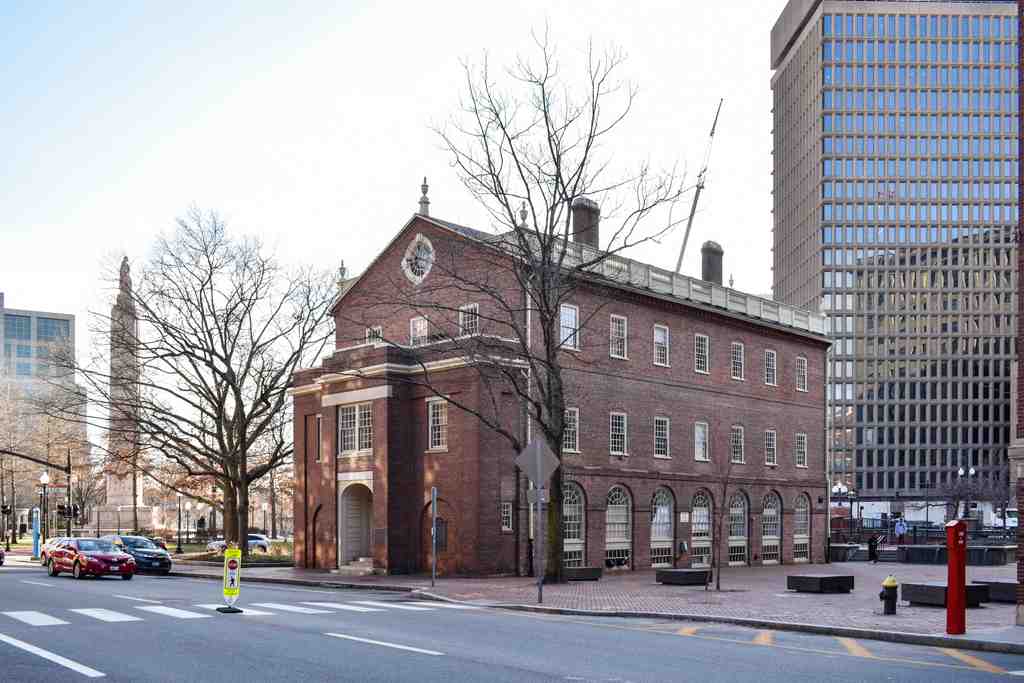
You’re looking for a big brick building with a grand arched entrance and rows of tall windows-right at the intersection of North Main and College Street, at the foot of College Hill-with a small tree-dotted plaza snuggled up beside it.
Market Square is more than just bricks, mortar, and pigeons (although you’ll probably spot a few of those too). Imagine the square all the way back in the 1700s, when it was the hot spot of Providence-bustling with merchants, farmers, quirky townsfolk, and a whole lot of hay. This land was once owned by Chad Brown, the very Brown who’d leave his family name on a famous Ivy League university just up the hill. In 1738, a grand new highway made way for what became known as the Town Parade-a wide thoroughfare inviting trade and chatter. By 1744, hay bales were lining this square, turning it into the local center of commerce, and giving the area its earliest market vibes.
The anchor here is the sturdy Market House, built between 1773 and 1775. Right before the American Revolution, this square sizzled with revolutionary energy. Locals, inspired by the Boston Tea Party, dragged a mound of English tea right here into the center of Market Square, drenched it in tar, and torched it in protest of unfair taxes. Imagine the crowd-it smelled like burnt leaves and rebellion, and surely someone grumbled about the wasted caffeine.
But Market Square carries other, heavier stories. As the busy center of colonial Providence, it’s suggested this was once a site for slave sales, though much of that dark business happened inside nearby shops. Still, you’d find enslaved Black laborers building Market House itself-one stonemason, Pero Paget, helped shape not only this building but also University Hall at Brown. In the years that followed, free Black entrepreneurs staked their claim here too, adding their voices and dreams to the square’s busy hum.
Leap ahead to the 19th century, and you’ll spot presidents and protestors crossing this space. In 1843, President John Tyler stopped here and enjoyed a meal across the street, pondering a presidential comeback-maybe he just came for the food. During the Civil War, Market Square pulsed with the sound of “war meetings” as citizens gathered to hear updates and urge enlistment. One sweaty August afternoon in 1862, the mayor’s voice rang out, announcing the draft and calling Black residents to form a regiment-an announcement that stirred cheers, some anxiety, and more than one person pulling their hat lower over their eyes as names for conscription were drawn from a spinning wheel.
A little later, electric arc lights flickered to life here for the first time in Providence-no more stumbling home in the dark or blaming your neighbor’s cow for running off with your lantern. The square also hosted a good bit of drama, like in 1897 when the famous anarchist Emma Goldman was arrested mid-speech-a regular soapbox moment, until the mayor stepped in and the city told her to skedaddle.
Eventually, the square found new energy. It’s now surrounded by the creative buzz of RISD, where art students have held protests and called for justice, demanding that the square’s shadows be honored with a memorial. In 2023, a bronze statue of Providence artist Edward Mitchell Bannister joined the scene-he’s sitting on a bench, maybe pondering the same ghosts and dreams as you are right now. Welcome to Market Square: a crossroads of commerce, protest, invention, and all the wild characters Providence can offer. Now that’s a market for every kind of story.


