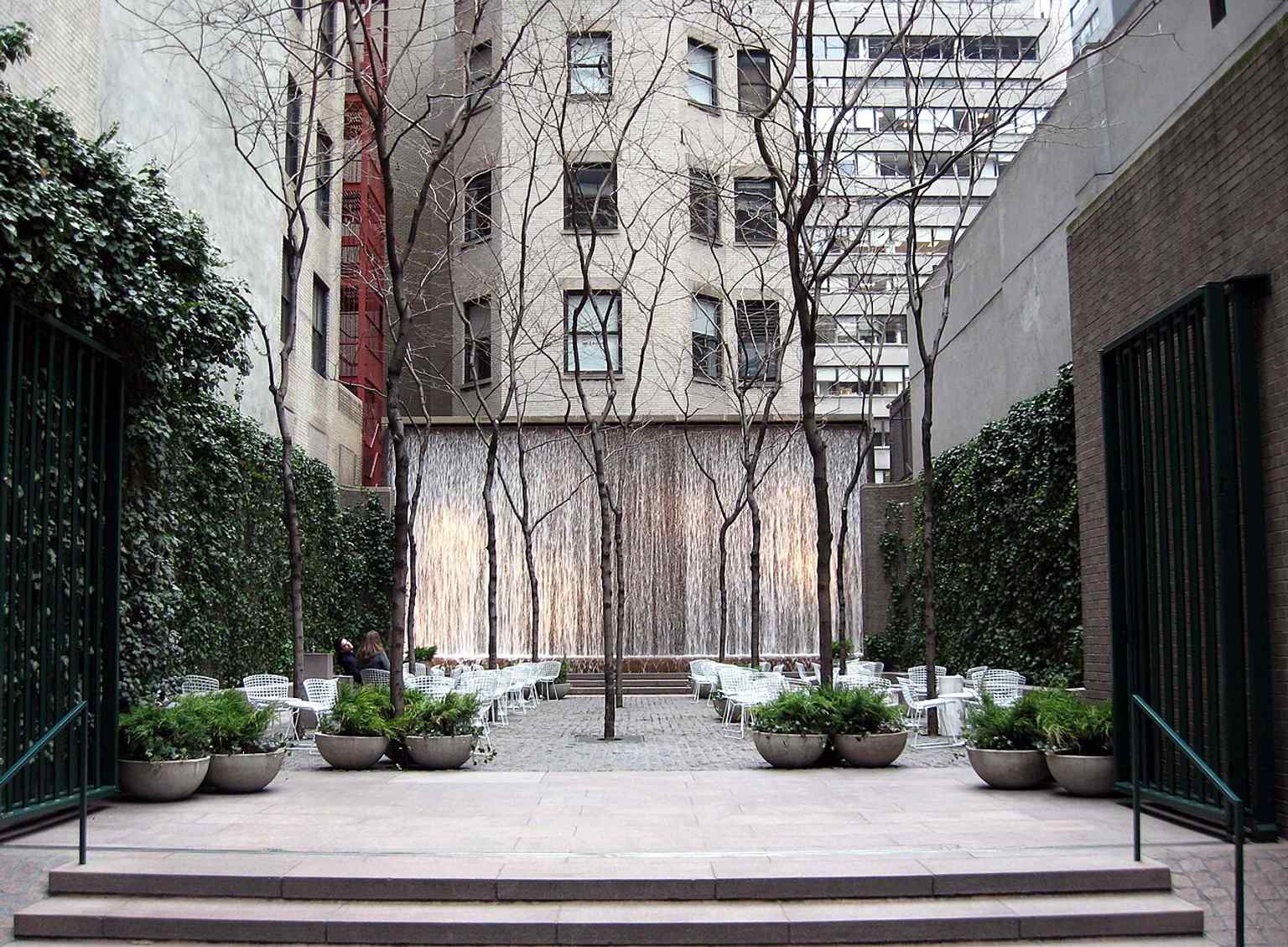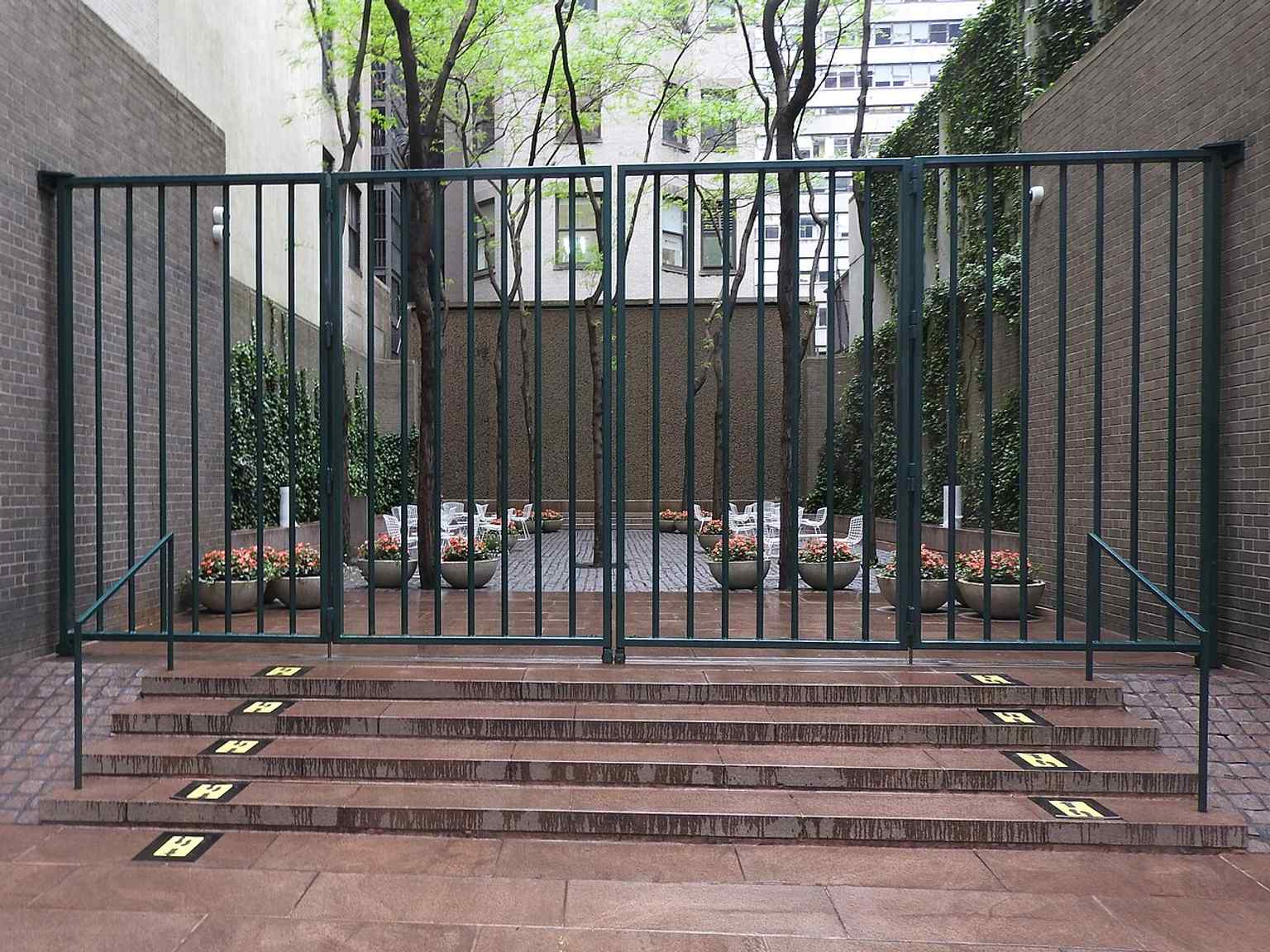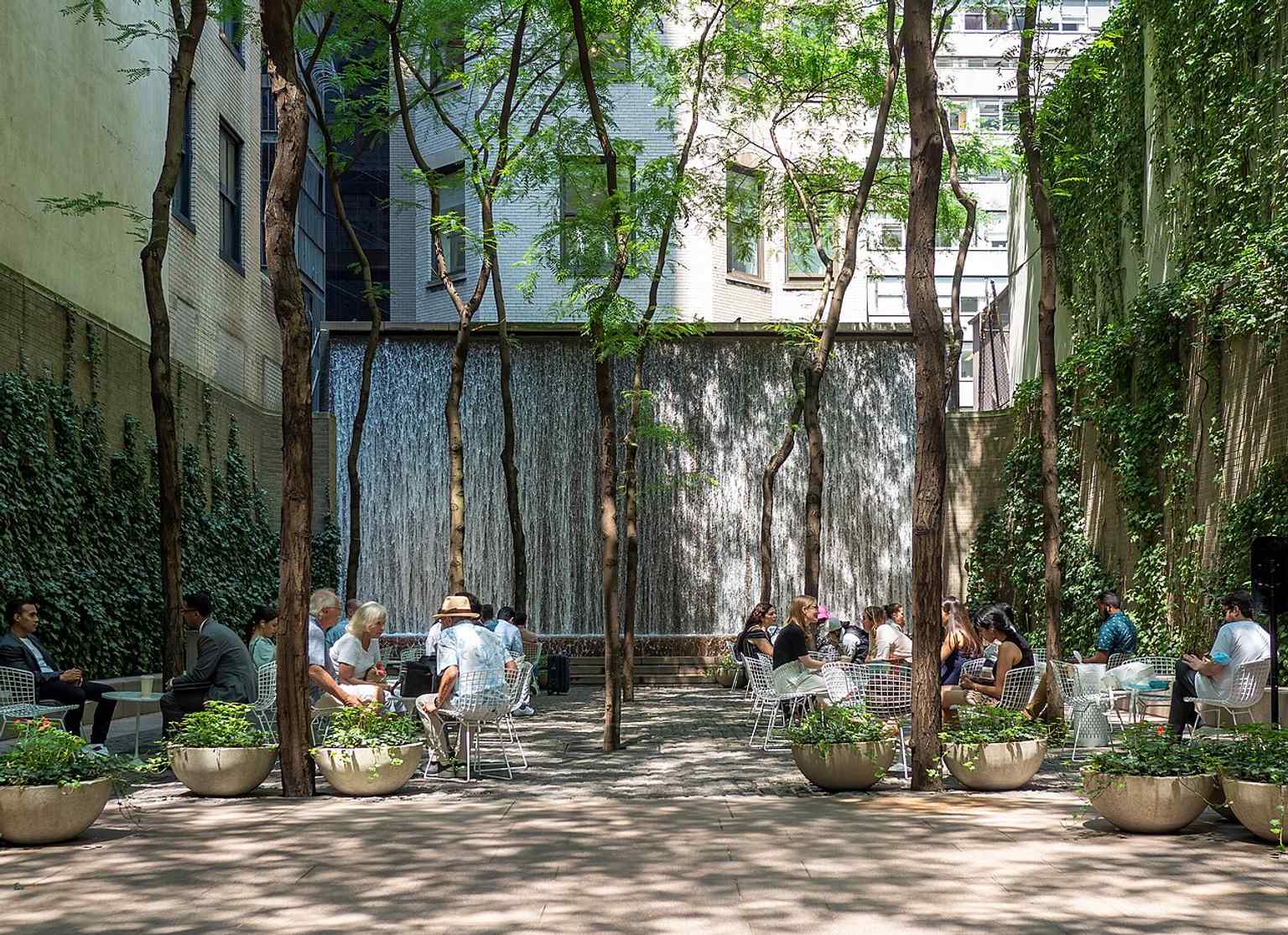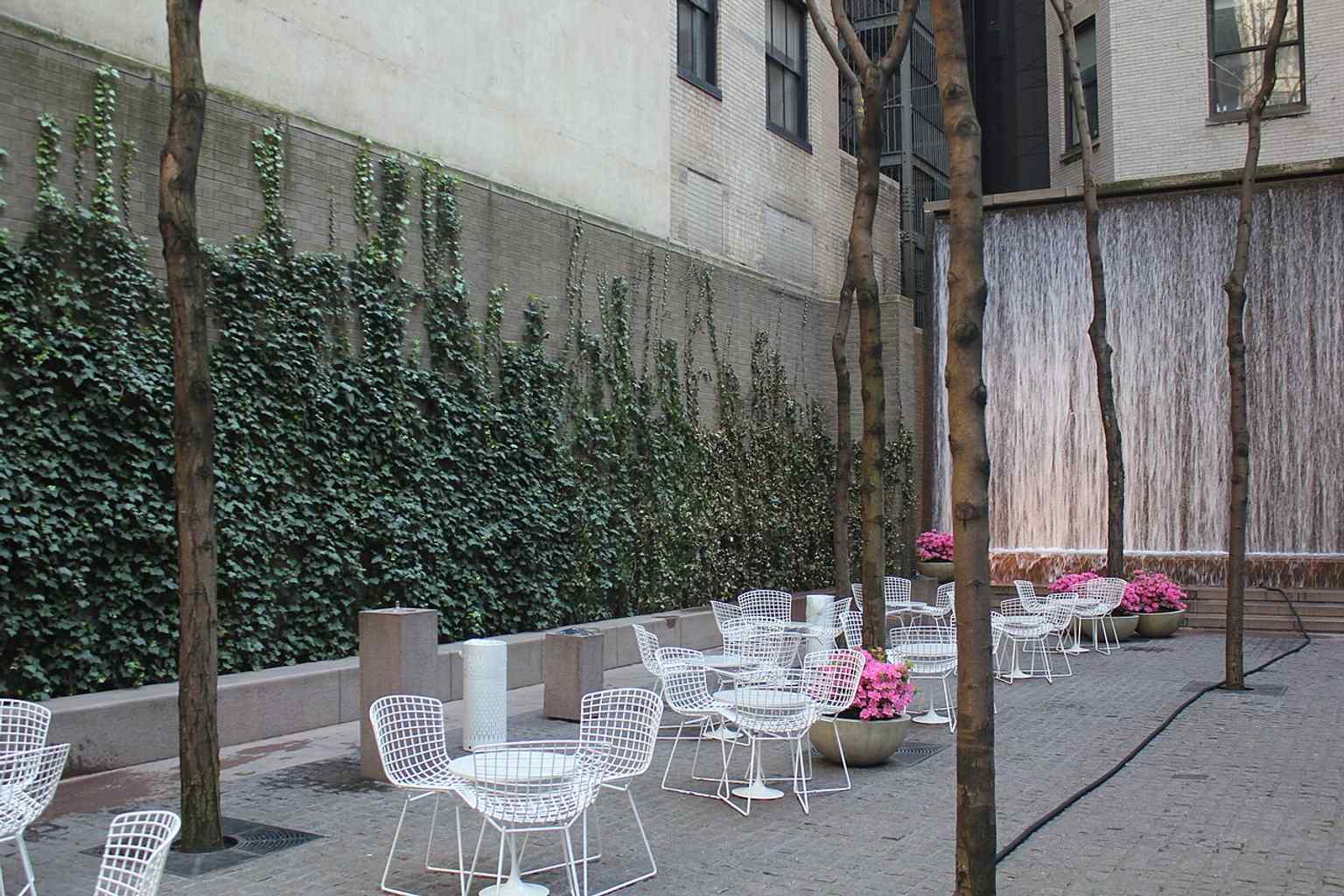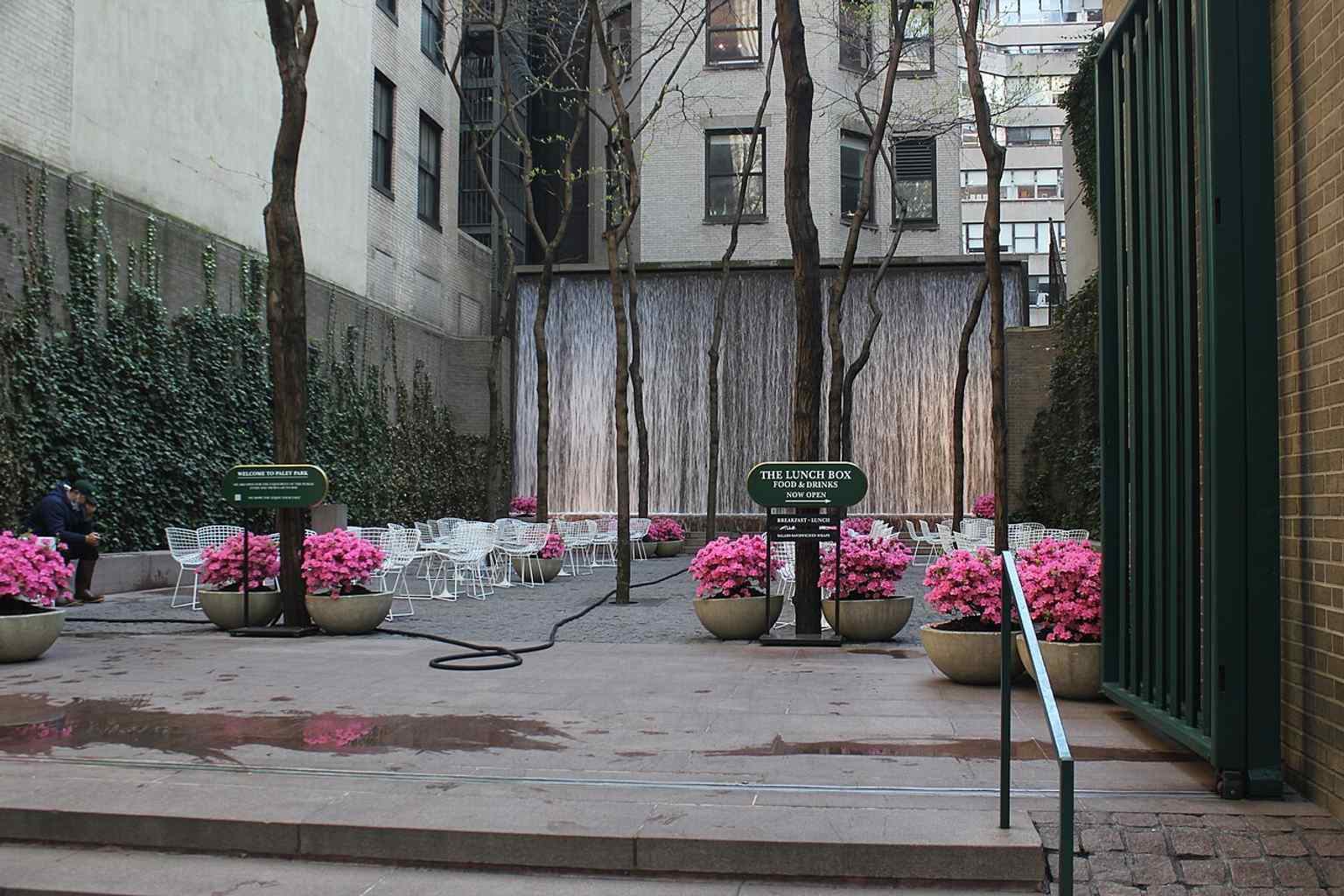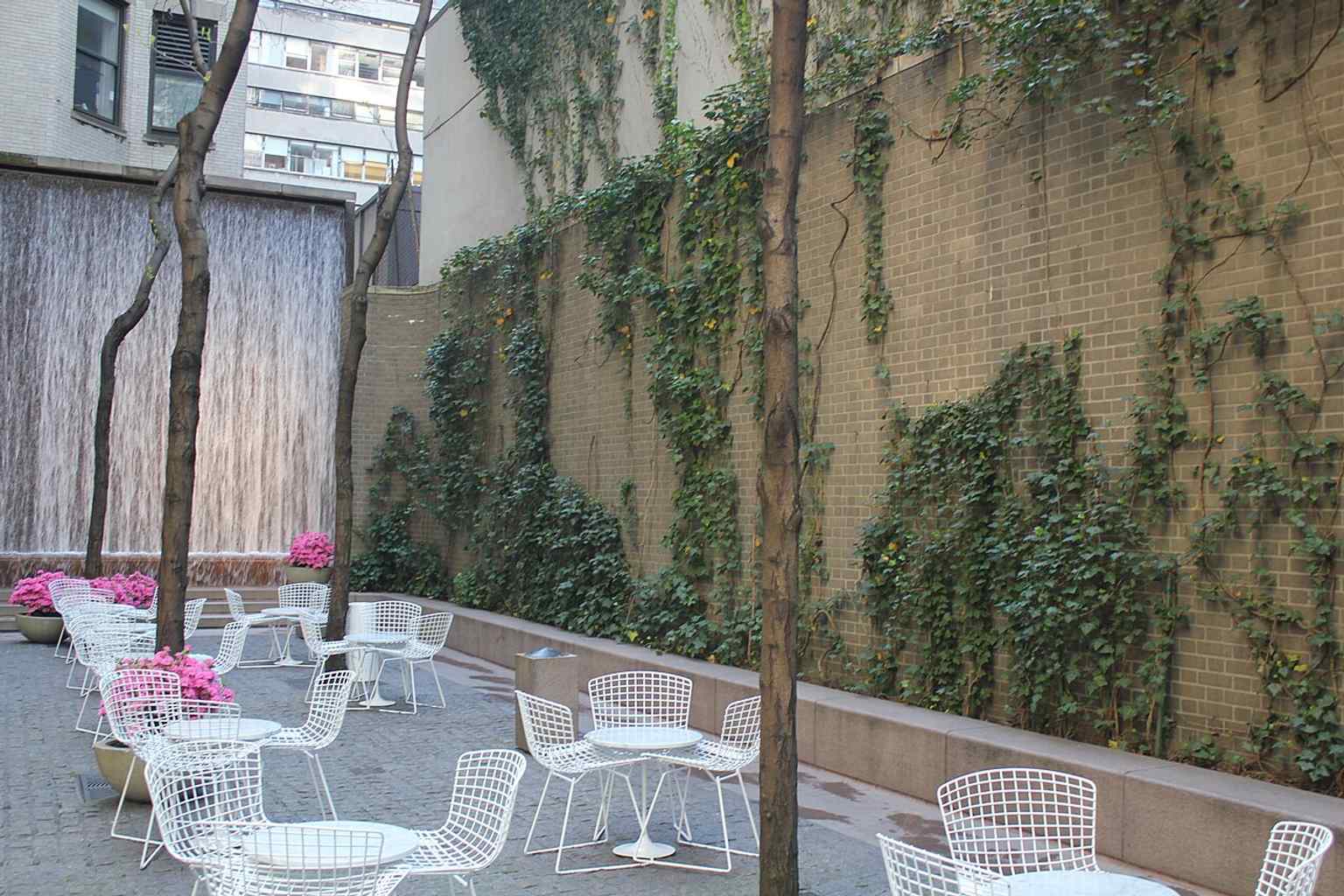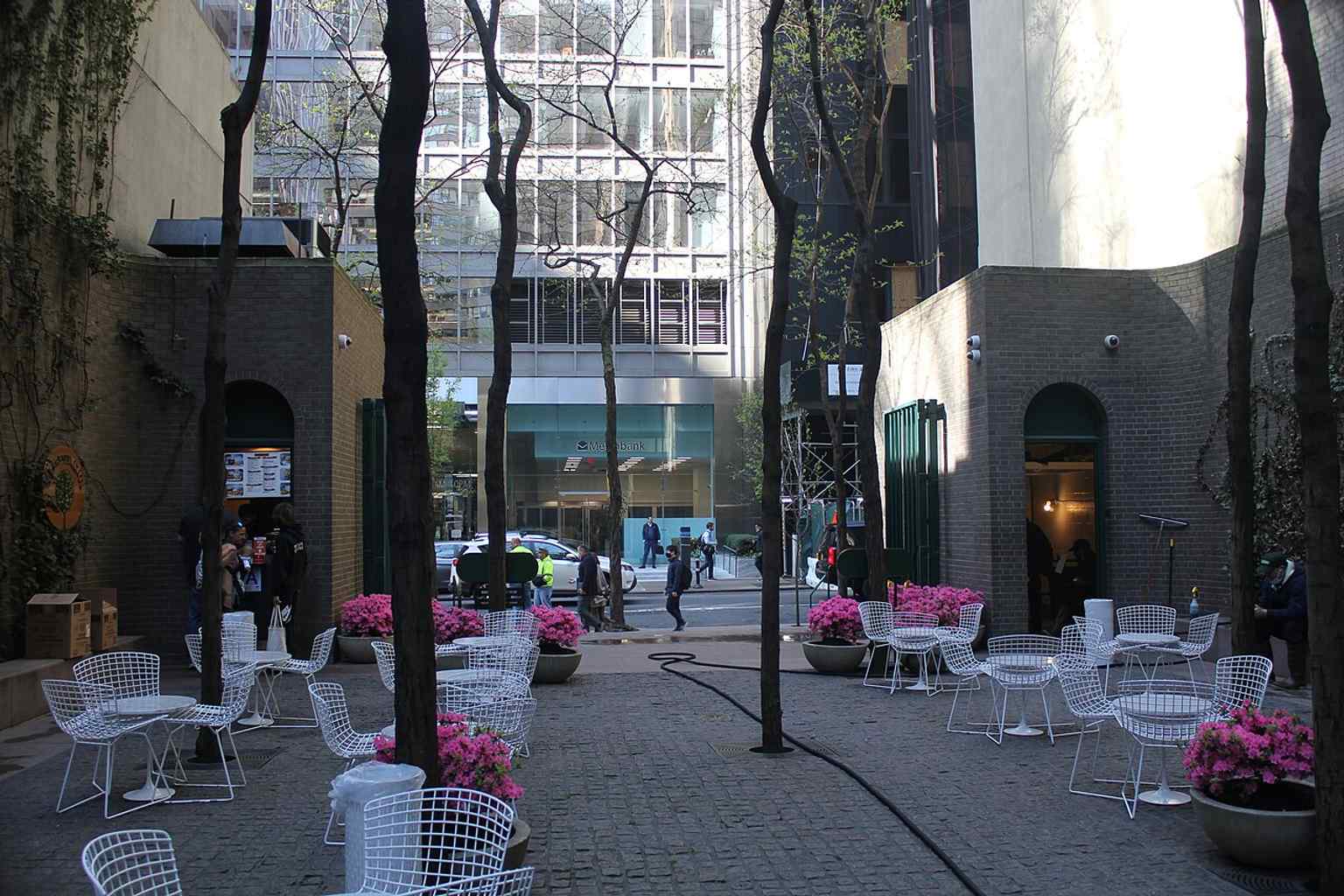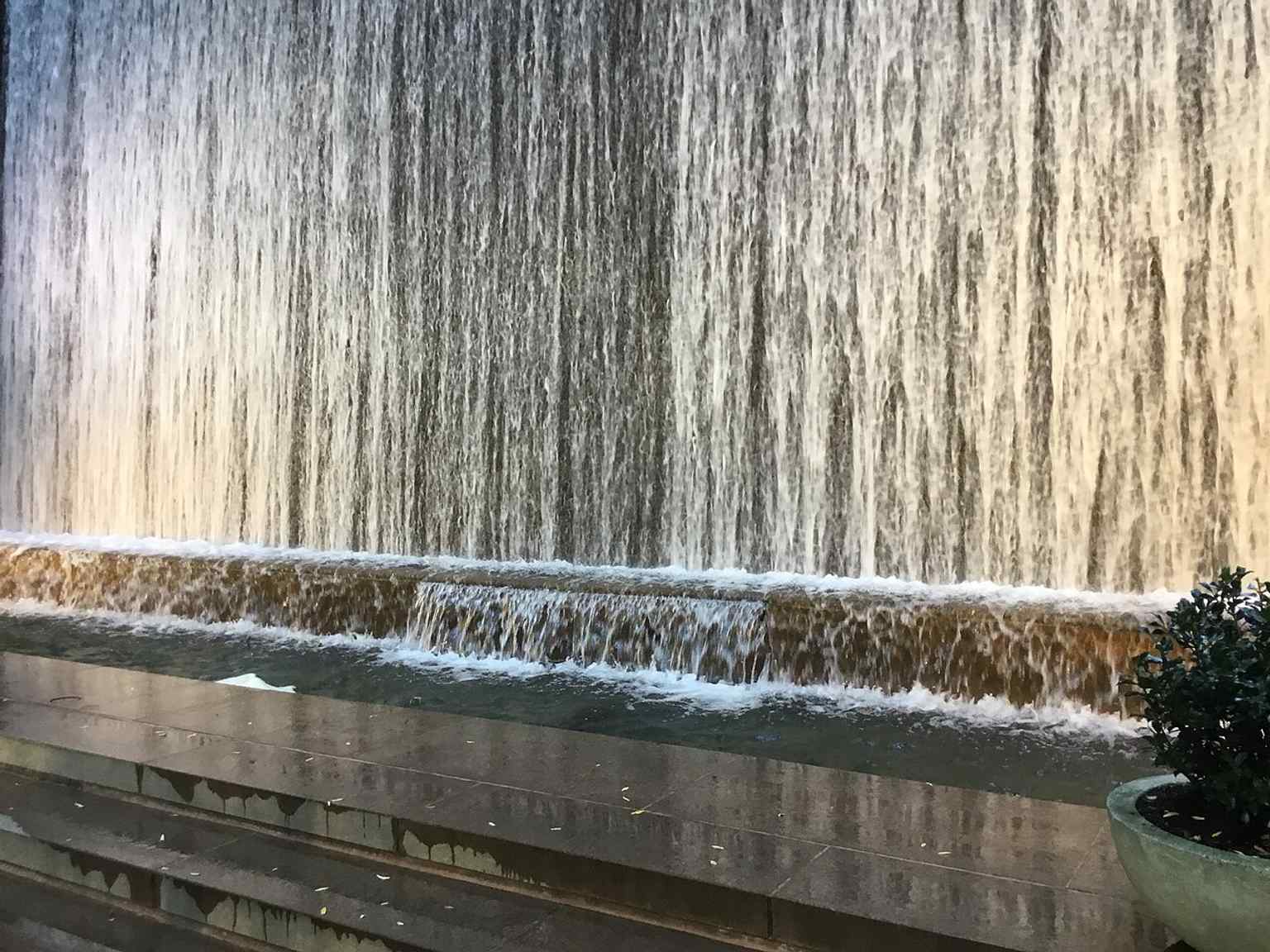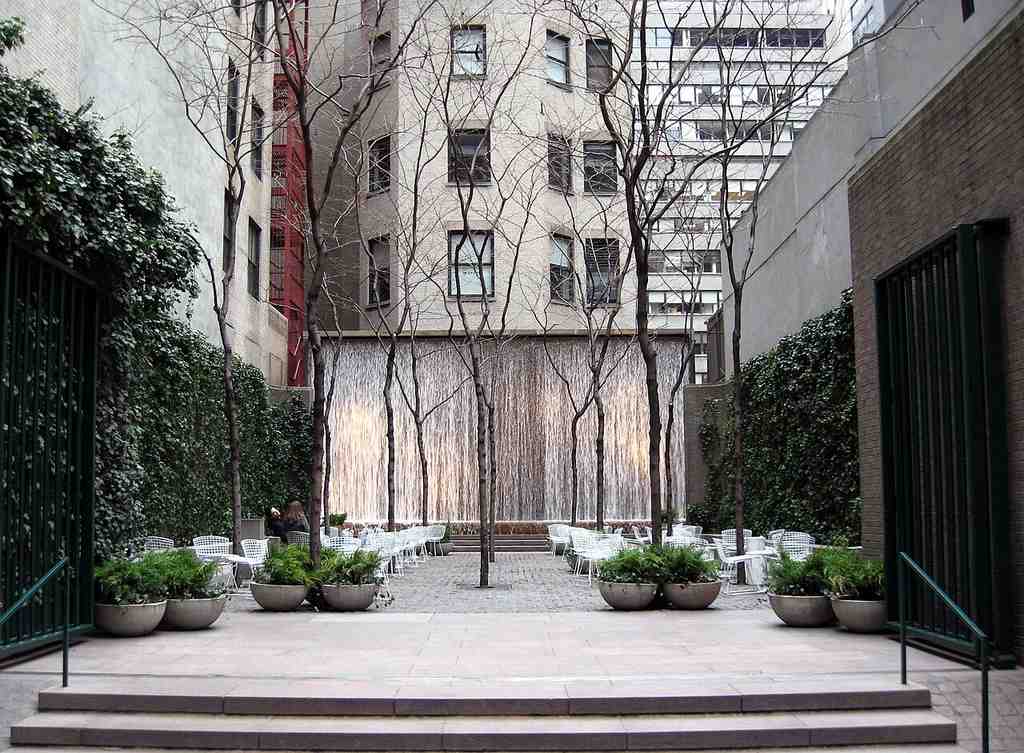
Look for the short flight of stone steps leading into a courtyard paved with rough-hewn granite, flanked by ivy-covered brick walls, and anchored at the far end by a massive twenty-foot wall of falling water.
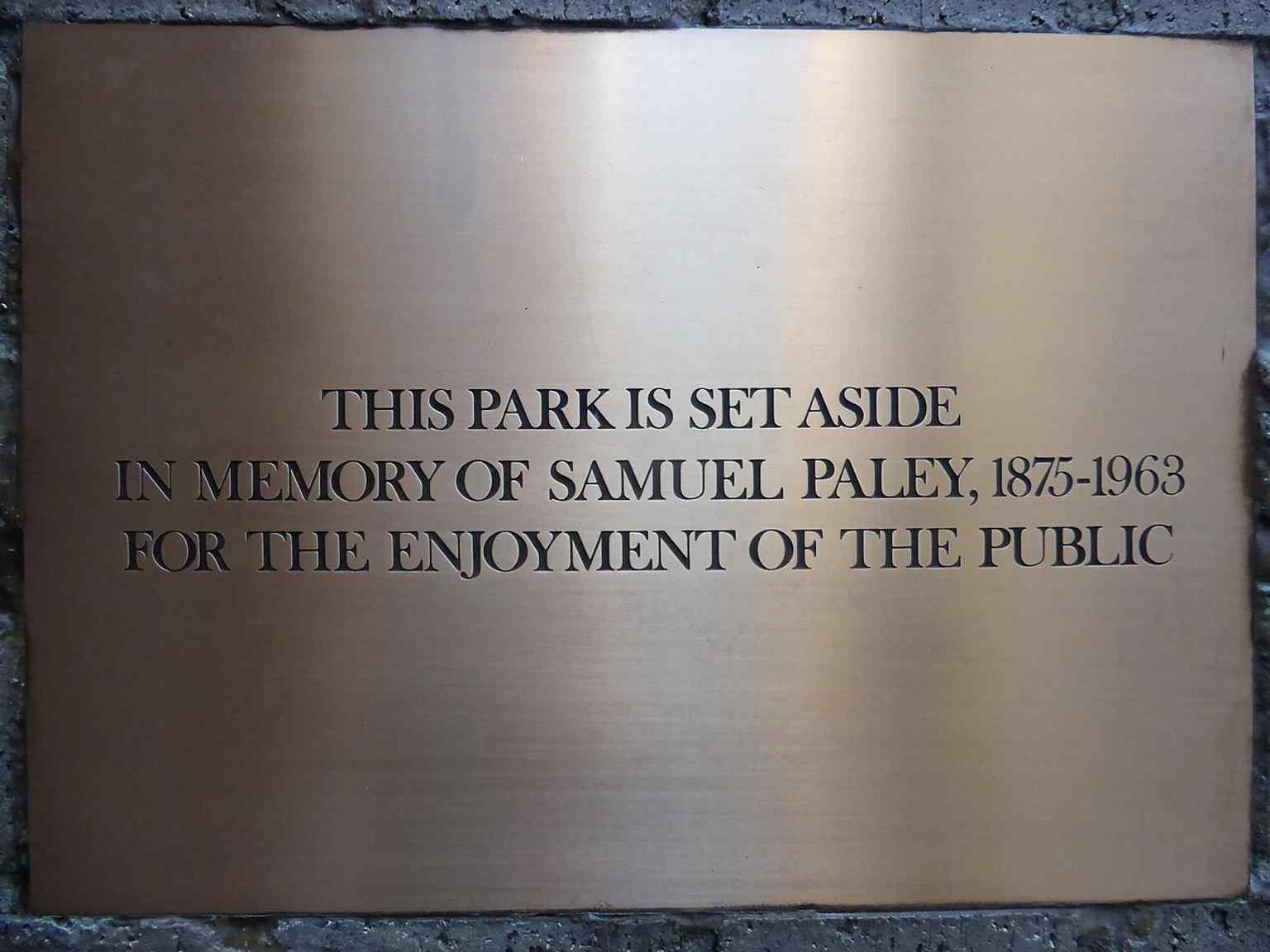
Before nineteen sixty-seven, this exact spot was home to the world-famous Stork Club, a highly exclusive celebrity haunt. But after a bitter ten-year labor dispute, the club went into a steep decline. Broadcasting executive William S. Paley bought the building, tore it down in nineteen sixty-six, and built something completely different, a space dedicated entirely to the general public, named in memory of his father, Samuel Paley.
Landscape architect Robert Zion had pitched the pocket park concept back in nineteen sixty-three. He argued that New York needed small, high-quality retreats squeezed onto single fifty by one hundred foot lots, a radical shift from the city focus on massive regional parks.
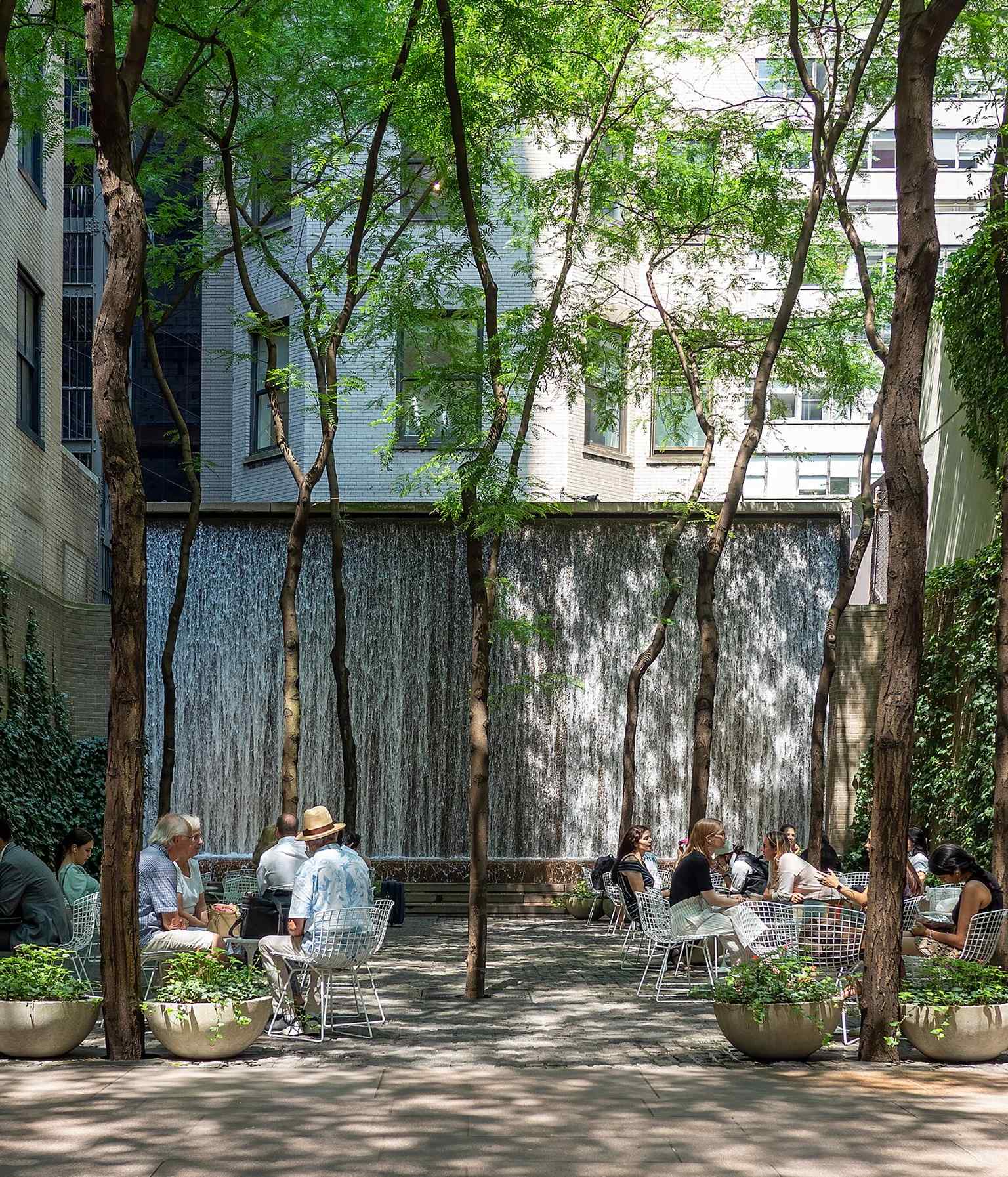
Let us talk about that water. The waterfall dumps eighteen hundred gallons of water every minute, specifically engineered to hit approximately eighty-seven decibels. It acts as an auditory lure. The roar of the water catches the attention of pedestrians on the street, drawing them toward the back of the lot. Urbanists call this the discovery effect, that moment of surprise when a passerby stumbles upon a tiny, lush oasis wedged right between giant glass and steel office towers.
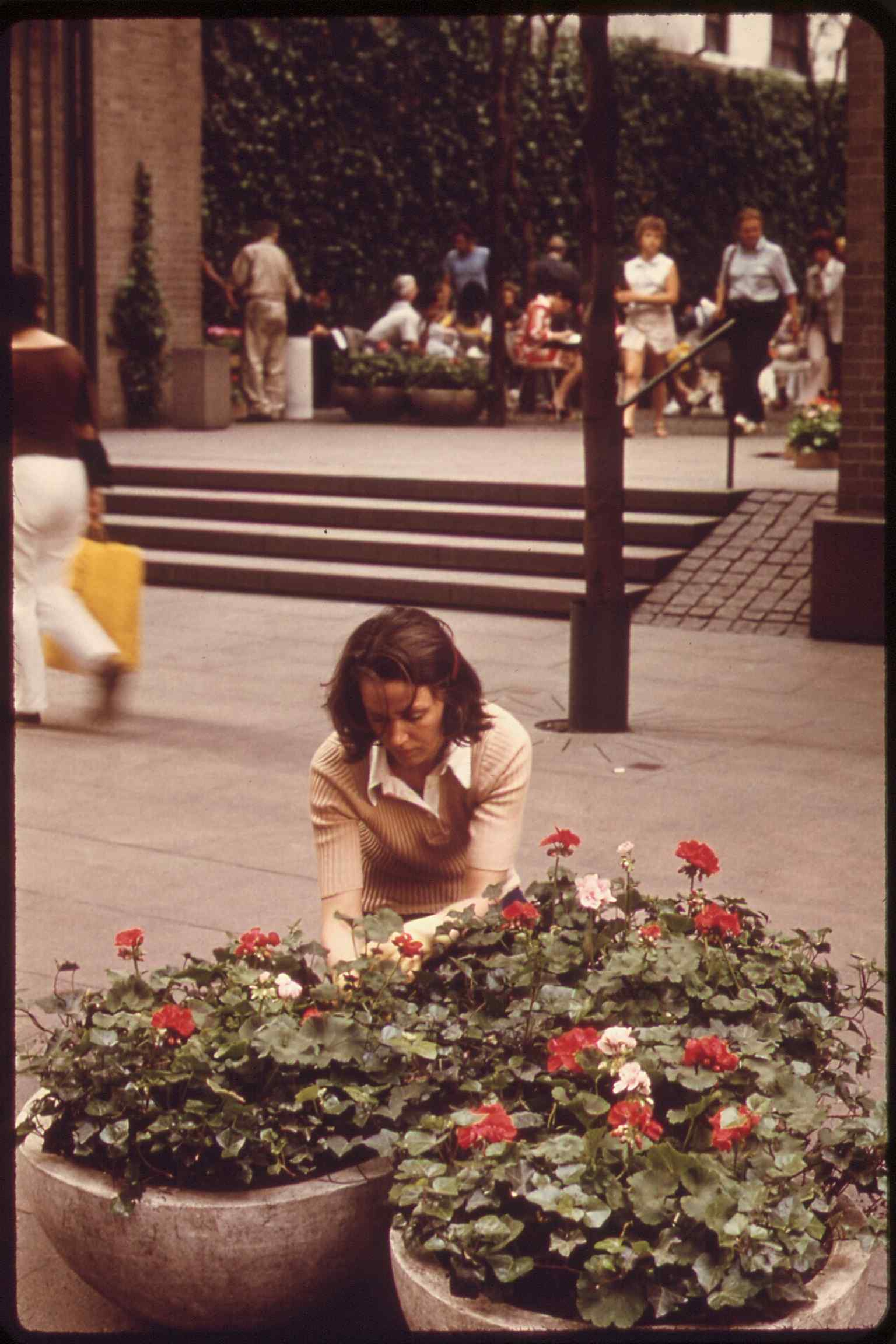
William S. Paley was fiercely protective of this plaza. He visited constantly, sometimes picking up litter himself. Check out your screen for a great shot of a C-B-S secretary helping plant flowers back in nineteen seventy-three, showing just how hands-on the whole team was. Paley even personally taste-tested the hot dogs sold at the refreshment stand, insisting ordinary New Yorkers deserved high quality for an affordable price.
Take a look at the before and after image in your app to see how this space has maintained its tranquil charm over nearly fifty years.
Now, notice the side walls. Zion branded those ivy coverings vertical lawns to emphasize that nature could thrive even in the narrowest concrete canyons. And see those white wire-framed chairs designed by Harry Bertoia? They are not bolted down. Urban sociologist William H. Whyte observed that movable seating gave people a sense of personal sovereignty. Visitors could chase a patch of sunlight or slide into the shade whenever they pleased.
Whyte also discovered the waterfall created what he called triangulation. The sheer drama and volume of the water gave strangers a common experience, sparking conversations and breaking right through the traditional social anonymity of New York City. He found the park to be self-leveling, meaning people naturally spread out or clustered together to keep the space comfortable, even during the busy lunch rush.
Its massive success changed city policy, inspiring a nineteen seventy-five zoning resolution that gave developers extra floors if they built P-O-P-S, or privately owned public spaces, just like this one.
You can generally pop into the park every day of the week from eight A-M to eight P-M.
Paley Park proves that you do not need acres of space to create something magical, just some rushing water, movable chairs, and a vision. Whenever you are ready to keep exploring, we can head toward the next stop.