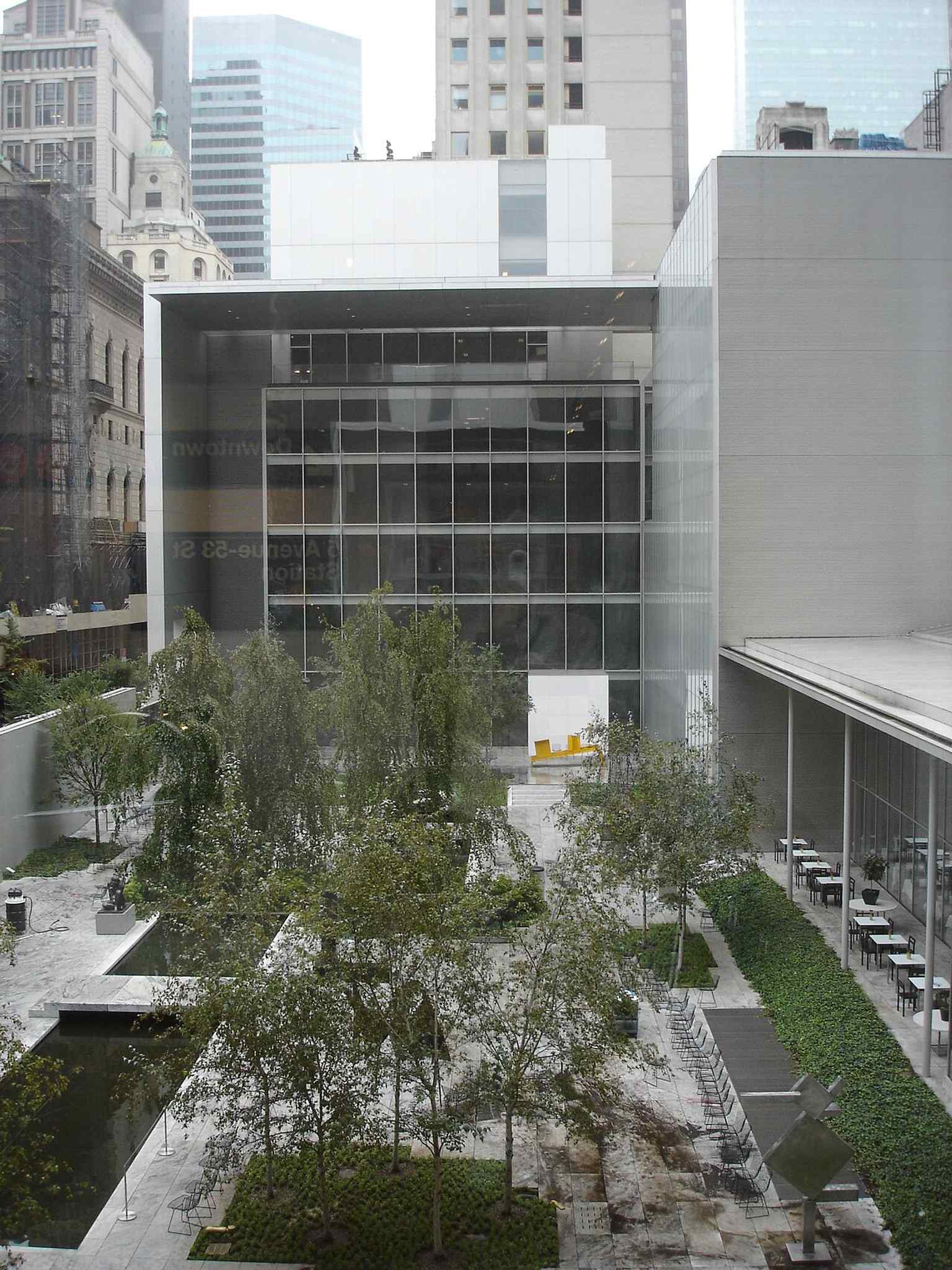
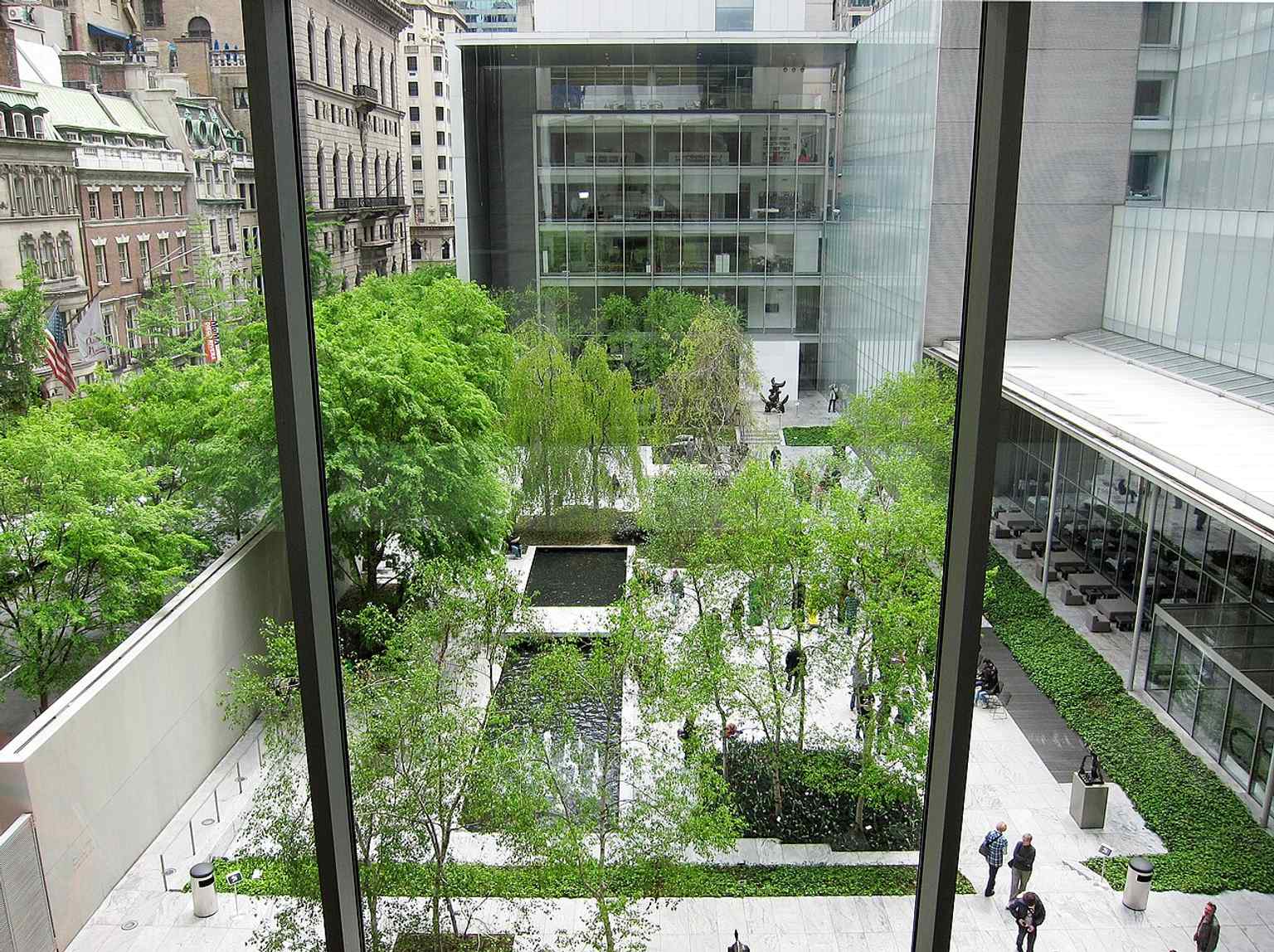
Look right and you will spot a sleek multi-story glass grid framed by a massive white rectangular overhang, blending sharp modern geometry with smooth gray stone. This is the Museum of Modern Art, or MoMA. Its story begins at a nineteen twenty-eight lunch where three determined patrons, Abby Aldrich Rockefeller, Lillie P. Bliss, and Mary Quinn Sullivan, decided New York needed a place entirely dedicated to modern art. People called them the adamantine ladies, meaning unshakeable, because they challenged the traditional Metropolitan Museum of Art, which ignored contemporary artists. Despite disapproval from Abby's husband, John D. Rockefeller Junior, the trio opened the doors in November nineteen twenty-nine, just nine days after the Wall Street Crash.
Lillie P. Bliss saved the museum during its fragile early years by leaving them her massive collection when she died in nineteen thirty-one, but on one condition. The museum had to raise a dedicated financial fund, known as an endowment, to care for it. This allowed MoMA to sell certain pieces to fund the purchase of Vincent van Gogh's The Starry Night. You can see this vibrant masterpiece on your screen. You might also want to check the before and after pictures in your app to see how MoMA evolved from a modest nineteen thirties facade into this sprawling complex over eight decades.
The internal drama often rivaled the art. Founding director Alfred H. Barr Junior clashed with the board chairman, who fired Barr in nineteen forty-three. Barr simply refused to leave. He moved his desk into the library and kept working as a ghost director until they eventually hired him back.
A worker's dropped cigarette sparked a massive fire in nineteen fifty-eight. Tragically, an electrician named Ruby Geller died, and an eighteen-foot-long Claude Monet painting was destroyed. Braving the smoke, staff and volunteers formed a human bucket brigade, passing nearly two thousand artworks hand-to-hand to safety.
MoMA's history also includes wild legal hurdles. When art collector Ileana Sonnabend died in two thousand and seven, she left behind Robert Rauschenberg's Canyon, an artwork featuring a stuffed bald eagle. Because federal law prohibits selling bald eagles, the artwork's market value was zero. Yet the I-R-S insisted the art was worth sixty-five million dollars, handing the family a twenty-nine point two million dollar tax bill. To escape this, the family donated the eagle to MoMA in twenty twelve. The I-R-S dropped the bill, and the museum added Sonnabend to their founders wall.
They are equally ruthless about real estate. In twenty fourteen, MoMA demolished the award-winning American Folk Art Museum building next door, which was only thirteen years old. MoMA director Glenn D. Lowry called the bronze-clad building a bespoke suit, meaning it was custom-tailored to the point of being inflexible, preventing it from connecting to MoMA's new expansion.
If you want to explore inside, the museum opens daily from ten thirty in the morning to five thirty in the evening, extending to eight thirty at night on Fridays. Take a moment to soak this in. When you are ready, we can head to the next stop.