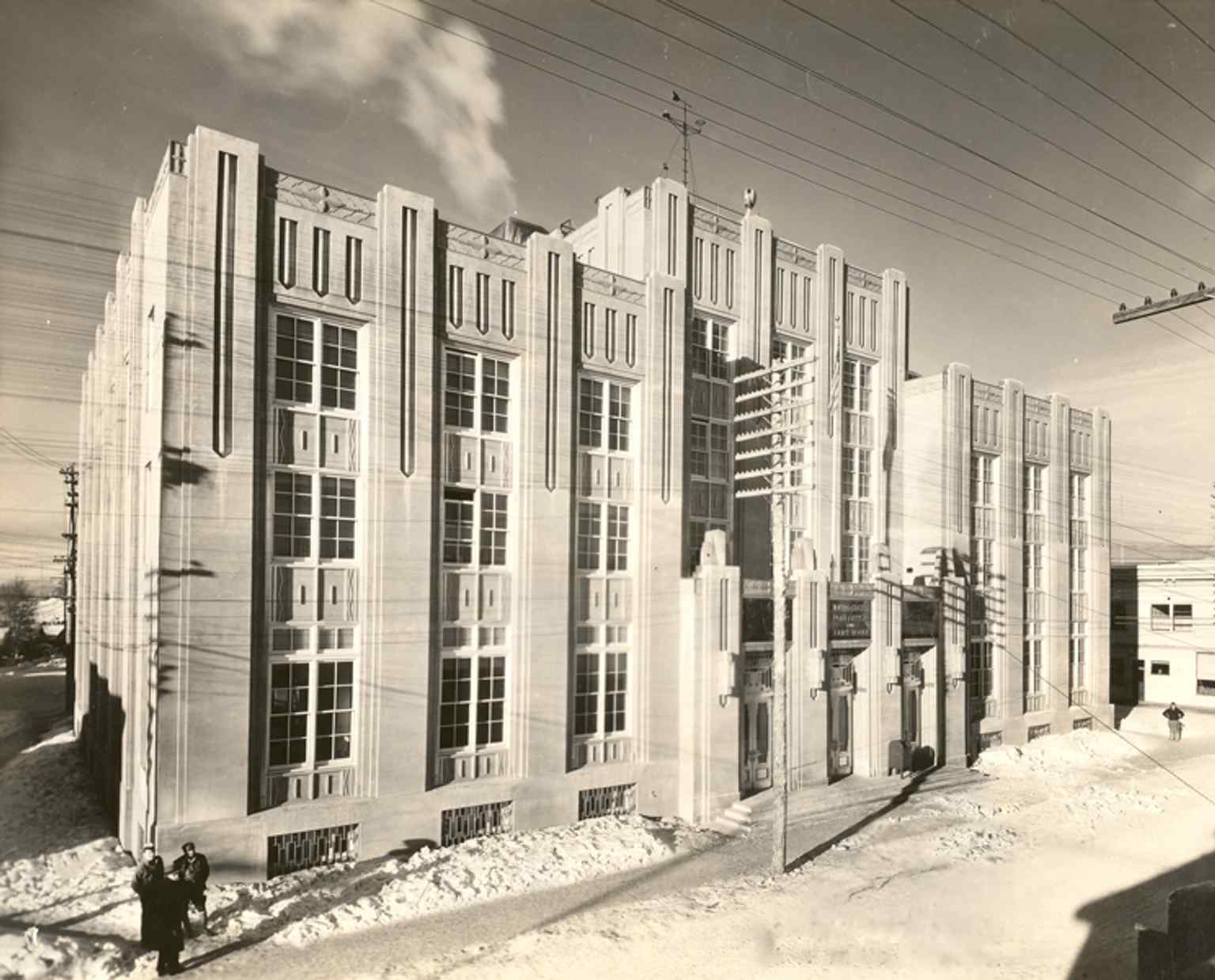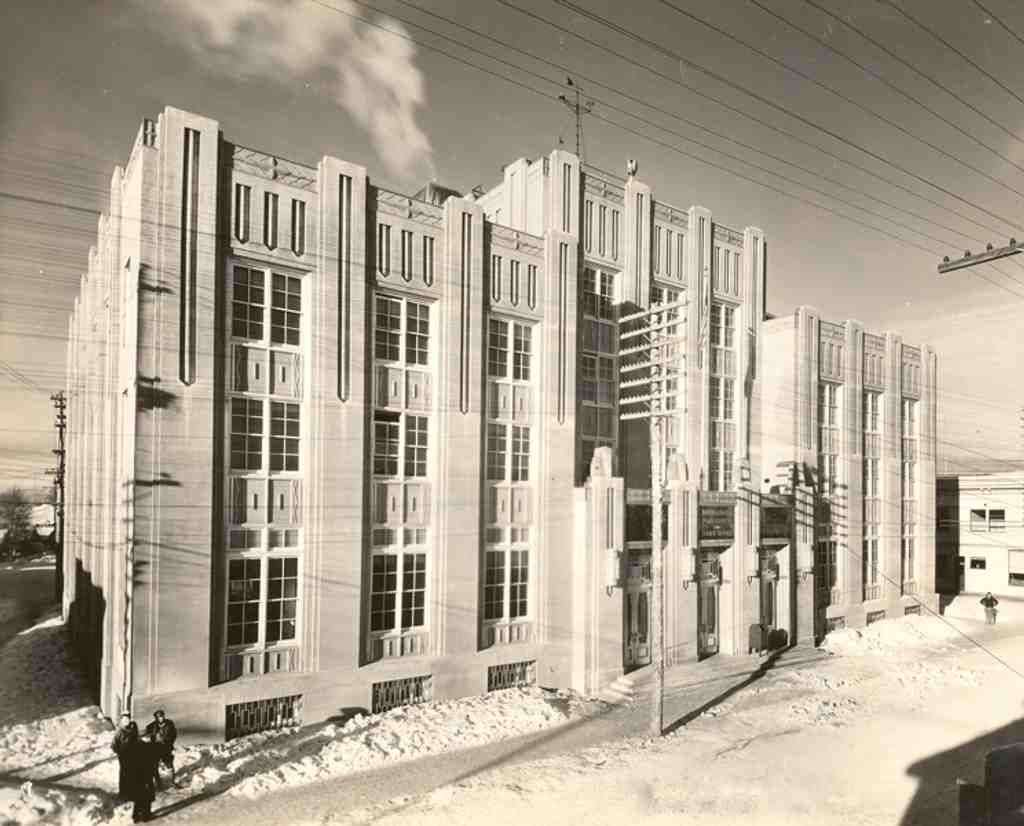
Look for the pale concrete block with a flat roofline, tall vertical window bands, and sharp V-shaped grooves carved into the facade.
This building stands on one of Fairbanks’s oldest and most consequential blocks. Before federal authority settled here in concrete, this ground formed part of E. T. Barnette’s trading post. When Barnette unloaded goods here in late nineteen oh-one, at the end of the sternwheeler route, he helped nudge a settlement into being. In nineteen oh-two, Barnette and James Wickersham tied the town’s name to Senator Charles Fairbanks. Wickersham, first as a judge and later as Alaska’s delegate to Congress, kept pressing for something more than a boomtown. He wanted the visible machinery of law and government.
That ambition had a darker apprenticeship. Wickersham’s first wood-frame courthouse burned in the great fire of nineteen oh-six. Its replacement turned out so poorly built that an engineer told the grand jury it ought to be condemned. And before this structure rose, the old jail yard here hosted hangings. So this was never merely a convenient address. It was a place where the town kept relearning, rather sternly, that authority needed sturdier walls.
Take a moment to study the weight of the building. Does it strike you as reassuring, imposing, or faintly controlling?
By nineteen fourteen, the local postmaster argued that Fairbanks served a region more than three hundred miles across and needed a proper federal building. He even called for concrete. Congress finally provided the money in nineteen thirty-one, and Wickersham pushed the project forward again. Treasury officials tested whether concrete could endure here; local engineers, including voices from the Fairbanks Exploration Company, said it could. Architect George N. Ray drew this Art Deco design, and William “Mac” MacDonald built it. When it opened in nineteen thirty-three, it was among the northernmost concrete buildings in the United States. You can see that crisp federal confidence in full view.
Inside, there were terrazzo floors, marble walls, and even a pressed copper courtroom ceiling. Today the building holds private offices. As you leave, notice how law and government tried to plant stability on this block. In about four minutes, the Rabinowitz Courthouse will show that effort continuing into the present.