
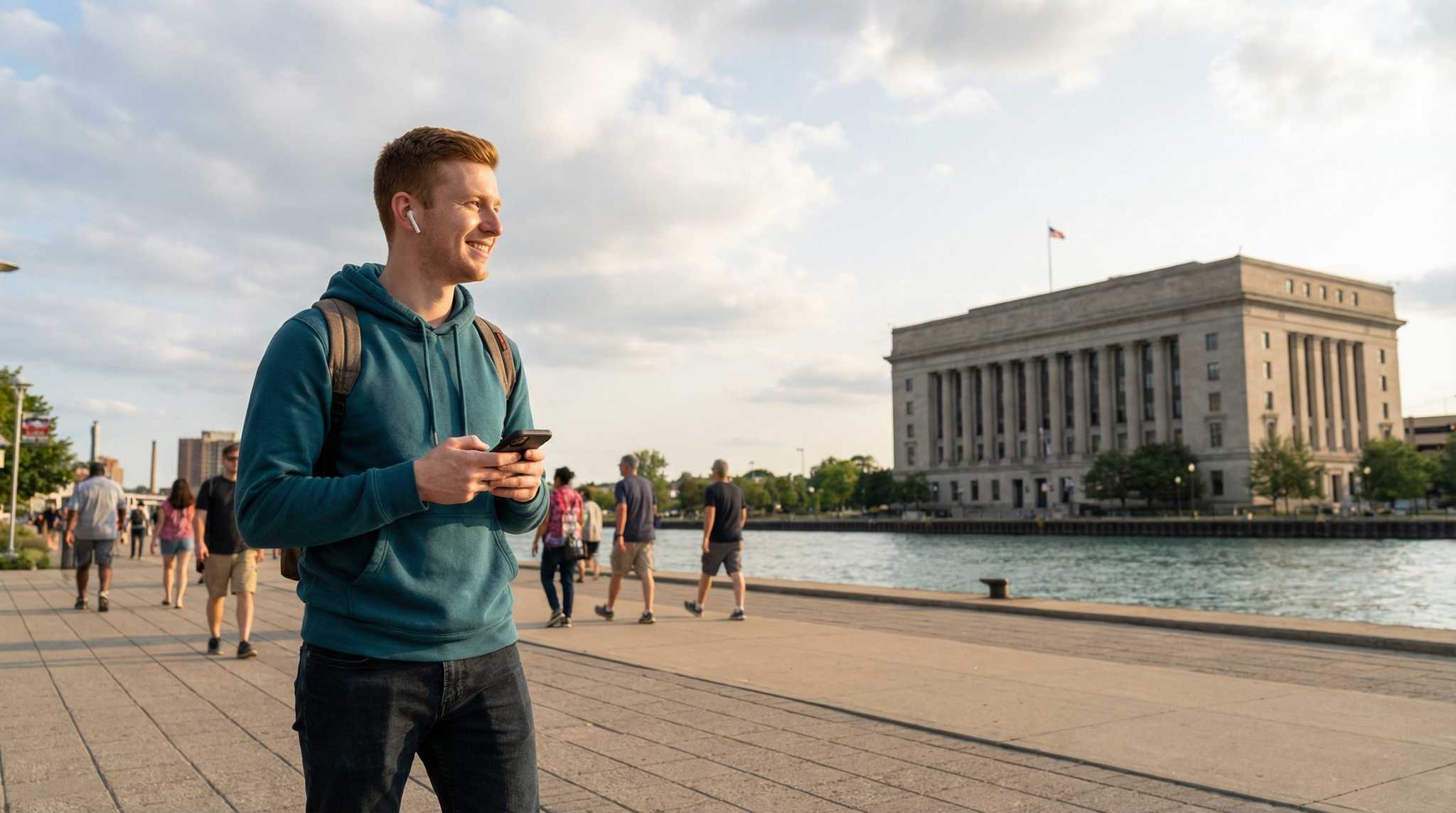
Detroit Audio Tour: Legends and Landmarks of Downtown's Golden Mile
Steel giants once watched over Detroit’s streets while fortunes, laws, and empires rose and fell within their shadowed corridors. Just beyond the glass facades and marble pillars lie secrets that most stroll past: the untold dramas of the Financial District and its powerful neighbors. This self-guided audio tour leads you deep into the city’s beating heart, revealing scandalous deals, daring trials, and the hidden histories etched into every stone. Discover what most miss and unlock stories that shaped Detroit behind the scenes. What explosive courtroom showdown threatened to shake the city’s foundations? Which Monroe Avenue businesses hid secret ambitions and unexpected alliances? Why did one particular bronze plaque spark whispers and wild rumors for decades? Trace the footsteps of moguls, rebels, and visionaries. Traverse alleyways thick with echoes of defiance and discovery. Every turn brings fresh intrigue and a sharper gaze at Detroit’s true soul. Ready to unveil the power plays and mysteries that lurk just beneath Detroit’s polished surface? Start the adventure now.
Tour preview
About this tour
- scheduleDuration 40–60 minsGo at your own pace
- straighten3.8 km walking routeFollow the guided path
- location_on
- wifi_offWorks offlineDownload once, use anywhere
- all_inclusiveLifetime accessReplay anytime, forever
- location_onStarts at Detroit Financial District
Stops on this tour
Look for a cluster of shimmering skyscrapers with Art Deco crowns and geometric lines-standing next to the river, these proud towers light up the night with glowing windows and…Read moreShow less
Look for a cluster of shimmering skyscrapers with Art Deco crowns and geometric lines-standing next to the river, these proud towers light up the night with glowing windows and signature neon signs. Welcome to the Detroit Financial District! You’re standing where fortunes were made, lost, and sometimes, found again. Take a deep breath-can you picture the electric buzz of ambition in the air? This canyon of stone and glass is where Detroit’s dreamers once flocked, hoping for a little slice of the city’s legendary boom. Long before the first dollar was banked, or even the first brick was laid, this very spot witnessed Detroit's beginnings. Picture it: it’s 1701, and Antoine de la Mothe Cadillac is building Ste. Anne’s Catholic Church, the first structure in all of Detroit, right near where you're standing. Back then, this area was so wild that they had to build a fort-imagine trying to get a mortgage approval with wild animals outnumbering the bankers! Over the years, French, British, and American soldiers traded stories by campfires here, while muddy marshland threatened to swallow their boots whole-until the clever folks rerouted the River Savoyard and drained the land. The banks started popping up in the 1830s along Jefferson Avenue, where bankers with impressive whiskers (and maybe slightly less impressive math skills) introduced Detroit to its first taste of high finance. By the 1850s, Griswold Street was the place to be, so famous for banking that a local historian called it “the Wall Street of Detroit.” If you wanted a bank, there was one on nearly every corner-trust me, it was harder to find a coffee shop than a place for a loan! Then came the early 1900s, when Detroit’s auto industry revved its engines, and the district shot up with skyscrapers almost as fast as cars rolled off the assembly lines. The Penobscot Building, looming above you now, became the king of them all-a 47-story Art Deco marvel that once competed with New York and Chicago for the tallest trophy. When it was finished in 1928, it was so tall, people joked you could see Ohio from the top-on a clear day, and with binoculars. Each stone and spire tells a story: the Guardian Building, decked out in Art Deco and Native American-inspired décor, glows like a gem at sunset. Or the First National Building, sporting columns that would make ancient Romans jealous. If these buildings could talk, they’d whisper tales of fortunes made during lunch breaks, of daring business deals, and maybe a few wild office parties after quitting time. But then came the Great Depression, when the party stopped. Banks failed, buildings emptied out, and dreams dried up. Yet Detroiters aren't quitters. By the 1950s, new buildings sprang up again, and modern glass-and-steel towers like One Woodward Avenue touched the clouds-a design by Minoru Yamasaki, who later dreamed up the World Trade Center in New York! Some say at night, you can feel the echoes of typewriters tapping, telephones ringing, and the swirl of deals being struck in smoke-filled rooms. But don’t worry-the only thing likely to sneak up on you now is a friendly Detroit local ready to show you their favorite coffee spot. As you stand among these shining towers, think about all the people who’ve walked here: French priests, British soldiers, auto magnates, jazz musicians, hopeful immigrants, and sharp-suited bankers. The Financial District is more than buildings-it’s a living story of resilience, reinvention, and, yes, a dash of Detroit swagger. So, tuck that history into your back pocket, look up and around you, and marvel for a moment. In this city, you’re walking in the footsteps of giants-hopefully, ones with a good sense of humor and an even better head for math!
Open dedicated page →Look straight ahead to spot the Ally Detroit Center: it’s the massive grey granite skyscraper with jagged, neo-gothic spires crowning its roof, towering above everything else…Read moreShow less
Look straight ahead to spot the Ally Detroit Center: it’s the massive grey granite skyscraper with jagged, neo-gothic spires crowning its roof, towering above everything else around you. Now that you’re standing in the shadow of the Ally Detroit Center, take a moment to tilt your head back and soak in those soaring spires-gotta love when a building looks like it’s ready for a superhero to swoop in and perch on top! Rising 619 feet over downtown, this giant is the tallest office building in Michigan and only plays “second fiddle” in height to the Renaissance Center’s hotel tower a few blocks away. If the Penobscot Building tries to boast about its 45 floors, just remember: Ally’s floors are so generous, its roof is still about 60 feet higher. Talk about raising the bar! It was built in the early ‘90s, designed by the legendary architects John Burgee and Philip Johnson-who seemed to have a flair for blending modern flair with old-world drama. They crowned the building with those iconic twin neo-Gothic spires, inspired by Flemish cities and perfectly scaled for Detroit’s historic skyline. Made mostly of granite, the tower glows differently as the sun moves, sometimes silver, sometimes stone-grey. If you listen closely, you might imagine echoes of busy feet in the marble lobby, or the hush of lawyers planning their next big case-because this place is home to a number of major law firms, with entire floors bustling with Detroit’s sharpest minds. It also has a secret: there was once a grand plan for this building to have an identical twin next door, creating an architectural “dynamic duo.” But alas, only the garage for that phantom tower ever materialized. Maybe Detroit just wasn’t ready for double trouble! Inside you’ll find more than just offices-there’s a restaurant, a gym, and even a grocery store, making Ally Detroit Center a mini city within the city. Downstairs, the aroma of fresh food from Plum Market mingles with the hum of espresso machines at the bustling Townhouse restaurant; after hours, you might spot folks unwinding after a day of finance and law. The building’s design earned an Award of Excellence in 1996, and its silhouette stars on souvenir keychains all over Detroit. Once, the banking giant Comerica called this place home, but now it belongs to Ally Financial, who moved their main offices here in 2015 along with hundreds of employees, infusing new life and energy. So as you stand here beneath the spires, surrounded by the thrum of downtown Detroit, picture all the stories this skyscraper has seen-a symbol of ambition, resilience, and a bit of friendly rivalry in the race to the sky.
Open dedicated page →To spot the Monroe Avenue Commercial Buildings, look for the striking facade of the National Theatre, with its enormous arched window flanked by two tall, white latticework towers…Read moreShow less
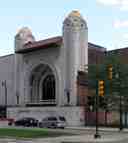
To spot the Monroe Avenue Commercial Buildings, look for the striking facade of the National Theatre, with its enormous arched window flanked by two tall, white latticework towers topped with golden domes-stand just across Monroe Avenue, and you really can’t miss its dramatic, old-world architecture. Alright, time for a story that’s packed with lively characters, dazzling lights, and a big heap of Detroit drama! Imagine, right where you’re standing, a bustling avenue in the late 1800s, lined with a lively crowd of butchers, bakers, tailors, and, yes, the odd saloon or two-because who doesn’t need a drink after shopping for an umbrella or getting your shoes fixed? The Monroe Block-stretching from 16 to 118 Monroe Avenue-was Detroit’s beating commercial heart, where so many dreams were launched, businesses started, and, occasionally, a sandwich or two consumed at warp speed. By the mid-19th century, architects like Sheldon and Mortimer Smith were in on Detroit’s best-kept secret: Monroe Avenue was the place to be. Office buildings like the Williams Blocks and the Johnson Block sprang up, packed with grocers, confectioners, and-once a new wave of European immigrants arrived-jewelry stores and pawn shops too. But the real magic started lighting up as the 20th century dawned and this block began to twinkle with the glow of the silver screen. Picture yourself surrounded by brick buildings four or five stories tall-each with rows of bay windows, flickering signs, and cast iron cornices that seemed to whisper stories of the past. Closer to you, the National Theatre stands as the once-glorious survivor of them all, its dazzling arched art glass windows framed by colorful tiles and hundreds of electric lights. At night, they must have sparkled like a carnival-sometimes I think Detroit was trying to outshine the stars above! Here’s the showstopper: Detroit movie history began right here. In 1906, a fellow named John H. Kunsky opened the Casino Theater-Detroit’s very first movie palace-only the second of its kind in the entire world. That’s right, Hollywood, eat your heart out! Just a couple doors away, the Bijou theater joined the fun. Before you knew it, Monroe Avenue was rolling in films, from the Star Theater to the Columbia, operated by theater tycoons and built by legendary architects like C. Howard Crane and Albert Kahn. Theaters sprouted faster than popcorn popping, and the area earned its reputation as Detroit’s original entertainment strip. Imagine the lineups-kids giggling, music drifting out the doors, eager crowds piling inside for vaudeville acts and shiny new moving pictures. The National Theatre, with its bold white and blue terra cotta, twin towers, and colorful Pewabic tiles, became the grand dame of Monroe Avenue. Built in 1911, this 800-seat wonder was Albert Kahn’s only known theater design in the city. Its lights, domes, and arches welcomed locals to everything from silent movies to vaudeville, and later, to spirited burlesque performances that stretched its stage magic well into the wild 1970s. Just imagine the sounds-whistles from the crowd, music echoing off mosaic tiles, and the hustle and bustle of Detroit’s bright nightlife. But it wasn’t all spotlights and encores. By the 1920s, new, larger venues began to draw the crowds north to Grand Circus Park, and Monroe Avenue’s glory faded a little. The old hotels-like the Kirkwood and Frontenac-had stories of their own: rooms packed with travelers and, at one time, even the city’s most enchanting restaurant. As the decades rolled on, shops changed hands, theaters tried to reinvent themselves (including a brief, not-so-proud “adult cinema” phase for the old Bijou), and Detroit’s commercial core shifted. The once-grand hotels and shops were eventually replaced with retail spaces, until the city finally said its goodbyes in the late 1970s. By 1990, most of the original Monroe Avenue Commercial Buildings were cleared away, leaving the National Theatre’s bold facade as the neighborhood’s last standing storyteller. And here’s a bittersweet twist: in January 2024, even the National Theatre was mostly torn down, its beautiful facade carefully dismantled to be reborn in some future development. So as you look up at those iconic white towers and domes, know that you’re gazing at the final chapter-remnants of days filled with velvet seats, flickering reels, and more excitement than you could shake a box of Milk Duds at. If these walls could talk, they’d sing-and maybe crack a joke about Detroit’s questionable taste in neon lights!
Open dedicated page →


Show 12 more stopsShow fewer stopsexpand_moreexpand_less
 4
4Cadillac Tower
Buy tour to unlock all 19 tracksTo spot the Cadillac Tower, look straight ahead for a very tall, narrow skyscraper covered in rows of windows and topped with spiky decorative elements and a thin mast reaching…Read moreShow less
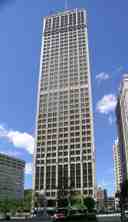
To spot the Cadillac Tower, look straight ahead for a very tall, narrow skyscraper covered in rows of windows and topped with spiky decorative elements and a thin mast reaching into the sky. Alright, pause here for a moment and imagine it’s 1927-the city is buzzing, jazz melodies drift from nearby clubs, and the Cadillac Tower is making its grand entrance onto the Detroit skyline. Can you feel the excitement? Because back then, this 40-story giant wasn’t just another building-it was a record-breaker! Outside of New York and Chicago, nobody had dared to go this tall. People must have craned their necks and stared in awe at what was, for Michigan, a kind of skyscraper superhero. Now, if you take a close look, you’ll notice the building’s sharp Neo-Gothic design. Its tall, slender profile is decorated with intricate cornices and spires at the corners and center-kind of like a stone crown fit for a king… or maybe, a well-dressed radio antenna, which you’ll see if you squint up to the very top! That mast is there for local radio and television stations. The whole structure is made of terra cotta and brick, which, when it was new, must have seemed impossibly modern and fancy. The Cadillac Tower didn’t start out with this name though. It was actually known as Barlum Tower when it first opened. Why the name change? Well, like a great magician, Detroit buildings love a bit of mystery and stage presence! But the real secret lies just next door-back in 1919, there was another giant, the 20-story Cadillac Square Building. Because these two towers were shoulder to shoulder, the west side of the Cadillac Tower got only a few windows-like a shy sibling not wanting to peek over its brother’s shoulder. The old neighbor was torn down in the 1970s, but if those walls could talk, they'd tell stories of a bustling Detroit in its roaring prime. Over the years, the Cadillac Tower has doubled as a canvas for Detroit’s sporting legends. For six years, Barry Sanders leaped across one side of the building as a 14-story mural, cheered on by thousands of fans and a very likely confused flock of downtown pigeons. After Barry, hockey legend Steve Yzerman moved in, before finally giving way to a roaring MGM Grand lion. Today, the Cadillac Tower may not be Detroit’s newest shining star, but its spirit is alive and full of future promise. In 2021, the building found a new owner, ready to dream up its next act in the city’s ongoing adventure. So go ahead, give it a wave-after all, not every building gets to wear a crown and play billboard to the stars!
Open dedicated page → 5
5Wayne County Building
Buy tour to unlock all 19 tracksTo spot the Wayne County Building, just look up and ahead for a grand, tan stone building with a tall, green-topped clock tower and monumental sculptures of horses and figures-the…Read moreShow less
To spot the Wayne County Building, just look up and ahead for a grand, tan stone building with a tall, green-topped clock tower and monumental sculptures of horses and figures-the kind of structure that looks ready for its own movie close-up! Now, as you stand in front of this spectacular building, picture the year 1902: Detroit’s streets are alive with clattering horse carriages, natty top hats, and that unmistakable whiff of ambition in the air. Rising above it all is the Wayne County Building, fresh from completion and instantly known as one of the fanciest spots in Michigan. Seriously, if buildings could wear jewelry, this one would be dripping in diamonds. Detroit architects John and Arthur Scott didn’t just build an office-they built an enormous stage for civic pride and government drama, fit for a Roman emperor with a taste for the dramatic. Crafted out of sturdy buff Berea sandstone and anchored by copper and granite, the building’s five floors are alive with statues, columns, and intricate stonework. Walk closer and check out the giant horses-these “quadrigas” named Victory and Progress-silently racing atop the roof, flanked by noble figures that represent Law, Commerce, Agriculture, and Mechanics. It’s like a business meeting for the ages… just nobody’s checking their phones up there! Step inside in your mind and you’d glide over mosaics and marble, under elaborate domes, the whole place designed to drop jaws and keep any visiting dignitary thinking, “Wow, Detroit means business!” The broad flight of stairs out front, Corinthian columns reaching skyward, and the tower-originally even taller before its copper dome makeover-were all meant to make an entrance impossible to ignore. Imagine turning up for work here every day-you’d feel like you’re walking onto a movie set instead of into a county office. But, oh, the drama doesn’t stop at architecture! For decades, this place hummed with the sounds of Detroit’s government-decisions that changed lives, stories whispered in marble hallways, and, occasionally, a pretty heated landlord-tenant spat. By 2008, the county packed up and moved to the Guardian Building to end a feud that made local headlines-because nothing says “big city politics” quite like a real-estate squabble over rent! And just when you think the curtain was dropping, the Wayne County Building got another act-sold, renovated, and shining once more. Through all the changes, it’s still standing tall, keeping a watchful eye on downtown Detroit and every visitor lucky enough to stop and stare. So take a breath, soak up the history, and give a wave to the mighty figures up top-they’ve been posing heroically for more than a century!
Open dedicated page →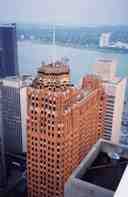 6
6Guardian Building
Buy tour to unlock all 19 tracksIf you look ahead, you’ll spot a towering, orange-brick skyscraper with dazzling geometric patterns near its crown-just look for the dramatic spire and colorful brickwork standing…Read moreShow less
If you look ahead, you’ll spot a towering, orange-brick skyscraper with dazzling geometric patterns near its crown-just look for the dramatic spire and colorful brickwork standing tall against the skyline. You’re staring at Detroit’s own Cathedral of Finance-no, not a church for money worshippers, but the legendary Guardian Building! This 43-story Art Deco masterpiece rose up in just over a year, from 1928 to 1929, when Detroit was bursting with big dreams and the sound of jazz spilled out onto the streets. When it opened, it was the Union Trust Building, and its architect Wirt C. Rowland had a vision: why should banks look dull and boring when you could have a skyscraper that shouts style from every brick? Step closer and feel that 1920s energy -this building was made to impress. Check out its main frame, marching up 32 glorious stories before two dramatic, uneven spires shoot even higher-one of them all the way to 632 feet! They say it looks like a cathedral, and standing here, you can imagine the sense of awe people must’ve felt when they first gazed up. The base, made from sturdy granite and stone, stands like a fortress, and if you peek at the Griswold Street entrance, two fierce sculptures by Corrado Parducci are ready to guard the doors. The outside is a riot of color; those orange bricks aren’t just any bricks! They became so famous as “Union Trust Brick” that the manufacturer renamed them “Guardian Brick” once the building itself changed names. Wirt Rowland didn’t stop at bricks-oh no, he supervised every single detail outside, handpicking limestone, terra cotta, and tile to make sure the entire surface sparkles like a jewel box. It’s as if the building is saying, “Ordinary metal? No thanks!” The Guardian was one of the very first skyscrapers to use Monel metal (that’s a high-tech metal, for you trivia buffs) on all the exposed trim, swapping out boring old brass and bronze to create a future-forward shimmer as dazzling as Gatsby’s smile. But the magic doesn’t end on the outside. If you could step inside the doors, you’d be hit by the glow of Pewabic and Rookwood tile glimmering from a soaring, three-story vaulted lobby. That’s right-a lobby that feels like you’re entering a sacred hall instead of just a banking office. There’s a Monel metal screen-a kind of see-through wall-with a Tiffany-designed clock gleaming in the center, like a fancy timekeeper at a royal ball. And wait until you spot the murals: mosaic pine trees, scenes of Michigan’s mighty industries, all painted by Ezra Winter. Above the front desk, a grand message declares this building a home for “faith and understanding” in the world of money. Talk about high ideals-imagine waiting in line at the bank surrounded by this much drama! In the banking hall, Rowland tried to hush the chaos of busy bank tellers by stretching a giant hand-painted canvas ceiling overhead, mounted on horsehair mats for soundproofing. The result? A hush you could practically feel as stacks of cash changed hands. The Guardian has always been about innovation-when it opened, the elevators could stop perfectly at each floor and open the doors automatically. You no longer needed an elevator operator: futuristic stuff for the roaring twenties! And let’s talk about Native American motifs: if you start noticing zigzags, chevrons, and earthy colors, that’s no accident. Rowland and artist Mary Chase Perry Stratton wove those patterns into both the floors and the ceiling, touching on the region’s deep history. Of course, the Guardian Building hasn’t always been about banking. During World War II, it buzzed around the clock as the U.S. Army Command Center for Detroit’s vital wartime production. Can you picture the urgent clatter of typewriters, the tense phone calls, and the smell of strong coffee wafting through these ornate halls? Decades rolled on and so did America’s love affair with skyscrapers. By the 1980s, this beauty had become home to Michigan Consolidated Gas Company, and in 1986, a grand restoration returned her lobby to its original jaw-dropping glory. These days, she’s a bustling hub for Wayne County’s offices and a home for everyone from city planners to coffee shop regulars. Even MichCon’s president, Stephen E. Ewing, helped polish every tile until the place glowed once more. Today’s tenants range from lawyers to transportation companies-even a café offering James Oliver Coffee for a fresh pick-me-up after all this history. So as you stand here, you’re not just looking at another tall building. You’re gazing up at a living time machine-one that’s seen Detroit’s fortunes rise, fall, and rise again, all while holding tight to its place in the skyline. And if you listen closely as the wind whistles around the spires, you might just hear echoes of the city’s dreams, old and new. For a more comprehensive understanding of the architecture, innovations or the tenants, engage with me in the chat section below.
Open dedicated page → 7
7Fort Shelby
Buy tour to unlock all 19 tracksTo spot the site of historic Fort Shelby, look toward where Fort Street meets Shelby Street-the ground where you’re standing is where the original fort once stood, though today…Read moreShow less
To spot the site of historic Fort Shelby, look toward where Fort Street meets Shelby Street-the ground where you’re standing is where the original fort once stood, though today you’ll see the tall Theodore Levin United States Courthouse and other downtown buildings. Alright, time to imagine we’re stepping back in time-close your eyes for a moment and let’s turn the city noises into the echoes of soldiers’ boots and clopping hooves. Fort Shelby began its life under a different name: Fort Lernoult. Picture a chilly November in 1778, British soldiers led by Captain Richard Lernoult tramping up the muddy slope, worried that the old French fort just wasn’t quite up to snuff against any angry Americans. So, they built themselves a brand-new stronghold right here, hauling logs and earth to make a massive, spiky wall-4 feet of tree trunks stacked like a beaver dam, then sharpened stakes poking up another 8 feet above that, and the whole shebang finished off with an 11-foot-high dirt wall as thick as two cars parked end-to-end. It’s like they were building the world’s prickliest birthday cake… but with more cannons. As the years passed, the stars-and-stripes started showing up around here, but the British just couldn’t say goodbye to their favorite forts. Even after the American Revolution wrapped up-or at least, you know, *officially* ended-the British hung on for more than a decade, cracking open their umbrellas and pretending negotiations weren’t happening. Finally, the Jay Treaty sorted things out: in 1796, the British packed up, mumbled a few stiff upper-lip goodbyes, and handed over the fort to the Americans, who gave it their own twist by renaming it Fort Detroit. Things were about to get dramatic: it’s 1812 and the world’s turned upside down. The British are back across the river in Canada, traders and soldiers are squinting suspiciously at each other, and a thunderstorm of war is brewing. American commander William Hull is in charge, but things are tense-he actually leaves the fort to try to invade Canada, only to turn back after he hears that the British have nabbed another American stronghold. Meanwhile, British General Isaac Brock is plotting, his red coat flashing in the sunlight, flanked by hundreds of soldiers and Native American allies banging their drums and howling battle cries. The tension is so thick you could cut it with a bayonet. On one fateful August morning, with cannonballs already whizzing overhead, General Brock sends Hull a letter demanding surrender, not-so-subtly warning him about Native warriors ready to rain chaos if the fight drags on. Hull, still feeling bold, replies he’s not scared-he’s ready for anything. Well, the next morning, with the sound of cannon fire shaking the air and British troops splashing across the river, Hull looks at his terrified soldiers and decides, “You know what? Maybe today’s not a good day for a massacre.” He surrenders the fort-and all of Detroit-without another shot. Spoiler: the folks back home are *not* impressed. In fact, the U.S. courts sentence Hull to be shot for cowardice, but President Madison gives him a pardon instead. I guess you could say it was a *get-out-of-fort-free* card! The fort stayed in British hands for over a year, but everything changes after the Americans win a wild naval battle on Lake Erie. The British retreat, and the Americans reclaim the fort, renaming it Fort Shelby after Kentucky’s own Governor Isaac Shelby who came galloping in with fresh volunteers. For a while, the fort’s just kind of…there, getting soggier and sadder each year until Congress gives it away to the booming city of Detroit. In 1827, they tore down what was left-imagine a thunder of axes and tumbling timbers-and history got buried by streets and skyscrapers. If you want proof that any of this happened, just think of the time in 1961 when construction workers digging here found an old wooden post and thousands of artifacts. Bits of story, buried under your feet. So today, as you stand by the busy courthouse, maybe you can still hear a distant bugle, or the clatter of panicked boots, or just the distant laughter of Detroit’s soldiers trying to stay warm and brave on a forgotten frontier.
Open dedicated page → 8
8United States District Court for the Eastern District of Michigan
Buy tour to unlock all 19 tracksIf you’re standing here, look for a grand, official-looking building - you can spot it by its classic facade and the large golden seal featuring a proud eagle, right ahead! Now,…Read moreShow less
If you’re standing here, look for a grand, official-looking building - you can spot it by its classic facade and the large golden seal featuring a proud eagle, right ahead! Now, let’s step into the world of American law and history right at your feet - but don’t worry, no jury duty required for this tour! The United States District Court for the Eastern District of Michigan has been the beating heart of federal justice for nearly two centuries, covering the eastern half of Michigan’s Lower Peninsula, with Detroit as its bustling hub. Imagine the centuries of footsteps echoing in its halls - lawyers shuffling papers, judges striking their gavels, and the air thick with suspense as verdicts are announced. This whole story really gets rolling back in 1836. Now, picture the scene: the US Congress has just created a brand-new District Court for Michigan. But, there’s a twist! Michigan isn’t even a state yet; there’s a tense boundary scuffle with Ohio called the “Toledo War” - yes, an actual war over the city of Toledo. Finally, in 1837, Michigan joins the United States, and suddenly, there’s a lot more work for the judges, sorting out fresh cases and figuring out exactly whose cows belong to which state. The court at first isn’t tied to any federal circuit, which is almost like playing for no team in a league full of rivals. Then Congress steps in and starts shuffling the judicial cards. One year, Michigan’s with the Seventh Circuit, then the Eighth, then back again - you can almost hear the courthouse doors swinging back and forth with every Congressional decision. In February 1863, things get serious: Congress splits the single Michigan district into two, creating the Eastern and Western Districts. Ross Wilkins, the first and only judge on the original court, gets a new title and his own Eastern District - talk about a promotion! Then, finally, by 1866, both districts are assigned to the Sixth Circuit, which is where they remain today, after all that circuit-hopping. Today, this district covers everything from the busy streets of Detroit to the gentler towns in counties far north and west. The Eastern District has two divisions: the Northern, where court’s held in Bay City, and the Southern, handling cases in Ann Arbor, Flint, Port Huron, and of course, right here in Detroit. That means people from all walks of life - from auto workers to artists to CEOs - have stood before these judges, shaping decisions that affect all of Michigan. The chief judges here have a bit of a musical chairs game, too. The position rotates among the district’s judges: to become chief, you need at least a year on the bench, be younger than 65, and not have served as chief before - which probably explains why the judges always look so sharp; nobody wants to age out of their chance! The chief serves up to seven years, unless they hit age 70, which is kind of like the Supreme Court’s version of a birthday surprise nobody wants. And since 1982, these clever ground rules keep the rotation lively and fair. This is a court of stories - from complicated federal cases to everyday legal dramas. Imagine the tension as history’s big decisions are made here, or the joy when justice prevails and the courtroom erupts in applause - or sometimes just a relieved sigh. So, as you stand outside the United States District Court for the Eastern District of Michigan, you’re brushing shoulders with the echoes of Michigan’s wild, sometimes wacky, always fascinating legal history! Hope you memorized your Miranda rights - just kidding, on to the next stop! To expand your understanding of the divisions, notable cases or the succession of seats, feel free to engage with me in the chat section below.
Open dedicated page → 9
9Statue of Alexander Macomb
Buy tour to unlock all 19 tracksAs you walk up, look for a tall bronze statue of a serious man in a dramatic military cape, standing proudly atop a hefty pink granite pedestal-he’s right ahead of you, surrounded…Read moreShow less
As you walk up, look for a tall bronze statue of a serious man in a dramatic military cape, standing proudly atop a hefty pink granite pedestal-he’s right ahead of you, surrounded by trees and even a couple of old bronze cannons nestled nearby on the platform. Now, welcome to the Statue of Alexander Macomb! This landmark isn’t just a hunk of metal and stone-it’s a time capsule, a bit like a movie prop from an epic war drama, right in the middle of Downtown Detroit. Imagine it’s 1908: folks in pressed suits and extravagant hats gather around, the city abuzz as they dedicate this statue to a homegrown hero-General Alexander Macomb, born and raised right here in Detroit. They chose September 11 for the ceremony, the very date of the Battle of Plattsburgh, a clash in the War of 1812 where Macomb’s leadership helped save the day. If you listen closely, you might almost hear a military band and the cheers of proud Detroiters who believed this man, once the Commanding General of the United States Army, deserved to be immortalized. But before all this bronze and granite, Macomb’s story began with a bit of Detroit privilege. Born in 1782 into a wealthy family, young Alexander picked up a sword and chose the army life. By the time he was just 32, he’d proven himself at Plattsburgh and Congress awarded him a gold medal-talk about a “gold star” on your report card! Not long after, he climbed to the VERY top, running the U.S. Army from 1828 until his death in 1841. Oddly enough, after he passed away, his legacy faded into the history books so quietly that by 1901, just a single stone marker over his grave stood in his honor. Enter the Michigan ladies of the United States Daughters of 1812-a determined bunch, let me tell you. They made it their mission to get Macomb a monumental statue here in his hometown, lobbying for years, wrangling $7,000 worth of old cannons from Congress for the statue’s bronze, and pulling together city and state funds. It took competitions and setbacks; one original proposal in 1901 featured a dramatic battle scene, but that plan fizzled out. Finally, sculptor Adolph Alexander Weinman won with the design you see today; he was just 36 years old, fresh from working with some of America’s most famous artists. As for the design, take a good look at the statue’s sweeping cape and that windblown, heroic pose-it’s modeled after authentic military uniforms of the era, detailed using old photographs. Macomb stands slightly off-center, hands joined calmly, as the breeze catches his coat. At his feet, the granite pedestal stands nearly as tall as an NBA player and is engraved with Macomb’s name, a wreath of oak and laurel, and a dedication on the back that you might want to check out up close. All around, the circular platform echoes with history-see those old cannons at the rim? They once saw action in the War of 1812. Meticulously crafted, the structure cost $12,000, a fortune back then. The statue was met with applause-a 1919 magazine named it Detroit’s most artistic sculpture. Weinman, our artist, became so popular that the city soon hired him again to honor Mayor William C. Maybury. But history, as you know, isn’t just made of medals and ceremonies. Macomb’s legacy is a thorny one-recent decades have brought lots of debate about his family’s ties to slavery and the mistreatment of Native Americans, casting a different shadow on this proud figure. Some want the statue replaced or removed, especially since it’s been vandalized during protests in the 2010s and again in 2020, with splashes of paint and bags draped over Macomb’s head-a modern echo of unresolved history. So as you’re standing here, close your eyes and imagine this spot as a stage through centuries-a parade of uniforms, proud speeches, heartfelt protests, and quiet controversy. Whether you see a hero, a villain, or something in between, there’s no doubt this statue is a crossroads of Detroit’s memory, still stirring up conversation, more than a hundred years after Macomb first stepped onto this patch of Michigan ground in shining bronze. Now, onward to our next stop-because the past in Detroit always has a few more twists in store!
Open dedicated page →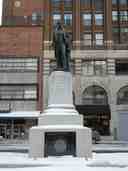 11
11Statue of Stevens T. Mason
Buy tour to unlock all 19 tracksTo spot the Statue of Stevens T. Mason, look for a tall bronze figure of a young man in 1830s attire, standing confidently atop a granite pedestal right in Capitol Park-you can’t…Read moreShow less
To spot the Statue of Stevens T. Mason, look for a tall bronze figure of a young man in 1830s attire, standing confidently atop a granite pedestal right in Capitol Park-you can’t miss his right hand holding a book and his left firmly on his hip! Now, imagine this: It’s a bright spring day in 1908, and you’re standing in a bustling Detroit, surrounded by thousands of excited spectators. Right before you, a bronze figure is about to be unveiled-the talk of the city, and for good reason. This isn’t just any statue; it’s a tribute to a legend, the “Boy Governor” himself, Stevens T. Mason. The energy is electric, and the crowd buzzes with anticipation. When the covering comes off, you see the young governor looking out with ambition in his eyes, standing like he just stepped out of a history book, wearing the sharpest fashions from the 1830s. But who was this Stevens T. Mason? Believe it or not, his story is practically begging for a Netflix series. At only 19, when most of us are focused on college applications or figuring out how to boil pasta, Mason was tapped by President Andrew Jackson to become secretary of the Michigan Territory. Just three years later, he became acting governor! By 24, he’d become the first elected governor of Michigan-the youngest in U.S. history. If you ask me, no wonder he got the nickname “Boy Governor.” And this wasn’t some ceremonial title; Mason was elbow-deep in the messy business of statehood, pushing Michigan into the Union and shaping it with a boldness well beyond his years. He was proof that even a teenager with big dreams could leave his mark on American history. But Mason’s story is also bittersweet. After serving as governor until 1839, Mason moved to New York to practice law, which, let’s be honest, sounds like the 19th-century version of “moving to the big city to make it big.” Tragedy struck, and he died of pneumonia at just 31 years old. At first, he was buried in New York, but Detroit had other plans. In 1905, his remains were reinterred right here, the former site of the very capitol he helped establish. The reburial was a grand event, drawing about 2,000 people-clearly, there were some real Mason superfans! Around this same time, Detroit wanted to make sure Mason’s legacy would physically stand tall. That’s where things get even more interesting. The U.S. Congress donated old cannons from Fort Michilimackinac-cannons with minds of their own, if you believe old ghost stories-for melting down and casting into Mason’s statue. Politicians, judges, and city leaders rallied together, commissioning sculptor Albert Weinert and architect H. Van Buren Magonigle to craft a monument worthy of the young statesman. They even held a design contest-talk about Detroit’s first episode of “America’s Next Top Monument”! On Memorial Day 1908, Mason’s 93-year-old sister Emily was there to see his statue revealed, while the crowd listened to speeches, music, and the lively tune of “Dixie”-a little musical shoutout to Emily’s Virginia roots. Mason’s statue originally stood on a grand platform, complete with fancy benches and lampposts, surrounded by marble. Over the decades, as the city grew and changed, some of the ornamentation got lost in the shuffle, but the statue-and Mason’s remains-stayed right here in Capitol Park. But the story doesn’t stop there! In the 2010s, during a park renovation, workers discovered Mason actually wasn’t lying directly under the statue as everyone thought, but nearby-like a game of historical hide and seek. After a bit of musical chairs (or, should I say, musical coffins), he’s now properly resting beneath his bronze likeness. Take a close look at Mason’s statue. He’s a solid eight feet tall, fashioned in elegant bronze, holding a book as if daring passersby to learn their history. The granite pedestal below boasts his name and honors his memory. On the back, you’ll find words praising how he took on the duties of manhood while still a boy, stamping his name indelibly in Michigan’s story. So as you stand here, you’re not just visiting a statue; you’re standing at the crossroads of courage, youth, and a little bit of Detroit’s everlasting spirit-proof that history has a way of sticking around, especially when cast in bronze!
Open dedicated page → 12
12Frank & Seder Building
Buy tour to unlock all 19 tracksYou’re looking for a cream-colored, six-story building with big rectangular windows and intricate ironwork details above, right across from the street with signs for Moosejaw and…Read moreShow less
You’re looking for a cream-colored, six-story building with big rectangular windows and intricate ironwork details above, right across from the street with signs for Moosejaw and Lofts of Merchants Row at street level-just lift your gaze above the shop awnings and you’ll spot it! Imagine yourself, right here on Woodward Avenue in 1891, standing in the shadow of what was then Detroit’s tallest building. The Frank & Seder Department Store rose above the city at six full stories and 41 meters, almost scraping the sky-or at least, as high as Victorian-era Detroit dared to reach! This wasn’t just a department store; it was the shopping palace of its day, with the latest fashions and bustling crowds milling about under the city’s very first cast iron façade-the last one of its kind still visible in Detroit. Now, let’s set the scene: Isaac Seder and Jacob Frank, both Russian Jewish immigrants, began their journey in the early 1900s selling women’s wear wholesale, eventually opening their own retail store way over in Pittsburgh before the Detroit flagship arrived. But not before drama struck-they lost their Pittsburgh store to a fire in 1917, $600,000 up in smoke. Talk about a tough break! But did they let that stop them? Not for a second. By 1918 they’d rebuilt, and by 1921 right here in Detroit, their empire was growing so fast they kept adding on: that building beside you was part of the expansion-at one point they dreamed of twelve stories instead of just six! Detroit’s Frank & Seder wasn’t alone-there were stores in New York and Philadelphia too, even occupying floors of the Marbridge Building near Herald Square. Frank & Seder was a place for both the city’s fashion-forward and bargain hunters. But here’s a twist: it wasn’t always just about shopping. In 1937, the store was the scene of a tense sit-down strike. Just picture it: eleven men slip inside as the doors close, and soon 550 employees are facing off in protest over harsh conditions. The event grew so notorious the police, Detroit’s mayor, and even Michigan’s governor showed up to break it up. Arrest warrants, hidden criminal records, and the dust of a rapidly changing era. Over the years, Frank & Seder’s magic extended to kid-friendly afternoons in Philadelphia: free cartoons and movies so parents could shop in peace, and the store even sponsored a TV show called the TV Spelling B. Who knew shopping could spell so much excitement? But times change. Department stores everywhere were fading as new suburban shopping centers sprouted up. Detroit’s store closed in 1951, Pittsburgh’s followed suit seven years later, and Philadelphia’s flagship was ultimately demolished for a parking garage-ironically, to make room for the next wave of urban convenience. Standing here, you can almost hear the clatter of shoppers, the ring of cash registers, and the bustle of a lost era-held together, still, by that stubbornly stylish cast iron skin up above you. Give it a wave: you’re eye to eye with Detroit’s own iron-clad slice of retail history!
Open dedicated page → 13
13Grand Circus Park
Buy tour to unlock all 19 tracksTo spot the Grand Circus Park Historic District, look straight ahead for a large green oasis filled with trees, surrounded by tall historic buildings, right where Woodward Avenue…Read moreShow less
To spot the Grand Circus Park Historic District, look straight ahead for a large green oasis filled with trees, surrounded by tall historic buildings, right where Woodward Avenue cuts through the park. Welcome to the heart of Detroit’s urban tapestry-Grand Circus Park Historic District! As you stand here, the sounds of the city seem to swirl around this half-moon shaped park, a green retreat framed by the watchful faces of old skyscrapers and the busy hum of crossroads. It’s easy to feel like you’ve stumbled on the stage of Detroit’s ever-unfolding story. Now, close your eyes for just a second and imagine the year is 1805. Most of this city has just been lost to a massive fire. Ashes everywhere. Enter Augustus Woodward-the kind of guy who dreams big-mapping out a future Detroit with grand circles and wide avenues. Grand Circus Park was meant to be a perfect full circle, but as soon as construction began, property prices shot up. The northern landowners, spotting a chance for profit, said, “Not so fast!” The grand circle shrank into this lovely half-moon, which you see today. Let’s jump forward. By the time the park officially sprang to life in 1850, it became Detroit’s cultural crossroads. Fancy yourself a theater lover? This spot connects the theater district glimmering to the east-where the Detroit Opera House winks at you-with the serious financial district to the west. The park itself is sliced stylishly down the middle by bustling Woodward Avenue. Over to the east, you’ll find the mighty Alger Fountain, designed by none other than Henry Bacon-the genius behind the Lincoln Memorial in Washington, D.C.! If you squint at that fountain, you’ll see a classic Roman figure by Daniel French, the same sculptor who gave Abraham Lincoln his dignified gaze. And speaking of Abe Lincoln, did you know that in 1865, after tragedy struck and the news of President Lincoln’s assassination reached Detroit, General George Armstrong Custer stood near this very site and delivered a heartfelt eulogy? Picture thousands gathered here, their hats held in trembling hands, the weight of history hanging thick in the spring air. Of course, every park worth its salt has a bit of friendly rivalry. Here in Grand Circus, you’ll spot two statues peering at each other across the years: Mayor Hazen Pingree, a popular guy with a stubborn streak, and Mayor William Cotter Maybury, not to be outdone by his rival. Over the decades, these two statues have been shuffled around so many times, it’s a wonder they don’t get dizzy! Today, they rest peacefully on their chosen corners, hoping perhaps for a ceasefire. The western half of the park is anchored by the Edison Fountain, and the east by the grand Alger Fountain. If you’re wondering about parking, don’t worry-Detroit had an idea for that, too. In the 1950s, a garage big enough for nearly 800 cars was built right beneath your feet! Practical and maybe a little sneaky. Around the green, look up at the proud skyline: the David Broderick Tower and David Whitney Building to the south, Kales Building and Central United Methodist Church to the north, and Comerica Park along with the Detroit Opera House to the east. Each one of these buildings has stories tucked behind its doors-tales of booms, busts, music, business, and rebirth. And don’t miss the people streaming in and out of the People Mover station-Detroit’s quirky elevated tram that’s as much a part of the city as the skyline itself. Grand Circus isn’t just a park. It’s a living timeline-of plans, dreams, setbacks, music, speeches, and second chances. So as you wander these shady avenues, know you’re striding through Detroit’s front yard, where every statue and fountain quietly admits: sometimes, half a circle is exactly the right amount. Exploring the realm of the development, east necklace or the gallery? Feel free to consult the chat section for additional information.
Open dedicated page → 14
14Detroit Opera House
Buy tour to unlock all 19 tracksLook just across the street for a tall, elegant beige building with large block letters that proudly announce “Detroit Opera House” near the upper corner-its clean lines and bold…Read moreShow less
Look just across the street for a tall, elegant beige building with large block letters that proudly announce “Detroit Opera House” near the upper corner-its clean lines and bold façade make it stand out beside the trees and the open plaza. Alright, take a deep breath and picture this: you stand outside the majestic Detroit Opera House, probably feeling a bit like royalty yourself! Just imagine 1922-the streets buzzing with excitement as Detroiters, dressed in their best hats and gloves, hustle toward this brand-new palace of music and drama. Back then, it opened as the Capitol Theatre, designed by C. Howard Crane, who was pretty much Detroit’s “King of Theater Design.” Reportedly, the Capitol was the fifth largest movie theater on the planet with about 3,500 seats. Pretty impressive, right? Now, listen closely… On opening night, let’s hear the *rustling and chatter of a crowd eager for the curtain to rise*. Back then, this place didn’t just host the opera; it was a playground for jazz giants like Louis Armstrong and Duke Ellington. You never knew who might stroll on stage-one night you’d get the elegance of an opera diva, the next you’d be tapping your toes to a trumpet’s wild call. At the same time, folks could catch the latest flicks or a live vaudeville act. Let’s be honest, though-showbiz isn’t all spotlights and applause. In the decades that followed, the theater wore many faces: it became the Paramount, then the Broadway Capitol, and even the Grand Circus Theatre after a small restoration in the 1960s. The Opera House survived a few rough chapters too, including years of showing second-run movies and, well, some films best described as “barely dressed adventures.” Hey, every building has its secrets, right? Things got a bit smoky at one point too, thanks to a minor blaze in 1985. But here’s where it gets triumphant: in 1988, Michigan Opera Theatre saved this grand dame and dove into an epic restoration. The stage stretched out, the velvet seats gleamed, and in 1996, the house finally rang with thunderous applause again when Pavarotti himself sang at its grand reopening. Today, if you close your eyes and listen, you might even catch an echo of a soaring aria or a jazz riff from years gone by. So as you stand right here, you’re not just outside a building-you’re next to the heart of Detroit’s musical soul, a place where every note and footstep is woven through with the city’s own never-give-up spirit. Now, ready to hit your next stop, superstar?
Open dedicated page →
Frequently asked questions
How do I start the tour?
After purchase, download the AudaTours app and enter your redemption code. The tour will be ready to start immediately - just tap play and follow the GPS-guided route.
Do I need internet during the tour?
No! Download the tour before you start and enjoy it fully offline. Only the chat feature requires internet. We recommend downloading on WiFi to save mobile data.
Is this a guided group tour?
No - this is a self-guided audio tour. You explore independently at your own pace, with audio narration playing through your phone. No tour guide, no group, no schedule.
How long does the tour take?
Most tours take 60–90 minutes to complete, but you control the pace entirely. Pause, skip stops, or take breaks whenever you want.
What if I can't finish the tour today?
No problem! Tours have lifetime access. Pause and resume whenever you like - tomorrow, next week, or next year. Your progress is saved.
What languages are available?
All tours are available in 50+ languages. Select your preferred language when redeeming your code. Note: language cannot be changed after tour generation.
Where do I access the tour after purchase?
Download the free AudaTours app from the App Store or Google Play. Enter your redemption code (sent via email) and the tour will appear in your library, ready to download and start.
If you don't enjoy the tour, we'll refund your purchase. Contact us at [email protected]
Checkout securely with 


