
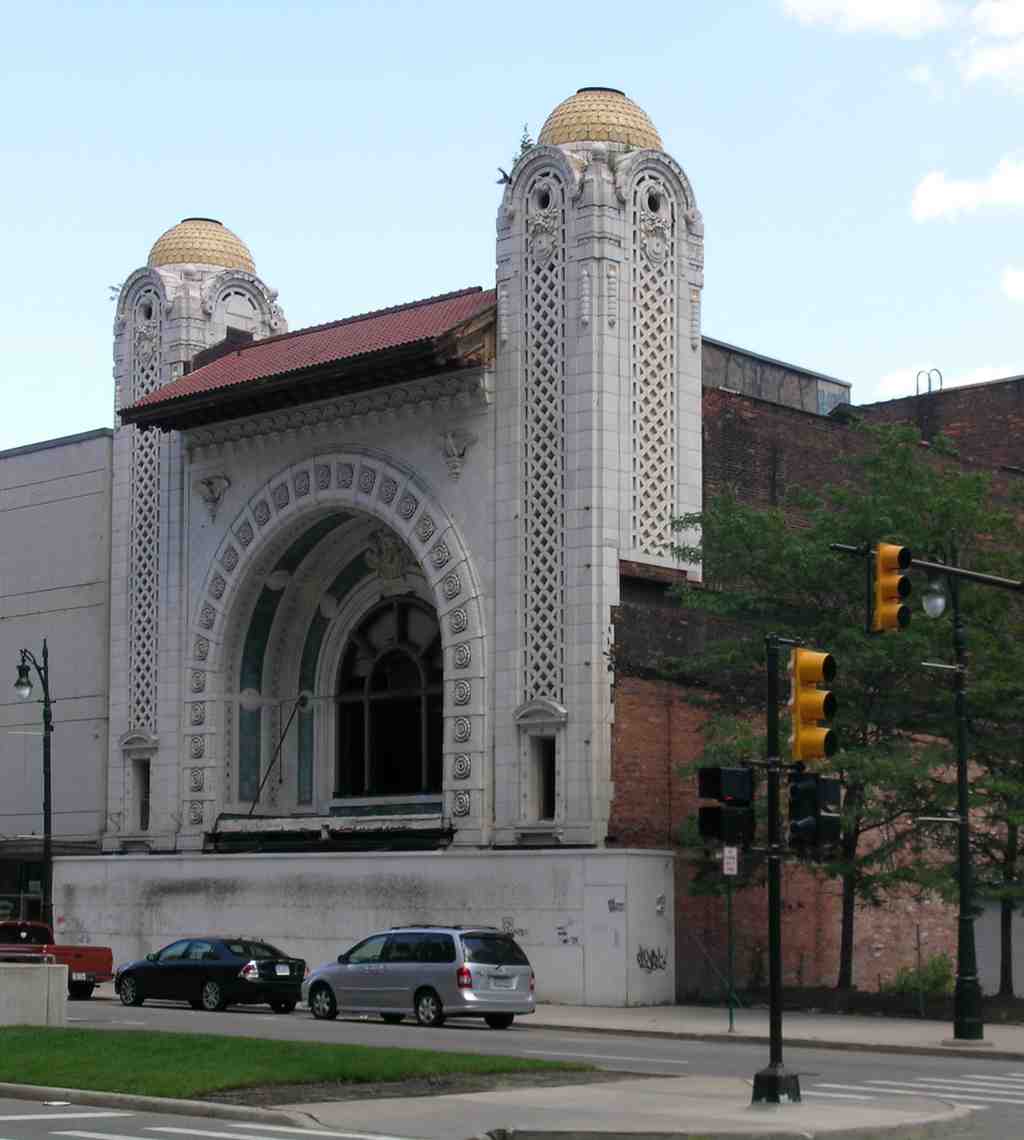
To spot the Monroe Avenue Commercial Buildings, look for the striking facade of the National Theatre, with its enormous arched window flanked by two tall, white latticework towers topped with golden domes-stand just across Monroe Avenue, and you really can’t miss its dramatic, old-world architecture.
Alright, time for a story that’s packed with lively characters, dazzling lights, and a big heap of Detroit drama! Imagine, right where you’re standing, a bustling avenue in the late 1800s, lined with a lively crowd of butchers, bakers, tailors, and, yes, the odd saloon or two-because who doesn’t need a drink after shopping for an umbrella or getting your shoes fixed? The Monroe Block-stretching from 16 to 118 Monroe Avenue-was Detroit’s beating commercial heart, where so many dreams were launched, businesses started, and, occasionally, a sandwich or two consumed at warp speed.
By the mid-19th century, architects like Sheldon and Mortimer Smith were in on Detroit’s best-kept secret: Monroe Avenue was the place to be. Office buildings like the Williams Blocks and the Johnson Block sprang up, packed with grocers, confectioners, and-once a new wave of European immigrants arrived-jewelry stores and pawn shops too. But the real magic started lighting up as the 20th century dawned and this block began to twinkle with the glow of the silver screen.
Picture yourself surrounded by brick buildings four or five stories tall-each with rows of bay windows, flickering signs, and cast iron cornices that seemed to whisper stories of the past. Closer to you, the National Theatre stands as the once-glorious survivor of them all, its dazzling arched art glass windows framed by colorful tiles and hundreds of electric lights. At night, they must have sparkled like a carnival-sometimes I think Detroit was trying to outshine the stars above!
Here’s the showstopper: Detroit movie history began right here. In 1906, a fellow named John H. Kunsky opened the Casino Theater-Detroit’s very first movie palace-only the second of its kind in the entire world. That’s right, Hollywood, eat your heart out! Just a couple doors away, the Bijou theater joined the fun. Before you knew it, Monroe Avenue was rolling in films, from the Star Theater to the Columbia, operated by theater tycoons and built by legendary architects like C. Howard Crane and Albert Kahn. Theaters sprouted faster than popcorn popping, and the area earned its reputation as Detroit’s original entertainment strip. Imagine the lineups-kids giggling, music drifting out the doors, eager crowds piling inside for vaudeville acts and shiny new moving pictures.
The National Theatre, with its bold white and blue terra cotta, twin towers, and colorful Pewabic tiles, became the grand dame of Monroe Avenue. Built in 1911, this 800-seat wonder was Albert Kahn’s only known theater design in the city. Its lights, domes, and arches welcomed locals to everything from silent movies to vaudeville, and later, to spirited burlesque performances that stretched its stage magic well into the wild 1970s. Just imagine the sounds-whistles from the crowd, music echoing off mosaic tiles, and the hustle and bustle of Detroit’s bright nightlife.
But it wasn’t all spotlights and encores. By the 1920s, new, larger venues began to draw the crowds north to Grand Circus Park, and Monroe Avenue’s glory faded a little. The old hotels-like the Kirkwood and Frontenac-had stories of their own: rooms packed with travelers and, at one time, even the city’s most enchanting restaurant. As the decades rolled on, shops changed hands, theaters tried to reinvent themselves (including a brief, not-so-proud “adult cinema” phase for the old Bijou), and Detroit’s commercial core shifted. The once-grand hotels and shops were eventually replaced with retail spaces, until the city finally said its goodbyes in the late 1970s. By 1990, most of the original Monroe Avenue Commercial Buildings were cleared away, leaving the National Theatre’s bold facade as the neighborhood’s last standing storyteller.
And here’s a bittersweet twist: in January 2024, even the National Theatre was mostly torn down, its beautiful facade carefully dismantled to be reborn in some future development. So as you look up at those iconic white towers and domes, know that you’re gazing at the final chapter-remnants of days filled with velvet seats, flickering reels, and more excitement than you could shake a box of Milk Duds at. If these walls could talk, they’d sing-and maybe crack a joke about Detroit’s questionable taste in neon lights!


