
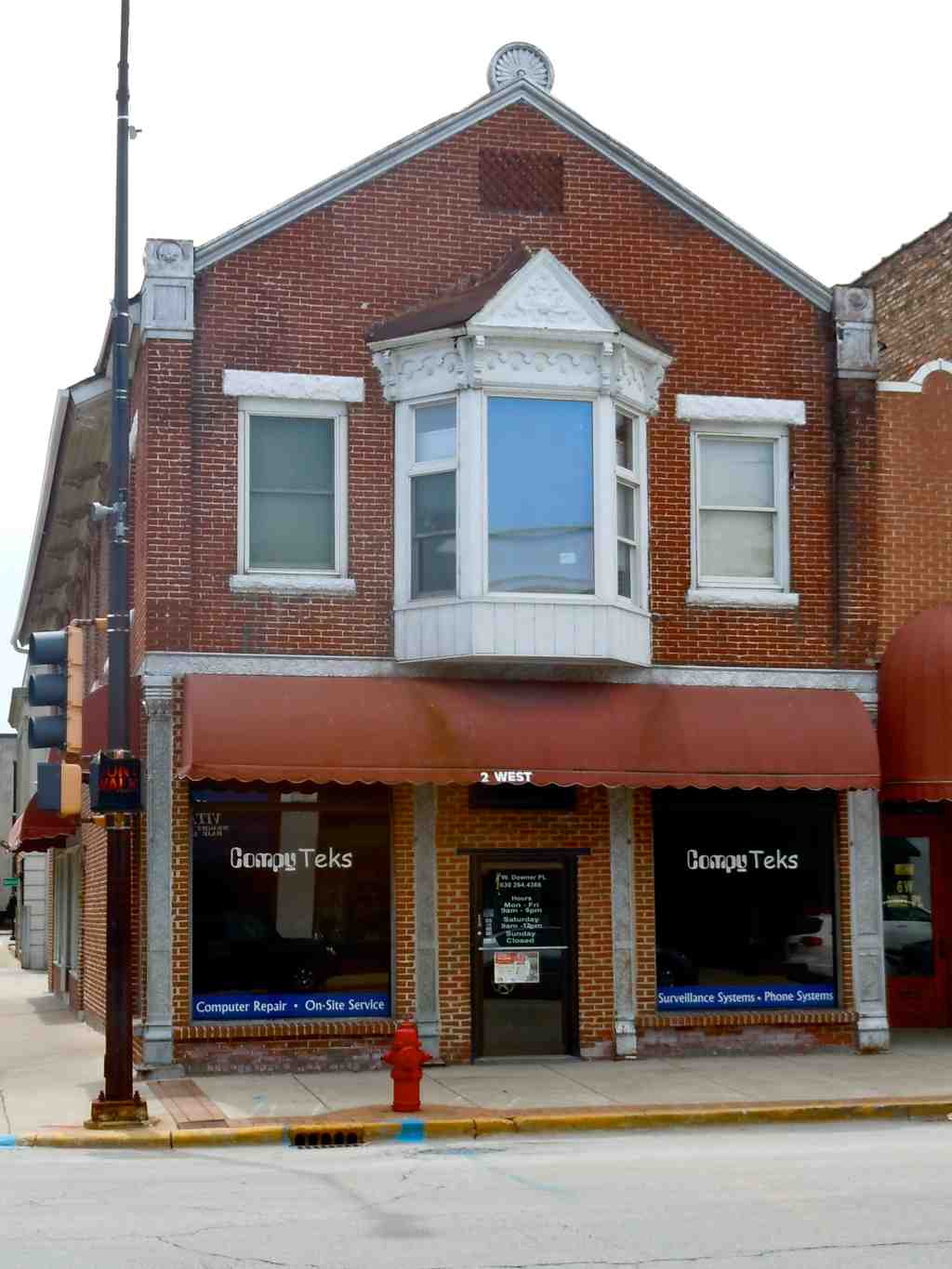
On your left, look for a narrow brick storefront with a glassy ground floor, a second-story oriel window that juts outward, and a small palmette ornament crowning the gable.
This little building tells a very practical story... and practical stories are where cities really reveal themselves. Joseph G. Stolp put this store here around eighteen sixty to eighteen sixty-one, after his wool business had outgrown its earlier setup. Before the brick mill, before the storefront, before any real sense of permanence, he worked from a tiny frame office on Stolp Island in eighteen thirty-seven. That matters, because it means the Stolp operation did not begin as some grand industrial kingdom. It began small, close to the ground, with a person trying to make something useful and sell it.
And this store was the key move. The mill to the west produced wool goods, but not everything went out across the country. Some of it came here, right to the street, where ordinary customers could see what Aurora made with its own hands. That is how local commerce started becoming civic power: goods moved from workshop to storefront, and a private business began shaping neighborhood habits, daily errands, even the identity of the island itself. A factory hidden from view can make money. A store like this makes a presence.
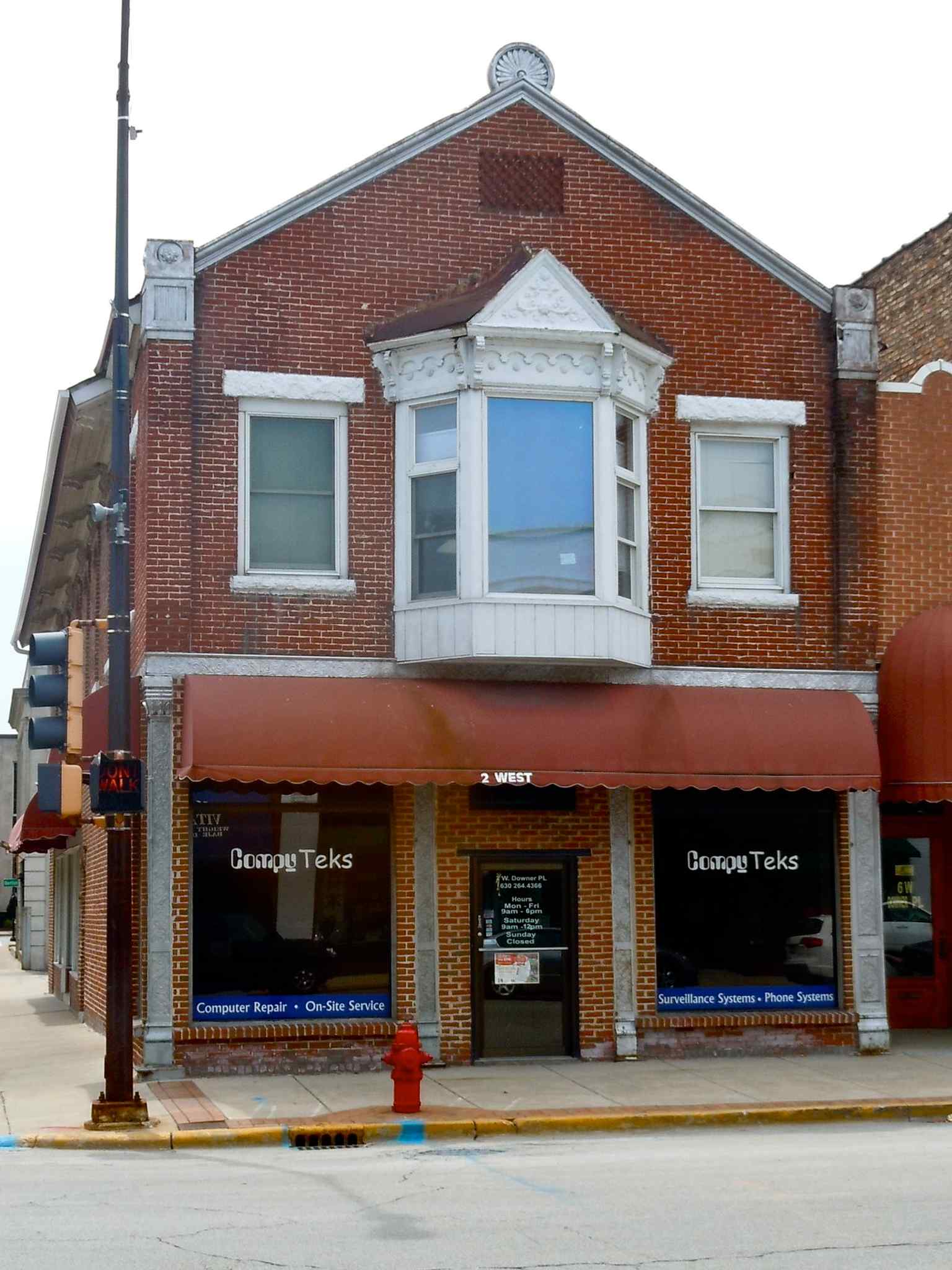
If you peek at the image in the app, the upper facade shows off that projecting oriel window - a window bay that extends from the wall - with a shallow cornice above it and a decorated center panel. At the top, that palmette detail, a carved leaf-like ornament, gives the whole thing a little flourish. Down at street level, the storefront has modern wood and glass, but the basic design still follows the shape created by Stolp’s eighteen eighty-nine renovation.
There’s some grit in the story, too. The island stayed tied to the Stolp family through the mill’s ups and downs. But railroad expansion brought fierce competition, and Joseph had to close the mill in eighteen eighty-seven. The store survived anyway. C. C. Hinckley and Company moved in with watchmaking tools. J. D. Rice and Sons used it for painting and decoration. Joseph even renovated the interior and added an extension on the east in eighteen eighty-nine, refusing to let the address go quiet.
That stubborn survival is why you’re looking at the oldest building still standing on Stolp Island, later recognized by the National Register of Historic Places in nineteen eighty-three and folded into the historic district three years after that.
And here’s the next turn in Aurora’s story: once money and trade settle in, people start building clubs, lodges, and social circles to match. Head on toward Aurora Elks Lodge Number seven hundred five, about a one-minute walk from here. If you ever want practical details, the building’s posted hours are generally Monday through Friday from nine to five, Saturday from ten to three, and closed Sunday.





