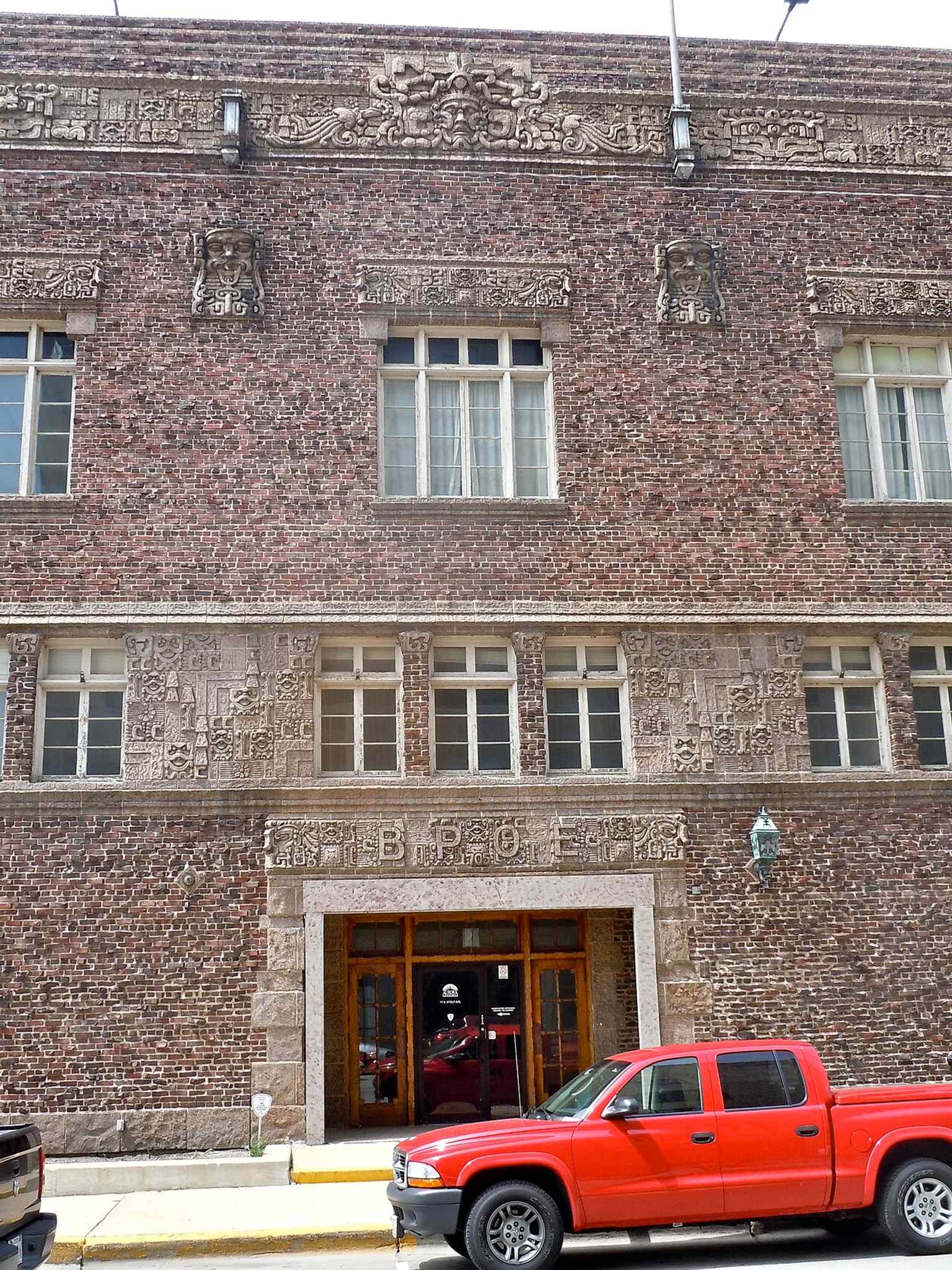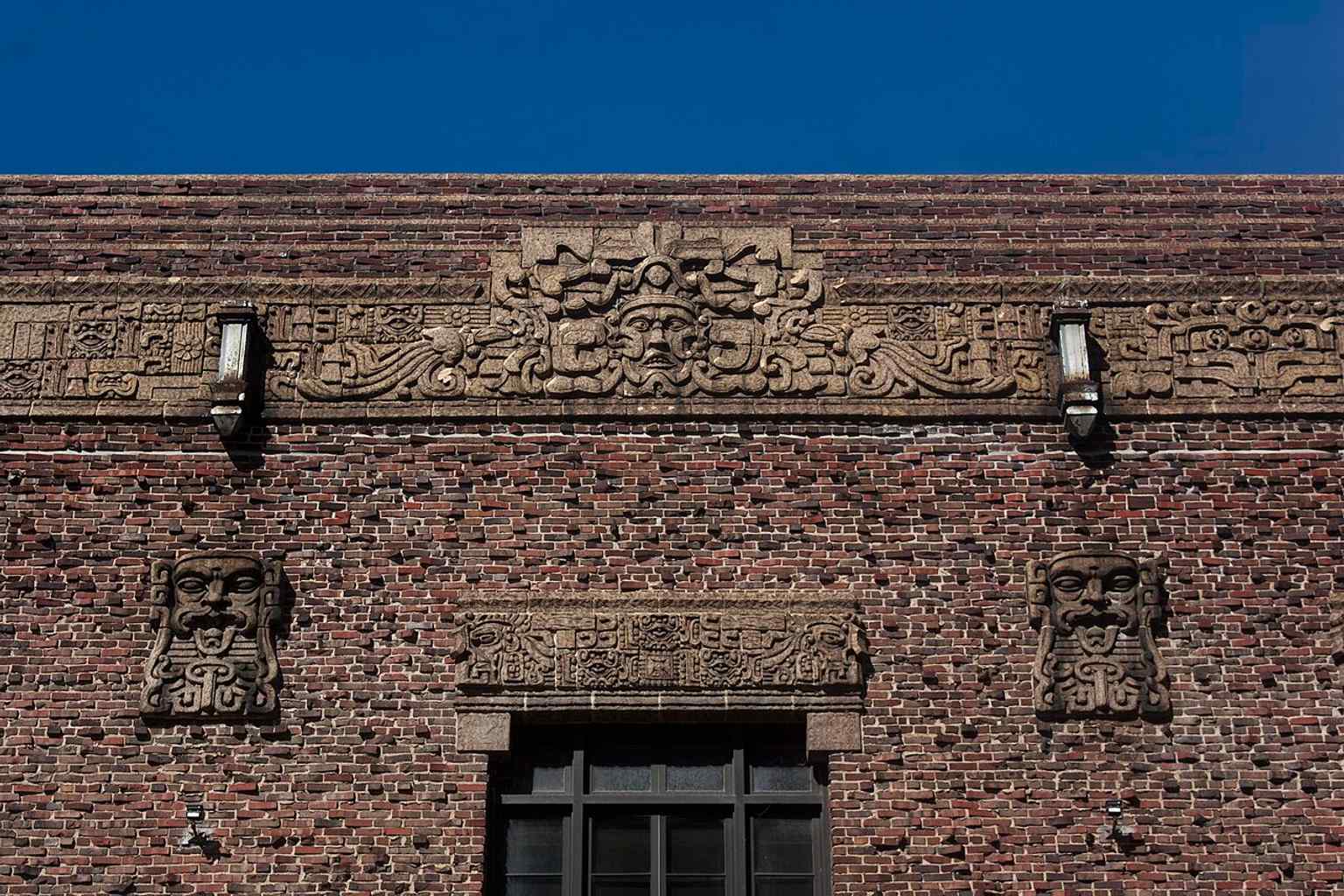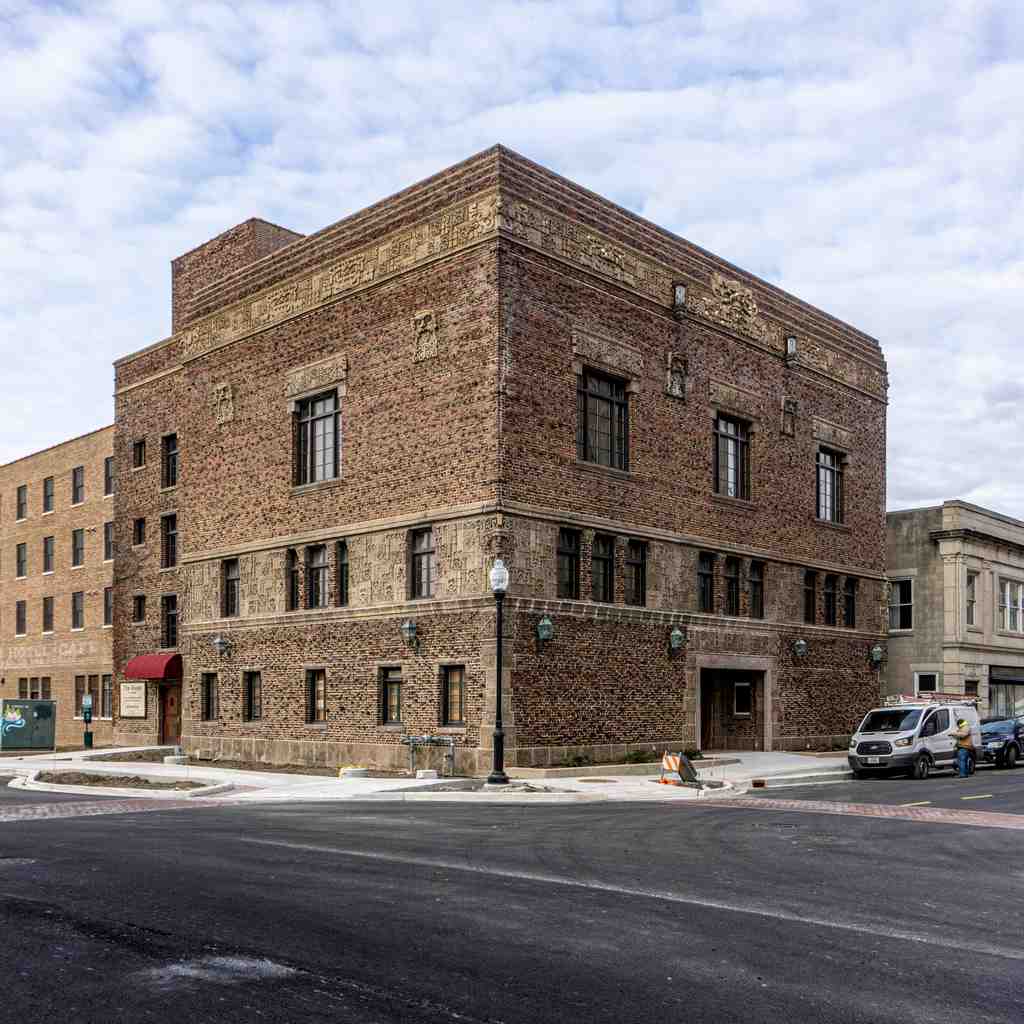
Look for a broad, flat-roofed brick building with horizontal bands of red-brown twisted brick and beige terra-cotta, marked by carved Mayan-style faces and glyphs across the facade.
Now this place... it’s Aurora dressing up for a big night out. The Aurora Elks Lodge Number seven oh five opened in nineteen twenty-six as the second home for a fraternal order that had organized here in nineteen oh one. Fraternal and social clubs mattered in cities like this. They were part networking machine, part celebration hall, part public ranking system... a place where people joined, hosted, toasted, and showed they belonged.
Zimmerman, Saxe and Zimmerman, a Chicago firm, gave the Elks something way beyond a plain meeting house. They built a steel-framed, concrete-reinforced clubhouse in two rectangular sections, one three stories, one four. Inside, the whole thing unfolded like a social engine: lobby, meeting rooms, offices, ballroom, bars, lounge, dining rooms... and in the taller section, forty-six rooms for traveling members, plus a kitchen and a basement bowling alley. Half lodge, half hotel, half recreation palace.
Pause for a second and study the facade. Does this feel like a typical Midwestern clubhouse... or like Aurora trying on a grander, stranger mask? If you want the details up close, check the glyph ornament on your screen.
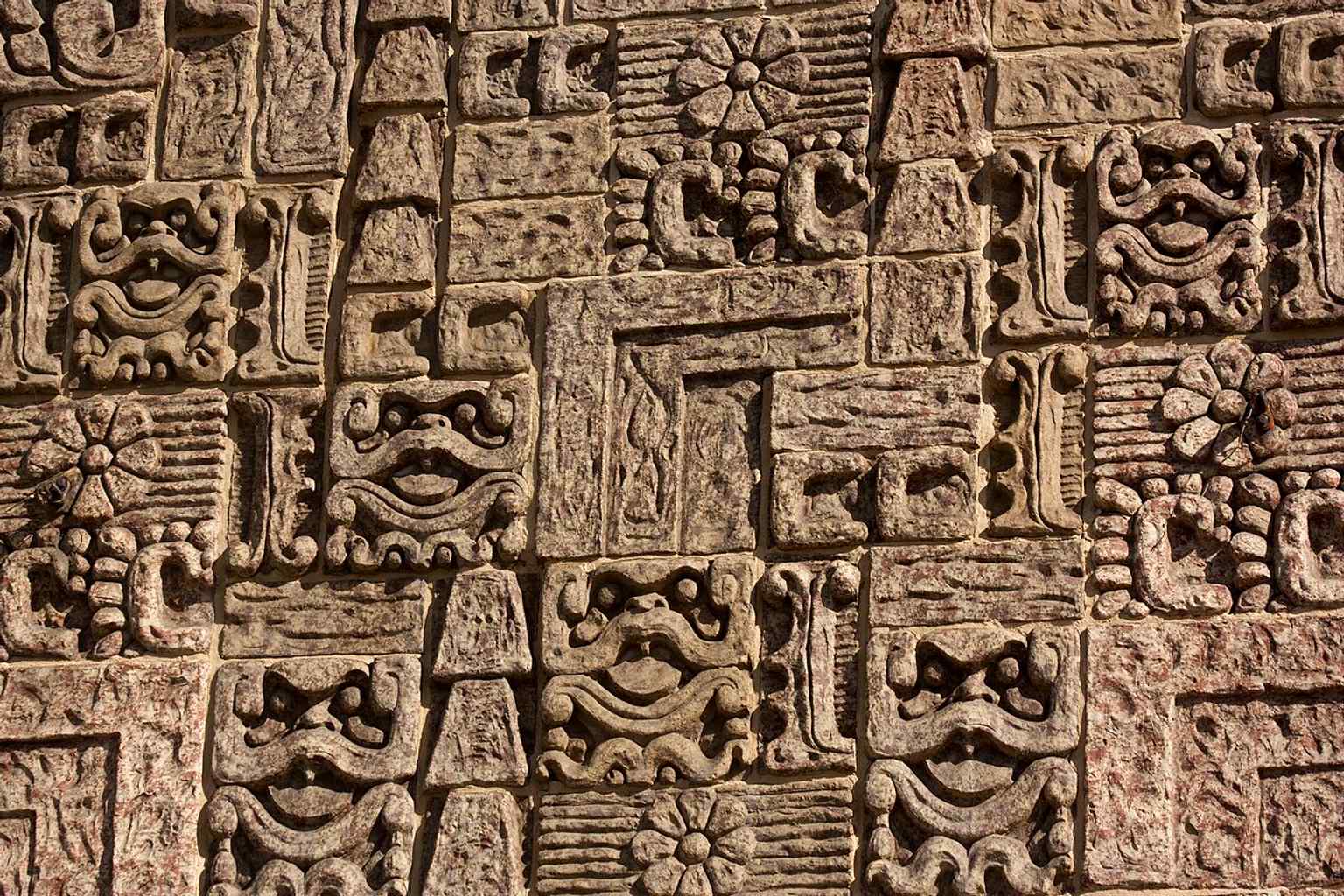
Here’s the local angle most people miss: this dramatic Mayan look was reportedly not the first plan. The architects started more conventionally, then pivoted when the nineteen twenties fell hard for newly publicized discoveries in Mesoamerica. William Carbys Zimmerman even reportedly visited Late Classic Maya sites himself, and you can see that influence in the deities, symbols, and placements worked into what is otherwise a Prairie School building - that low, horizontal style tied to the Midwest. It’s a rare mash-up, and honestly, a pretty swaggering one.
The lodge dedicated this building on the seventeenth of November, nineteen twenty-six, and with around seven hundred members then - later swelling to fifteen hundred with a waiting list - the opening became civic theater. Since nineteen seventy-eight, people here had already been treating it like something worth saving, and after its nineteen eighty National Register listing, it eventually found another life as apartments and a restaurant.
Next, we leave a building made for membership and performance, and head toward Old Second National Bank, where Aurora tried to make permanence look solid enough for everyone to trust. If you’re checking access, this property is generally listed as open daily from nine to five.