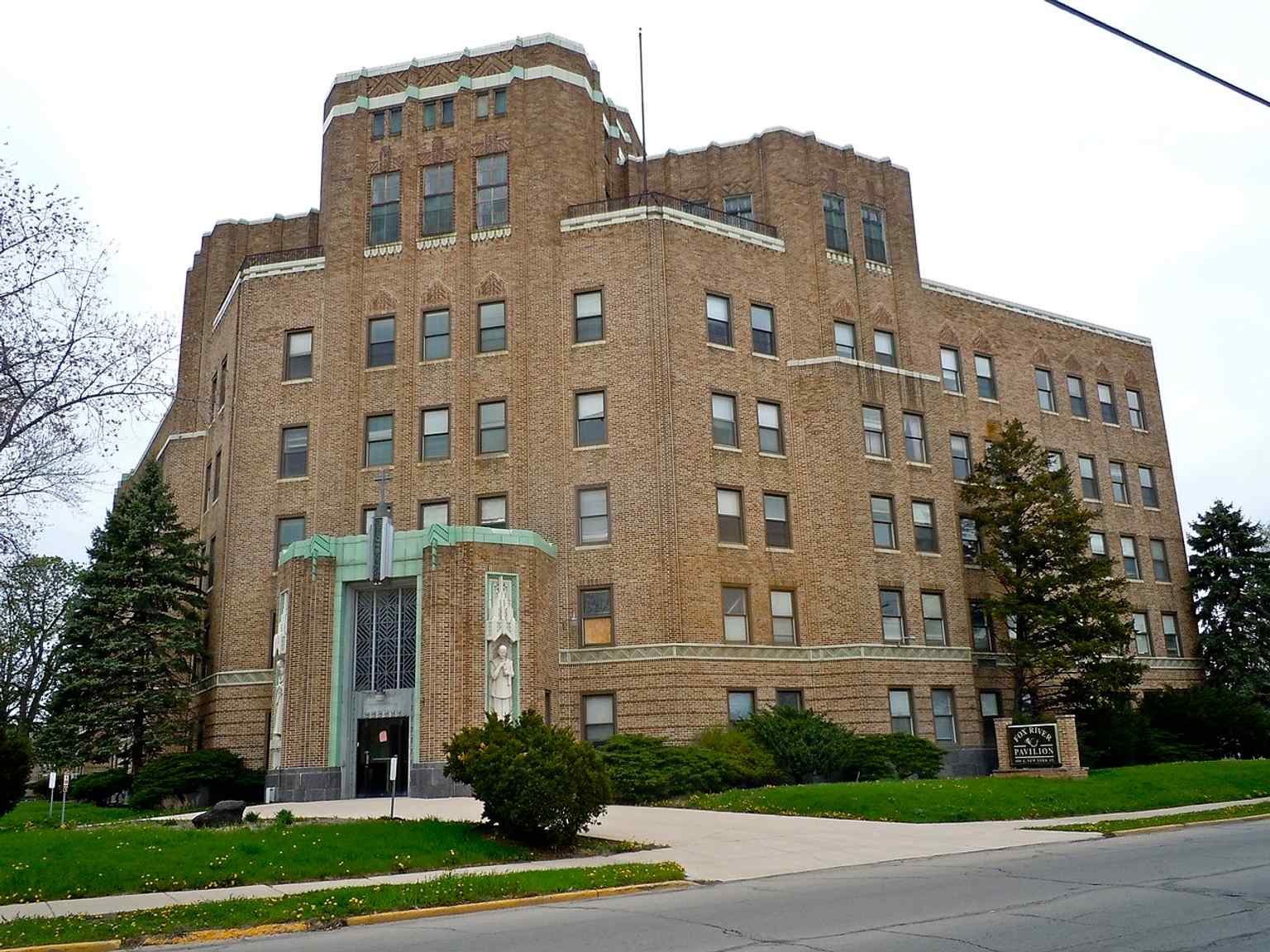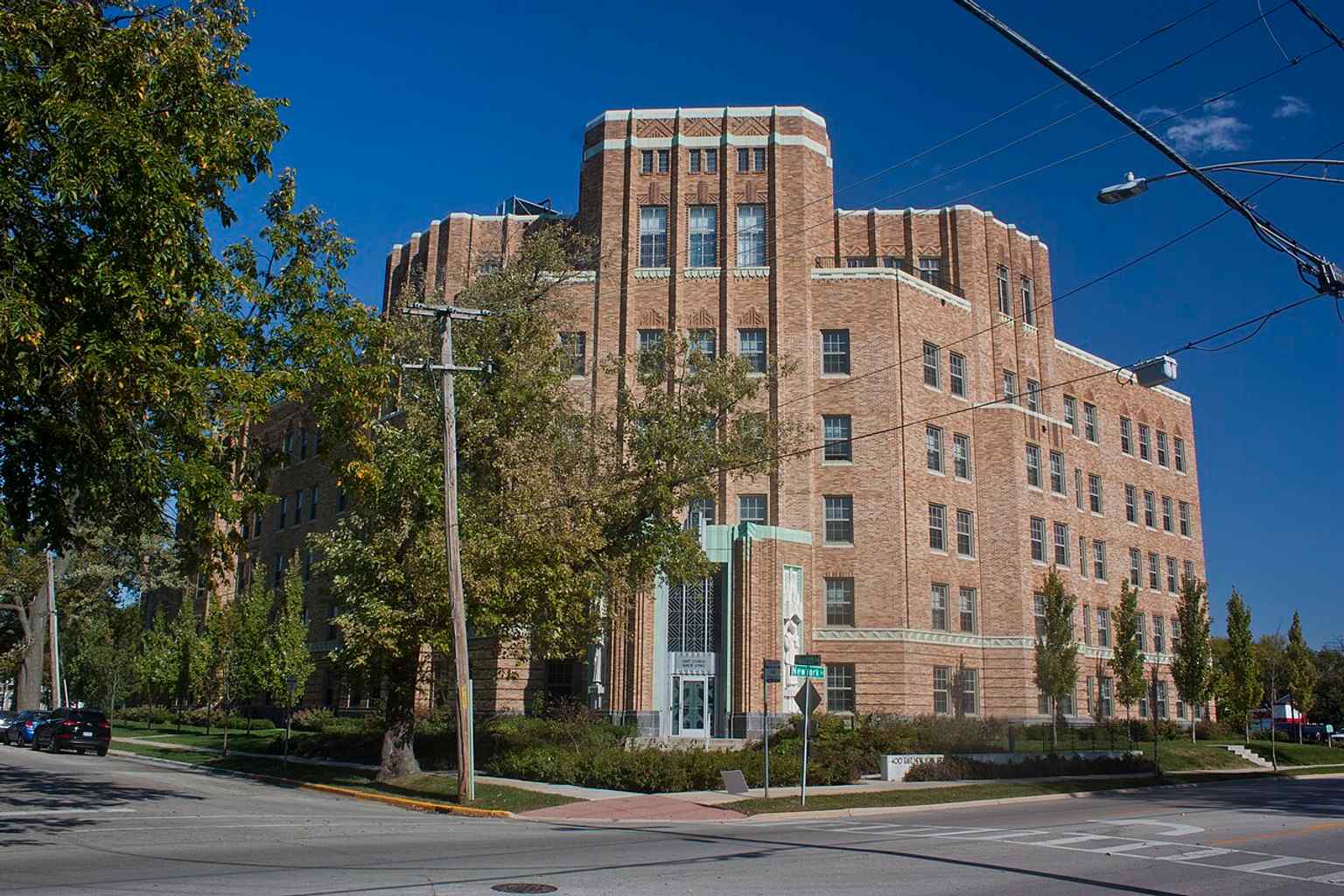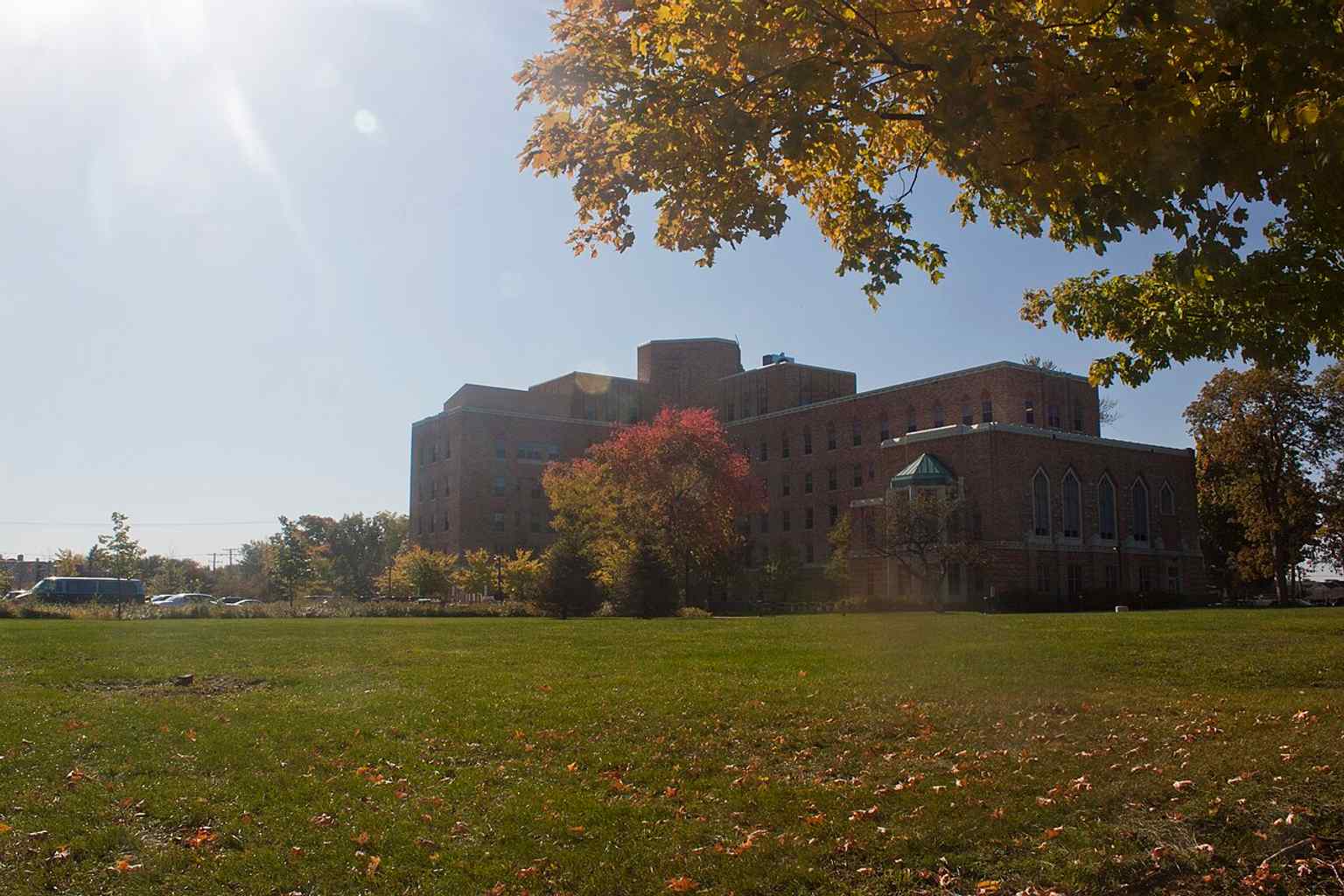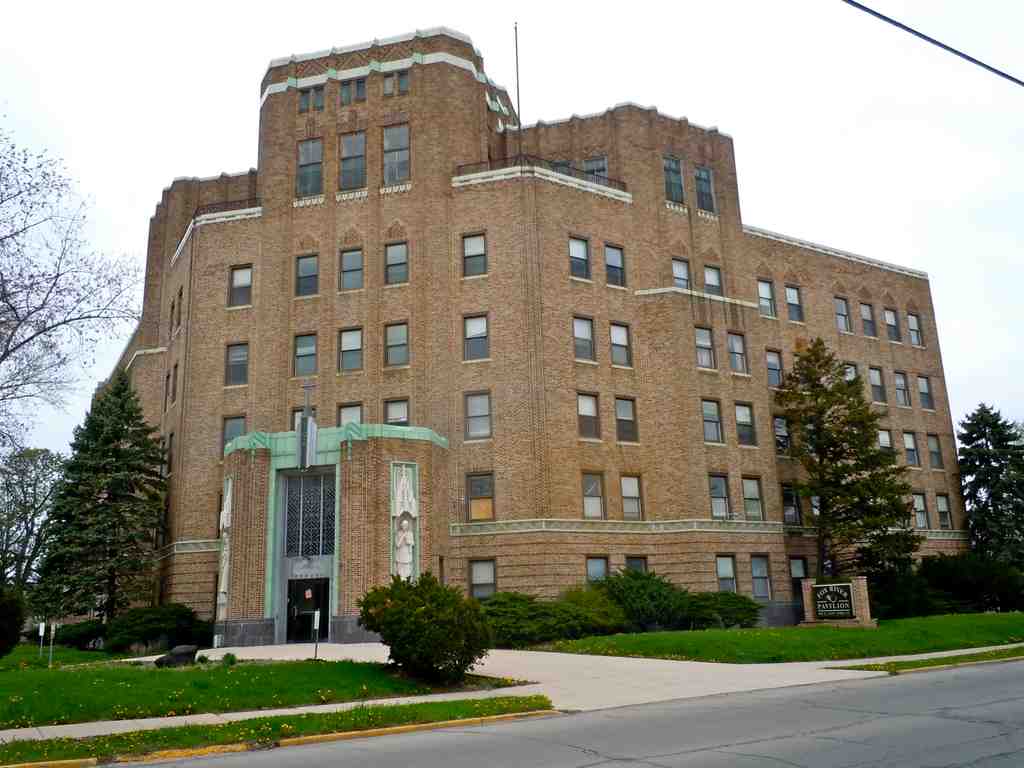
On your right is a broad tan-brick Art Deco building with a flat roof, long vertical window bands, and a taller center section that rises like a squared-off tower.
This stretch of the Fox River and Stolp Island corridor keeps collecting Aurora’s biggest public ambitions. Mills, banks, lodges, hotels, and hospitals all gathered near the water, like the city kept bringing its most important ideas to the same stage and asking, all right... what can we become next?
Here, that question took a deeply human shape. The Franciscan Sisters of the Sacred Heart came to the United States in eighteen seventy-six after persecution of German Catholics during the Kulturkampf, a political crackdown in Germany. They settled in Illinois, and by nineteen hundred they bought property in Aurora to expand their healing mission, first using houses on North Fourth Street as St. Charles Hospital.
But Aurora kept growing, and the Sisters kept stretching to meet it. They added a dormitory in nineteen ten, a boiler house and laundry in nineteen twenty, a nursing school in nineteen twenty-two, and a maternity branch in nineteen twenty-five. Then, in nineteen thirty-two, they went big. Architect Wybe Jelles Van der Meer designed this new hospital in Art Deco, that sleek early twentieth-century style that loves bold geometry and upright lines. Contractor C. J. DeWit led construction, and people praised him for hiring local workers during the Great Depression. The whole project cost five hundred thousand dollars, about eleven million dollars today, and it opened as a one hundred ten bed acute-care hospital with a blessing from Reverend Edward Francis Hoban.
If you glance at the nineteen thirty-two image on your screen, you can catch the building in its crisp, confident first act.
And wow, this place had more than one life. Later it became Fox River Pavilion, a skilled nursing facility and sanatorium. In two thousand seven, even its workers added another chapter: certified nursing assistants, rehab aides, dietary workers, housekeepers, and laundry staff voted twenty-eight to four to join S-E-I-U Local Four, and the National Labor Relations Board certified the union. That vote matters. Care institutions are workplaces, too.
Then the story turned painful. A two thousand ten state survey described residents getting access to dangerous items, including a razor blade that resident R thirteen used to cut her arm badly enough to need forty stitches. Investigators also examined an overdose involving pills brought by a boyfriend, another resident who swallowed objects and needed surgery, and sharp items still circulating inside. After a December two thousand nine fight between roommates left fifty-seven-year-old Randall Moons dead, regulators moved to revoke the license. Around April two thousand ten, the place was vacated. On the seventh of June, twenty ten, it landed on the National Register of Historic Places... just as its nursing home operation was collapsing. If you want, check the before-and-after image in the app; it really shows that shift from working institution to quiet landmark.
From healing wards, Aurora’s story now turns toward rooms for travelers and workers. In about nine minutes, Hotel Arthur picks up that thread.