
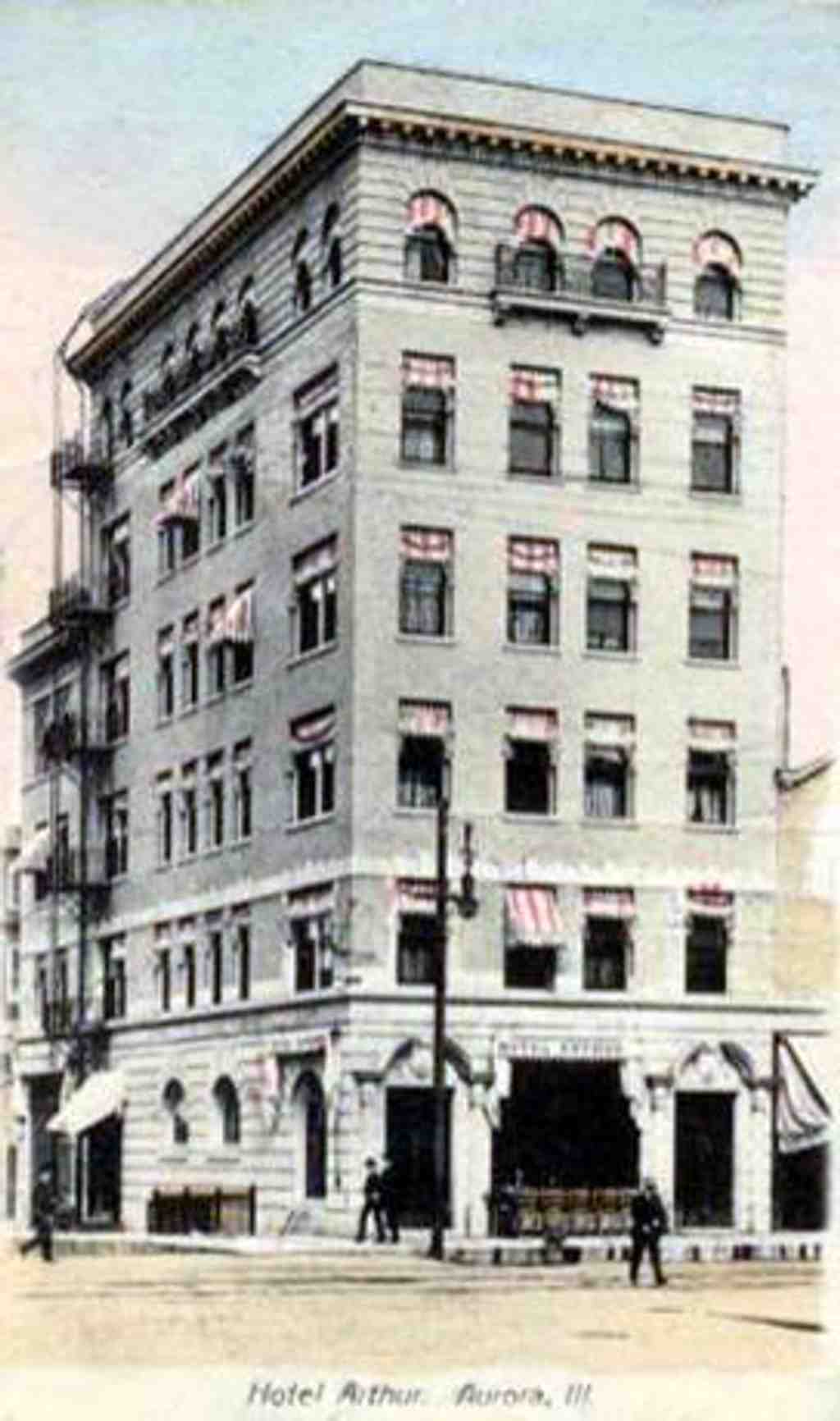
Look for a six-story red brick block with pale limestone bands, arched top-floor windows, and a heavy cornice along the roofline like a formal hat.
This is Hotel Arthur... though Aurora wound up knowing it just as well as the Traction Terminal Building. That double identity tells you almost everything. In nineteen oh five, John Knell Senior, a German immigrant who made his money as a beer wholesaler, commissioned this place as a hotel for river travelers and named it for his brother, Arthur. At the time, it stood as the tallest building in Aurora, and on this side of the Fox, it was the only hotel in the game.
The architect, Eugene Malmer, mattered here. He grew up in Aurora, studied locally and at the Armour Institute, then trained under William Le Baron Jenney, one of the big names of early skyscraper design. So when Malmer shaped this building, he wasn’t just drawing a hotel... he was helping give his hometown a sharper public face.
You can see that ambition in the details: pressed red brick, Indiana limestone bands slicing across the facade, and those arched sixth-floor windows giving the top a little flourish. It’s Renaissance Revival, meaning Malmer borrowed the balanced, dressed-up look of older European city buildings and translated it into a busy Midwestern corner.
Then the plot flipped. In nineteen fifteen, the Aurora, Elgin and Chicago Railroad leased the building and turned it into their headquarters and terminal. Most people assume that happened because Aurora planned it that way. Not quite. The railroad needed new headquarters, and this hotel stepped into a whole new life. The first floor became a waiting station and diner. Passengers came through with tickets in hand, clerks shuffled papers upstairs, and the sixth floor plus part of the fifth filled with railroad management. For a stretch, other interurban lines joined the mix too, so this address became less about overnight stays and more about movement itself... arrivals, departures, meetings, delays, decisions.
Take a glance at the image on your screen and you can catch that earlier identity still clinging to the building’s bones, even after the station years took over.
The twenty-year lease ended in nineteen thirty-five, but the Traction Terminal name stuck. Highways later stole riders from the rails, the upper floors emptied out in the nineteen sixties, and the last ground-floor business left in two thousand three. Still, Aurora never really gave up on the place. It landed on the National Register in two thousand five, and the upper floors found new life again as apartments.
That’s the thing here: Aurora didn’t just ship out goods. It learned how to stage entrances, manage traffic, and present itself to people stepping into town. Next up, head toward Leland Tower, about a three-minute walk from here. And if you circle back later, this corner stays accessible around the clock.




