AudaTours logoAudaTours

Stop 12 of 17

Vance Birthplace

headphones 04:33 Buy tour to unlock all 19 tracks
Vance Birthplace
Vance Monument
Vance MonumentPhoto: Billy Hathorn, Wikimedia Commons, Public domain. Cropped & resized.

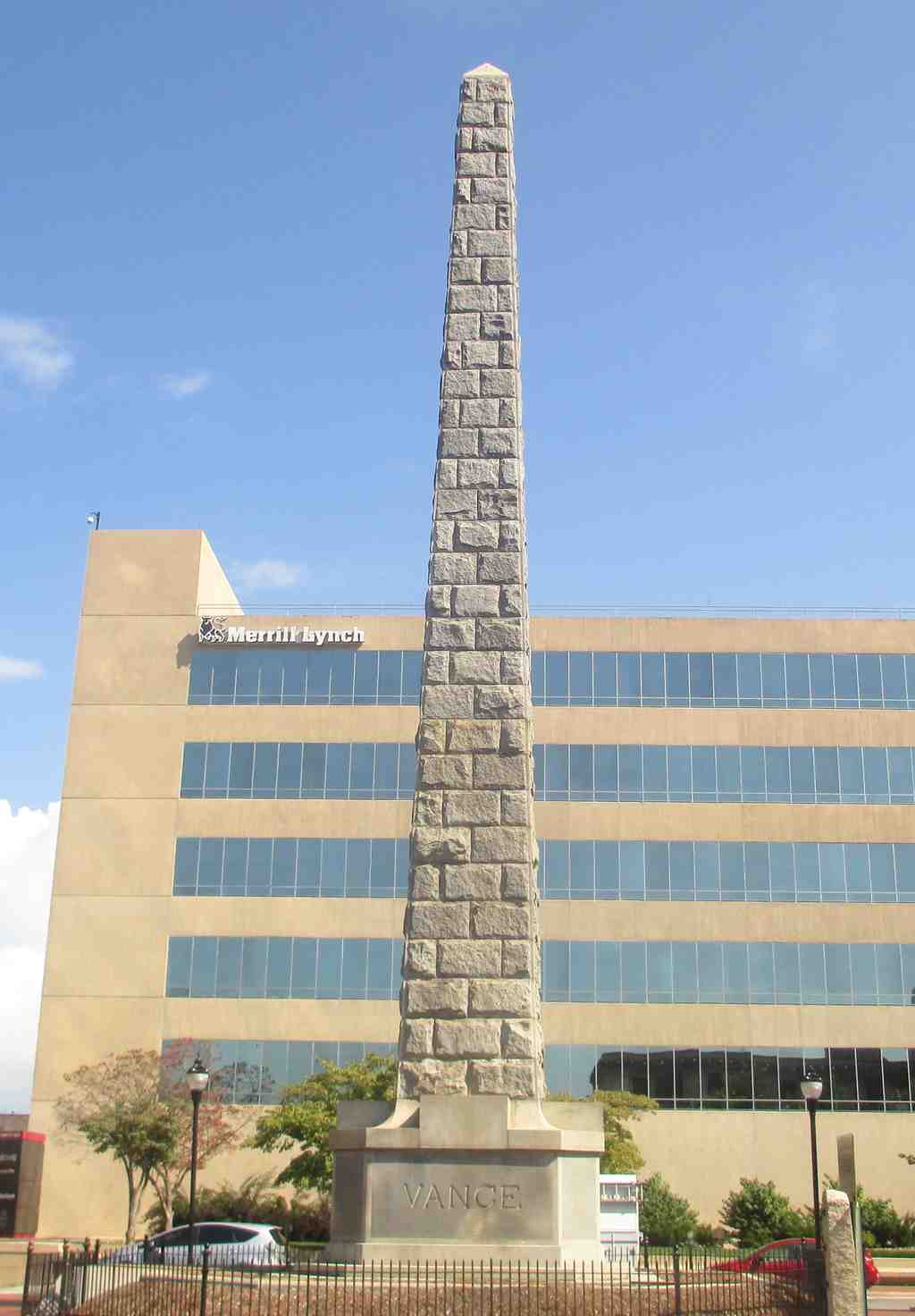
On your right, picture a tall gray granite obelisk rising from a square pedestal, with a sharp pyramidal tip and polished panels carved with the single word “Vance.”

This spot held one of Asheville’s most visible landmarks for well over a century... and one of its most argued-over ones too. In eighteen ninety-six, local leaders formed the Vance Monument Association to honor Zebulon Vance, a Buncombe County native who served as governor, congressman, and then a U-S senator until his death in eighteen ninety-four. The architect they chose was Richard Sharp Smith, the same gifted designer tied to Biltmore, and he gave his work for free. He drew a plain, sturdy obelisk, inspired by the Washington Monument, because the committee wanted something strong rather than grandly decorative.

The money came from all over, but mostly from George Willis Pack, the New Yorker whose name still lives on in Pack Square. He gave two thousand dollars, nearly two-thirds of the whole fund, a contribution worth many tens of thousands of dollars today. Schoolchildren, volunteers, and a Ladies Auxiliary joined in too. Twenty women went door to door selling tickets for a charity performance, and another fundraiser gathered the city on the fourth of July at Battery Park Hill. It feels very Asheville somehow... a monument raised not by one hand, but by a whole crowd of determined neighbors.

The groundbreaking, on the twenty-second of December, eighteen ninety-seven, carried its own ceremony and theater. Masons laid the cornerstone in public, a rare honor, and tucked a copper box beneath it. Inside they placed a Bible, city records, coins, school rolls, and local newspapers, including The Colored Enterprise. More than a century later, when conservators opened that box in twenty fifteen, they found the only known surviving copy of that African American newspaper. Even buried objects can wait patiently to tell a fuller story.

Construction had its own drama. One polished granite panel showed a natural white streak only after it was buffed, so Smith rejected it. A capstone weighing more than six tons needed eight mules to haul it from the station. And when a rope slipped high above the square, a telephone worker named Will Ward climbed one hundred feet by hand in ten minutes to lash on a new line. The next week, during another lift, the boom groaned, timbers cracked, the crowd scattered, and one poor man tripped over an apple vendor’s baskets, sending apples rolling everywhere. Still, no one got hurt, and by May of eighteen ninety-eight the seventy-five-foot monument stood complete. If you want to see how completely it once ruled this square, that old downtown view makes the scale clear.
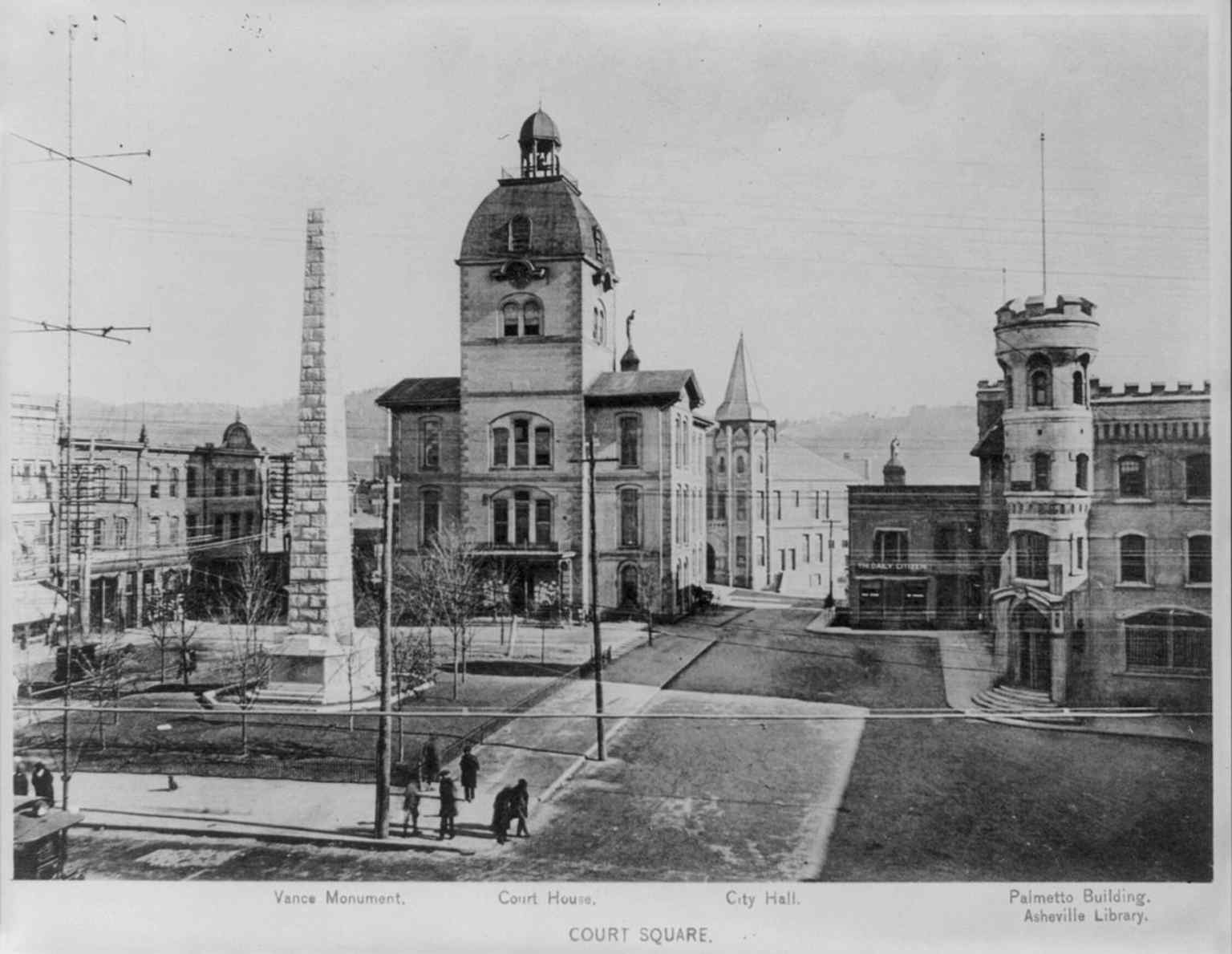
Pack Square as it looked in 1899, with the Vance Monument anchoring downtown Asheville’s civic core.
Pack Square as it looked in 1899, with the Vance Monument anchoring downtown Asheville’s civic core.Photo: Miscellaneous Items in High Demand, PPOC, Library of Congress, Wikimedia Commons, Public domain. Cropped & resized.

But this story does not end in admiration alone. Vance had owned enslaved people and publicly defended slavery in deeply racist terms. Over time, many Asheville residents asked what it meant to keep his monument at the city’s center, especially at a site tied to the sale and punishment of enslaved people near the old courthouse and jail. After years of debate, protests, vandalism, and a period when the obelisk stood shrouded, the city removed the granite shaft in May of twenty twenty-one. If you glance at the later image in the app, you can feel that absence for yourself.
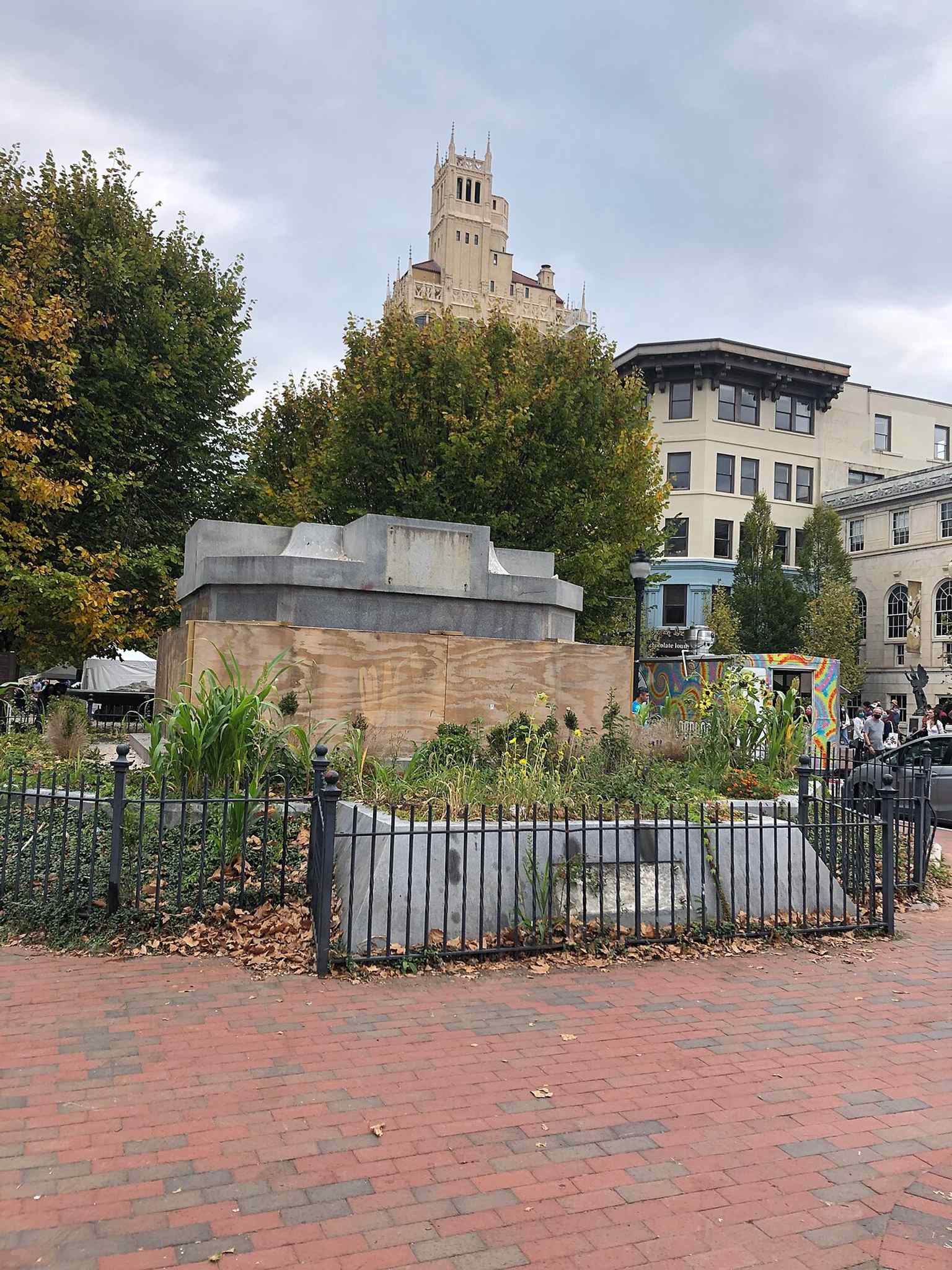
The former site of the monument left to weeds in 2021, a stark reminder that the obelisk was removed in 2021.
The former site of the monument left to weeds in 2021, a stark reminder that the obelisk was removed in 2021.Photo: Scrapsintime, Wikimedia Commons, CC BY-SA 4.0. Cropped & resized.

What remains here is not just memory, but a question Asheville is still trying to answer with honesty.

If you’d like the venue note in the app, it lists hours of nine to five Tuesday through Saturday, closed Sunday and Monday.

When you’re ready, continue on toward the Asheville Art Museum, carrying both the monument’s rise and its reckoning with you.
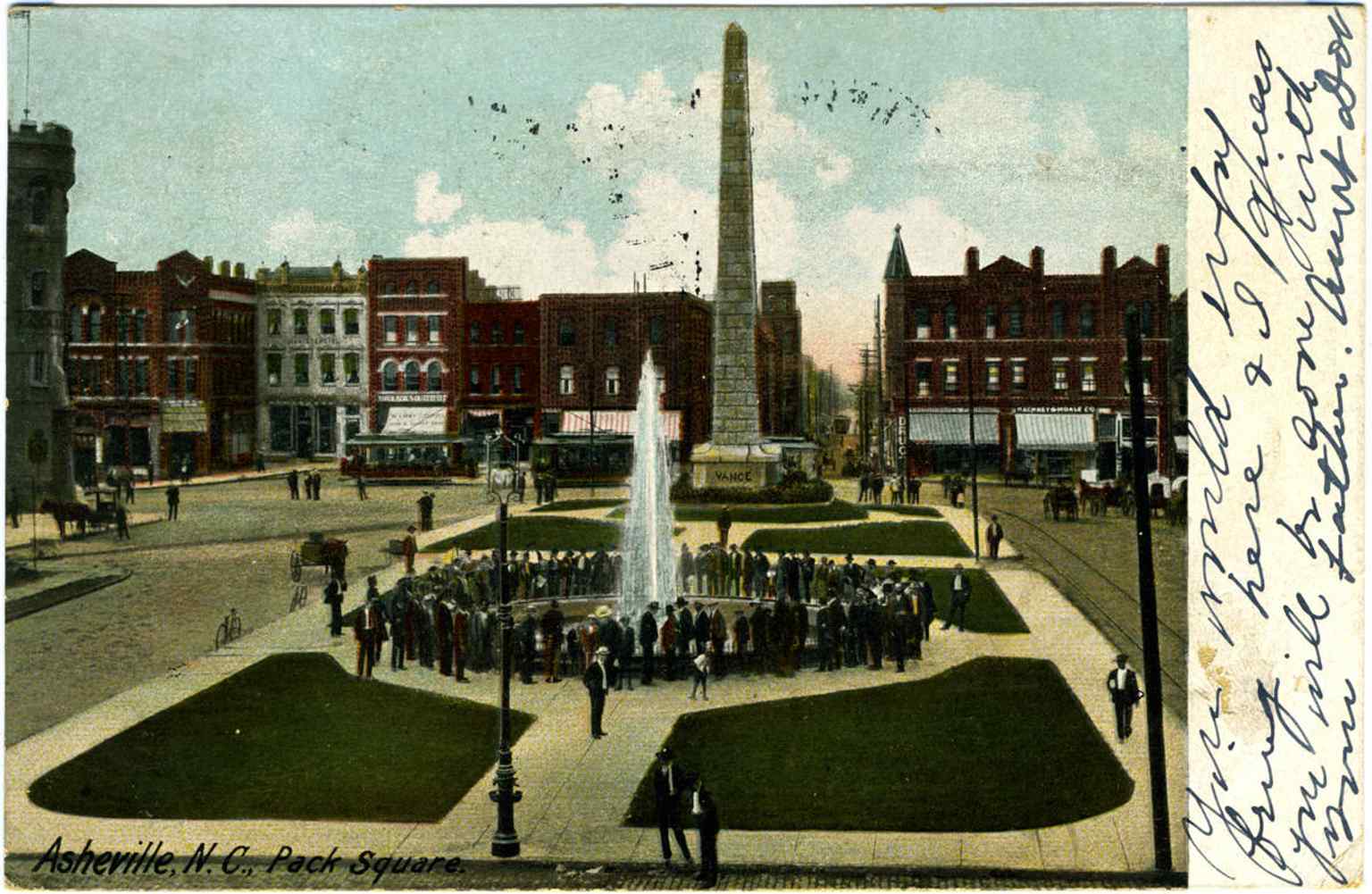
A 1906 postcard showing the monument’s pedestal marked “Vance,” when it was still framed by the busy square and streetcar era Asheville.
A 1906 postcard showing the monument’s pedestal marked “Vance,” when it was still framed by the busy square and streetcar era Asheville.Photo: Hackney & Morale Co., Publishers, The H.C. Leighton Co., Portland, Me., Wikimedia Commons, Public domain. Cropped & resized.
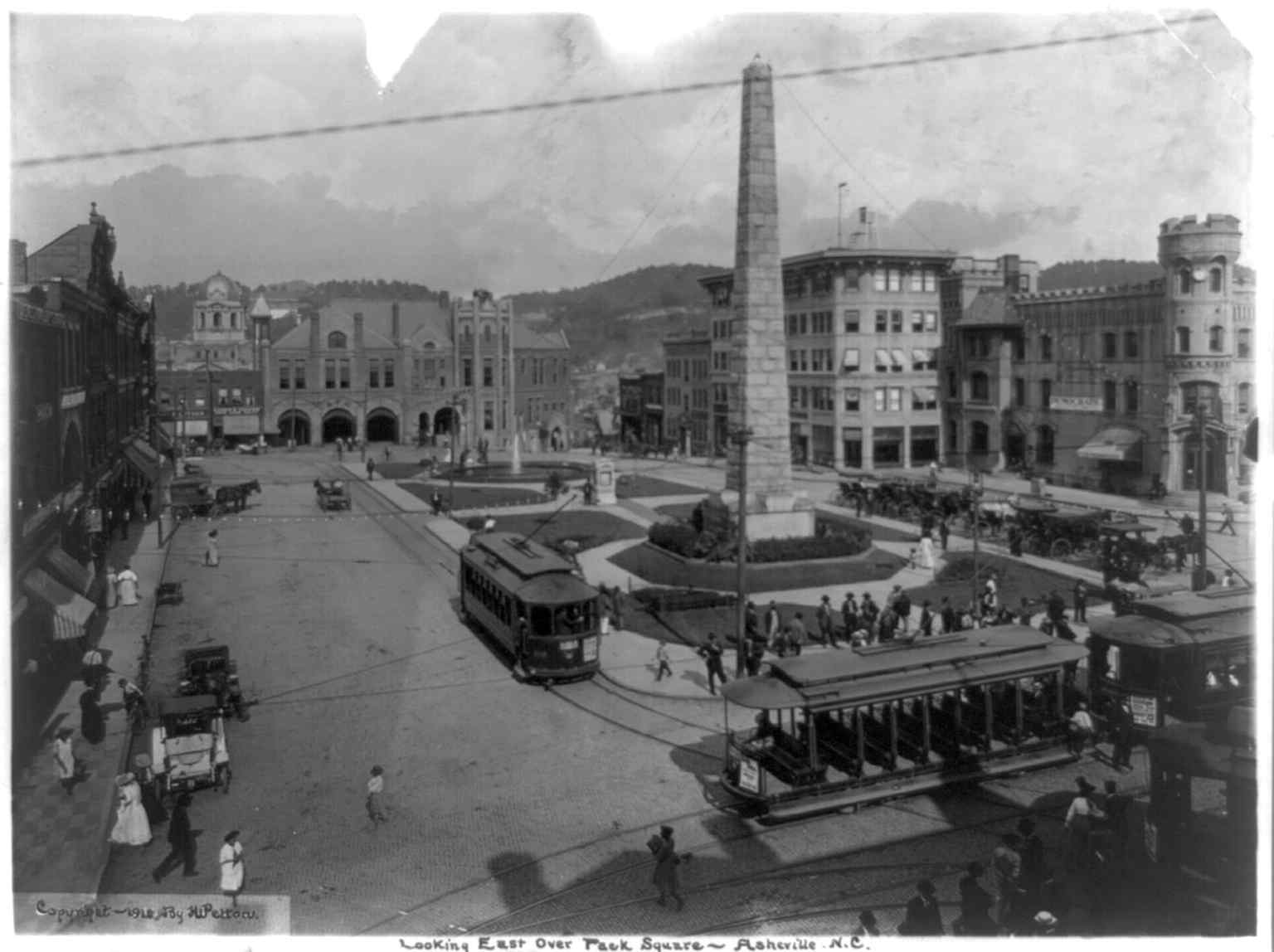
Looking east over Pack Square in 1910, with the monument rising above the district Richard Sharp Smith helped shape.
Looking east over Pack Square in 1910, with the monument rising above the district Richard Sharp Smith helped shape.Photo: Pelton, H. W., Wikimedia Commons, Public domain. Cropped & resized.
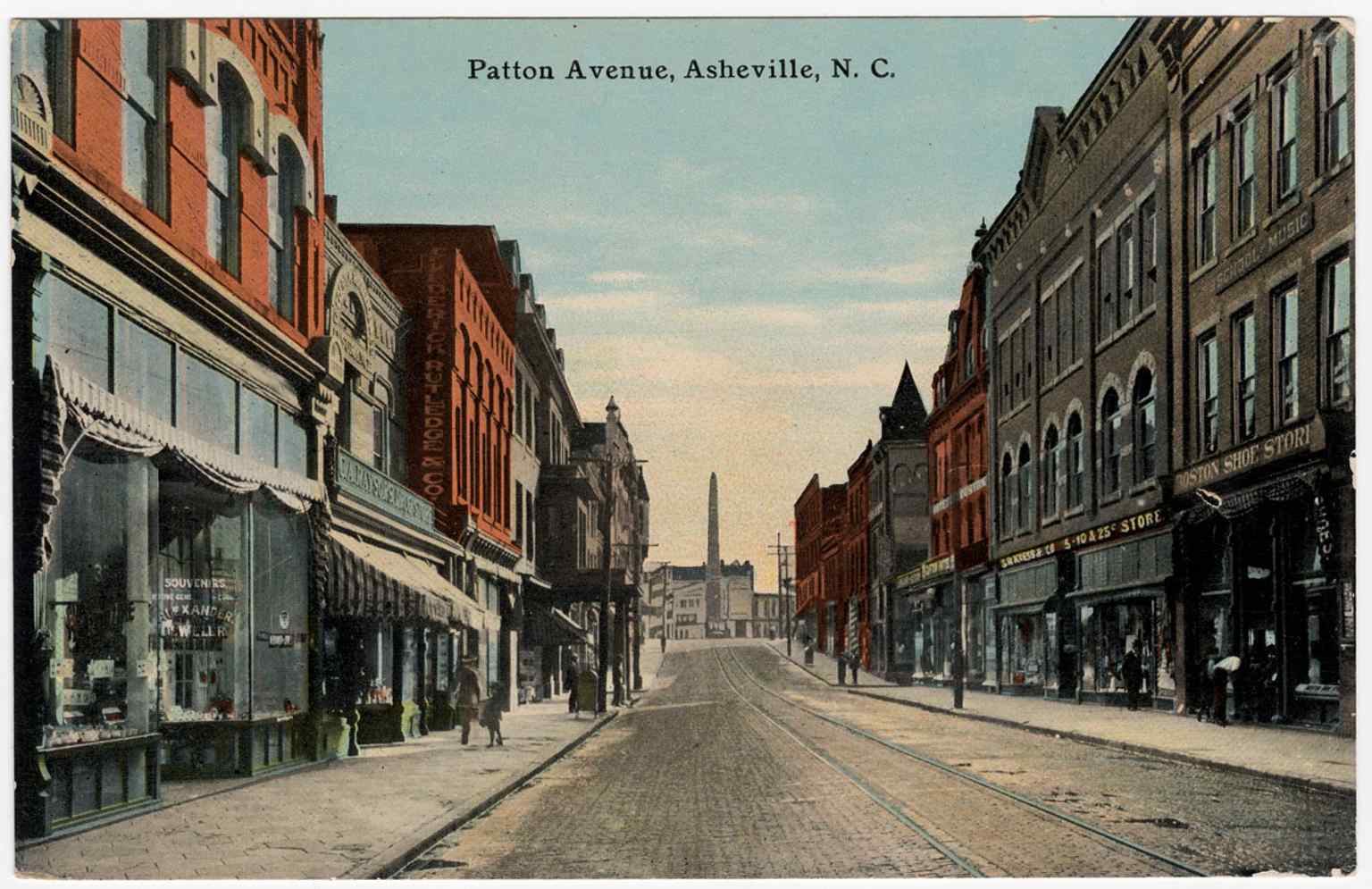
Patton Avenue in the early 1900s, where the Vance Monument appears in the distance as an icon of downtown Asheville.
Patton Avenue in the early 1900s, where the Vance Monument appears in the distance as an icon of downtown Asheville.Photo: UNC Libraries Commons, Wikimedia Commons, Public domain. Cropped & resized.
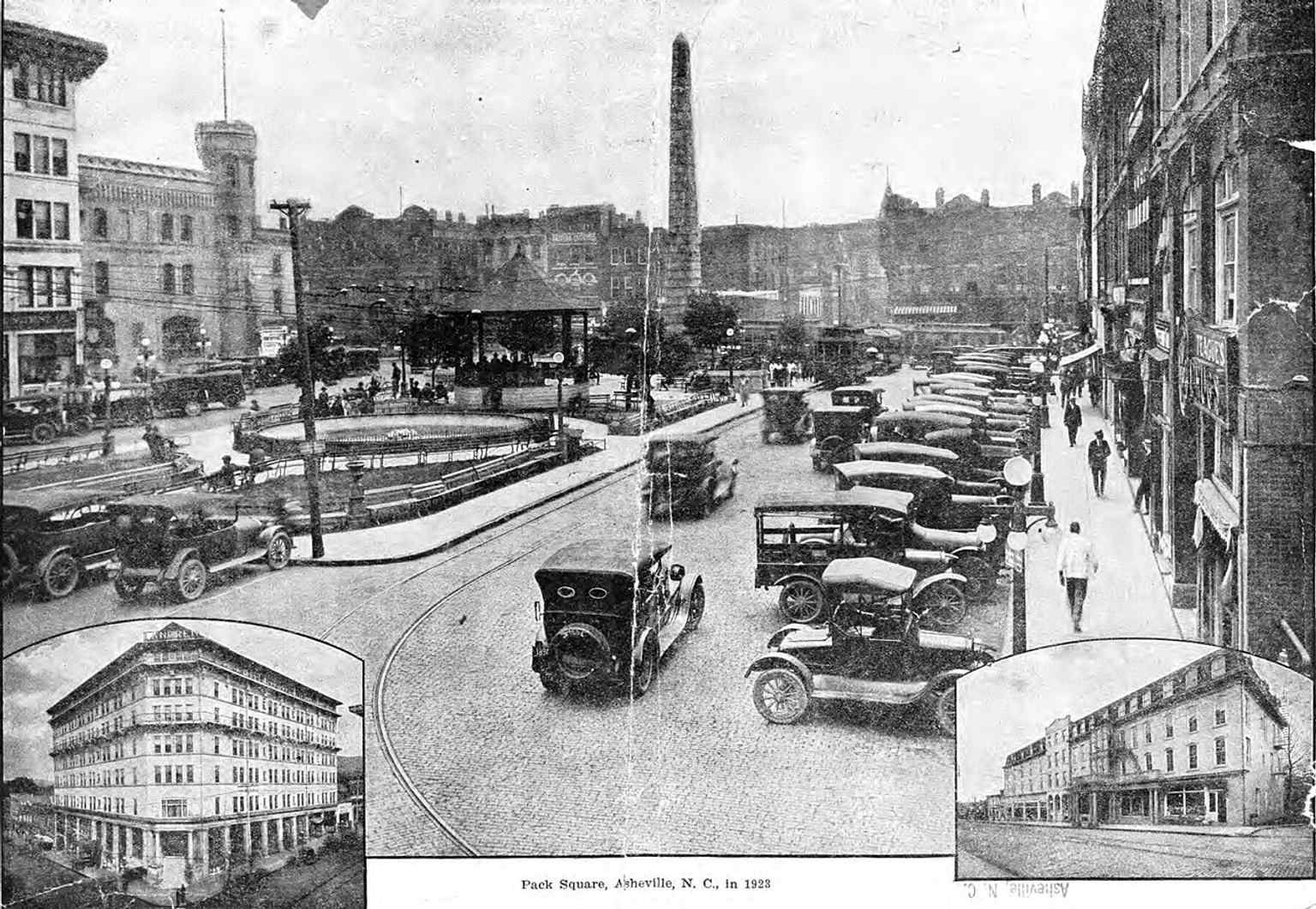
Pack Square in 1923, showing how the monument remained the visual center of Asheville’s downtown landscape.
Pack Square in 1923, showing how the monument remained the visual center of Asheville’s downtown landscape.Photo: Uncredited, Wikimedia Commons, Public domain. Cropped & resized.
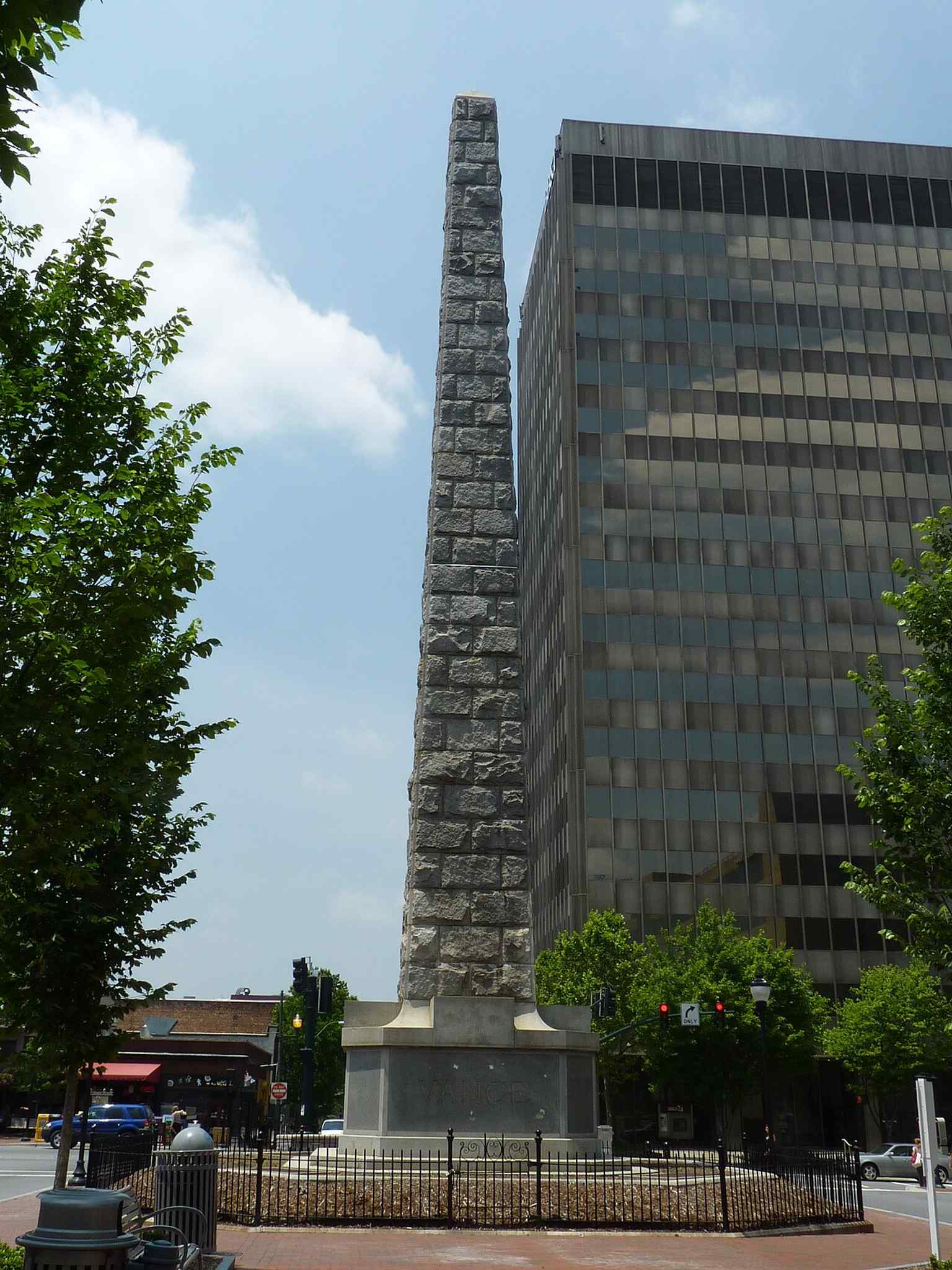
A clear full-height view of the granite obelisk, echoing Richard Sharp Smith’s Washington Monument-inspired design.
A clear full-height view of the granite obelisk, echoing Richard Sharp Smith’s Washington Monument-inspired design.Photo: Billy Hathorn, Wikimedia Commons, Public domain. Cropped & resized.
The monument seen from Patton Avenue, emphasizing how the tall obelisk dominated the Asheville streetscape.
The monument seen from Patton Avenue, emphasizing how the tall obelisk dominated the Asheville streetscape.Photo: AbeEzekowitz, Wikimedia Commons, CC BY-SA 3.0. Cropped & resized.
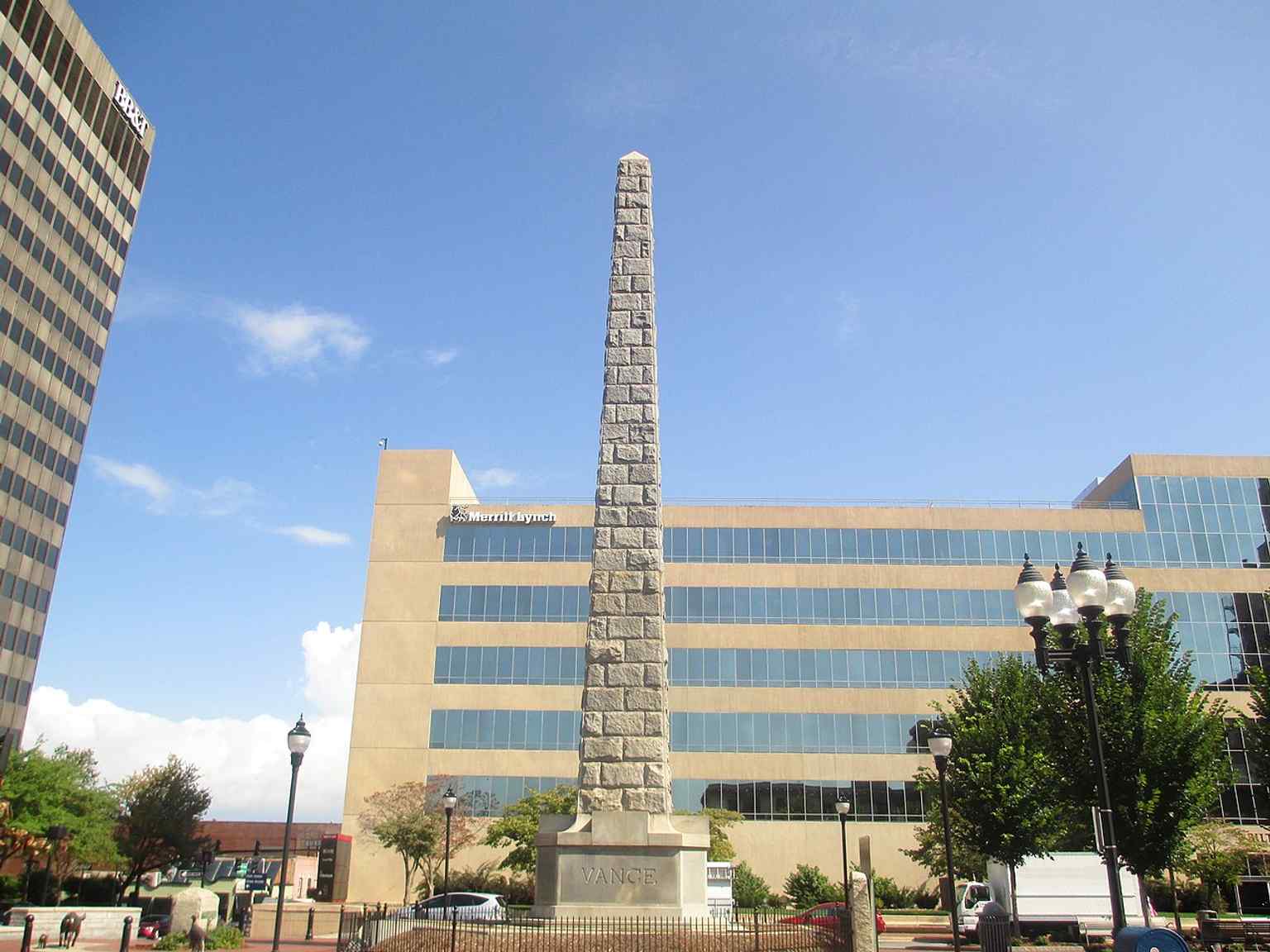
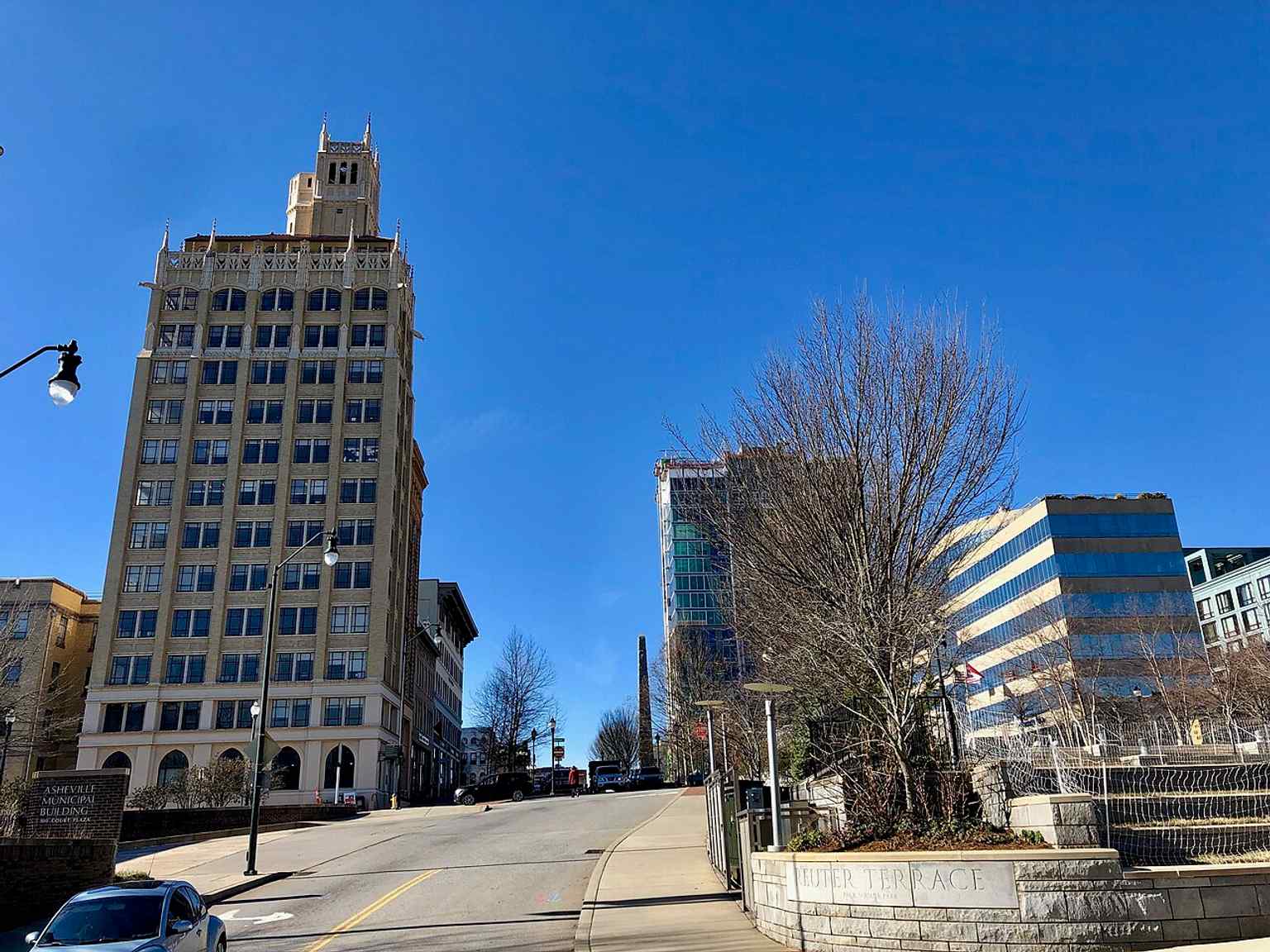
A wide Pack Square view that places the monument in Asheville’s larger downtown setting among modern buildings.
A wide Pack Square view that places the monument in Asheville’s larger downtown setting among modern buildings.Photo: Warren LeMay from Cincinnati, OH, United States, Wikimedia Commons, CC0. Cropped & resized.
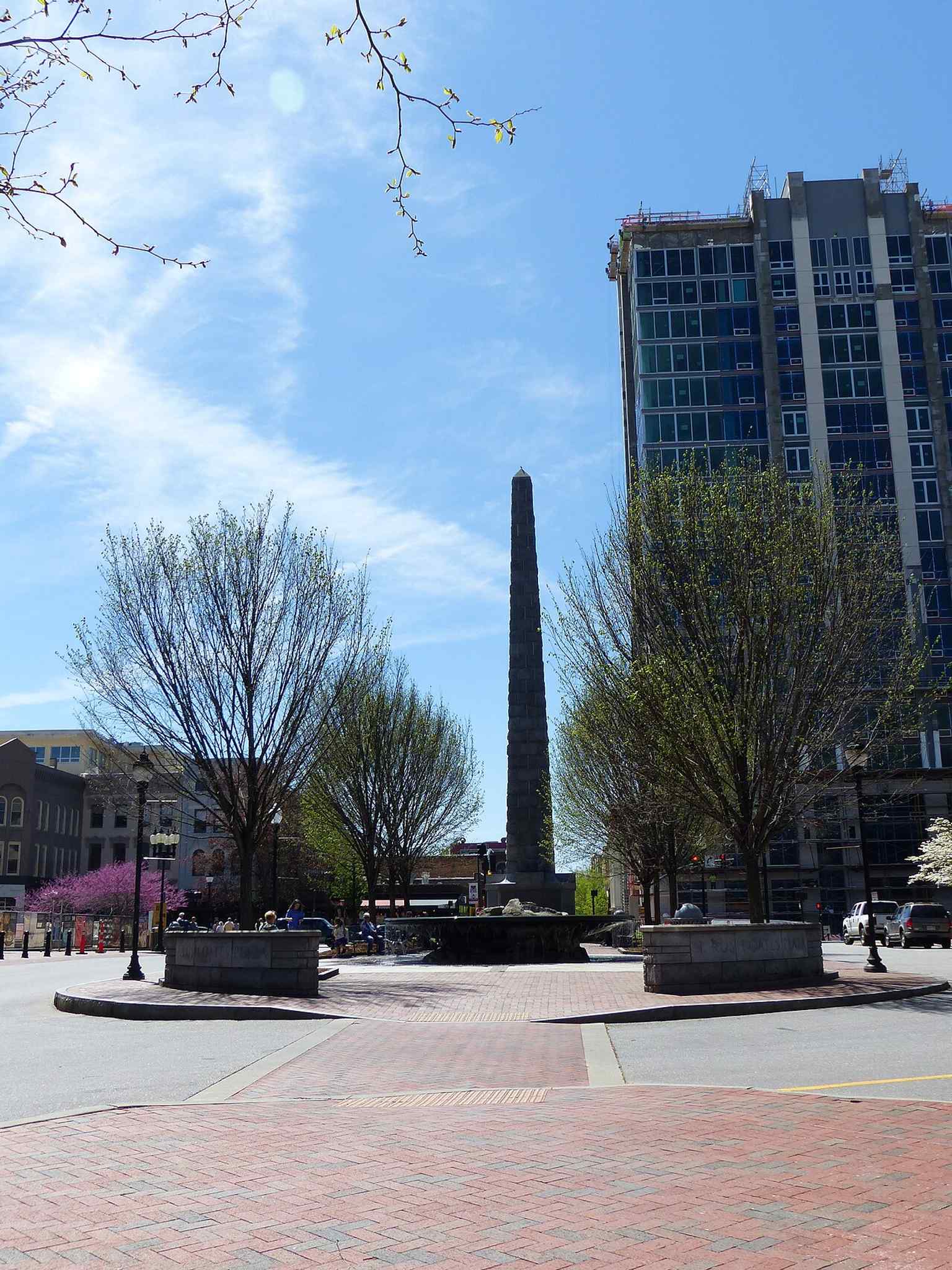
Downtown Asheville’s Pack Square with the monument at the center of the civic plaza, reflecting its role as a major landmark.
Downtown Asheville’s Pack Square with the monument at the center of the civic plaza, reflecting its role as a major landmark.Photo: Stilfehler, Wikimedia Commons, CC BY-SA 4.0. Cropped & resized.
arrow_back Back to Asheville Audio Tour: Tastes, Tales & Treasures of the Mountain Metropolis
Loved by travellers

Thousands of tours started.
Plenty of opinions.

4.8 across the App Store and Google Play. Here's a few we keep coming back to.

starstarstarstarstar
This was a solid way to get to know Brighton without feeling like a tourist. The narration had depth and context, but didn't overdo it.
Christoph
Christoph
Brighton Tour
starstarstarstarstar
Started this tour with a croissant in one hand and zero expectations. The app just vibes with you, no pressure, just you, your headphones, and some cool stories.
download Get the app

Pop your headphones in.
Step outside.

Free to download. Tours in every city. Start in 60 seconds — no account, no card.

Download on the App StoreGet it on Google Play
starstarstarstarstar_half
4.8
AudaTours app icon
headphones
~ 4 min until your first tour starts
public
1,000+ cities worldwide
all_inclusive
AudaTours
Unlimited

Every tour. Every city. One subscription.

3101 tours2271 cities138 countries50+ languages