
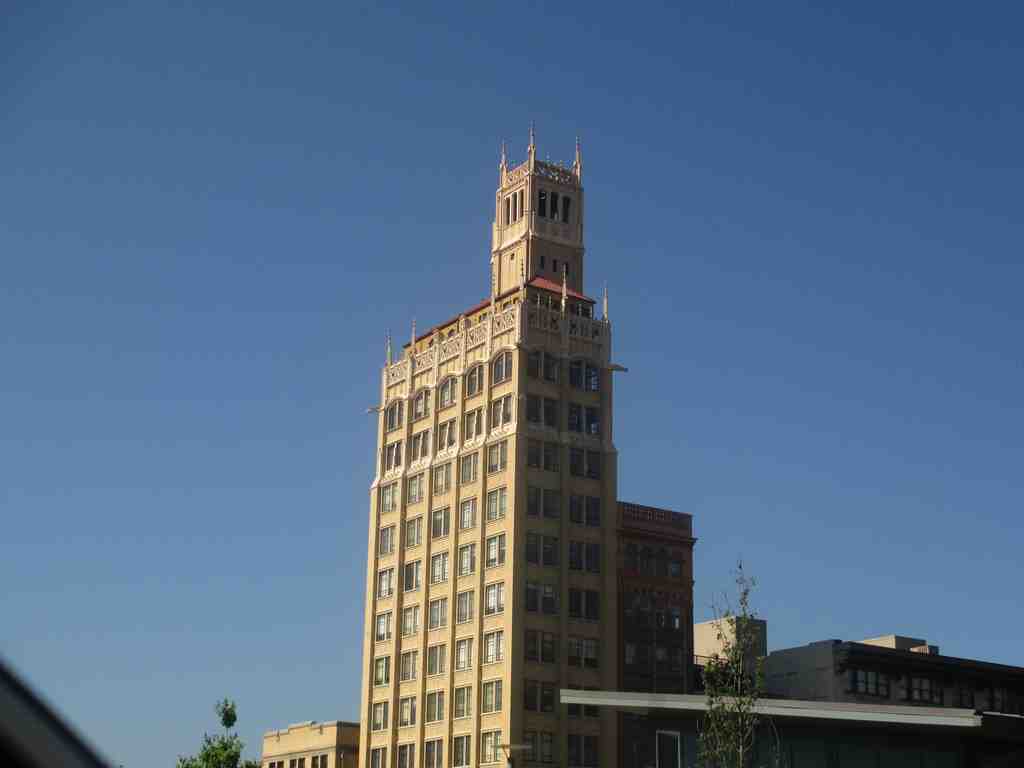
On your left, look for a narrow terracotta tower rising in a stepped vertical shape, with carved corner grotesques - little stone creature faces - high near the top.
This was western North Carolina’s first skyscraper, finished in nineteen twenty-four, and its story starts with a tiny lot only twenty-seven by sixty feet wide. Before Lynwood B. Jackson claimed it, Thomas Wolfe’s father ran his tombstone business here... the same family name you met at the Wolfe House. Jackson believed so fiercely in Asheville’s future that he hired Ronald Greene and dug an unusually deep foundation; he and his brother Winston spent three nights beside the excavation, making sure the walls did not collapse. He even kept his office on the top floor, and his sister Alberta said he stored a rope there in case of fire.
Its Neo-Gothic style - a modern revival of medieval pointed-arch drama - helped it feel daring and elegant at once. The corner grotesques are decorative, not drainspouts, though tiny holes in their mouths let water escape.
A bold dream rose straight up from one of Asheville’s smallest pieces of ground. When you’re ready, continue toward Vance Monument.




